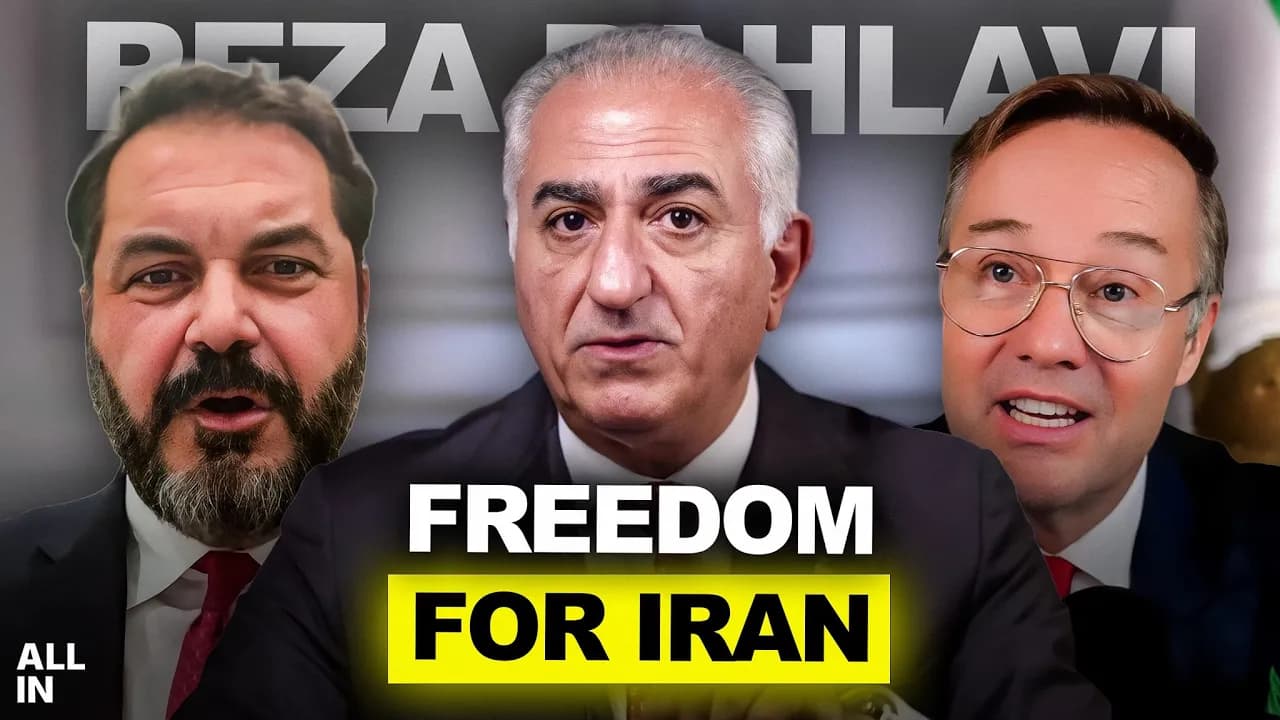
50 Years of Iran Coverage | 60 Minutes Marathon
In a Nutshell
**60 Minutes' 50-year Iran retrospective traces US-Iran enmity from the Shah's 1970s oil dominance and SAVAK torture (US-backed), through the 1979 Revolution, hostage crisis, and Khomeini's rise, to nuclear tensions, proxy wars, and sanctions under leaders like Rafsanjani, Ahmadinejad, Rouhani, and Raisi.** Key escalations include Trump's 2018 nuclear deal exit, 2020 Soleimani drone strike (averting full war via Iran's Al-Asad missile retaliation with no US deaths), and Iran's global assassination plots against US officials and dissidents. Post-fictional 2025 US-Israel strikes killing Khamenei, Reza Pahlavi emerges as exile leader advocating democratic transition, nuclear dismantlement, and Israel peace amid Iranian street celebrations and regime collapse hopes.
These notes were generated by AI and may contain inaccuracies.
Adriana Diaz introduces the US and Israel joint attack on Iran on Saturday, February 28th, targeting the Islamic Republic and killing Supreme Leader Ayatollah Ali Ham. Iran responded with attacks on Israel, US targets in the region, and neighboring countries. War has broken out in the Middle East. CBS News reviews 60 Minutes archives covering Iran for six decades, from Mike Wallace's interview with Ayatollah Khomeini days after the Iranian hostage crisis to Scott Pelly's recent interview with Reza Pahlavi, son of the former Shah of Iran.
1974 Arab oil embargo caused US gas shortages and long lines. Mike Wallace interviewed Shah Mohammad Reza Pahlavi in Tehran. Shah calls himself Aryan, sells oil to anyone at right price, member of OPEC. Offered $1 billion from oil money for fund to help have-not nations. Discussed Sheikh Yamani's optimism for Syria-Israel disengagement and oil embargo lift in February, which soured.
Oil Embargo and Fraud Claims
Why do you attach so much importance to this embargo on the United States? You are not sure of why.
Shah claims US imports more oil than in September, calls shortage a fraud with ships changing destinations. Oil companies enriched: one made 67% interest, Aramco parent profits up 400% next year, Iran's profits up too. Calls it Iran's natural wealth vs. manipulation.
Persian Gulf and Israel Relations
Shah insists on Persian Gulf, not Arabian Gulf. Denies benefiting from embargo as Israel's friend; economic cooperation under $2-3 million/year, intelligence from newspapers. Denies training SAVAK secret police with Israel help, claims same with friendly Arab countries.
Oil Prices and Economics
Industrial nations fear worldwide depression from high oil prices; Henry Kissinger and Sheikh Yamani warn. Shah says price lowest suggested to OPEC by experts, accuses Yamani of being told to say it by unnamed figures, possibly King of Saudi Arabia. Oil prices will go up due to inflation. Decision in weeks depends on industrial countries' attitude (hostile or cooperative) and inflation on commodities like radar spare parts. Calls US society permissive because they cannot control economy.
Corruption Allegations
Western claims of corruption in Iran due to affluent economy: cannot get contracts without payoffs. Shah calls it jealousy; military purchases government-to-government, corruption from seller governments. Has five inspectorate organizations; claims less corruption than in US permissive society.
Shah's Survival and Visions
33 years ruling, survived assassination attempts, internal strife, external threats. Believes in God; had visions and apparitions age 6-7: dreams, then apparitions, feelings. Sometimes dreams come true. As child, dreamt of pit of snakes (enemies). Takes tranquilizers to sleep.
First of all, I believe in what I say. Secondly, I'm not afraid of my people... confidence exists between me and my people.
Shah savors power from oil, willing to talk to reporters. Favors Ford over Carter, who fails to comprehend Iran's defense of US interests. Supports secure Israel but insists return 1967 conquered Arab lands. Blames US Jewish lobby for Israeli intransigence.
Jewish Lobby Influence
Surely, your majesty, you're not telling me that the Jewish lobby in the United States pulls the strings of the presidency. Not entirely, but I think even a little too much even for Israel interests.
Lobby too powerful, pressures via newspapers, media people, banks, finances. Some newspapers reflect their views: New York Times (Sulzberger family, Jewish), Washington Post, networks. Suggests computer analysis of NYT articles on Zionism, Israel, US-Arab relations.
Palestinians
Sympathy for Palestinians like for Jews seeking home, but they cannot bully world with terrorism, blackmail. Arab leaders find Palestinians problematic. Out of control, need new policy. No understanding with Assad, Sadat, Hussein. Calls Gaddafi of Libya crazy, irresponsible.
Corruption and Arms Deals
Washington Post quote: trucks need payoff to Princess Ashraf (Shah's sister). Shah dismisses as sensationalism by newspapers whipping Iran. Claims no middlemen in arms deals he chooses, no bribery.
SAVAK Secret Police
SAVAK (FBI/CIA combined) reputation for brutality. Agents in US check Iranian students affiliated with hostile groups, with US knowledge/consent. Deputy director Parvis Sabeti criticized FBI, CIA for not watching exiles, students in communist activities. International Commission of Jurists reports torture continues.
Not the torture in the old sense... intelligent ways of questioning now... The word has gone out to stop it a long time ago.
CIA Psychological Profile
CIA profile: Shah brilliant but dangerous megalomaniac, disregards US interests, uncertain ally, dreams of glory exceed finance ability, might seize neighboring oil fields in 20 years when revenues run out. Shah calls it imagination.
Payment Delays
American businesses complain Iran delays payments for months despite no cash flow issues. Shah unaware, invites them to write to him; Iran in deficit this year.
Because I like these kind of provocations. It gives me the opportunity of clarifying things.
One year before US embassy takeover in Tehran, Mike Wallace returned; Shah refused interview. Big trouble: riots, trashing, burning by opposition. SAVAK arrested opposition leader Karim Sanjabi calling for Shah to leave for democratic Islamic state. Discontent across spectrum: oil workers strike (some back), journalists protest censorship, school teachers out, universities shut. Muslim holy men spearhead opposition.
Muslim Opposition Voices
In Tehran headquarters, masked professionals/students hide from SAVAK. Outsider sees prosperity, buildings, but deep misery, injustice, lack of freedom. Fighting continues till last drop of blood despite military government. Wanted Shah's response, but ordinarily accessible leader refused.
Two years ago at his Niavaran Palace, the Shah expressed confidence in his bond with the people.
I'm not afraid of my people. It's not a political campaign. I'm not going to look at the polls tomorrow to see if I'm two degrees higher or lower. And that's because this confidence exists between me and my people. They trust in me. I trust in them. I believe that I know the job. So I'm not trembling.
Last Sunday, polls would have dismayed the Shah. Thousands of young Iranians rampaged through Tehran's streets, shouting "down with the Shah, death to the Shah." Genuine fury against low wages, high inflation, huge military expenditures, corruption, and foreign influence. Protesters included Muslim militants, students, workers, and hooligans. Rumors of paid government agents torching buildings to justify crackdown.
National Iranian Gas Company headquarters torched four days ago, unprotected by military, Tehran Police, or Fire Department. American Embassy Compound 200 yards down Roosevelt Boulevard undamaged, protected by Iranian military police—one of few buildings so protected—expressing gratitude for President Carter's support.
Within 24 hours of Sunday's mayhem, tanks and troop carriers rolled. Civilian prime minister replaced by military government. Tehran became quiet. Military moved against rioters and against Ayatollah Ruhollah Khomeini, exiled churchman in Paris suburb, who condemns Shah's corruption, dictatorship, and US support. Khomeini calls for Shah's arrest, trial, ousting, and Muslim state. Millions listen; no opposition political figures, so masses turn to holy men.
Iranian scholar Dr. Shaul Bakhash: Great social upheaval. Thousands of migrants from villages to urban areas. Young people from villages to universities. New occupations strain family structure. People cling to traditional beliefs.
Not just traditional Muslims oppose Shah. New rich and middle class, beneficiaries of economic boom, repelled by ostentatious luxury, corruption, and lack of political freedom.
They have become richer which is natural. Now nowadays they can send their children to school. They have enough to eat but they want also another right the right to be able to speak freely and to choose their elected government.
Javan Alamir, wealthy businessman and politician:
What is so horrid about the Shah? It's the terrible thing that has happened in Iran during the last quarter of century. We had the worst repression known in the history... the repression, the torture, the cruelty... worse than ever, worse than anywhere in the world... add to that the corruption which was a scale never equaled... by percentage of the national wealth... unbelievable... 85% of the earnings of the nation went to 5% of the population... majority not touched by petro dollars... people in Kerman, Sistan, Baluchestan, and Khuzestan provinces dying of hunger... do not have minimum calorie per day.
Tehran protesters not starving rural poor but middle class in apartments, universities, cars; traffic as bad as anywhere. Alamir: Liberal revolution by new middle class.
Shah, with powerful military, heard demands: cut back military purchases, military government temporary toward free elections, promised end to excesses and corruption on TV. Pahlavi Foundation (family's) and royal family finances under commission; illegal gains to return to people. Over 50 arrests or warrants: former prime minister, former Savak head, former Iran Air chief (reported suicide).
45,000 Americans in Iran; at least 3,000 left recently, scared. Bill Lefeld, president Iran-American Chamber of Commerce, lived 10 years:
Threats anti-foreign, not just Americans: telephone, leaflets, letters saying "get out or else."
Should the Shah survive? It is in the interest of the nation for the time being. Yes. If he changes, we want the monarch not as dictator but as constitutional monarch... As a dictator, he should not survive. As a constitutional monarch, a figurehead, a head of state... We need the monarchy... We need a monarch. We need a ruler. We need a king who abides by the constitution. If the Shah abides by the constitution, we will be for him... We hope.
Alamir's hope for constitutional monarchy futile; military cracks down on dissidents, opposition demands Shah step down. Longtime imperial court member in foreign capital to assert publicly Shah had personal direct knowledge of Savak torture and killings, with his full approval; seeks asylum.
1979: Long-brewing tensions exploded. Shah Mohammad Reza Pahlavi left in exile; Ayatollah seized control. Iran from secular monarchy to anti-Western theocracy. Militants seized US embassy, 52 Americans hostage.
Two weeks after takeover, Mike Wallace's interview with Ayatollah Khomeini—first by American reporter. Amid hostage display and reports of possible trials if Shah not handed over.
Interview in Qom, 100 miles south of Tehran, modest compound guarded by one soldier. Ground rules: pre-approved questions only, no internal politics or freedom issues; half proposed questions forbidden.
Do you still say that if the ex-Shah is not returned, the hostages will not be freed?
This issue has to do with the people. The 35 million population of Iran want this... unless he is returned, the hostages will not be freed... The Shah has to return and tell us where his money is and we have to know the extent of his treason... Two main reasons: 1) plundered wealth taken to US/European banks belongs to poor people. 2) Show extent of crimes in 37 years of rule, treasons; tried, courts decide... The people will it and we can't go against this will... They will remain until the Shah is returned. It is in the hands of Carter.
On Carter calling regime terrorists:
Terrorists, the 35 million people of Iran are terrorists... This is an insult... We are Muslims.
On Sadat calling him disgrace to Islam, lunatic:
Sadat states he is a Muslim and we are not... He compromises with enemies of Islam... united with our enemies... knows crimes of Israel... considers Begin a friend... Egyptian people do not back Sadat. I demand that Egyptian people try to overthrow him just as we did with the Shah.
On releasing women and black hostages:
The freedom of the women and blacks will be given... Women given great dignity in Islam, blacks oppressed in US... owing to tenets of Islam. In return, we ask nothing... want the Shah. Carter must return him.
On compromise or war:
Question crossed out. On war:
What do you mean by war? If armies against US armies, no... battle of nerves is Carter's doing. We are against war. Muslims desire peace... Carter should return criminal Shah.
We have nothing against people of US. But if president refuses to return Shah and Imam will not free hostages, what can be the answer?
Question not pre-approved.
On US embassy as spy center:
We didn't think an embassy could be a center of spying... didn't realize until students found evidence... now realized with backing of all people.
Wallace request to visit embassy denied.
Afternoon: Three hostages displayed—Katherine Gross (Cambridge Springs, PA, part-time secretary), Sgt. Liddell Maples (Errol, AR), Sgt. William Quarles (Washington, DC)—for brief news conference; to be released later.
120th day of crisis; end of first week UN tribunal on Shah's crimes and US complicity. Iranians believe US guilt: CIA restored Shah in 1953 coup; helped set up Savak secret police. Classified Senate report confirms CIA money and training for Savak; brutality later.
1976 Niavaran Palace:
International Commission of Jurists reports torture continues... Physical? I don't believe... Not anymore. Maybe in old days... word gone out to stop it a long time ago.
Raji Sam Gabadi, Iranian journalist (now Time magazine):
Brother released week before 1976 interview; torture marks. Psychological worse: shown mangled bodies claimed to be relatives (lie), driven insane; thousands in treatment, not fully recovered.
Carter's 1977 New Year's Eve Tehran speech praising Shah as great friend who cares for people loving him—same night, Gabadi's brother seized with fit; mental hospital doctor: 70% cases Savak-tortured.
Max McCarthy, ex-US embassy press officer 1976:
Knew Gabadi's brother, saw him post-torture: walking dead man, zombie.
Post-Shah Savak trials: torturers confessed—hot irons in noses/eyes, upside-down beatings, whips, electric shock, rapes, family tortures, cyanide, shootings.
Young Iranian in London hospital: 3 years prison, repeated spinal injections; paralyzed, unable to talk, dying.
McCarthy: Embassy knew of Savak savagery; resigned late 1976, wrote report.
Richard Helms, as ambassador, warned US mission personnel not to divulge to American correspondents information the Iranian government did not want disclosed or which revealed too much about the US role in Iran. Helms was pro-Shah, stating there was no alternative to the Shah, a view many Americans held at the time. This meant effectively doing what the Shah wanted. The idea of giving the Shah what he wants was prevalent, with articles to that effect. The Shah was seen as the pillar in the Persian Gulf, with US security built on this one man. Thus, his excesses had to be forgiven, and corruption overlooked for transcendently important considerations beyond corruption and repression. The United States knew what was going on but turned a blind eye for the greater good.
Jesse Leaf, CIA Iran analyst in Langley, Virginia in the early 1970s, heard reports of SAVAK brutalities and wanted to act. He planned a report on torture in Iran around 1970-71 but was told not to by division level. Richard Helms was CIA head then. Anyone would have known about the torture; it was widespread, documented by Amnesty International with descriptions of torture rooms in SAVAK headquarters in Tehran. The US knew but did nothing, deeming it an internal Iranian affair. SAVAK's job was to keep the lid on dissident elements, originally communists, then anyone opposing the Shah. An enemy of the Shah was an enemy of the CIA; they had a very close relationship.
When the CIA set up SAVAK, they held regular instructional classes, including interrogation techniques where torture was covered as a classroom lecture. A former SAVAK agent claimed CIA showed agents how to physically torture, but Jesse Leaf called it baloney, saying the source was testifying to save his life and working for the other side. Iranians did not need to be taught torture; they had a long history of it.
SAVAK conducted operations outside Iran, like a plot involving Jules Kipros (Kira), a Soviet-born adventurer living clandestinely in Western Europe. Granted an Iranian passport, he worked as a journalist in Tehran, then was contacted by SAVAK and sent to France to assassinate Sadegh Ghotbzadeh, then a supporter of Ayatollah Khomeini exiled in Iraq (later Iran's foreign minister). Kipros instead warned Ghotbzadeh and revealed SAVAK tasked him to kill Nasser Afshar, an American citizen in Alexandria, Virginia, publisher of Iran Free Press, which attacked the Shah, his regime, and family.
"Why would SAVAK want to kill you?" "Because I'm publisher of Iran Free Press. Simple as that."
Ardeshir Zahedi, then Iran's ambassador to the US (now in exile in Switzerland), denied SAVAK wanted to kill anyone. But Kipros's story checked out. Initially, State Department, CIA denied knowledge. A classified Senate Foreign Relations Committee report confirmed it: CIA knew of the Afshar plot for over a year before broadcast; State Department's Bureau of Intelligence and Research was told by CIA; US embassy in Iran indicated Jules Kipros was trained in assassination techniques.
Though Kipros never operated in the US, a SAVAK agent network did, with the Shah's own admission in 1976:
"They are there for the purpose of checking up on Iranian students, checking up on anybody who becomes affiliated with circles, organizations hostile to my country... with the knowledge and consent of the United States government."
This caused a flap; Henry Kissinger denied US knowledge but inquired. Two weeks later, aide Robert Hunter said State found no evidence of illegal activity—misleading per Senate report. SAVAK spied on Iranian dissidents like students, potential targets upon return to Iran. CIA furnished SAVAK info from FBI; SAVAK training continued in US; CIA did not ask SAVAK to refrain from using surveillance techniques learned here. In July 1978, Washington Post reported Deputy Attorney General warned Zbigniew Brzezinski of SAVAK's significant police, security, non-diplomatic activity in US; no move to tighten control.
Zahedi said if US demanded SAVAK agents leave, Iran would ask US personnel to leave Iran. The Shah repeated this threat. US unwilling to pay the price; Iran was vital CIA listening post with 1000+ miles Soviet border. Former CIA officer Richard Cottam (now political science professor) explained the Shah allowed US monitoring operations from Iran; close liaison gave SAVAK substantial hold over US.
US support meant ignoring Shah's excesses and failing to recognize mounting opposition. Cottam blamed Henry Kissinger's "total commitment": why annoy Shah over minor opposition when joint operations were vital? Cottam put Kissinger at top of culprits for "who lost Iran," saying his diplomacy intolerable; US must read full public opinion, not cut off from major popular forces like Khomeini.
January 1978: Massacre in holy city of Qom by SAVAK and police. August 1978: Rex Theater fire in Abadan, hundreds (about 500-600) died, allegedly set by SAVAK to capture/kill Khomeini agents inside; policemen prevented escapes. Reza Razmara, SAVAK agent, police chief in Qom January, promoted to general in Abadan August. Iran's current embassy calls him responsible for atrocities.
"He committed great atrocities... had people shot on the streets... in Abadan... Rex cinema fire... 500-600 people incinerated; policemen prevented breaking walls/doors."
Razmara lives under alias in Fresno, California; entered US January 1979. Iranians protested to State Department for his return; Vance promised to look into it but needed evidence, not provided. CIA refused comment; FBI knew entry date, said Razmara called CIA for protection, referred to FBI San Francisco, then local police. No suggestion of US-Shah collusion for entry.
Joseph Sisco, former Under Secretary to Kissinger (now Chancellor of American University), acknowledged excesses but highlighted Shah's accomplishments: 25 years Iranian-US relations provided umbrella for economic development, broadened education, land reform, new industrial class, progress to modern state.
"Why did Iranians overthrow the Shah? ... No real opportunity for political expression... repression... corruption around the throne... We share a measure of responsibility... myth of American control."
Senate report: 1970s, CIA officials met weekly with SAVAK; SAVAK conducted significant police/security/non-diplomatic activity in US, including planned assassination of US citizen.
Iran's President Bani-Sadr amazed at US naivety, failing to understand revolution. To break hostage stalemate, Iran demands: 1) admission of US past wrongs, 2) pledge no interference in internal affairs, 3) not block efforts to get Shah and his embezzled wealth. Sisco: Only President negotiates; grievances can be aired/discussed, but not while 50 Americans held hostage. Hostage-taking condemned; US need not confess guilt to Iranians but to itself, constitution, democracy.
Sisco did not oppose airing this material, but it must be evaluated in broad context of Iranian-US relations and positive benefits over 25 years (six presidents, six Secretaries of State) without condoning actions.
Carter/Vance decision to admit Shah October 1979 triggered embassy capture, 52 hostages for 444 days, released January 20, 1981 after Reagan inauguration. Not instant response to sick man; classified State document "Planning for the Shah to Come to the US" (three months prior) said once Khomeini regime firm, admit Shah. Embassy cable: Shah's illness unlikely to ameliorate reaction; warned of hostage risk, recommended extra security guards (not provided per Henry Precht, Iranian desk head). Iranians pledged embassy protection, but Yazdi warned State 24 hours before: "playing with fire, drastic reaction." Vance told Carter embassy could be protected, but wasn't.
1997: Mike Wallace in Iran amid Clinton trade embargo; Newt Gingrich called Iran "most dangerous nation on earth." US remembered 444-day hostage humiliation; Iranians remembered US support for hated Shah overthrown 18 years prior. Iran's parliament speaker called US "blood sucking wolf."
President Hashemi Rafsanjani (moderate, ex-torture victim under Shah, age 62) wants toned-down rhetoric, improve US relations; rarely interviews Western journalists.
Clinton: Iran sponsors terrorism, killing dissidents in Germany, France, Iraq, Turkey. Rafsanjani: Claims distorted. US dissidents killed? Waco burning? 241 Marines killed in Beirut 1983 by Hezbollah (Iran created, finances with Syria); western intel: 30 plane loads weapons to Hezbollah last year.
"Humanitarian assistance... Missiles, rockets... Those are Russian weapons stocked in Lebanon from old days."
US: Iran scuttles Mideast peace (okayed by King Hussein, Mubarak, Palestinians). Rafsanjani: Not fair peace, ignores refugees; more Palestinian than Palestinians; many Palestinians agree/act.
Iran denies funding bombings killing 61 Israeli civilians; condemns US Israel support, heavy-handed policy.
Elburz Mountains hikers: US wants to control every country/policy/movement; Iraq-Kuwait none of US business.
Woman on dress code (cover all but face): Does not resent; woman's beauty for family only. Off-camera, many women resent but fear complaining on camera.
Iran tricky for TV: What you see less important than what you cannot. No dating single people, no alcohol; but behind closed doors, unmarried Iranians have parties even though
Women risk a fine and a night in jail if caught violating the dress code. Many wear revealing clothes in private, drink whiskey, mingle with men freely. Islamic Republic forces some women to be hypocritical?
There are some people who do not believe in our laws. We can tell them to observe the dress code in the street. This is required by law. But in their homes, we can have no influence on them. They do what they want. We know there are many people like this.
Sexes kept separate: men enter buses from front, women from back. Life for women improving with more chances in education and employment. Students at Foreign Language Institute hope to become interpreters.
You find this young man attractive or one standing over there? Would there be a problem going to the movies together? > Well, just talking is okay. No problem. But no, nothing more.
Iranians care most about the economy. Tehran looks clean, prosperous, new buildings sprouting. US trade embargo has little effect as France and Germany take US contracts. Oil money pours in. Under late Ayatollah Khomeini, government built highways, hospitals, schools in rural villages.
In cities, high food prices, low wages force people to work 2-3 jobs. Many young people can't afford marriage, resort to temporary marriages: signed certificate from religious leader for 1 day, 1 week, 1 month.
There are many people who need to satisfy their instincts on a temporary basis for one day or one week or one month, whatever the length of time. It sounds like legitimizing illicit sexual relations. > No, there is an order to it. Psychologically, this is a legal act, not a forbidden act that everyone is afraid of.
Fear in Iran: students say criticizing government leads to expulsion from university.
We don't like to talk about politics at all. > Really? Why? > That's right. > Oh, because it's dangerous. Why to talk about politics? > It's dangerous.
Confronted by fundamentalist students demanding to know questions asked.
I'd like to know about your question that you asked our students here. > Sir, it is none of your business.
They objected to questions about Salman Rushdie, targeted for assassination by Iran over book slandering Islam (9 years prior).
If I face with Salman Rushdie myself, I murder him because he doesn't respect Islamic religion because he's not a human being at least because he was a person who destroyed our culture. > It seems to me that your culture has survived Salman.
Hardliners see culture under aerial attack. Government murals warn against private satellite dishes, banned ~1 year ago due to enthusiasm for western TV, movies, fashion. Iranians hide dishes behind bushes or near windows. Impossible to ban western influences falling from sky.
Do you know what Baywatch is? Young women, very small bathing suits. And there are people who have satellite dishes in Iran who charge their neighbors to watch Baywatch. > It might be so. But you must admit that these kinds of programs cause problems for young people. They weaken the foundation of a family and they have created problems in the west and the statistics of women without husbands and children without fathers in the west are terrible.
Are you suggesting that perhaps we should have an Islamic Republic of the United States? > No. I am saying that you should have good ethics. Do not allow perversion in the ethics of your young people.
Iran 50%+ population under 20. President Rafsanjani fears lure of American TV like Playboy channel, Hollywood films.
Playboy. Things like the Playboy channel or Hollywood films do not help the progress of your country and your people. How are you familiar with Playboy programs? Do you have a satellite dish, Mr. President? > No, we hear these things. We read these things in reports.
Many Iranians admire America; 1/3 of Rafsanjani's cabinet educated in US. Rafsanjani won't talk unless US releases frozen Iranian assets: billions sent to buy weapons under Shah, sales stopped post-deposition, money stayed in US.
Let's you and I play a game. I'm the United States. You're Iran. I give you the money. What do you do for me? Then we'll be ready to talk to one another. > You serious? This would be a sign of goodwill. You may choose something else as evidence of goodwill.
Iran-US talk past each other. US concern: Iran's nuclear bomb program. Iran insists only nuclear energy.
What the Americans did in Hiroshima and Nagasaki has had everybody hate the idea of getting the bomb. You are not going after a nuclear bomb. > Definitely not. > You swear on Allah. > Swearing is not needed. Those who swear are the ones who want to lie. We are not going after the nuclear bomb or biological weapons or chemical weapons. > Absolutely not. Absolutely not.
10 years later (2007), Iran's nuclear ambitions major US concern. Scott Pelley interviews President Mahmoud Ahmadinejad in Tehran garden.
Ahmadinejad infuriates West: wants to visit Ground Zero for UN General Assembly, questions Holocaust, demands elimination of Israel.
Sir, what were you thinking? The World Trade Center site is the most sensitive place in the American heart. And you must have known that visiting there would be insulting to many, many Americans. > Why should it be insulting? > Well, sir, you're the head of government of an Islamist state that the United States government says is a major exporter of terrorism around the world. > We obviously are very much against any terrorist action and any killing and also we are very much against any plots to sow the seeds of discord among nations. Usually you go to these sites to pay your respects and also to perhaps air your views about the root causes of such incidents.
US-Iran could be friends, but evidence Iranian weapons/bomb components kill US forces in Iraq.
It is an established fact now that Iranian bombs and Iranian knowhow are killing Americans in Iraq. You have American blood on your hands. Why? > Well, this is what the American officials are saying again. American officials wherever around the world they encounter a problem which they fail to resolve instead of accepting that they prefer to accuse others. I'm very sorry that because of the wrong decisions taken by American officials, Iraqi people are being killed and also American soldiers. It's very regrettable.
American army captured Iranian missiles, explosively formed penetrator (EFP) bombs in Iraq from Iran.
The denials are no longer credible. > Sir, if I may, are you an American politician? Am I to look at you as an American politician or a reporter? This is what the American officials are claiming. If they accuse us 1,000 times, the truth will not change. > Are you saying that it is not the policy of this government to send weapons into Iraq? > Sir, forgive me you're smiling, but this is a very serious matter to America. It's serious for us as well. I dare say it's serious for everyone. It seems to me it's laughable for someone to turn a blind eye to the truth and accuse others. It doesn't help. And the reason that I'm smiling again, it's because that the picture is so clear, but American officials refuse to see it. > Mr. President, can you tell me that you are not sending weapons to Iraq? Very simple, very directly. > We don't need to do that. We're very much opposed to war and insecurity. Iraq. It's very clear the situation. The insecurity in Iraq is detrimental to our interests.
Ahmadinejad: 50 years old, wife, 3 grown kids, son of blacksmith, religious, incorruptible. Elected 2 years prior by rural/poor voters. 1980s: elite army intelligence officer in war with Saddam Hussein.
Mr. President, you must have rejoiced more than anyone when Saddam Hussein fell. You owe President Bush. This is one of the best things that's ever happened to your country. > Once the dictator was toppled, many people were happy. But the American government did not appropriately use this golden opportunity. They should have left the Iraqi people to their own way and to determine their own fate.
Iran enriches uranium despite UN Security Council demands to stop. Ahmadinejad claims only nuclear energy; Bush admin says bomb pursuit. IAEA involved.
You have said in the past that you have 3,000 centrifuges in a line producing highly-enriched uranium. Do you have more now? > No. Our plan and program is very transparent. We are under the supervision of the agency. Everything is on the table. We have nothing to hide.
Program hidden 15+ years; IAEA got confession of secret activities.
It is not transparent, sir. > The agency is supposed to supervise and ask questions and we respond. Our activities are very peaceful. > For the sake of clarity, because there is so much concern in the world about this next question, please give me the most direct answer you can. Is it your goal to build a nuclear bomb? > What what are you driving it? Simply that, sir. Is it the goal of your government, the goal of this nation to build a nuclear weapon? > Do you think that the nuclear technology is only limited in a bomb? You can only build a bomb with that. I appreciate the differences, sir, but the question is limited to the bomb. > Well, you have to appreciate we don't need a nuclear bomb. We don't need that. What need do we have for a bomb? > Can may I take that as a no, sir? It is a firm no. I'm going to be much firmer now in political relations right now. The nuclear bomb is of no use. If it was useful, it would have prevented the downfall of the Soviet Union. If it was useful, it would have resolved the problems they have the Americans have in Iraq. The time of the bomb is passed at the moment.
No war between Iran-US; psychological warfare. Resolve differences with logic.
What trait do you admire in President Bush? > You should respect the American people. > Any trait? As an American citizen, tell me what trait do you admire? > Well, Mr. Bush is without question a very religious man, for example, as you are. What religion, please tell me, tells you as a follower of that religion to occupy another country and kill its people? Please tell me, does Christianity tell its followers to do that?
Bush to Ahmadinejad: "Speaking to you, you've made terrible choices for your people. You've isolated your nation. You've taken a nation of proud and honorable people and made your country the pariah of the world."
President Bush is free to think as he pleases and to say what he pleases. I don't think that President Bush has said these things. Rather, I prefer to think that this is your impression of what the president has said. > I'm quoting the president directly for the record. This is a direct quote. > So, well, this tells me that there's a great divide between us.
Bush pledged no nuclear weapon for Iran, military force if necessary.
I think Mr. Bush. If he wants his party to win the next elections, there are cheaper ways and ways to go about this. I can very well give him a few ideas so that the people vote for him. He should respect the American people. They should not bug the telephone conversations of their citizens. They should not kill the sons and daughters of the American nation. and they should not squander the taxpayers money and give them to weapons companies if and also help the people the victims of Katrina. People will vote for them if they do these things. What I'm saying, I am being very sincere here. I'm a Muslim. I cannot tell lies.
On pledging no nuclear test: dances around question.
But when I ask you a question as direct as will you pledge not to test a nuclear weapon, you you dance all around the question. You never say yes. You never say no. > Well, thank you for that. You are like a CIA investigator. > And I am just a reporter. I am a simple average American reporter. > This is not Guantanamo Bay. This is not a Baghdad prison. This is not a secret prison in Europe. This is not Abu. This is Iran. I'm the president of this country.
2015: Hope diplomacy calms tensions. Steve Kroft interviews President Hassan Rouhani on deal with US, Russia, China, Britain, France, Germany: curtails Iran's nuclear program for lifted sanctions.
What do you think of the agreement? A very difficult agreement to reach with lots of ups and downs, but it's the right path we have chosen. I am happy that we have taken extremely important steps on this issue and are in the process of taking the final steps. > Were you surprised by the ferocity of the debate in the United States and the outcome? > It was predictable. An issue of this significance cannot be resolved without its opponents. One is surprised by the commentaries and the commentaries are not very pleasant. Some groups and political parties may be against it but the governments of the world altogether welcomed this deal.
Opponents: US gave too much for 15-year freeze; Iran could resume bomb work later with more resources.
If a country wanted with the technical resources it has to gain an atomic bomb, this deal would have been a very bad deal for it because the deal creates limitations from all sides to getting an atomic bomb. But if a country has been after peaceful technology from the beginning, then it has lost nothing. We wanted this incorrect accusation that Iran is after nuclear weapons corrected and resolved and that the goal of Iran is peaceful activity. In this deal, we have accepted limitations for a period of time in order to create more trust with the world.
Deal requires leap of faith. Iran: peaceful program, fatwa prohibits bombs, but knows how. Requirements: ship 98% enriched uranium out, lock up thousands of centrifuges, close Fordow enrichment facility, disable Arak heavy water reactor, rigorous IAEA inspections.
Opposition in Iran: state TV, hardline papers, Revolutionary Guard head says never accept.
The United States seems to have its hardliners and Iran seems to have its hardliners. The opponents say essentially that they think Iran has given up too much control over their nuclear program to the US and other foreign countries uh and to the IAEA. Do you see similarities between the United States and Iran in terms of the opposition to this? > There are similarities. It's natural that opponents always look for the maximum possible outcome. In an agreement, neither achieves the maximum. Both sides must always concede a little bit from the maximum to get an agreement. Therefore, the person who seeks the maximum complains. The result of this agreement benefits everyone. benefits both sides because we've been able to reach an understanding, an agreement on a very complicated issue at the negotiating table and be able to prevent misunderstandings and take the first step towards trust. Of course, for reaching trust between the US and Iran, there is need for a lot of time.
Some of the opponents are are very powerful. Um the commander of the revolutionary guard, for example, has condemned the the deal. Um how do you deal with that? That's an important political force in this country. > It's clear that some will be opposed, some will be in favor, will express their opinions. But at the same time, after the agreement is approved by the responsible institutions, everyone will comply with that. The revolutionary guards also when the deal is approved by responsible institutions, they too will respect this agreement.
Supreme Leader Ayatollah Ali Khamenei has final say, sent to Parliament and Supreme National Security Council.
The majority of our people in opinion polls have a positive view of the agreement and usually institutions like the Parliament and the Supreme National Security Council are usually not far removed from public opinion and move in that direction.
Rouhani temperate, encourages goodwill, but undercut by harsh statements. Khamenei endorses "death to America", "death to Israel" chants, calls US great Satan.
Do you believe the United States is the great Satan? The enmity that existed between the United States and Iran over the decades, the distance, the disagreements, the lack of trust will not go away soon. What's important is which direction we are heading. Are we heading towards amplifying the enmity or decreasing this enmity? I believe we have taken the first steps towards decreasing this enmity. > Do you think the United States is the great Satan? Satan in our religious parliament is used to refer to that power that tricks others and whose words are not clear words do not match reality. What I can say is that the US has made many mistakes in the past regarding Iran and must make up for those mistakes.
I'm sure you realize that it is difficult uh for many Americans to get past the fact that President Obama has signed an agreement with the country that says death to America, death to Israel. How do you explain this? What are they to make of it? Are they to take it literally? Is this for domestic internal Iranian political um consumption? Um, what are Americans to make of it? The language, this slogan that is chanted is not a slogan against the American people. Our people respect the American people. The Iranian people are not looking for war with any country. But at the same time, the policies of the United States have been against the national interests of Iranian people. It's understandable that people will demonstrate sensitivity to this issue. When the people rose up against the Shah, the United States aggressively supported the Shah until the last moments. In the 8-year war with Iraq, the Americans supported Saddam. People will not forget these things. We cannot forget the past, but at the same time, our gaze must be towards the future.
Death to America is very simple concept. Three words, not much room left for interpretation, not very conciliatory. Do you see the day when that language will not be used? You yourself have encouraged both sides to try and lower the temperature. > If America puts the enmity aside, if it initiates goodwill and if it compensates for the past, the future situation between the United States and Iran will change.
US signed deal to lift sanctions as goodwill?
It hasn't been implemented yet. The lifting of the sanctions must be initiated.
Full implementation months away, needs IAEA certification of Iran's compliance.
Do you think the level of trust between Iran and the United States has improved because of this treaty? Relative to the past, it's improved. But this does not mean that all disagreements are resolved or all the distrust removed. In one case, on one issue, yes, we have managed to overcome the problem. There's been speculation
Hope inside and outside of Iran and in the United States that this nuclear deal could be a catalyst for some broader if limited cooperation between the two countries where there are mutual interests. Many areas exist where common goals or common interests may exist. But what is important is that in the nuclear agreement, we see how the two sides behave in action. Enacting this deal in a good way will create a new environment.
Ayatollah Khamenei has said that there will be no further cooperation beyond the nuclear agreement.
But there is already some indirect military coordination between US air strikes and Iranian-backed Shiite militias both fighting against ISIS in Iraq. Officially, it's being done through the Iraqi military. There is also the possibility of future cooperation in Syria.
You've said that you're willing to sit down with any country, friend or enemy, to discuss the situation in Syria in order to stop the bloodshed. What does Iran see as a possible, workable, acceptable solution to the situation in Syria?
Look, in a country where a large segment of the country has been occupied by terrorists, there is bloodshed inside the country. Millions of people have been displaced. How is it possible that we fight the terrorists of this country without supporting and helping the government of that country? How can we fight the terrorists without the government staying? Of course, after we have fought terrorism and a secure environment is created, then it is time to talk about the constitution or the future regime to talk and discuss. Opposition groups and supporters sit at a table. But during a situation of bloodshed and during an occupation of the country, what options exist?
So far, President Rouhani has been the biggest political beneficiary of the agreement between Iran and the United States. He is popular with the voters right now, but he's also ruffled some feathers and no doubt irritated political rivals.
This agreement was a big political victory for you personally. You were elected president based on the idea that you wanted to open up Iran to the outside world, that you wanted to get the sanctions lifted, that you wanted to bring prosperity back to the country so Iran could take its place among the great nations in the world and not be isolated. There are still some things in that agenda that are still unfulfilled. Freedom of speech, more access to the internet and personal freedoms.
I think relative to the two years I've been in office, I've been successful. Not 100% of course, but successful. Our relations with other countries have improved. There is more freedom at the universities, lively debates, and greater freedom of the press compared to the past. Of course, there are some issues that are not in control of the government. Two of those issues, human rights and personal freedoms, are in the domain of Iran's conservative judicial system. Two former presidential candidates have been under house arrest for the past 4 and a half years, and there are at least three Americans imprisoned here.
as we sit here and speak that right now there is a dual American Iranian citizen a journalist for the Washington Post Jason Rezaian in prison for more than a year on unspecified charges. There has been talk among leaders in the last few weeks that there might be a prisoner exchange. Is there anything you can say to clarify the situation?
We have Iranians who are imprisoned in the United States. Iranians who are being pursued and most of them are being pursued for circumventing the sanctions and you know that from the beginning we considered the sanctions to be wrong and we encouraged everyone to circumvent them. We consider all of those prisoners to be innocent and consider it wrong that they are in prison.
Would you support a prisoner exchange?
I don't particularly like the word exchange, but from a humanitarian perspective, if we can take a step, we must do it. The American side must take its own steps.
If the nuclear deal stays on track and the sanctions are lifted, the Iranian Treasury will soon begin collecting hundred billion dollars in oil revenues that have been frozen in overseas banks. And President Rouhani says Iran will be open for business. As you know in Iran, we are transferring the economy step by step to the private non-governmental sector. Our private sector and the American private sector can improve the environment. Actually, it will strengthen the nuclear agreement, even tourism. If the people of the United States come to Iran and see its ancient history and nature of Iran and the people of Iran go to the United States to see America, this can shorten the walls of mistrust and improve the situation for the future.
President Trump withdrew the United States from the Iranian nuclear deal in 2018. Coming up, how an American drone strike escalated tensions. The first time the US assassinated an Iranian military leader was January 3rd, 2020. A year later, David Martin got the inside story on how the US avoided a disaster when Iran decided to retaliate.
The US air strike against Iranian-backed militias Thursday night was the latest chapter in the poisonous relationship with Iran President Biden inherited from the Trump administration. 13 months ago, the two countries came perilously close to war. It began with an American drone strike which killed Iran's most powerful general and ended with an Iranian ballistic missile attack against US troops in Iraq. It was the largest ballistic missile attack ever against Americans.
Tonight, we will show you for the first time drone video of the attack and talk to the troops who were there the night the US and Iran went to the brink.
Hey buddy, if you're seeing this video, some bad things happened to dad last night. So, I need you to be strong, okay? for mom and just always know in your heart that I love you. Okay, bye buddy.
A few hours after Army Major Alan Johnson recorded that message to his son, Iranian ballistic missiles began raining down on Al-Asad air base in Iraq, where 2,000 US troops were based. As a drone recorded the attack, Americans caught in the crosshairs could do nothing but run or duck and cover.
Holy holy god damn.
Each missile carried a warhead weighing more than 1,000 lbs.
Stay right here, bro. Don't move.
Words can't even describe the amount of energy that is released by these missiles. Johnson was taking cover in a bunker designed to protect troops against much smaller warheads, weighing only 60 lbs.
Knocked the wind out of me, followed by the most putrid tasting ammonia, tasting dust that swept through the bunker, coated your teeth.
After the blast wave and debris came the flames.
The fire was just rolling over the bunker, you know, like 70 ft in the air.
Johnson's bunker provided no protection from that.
We're going to burn to death. We start heading down 135 m. Make it about a third of the way there. The big voice, we call it clicks in. Incoming. Incoming. Take cover. Take cover. Take cover. I've got another football field to run. I don't know when this next missile is going to hit.
Can you hear the incoming?
Like a freight train going by you.
Johnson wasn't the only one frantically searching for cover. That's six people running for their lives to get to this next bunker. We get to the bunker and realize there's roughly 40 people trying to stuff themselves into this bunker that's made for about 10 folks. And I grabbed the guy in front of me. I'm just like, you got to get in the bunker and just like shoved everybody in there.
But when you're running between bunkers, it's just a matter of what? Luck.
Luck. The only thing I can actually come up with is that the hand of God protected us because really nobody should have lived through this.
Things are happening that could take us to war if we don't make the correct move here.
Marine General Frank McKenzie, commander of US forces in the Middle East, monitored the attack from his headquarters at Tampa, Florida, ducking into this small room off his main operations center where he could talk directly to the only two people above him in the chain of command.
They bring in the Secretary of Defense and then a little bit later they brought in the president to this conversation. We're listening to the reports of the missiles flying.
You ever been on one like this?
I've never been on one like this where real missiles being fired at our forces and where I thought the risks were so high.
The Iranian attack on al-Asad was in retaliation for a stunning US operation. President Trump ordered six nights earlier, a drone strike which killed Iran's most powerful general, Qasem Soleimani.
The blood of many Americans is on the hands of Qasem Soleimani. He was as close to an indispensable man as you could find inside Iran. Where he went, violence and death followed.
During the American occupation of Iraq, Soleimani had orchestrated attacks which killed more than 600 US troops. And according to McKenzie, he was planning to do it again. We saw intelligence reports where Qasem Soleimani was moving various attack streams forward against our forces in Iraq against our embassy and against other bases there.
Were they imminent?
Perhaps in hours, perhaps in days, probably not weeks.
Until then, the US had shied away from going after Soleimani for fear killing such a high-ranking government official would only provoke more Iranian attacks. I never take killing anyone as a easy decision, but I think the risk of not acting in this case outweighed the risks of acting. So, yes, I was good with the decision.
On January 3rd of last year, an airport security camera recorded Soleimani's arrival in Baghdad on a commercial flight from Damascus. McKenzie was watching from a different angle.
You have the drones overhead. Do you see him get off the airplane?
Yes. Yes. As Soleimani's entourage pulled away from the plane, McKenzie gave the kill order to the commander controlling the drones.
And then I said, "Take your shot when you got it."
Missiles slammed into both vehicles simultaneously.
There's no backslapping. There's no cheering because now I have to prepare to deal with the consequences of the action.
General McKenzie was sure Iran would retaliate, but he didn't know how.
And neither for a while did the Iranians. I believe they went into a period of disorganization because they had lost the officer who really spoke up and shaped everything up and told them what they were going to do.
So, it was kind of a ominous silence.
It was a very ominous silence.
And what was the first sign that Iran might really be thinking of a ballistic missile attack?
They began to move their ballistic missiles. The attack was just hours away when Major Alan Johnson got the word Iran's most powerful weapons were aiming for al-Asad.
My intelligence officer pulled me aside and basically said, "Sir, I've got some bad news for you. What's up? We have information that Iran is fueling 27 medium-range ballistic missiles and their intention is to level this base and we may not survive."
This was a completely different threat.
Lieutenant Colonel Tim Garland commanded an army battalion at Al-Asad, a sprawling air base about 120 miles west of Baghdad where the US operated scores of helicopters, drones, and other aircraft.
Did the base have any defense against ballistic missiles?
No sir. It was such a unprecedented threat. I don't think it was ever calculated. The capability to prevent a ballistic missile attack it wasn't there.
Did you have a plan for what to do?
We came up with a plan.
The only real defense against a ballistic missile attack is to get out of harm's way. Air Force Lieutenant Colonel Stacy Coleman and the rest of Al-Asad scrambled to evacuate more than 50 aircraft and 1,000 troops before the missiles hit, but the base still had to be manned.
We still needed to be able to do our mission. So the first decision was to split our team by combat capability.
What did you think was going to happen to the people you were telling to stay?
The honest truth is I didn't think that we were going to survive.
The best shelter was air raid bunkers built during the rule of Saddam Hussein, but there weren't enough of them.
And I just remember a very heavy sinking feeling setting in. I was like, man, we are not going to come up with a bunker plan that's going to be adequate for the number of people that we're talking about.
So Garland sent most of his soldiers out into the desert where they watched the attack from a safe distance.
Holy, there was a lot of people who didn't want to leave. They didn't want to be that guy that was going to relative safety.
A lot of people might have trouble understanding what you just said. Tell me why a soldier wouldn't want to go to a safe place.
They want to carry the burden. They want to share in the danger.
From his headquarters in Tampa, General Frank McKenzie had tried to time the evacuation just right.
If you go too early, you risk the problem that the enemy will see what you have done and adjust his plans.
The Iranians monitored al-Asad by purchasing photos like these taken by commercial satellites. McKenzie waited until after Iran had downloaded its last picture for the day. So, the last time the Iranians took a look with their commercially acquired spy photos, what would they have seen? They would have seen airplanes on the ground and people working. So, when they launched those missiles, they thought that was going to be a full flight line.
I think they expected to destroy a number of US aircraft and to kill a number of US service members.
A clock stopped at 1:34 a.m. when it was knocked off the wall recorded the moment the first missile landed.
It's like the sun rising instantaneous. That's how bright it was.
Air Force Master Sergeant John Haynes and his security team were outside their armored patrol vehicle when the first missile struck.
Across the radio, we heard incoming, incoming, incoming.
And what do you do?
I just threw the phone down and ran to my vehicle. And once that impact happened, the back pressure blew our doors closed. And then you just see cloud of dirt, fire.
They call it a shock wave. And you kind of feel that wave almost internally like your organs are kind of wavering around inside.
Sergeant Kim Keltz was outside the bunkers manning a guard post in case the missile barrage was followed by a ground assault.
We got down and we protected our vital organs, our heads, and we waited. Did it blow you around?
One of the closest ones I had hit directly near us had actually lifted my body about 2 in off the ground.
Iran fired a total of 16 missiles from three locations. Five missed, 11 landed at Al-Asad. This was an attack like no other. It was an attack certainly like nothing I've ever seen or experienced.
What have you learned so far?
Their missiles are accurate.
Did that surprise you?
We knew it, but to see it, they fired those missiles to significant range and they hit pretty much where they wanted to hit.
From first launch to last impact was 80 minutes. Somehow, no one was killed. When the sun came up, the survivors surveyed the damage.
shells of a building, skeletal frames left with nothing else. Craters about a room size deep into the ground, concrete barriers blown across a field or a street.
It looked like a scene from a movie where everything is destroyed around you, but yet no one was killed. I still have no idea understanding other than God being on our side that no one was seriously injured and there were no fatalities.
The news traveled fast up the chain of command and President Trump tweeted, "All is well." That turned out to be premature.
There are people throwing up. Everybody had headaches. I had a concussion for two weeks.
What did it feel like?
Someone hitting me over the head with a hammer over and over and over.
Finally, hours later, we realized we have a mass casualty event here of traumatic brain injury. Military doctors diagnosed more than 100 cases of traumatic brain injury. Major Alan Johnson and 28 other soldiers received Purple Hearts.
Do you have any lingering effects today?
Headaches every day. Horrible tinnitus or ringing in the ears. PTSD. Yeah, I'll be willing to admit that. I still have nightmares.
But the nightmare of war with Iran had been averted. Had Americans been killed, it would have been very different.
Have you ever done an estimate on if you hadn't evacuated the damage that would have been done?
So I think we might have lost 20 or 30 airplanes and we might have lost 100 to 150 US personnel.
You had a plan to retaliate if they killed Americans.
David, we had a plan to retaliate if Americans had died.
Iran was on alert for a possible US strike and hours later mistakenly shot down a Ukrainian airliner thinking it was an American bomber. 176 entirely innocent people died.
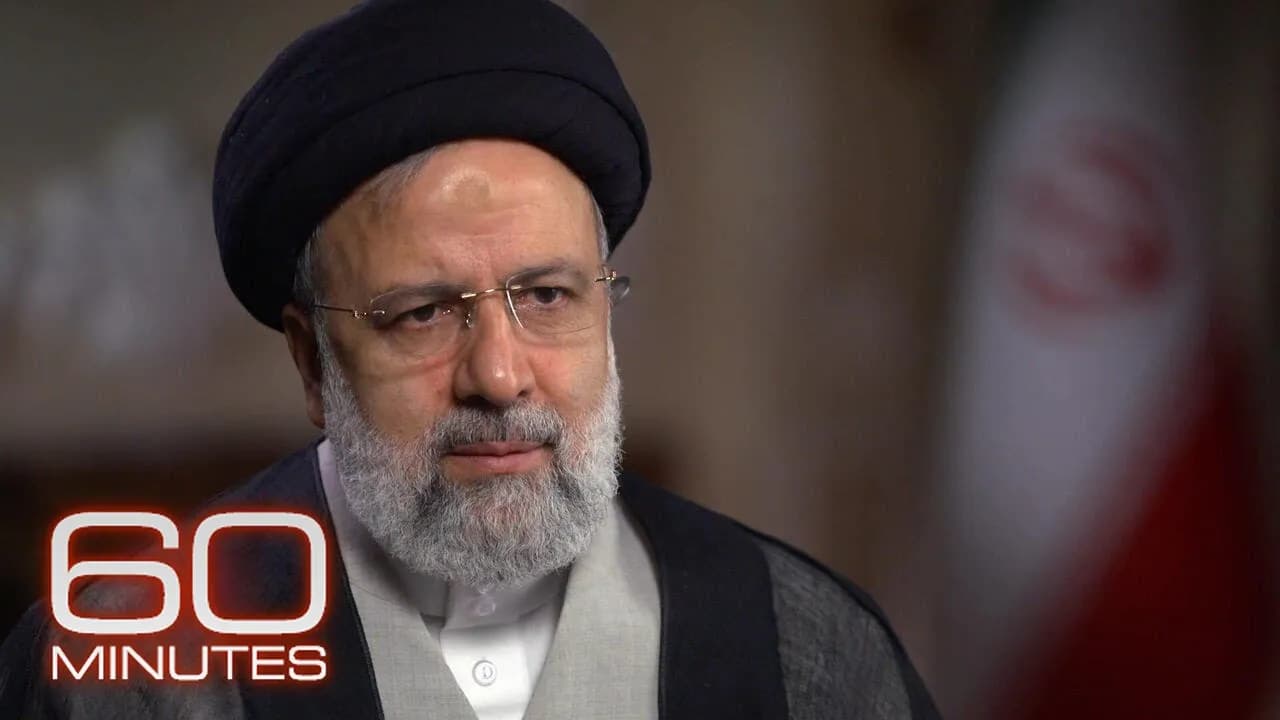
In the fall of 2022, Leslie Stahl spoke with Iran's President Ebrahim Raisi. It was his first sit-down interview with a Western reporter. Only a year into his presidency, Raisi discussed the requirements needed for a nuclear deal with the US.
The United States first placed financial sanctions on Iran back in 1979 during the hostage crisis. For nearly four decades, the US State Department has designated Iran one of the world's leading state sponsors of terrorism. But the Obama administration, along with five other countries, agreed to billions of dollars in sanctions relief in exchange for Iran's agreement to dismantle much of its nuclear program and open its facilities to extensive international inspection. The Trump administration distrusting Iran pulled out of the deal and stepped up crushing economic pressure. That's where Ebrahim Raisi found himself when he was elected president a year ago. Last month, Iran and the 61-year-old hardliner were on the verge of striking a new deal. But then Iran submitted demands that sent the nuclear talks into a stalemate.
Sir, thank you. I'm Leslie. We met President Raisi Tuesday at the presidential compound in Tehran for his first interview with a Western reporter. I was told how to dress, not to sit before he did, and not to interrupt him. We were given one hour for the interview.
Can we start with the negotiations on the nuclear deal? Do you want to have that deal renewed? Because you know there are some American officials who are beginning to think that you don't.
If it's a good deal and fair deal, we would be serious about reaching an agreement. It needs to be lasting. There needs to be guarantees. If there were a guarantee, then the Americans could not withdraw from the deal. But you can pull out of the deal. I mean, just as well as we could pull out of the deal.
You see, the Americans broke their promises. They did it unilaterally. They said that I am out of the deal. Now making promises is becoming meaningless.
Are you saying that you cannot trust the Americans?
We cannot trust the Americans because of the behavior that we've already seen from them. That is why if there is no guarantee, there is no trust.
The US says the West can't trust Iran. For instance, when it claims its nuclear program is purely for peaceful purposes. As far as we can tell, you don't use it for, you know, things that can help your citizens like electricity. You say that you want it for peaceful reasons like what?
Like in medicine, agriculture, oil, gas.
In terms of peaceful purposes, one available figure from the UN nuclear watchdog agency, the IAEA, is that only 1.8% of the country's electricity is generated by nuclear power. There seems to be some evidence that you had been working at least before toward a bomb, a weapon, and that you might be doing that again.
We have responded to these claims several times. They are baseless.
The Islamic Republic of Iran has said many times that possessing nuclear weapons has no place in our doctrine. However, the US intelligence community has assessed with high confidence that Iran did attempt to develop a nuclear bomb in the past. And then there are the American citizens being detained in Tehran, three of whom were born in Iran.
If there is a deal, would you agree to release the four Americans who are being held here? Could that be part of it?
There are Iranian nationals also imprisoned inside the US. These people are only in there because they simply tried to circumvent sanctions. And the Americans, we have told them that we can talk to them about this. It can be conducted separately from the nuclear talks. It can be done between the two countries. It is a humanitarian issue. This can be negotiated.
You're off to New York. You're going to speak at the United Nations. You know, President Biden is going to be there. Are you open to a meeting with President Biden, a face to face?
No, I don't think that such a meeting would happen. I don't believe having a meeting or talk with him will be beneficial.
What do you think the difference is from your perspective between the Trump administration and the Biden administration?
The new administration in the US. They claim that they are different from the Trump administration. They have said it in their messages to us. But we haven't witnessed any changes in reality.
His major grievance against President Biden is that he has maintained the sanctions on Iran that President Trump imposed.
The sanctions are very tyrannical. This is a tyranny against the people of Iran. It is important to us to have the sanctions lifted.
The sanctions thrust Iran into a 2-year recession, mainly because oil exports from refineries like this one fell overnight from 2.8 million barrels a day to about 200,000. Businesses have been cut off from international banking. With inflation today in Iran at over 40%, virtually everything is more expensive. And yet we found traffic here as clogged as in New York. And as we saw, Tehran's bazaars are teeming with shoppers.
Hello. How are you? Oh, I'm good. How are you? Fantastic. And you? Good. Do you study English in school? No.
One reason for the bustling commerce is something the president calls the resistance economy in which businesses are encouraged to make more of the things themselves that they used to import.
So do you know where these are made? Made in Iran. In Iran? Yeah. Homemade blue jeans for our country. Also made in Iran. Washing machines, refrigerators, TVs.
They also have their own version of Uber Eats called Snapp Food. Iran is home to one of the world's oldest civilizations, dating back to 4,000 BC. It's where the foundations of algebra and chemistry were developed. Today, while there's attention to religious tradition in the Islamic Republic, it's one of the most westernized countries in the Middle East with a well-educated population. This mall could be anywhere in America with an ice skating rink, a food court with hot dogs and burgers, and the least expected, sexy window displays. And yet, President Raisi just signed a decree making women who don't dress modestly subject to arrest.
A young woman died Friday after the morality police took her into custody for violating the rules on head coverings. Eyewitnesses say they saw her being beaten while in a police van. President Raisi's office says he ordered an investigation. Seyed Ebrahim Raisi descends from the prophet Muhammad as his black turban signifies. According to Shiite Muslim tradition, he's a hardline conservative cleric like his mentor, the Supreme Leader Ayatollah Khamenei.
I want to ask you about your own record. There is a personal sanction against you. You took part in a commission that was responsible for executing up to 5,000 political dissidents. They were hanged or shot by firing squad. I want to ask if you regret that action.
What kind of proof can you offer for this?
These are just allegations and claims made by members of a terrorist group. You're saying that that was not true and that anybody who commits a crime in Iran stands trial in official courts of law and they receive punishments for what they did. They were assassinating people and what happened to them was exactly proportionate to what they did.
But the US Treasury Department sanctioned Raisi personally for human rights violations over this and Amnesty International called it a crime against humanity. The president was feisty with us.
Iranian leaders express predictable antipathy toward Israel and Jewish people. Supreme Leader Ayatollah Khamenei tweeted in English in 2018: > "Israel is a malignant cancerous tumor that has to be removed and eradicated."
Do you believe the Holocaust happened that 6 million Jews were slaughtered? Look, historical events should be investigated by researchers and historians. There are some signs that it happened. If so, they should allow it to be investigated and researched.
So, you're not sure?
On Israel's right to exist:
You see, the people of Palestine are the reality. This is the right of the people of Palestine who are forced to leave their houses and motherland. The Americans are supporting this false regime there to take root and be established there.
Morocco, Bahrain, Sudan, and the United Arab Emirates have recognized Israel and have relations with Israel. Saudi Arabia is also talking directly with Israel.
If a state shakes hands with the Zionist regime, then they are also an accomplice to their crimes and they are stabbing the very idea of Palestine in the back.
Iran vowed revenge on the US government for killing General Qasem Soleimani more than two years ago in a drone strike. Soleimani, a revered military hero in Iran, masterminded deadly attacks on American forces. Supreme Leader called for retaliation.
Are you intending to retaliate by assassinating officials from the Trump administration?
What the then American government did by the direct order of Trump himself to assassinate Mr. Kasim Soleimani. This was a heinous crime. We want justice to be served. We are not going to forget about this.
I'm wondering what you mean by justice. Does it mean an eye for an eye?
That's the type of the actions that the Americans and Zionist regimes are doing in the world. We are not going to carry out the same actions.
US Department of Justice charged a member of Iran's Revolutionary Guard with plotting to assassinate John Bolton, President Trump's former national security adviser. Iran offered a hitman $1 million to kill Mike Pompeo. Price for Bolton was $300,000.
President Raisi is defiant, no concessions in the nuclear deal. Iran will not back down and can survive sanctions.
Yes, they can create restrictions and problems for us and difficulties. But there's a number of countries that are being sanctioned. By doing this, they are bringing them closer together, making them more united. And this will render American sanctions ineffective. Chinese, Russians, Iranians getting closer. This approach won't work.
As conversation ended, a member of Raisi's staff blocked cameraman from shooting goodbyes. Another cameraman's phone was confiscated for 2.5 hours.
Tensions rising between US and Iran since Israel-Hamas war. Iranian-backed militias attack US bases in Syria and Iraq almost every week. Iran uses proxy fighters like Hezbollah and Hamas. Iran hires hitmen worldwide to intimidate, abduct, assassinate enemies, including on US soil.
Video from channel affiliated with Iran's Revolutionary Guard vows to kill former US officials including President Trump to avenge 2020 Soleimani assassination. Officials under protection: former Defense Secretary Mark Esper, former Secretary of State Mike Pompeo, John Bolton.
They bargained the price for me would be $300,000, which I have to say I found insulting.
The Revolutionary Guard sought to procure either my kidnapping or my assassination not directly by a Revolutionary Guard member, but by seeking a hitman who would carry out the job either in the US or abroad.
FBI arrest warrant for Iranian officer who hired hitman online to kill Bolton in Washington garage. Hitman was FBI informant.
This was not internet chatter. This was a negotiation to murder an American citizen, a former government official. The threat against you ongoing? We've got marked Secret Service cars outside my home.
FBI and intelligence agencies say Iran's efforts more frequent and bolder, targeting vocal Iranian activists abroad.
Masih Alinejad, leader in women's revolt against hijab law, fled Iran 14 years ago, settled in Brooklyn. Encourages women in Iran to send videos of removing hijab, spreads to 10 million followers.
FBI warned her of plot: Iranian regime hired private investigator on US soil to photograph her routine in New York Brooklyn. Plot to kidnap her by speedboat to Venezuela, then to Iran for trial.
Jamshid Sharmahd, Iranian dissident in Los Angeles for 20 years, created website for reporting human rights abuses. In 2020, kidnapped in Dubai while changing planes. Forced confessions on Iranian TV, charged with "corruption on earth", death sentence.
He's forced to confessions about crimes he did not commit. They want to hang him from a crane in the middle of the city. He could be executed any day.
In 2022, Iran paid Azerbaijani outside New York $30,000 to buy semi-automatic rifle and kill Alinejad. He lurked outside her home for a week, planned to use her habit of offering flowers to strangers. Text from Iran: knock on door, take her to backyard garden, kill her. Home security caught him on porch. Pulled over for running stop sign, rifle found in car. In custody awaiting trial. Three men hired were Eastern European criminals from criminal syndicates for deniability.
They were all from criminal syndicate. This is what the Islamic Republic is really good at, like using drug dealers, using criminals to do their dirty job on western soil. To have somebody who is not being tracked by intelligence or security agencies.
Matt Jukes, head of counterterrorism policing in Britain, says UK foiled 15 Iranian kidnapping and assassination attempts since last year. Acceleration in last 18 months. Criminal gangs hire other gangs.
Recording from foreign intelligence: Iranian smuggler from Heria near Turkish border recruited by IRGC. Deal: ignore smuggling if he finds people for beatings or killings. Recruited Mansor Rasuli, alleged drug dealer, to arrange assassinations in Europe for money.
Rasuli kidnapped by Israeli intelligence, confessed on video: paid $150,000 upfront, promised $1 million to kill three: Israeli at embassy in Istanbul Turkey, American general in Germany, journalist in France (Bernard-Henri Lévy). Plots prevented.
Iran succeeded in kidnapping dissidents in Europe, some executed. Hasn't succeeded in US despite targets.
Look, I think the targeting of American citizens by a hostile foreign government is very close to an act of war.
Well, I think we have lost deterrence and this also goes to an unwillingness on the part of the administration to confront the Ayatollahs in a way that they understand. When you negotiate with the killers, you're empowering them.
Biden administration didn't respond to interview request.
Masih Alinejad testified before Congress in September: unless policy changes, her life in danger.
I believe that when I'm not in the spotlight, when media like you are not paying attention to me, finally they're going to come after me.
Alinejad and family in hiding under FBI protection.
It's like, wow, the government from my own country trying to kill me, but my adopted country trying to protect me. You have to be an Iranian to survive assassination plot to understand that how it feels to survive in America and to have the platform and to criticize the US government.
You're tearing up. Tell me why you're tearing up. Because people in my country get killed for criticizing, get shot in head for the crime of criticizing.
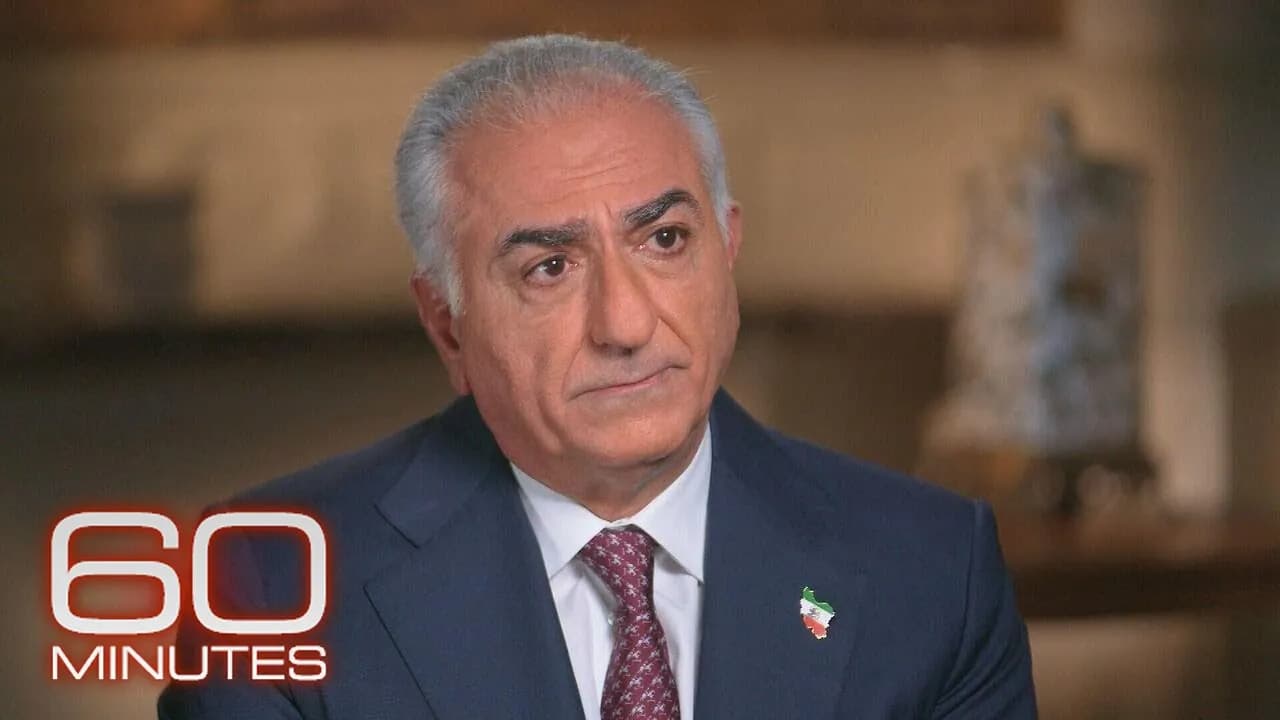
One day after Operation Epic Fury killed Supreme Leader Ayatollah Khamenei, Scott Pelley interviewed Reza Pahlavi, Iran's crown prince and son of last shah, in Paris.
US and Israel conducted second day of strikes on Iran targets. Iran retaliated with missile attacks on Israel, neighbors, US bases; 3 American service members killed.
Pahlavi, 65, son of shah deposed in 1979. Was 18, training as fighter pilot in Labeck Texas. Lived in exile 47 years, mostly US.
On Khamenei's death:
It is definitely a sort of earthshattering event... when people identify the entire monstrosity of a regime... depicted ultimately by the chief monster... it's like elation... maybe this is it, this is our chance now.
Ever since this regime has taken over, how many Iranians lives have been lost... such level of atrocity... all because of Ali Khamenei's insistence... I don't know how else can you depict it other than being true monsters.
January protests: Pahlavi urged on, regime gunned down estimated 20,000 citizens.
Video of celebrations in Isfahan after death announcement means people ready to return to streets for liberation.
We were prepared to fight the fight... too much blood between us and this regime... committed to fight regardless of outside intervention. They're thanking President Trump for standing on his word.
Believes regime could fall after almost 50 years.
Wants to lead transition to democracy, not be king or run for office.
They trust me as a transitional leader... let me bring the country to a point that they can make that free choice.
Imagines peace with Israel: Iran gave refuge to Jews escaping Nazis in WWII. Strategic partnership critical.
Four core principles for new Iran:
- Iran's territorial integrity
- Clear separation of religion from state
- Equality of all citizens under the law and individual liberties
- Democratic process to elect governance
Nuclear program should be totally dismantled; no need for military weaponizing.
Father Mohammad Reza Pahlavi close to US, suppressed opposition, lavish wealth. Left 1979 amid tension; Ayatollah Khomeini led revolution. US blamed, embassy overrun, 52 Americans hostage 444 days.
Your father's reign is remembered for repression and opulent wealth. Why would people welcome you?
When you look at a lot of people... they recognize where we were and where we are now... People were killed in your father's regime. My father left Iran voluntarily to avoid bloodshed... A king doesn't build his throne on the blood of his own people.
If they thought that was an issue, I don't think they'll be calling my name by the millions on the streets of Iran... cannot associate me... to the revolution or this regime.
In touch with Trump administration and Congress.
My message to President Trump is... thank him for having the courage to intervene and he will go down... as the most celebrated foreign leader...
Trump in January: > "He seems very nice, but I don't know how he'd play within his own country... if they would, that would be fine with me."
Millions of Iranians... calling my name... uniquely placed... transitional leadership... bridge to that destiny.
Unrest building: Last June, US-Israel attacked Iran's nuclear facilities. 2022 uprising after 22-year-old killed in custody for hair covering; 500+ killed, 22,000 arrested, internet blackout.
When you see the courage on the streets... ultimate definition of heroism.
Units in military and police signaled they would turn on regime; amnesty possible in national reconciliation.
This is the time... Do you want to join this stand with the people or... the sinking ship?
To Iranian people:
Have faith in yourselves. You are a nation with an ancient civilization... instead of hoping, start believing that it can be done.
Free CBS News app on Paramount Plus or wherever you stream. I'm Adriana Diaz. Thank you so much for watching.
Keep 60 Minutes in your library
Save the videos and channels worth coming back to, and find them again in one place.