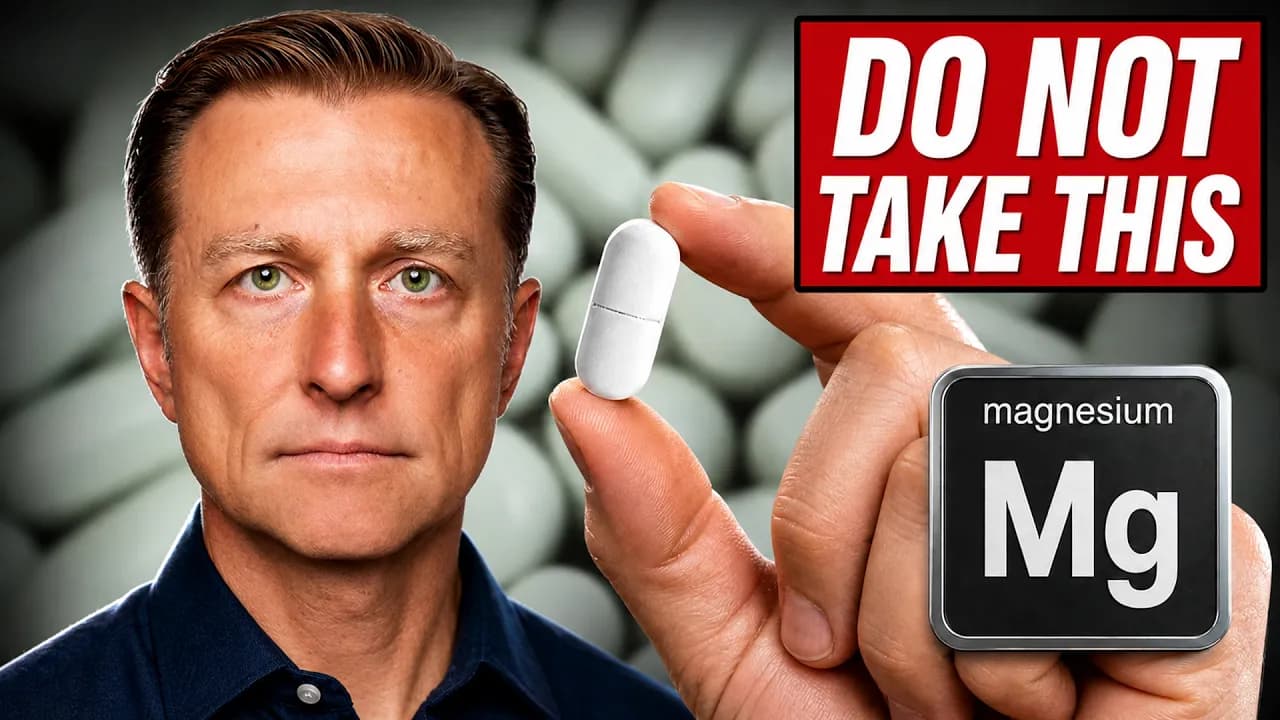
9 Warning Signs Your Body Is Begging for Magnesium
In a Nutshell
Magnesium deficiency is often missed since blood tests detect only 0.3% of stores, worsened by 300+ medications, stress, sugar, caffeine, alcohol, high insulin, low HCl, low salt, and low vitamin D. Nine key symptoms include sudden anxiety, waking at 2 a.m., eye twitching, heart pounding after eating, mental exhaustion, random chest tightness, carb cravings, wired-but-tired feeling, and heavy limbs from poor mitochondrial energy. Opt for highly absorbable magnesium glycinate (300-400 mg multiple times daily, post-dinner), pair with low-carb diet, betaine HCl if over 50, and vitamin D; avoid low-absorption oxide.
These notes were generated by AI and may contain inaccuracies.
Most magnesium is stored in bones and cells. Only one-third to 1% (0.3%) is in blood serum. Relying on blood levels to evaluate magnesium is a mistake, like judging wealth by wallet coins instead of bank account.
Over 300 medications deplete magnesium. Other depleters:
- Stress
- Sugar
- Caffeine
- Alcohol
- High insulin levels (from high carbs; insulin resistance prevents normal absorption)
- Low hydrochloric acid in stomach
- Low salt
- Low vitamin D
1. Anxiety
Sudden anxiety or panic attacks with no reason. Magnesium acts as brakes to stabilize the nervous system.
2. Waking Up at 2:00 a.m.
Related to high cortisol (from blood sugar issues or stress). Magnesium suppresses and controls cortisol.
3. Eye Twitching (Tetany)
Classic sign. Magnesium controls calcium; imbalance causes excess contraction. Calcium controls muscle contraction; magnesium controls relaxation. Prevents calcification in body, joints, arteries (linked to high blood pressure), heart attacks (calcium crystals in mitochondria), migraines, headaches, muscle spasms, tight muscles.
4. Heart Pounding After Eating
Magnesium relaxes heart. Heart medications mimic magnesium. Low magnesium stiffens arteries, raises blood pressure, leads to atrial fibrillation (requires long-term high-dose magnesium).
5. Feeling Exhausted from Thinking
Magnesium needed in mitochondria for energy production. Brain is 2% of body but uses 20% of energy.
6. Random Chest Tightness
Low magnesium prevents smooth muscle relaxation; excess calcium causes contraction and tightness in heart tissues.
7. Sugar or Carbohydrate Cravings
Magnesium reduces cravings.
8. Wired but Tired
Can't relax into deep sleep; nervous energy in brain and body. Related: restless leg syndrome (legs full of energy, need massage or jog).
9. Feeling Really Heavy
Legs heavy, like trudging through water. Mitochondria depend on magnesium for energy; low levels make movement effortful.
Worst: magnesium oxide (CVS drugstores; most research uses it). Only 3% absorbed; higher doses cause diarrhea.
Best: magnesium glycinate (80% absorbed + glycine aids GABA for calming, sleep). Crosses blood-brain barrier indirectly via gut and tissues.
Best time: Later in day, after dinner (pills or powder mixed in water; warmer water dissolves fully).
Dosing: Over 400 mg at once excretes in urine. For therapeutic benefits (e.g., atrial fibrillation, osteoporosis): 300-400 mg several times daily.
Helpers:
- Low-carb diet to fix insulin resistance for better absorption.
- Over 50-60? Low HCl (symptoms: indigestion, heartburn, GERD). Take betaine hydrochloride to improve stomach acid and mineral absorption.
- Vitamin D needed to absorb magnesium; magnesium needed to absorb vitamin D (most deficient in vitamin D).
- Limit caffeine (one small morning coffee max).
Check related video on types of magnesium.
Keep Dr. Eric Berg DC in your library
Save the videos and channels worth coming back to, and find them again in one place.