Anthropic Files $965B IPO, Trump Signs AI Executive Order, and ChatGPT Crosses 1B Users | EP #262
In a Nutshell
Anthropic confidentially filed for a potential $1.8T IPO, OpenAI hit 1B monthly users, and President Trump signed an executive order rejecting heavy AI regulation while directing labs to share new models with the government 30 days before release. The discussion highlights how frontier labs are carving out specialized biodefense and cybersecurity models for government use, while pushing robotics, epigenetic reprogramming, and sovereign wealth fund proposals to manage AI's societal impact. Key themes include unprecedented revenue-per-employee metrics, the shift from human to agent-scale distribution, and the tension between self-regulation and the need for DNA synthesis screening to prevent bioterrorism.
These notes were generated by AI and may contain inaccuracies.
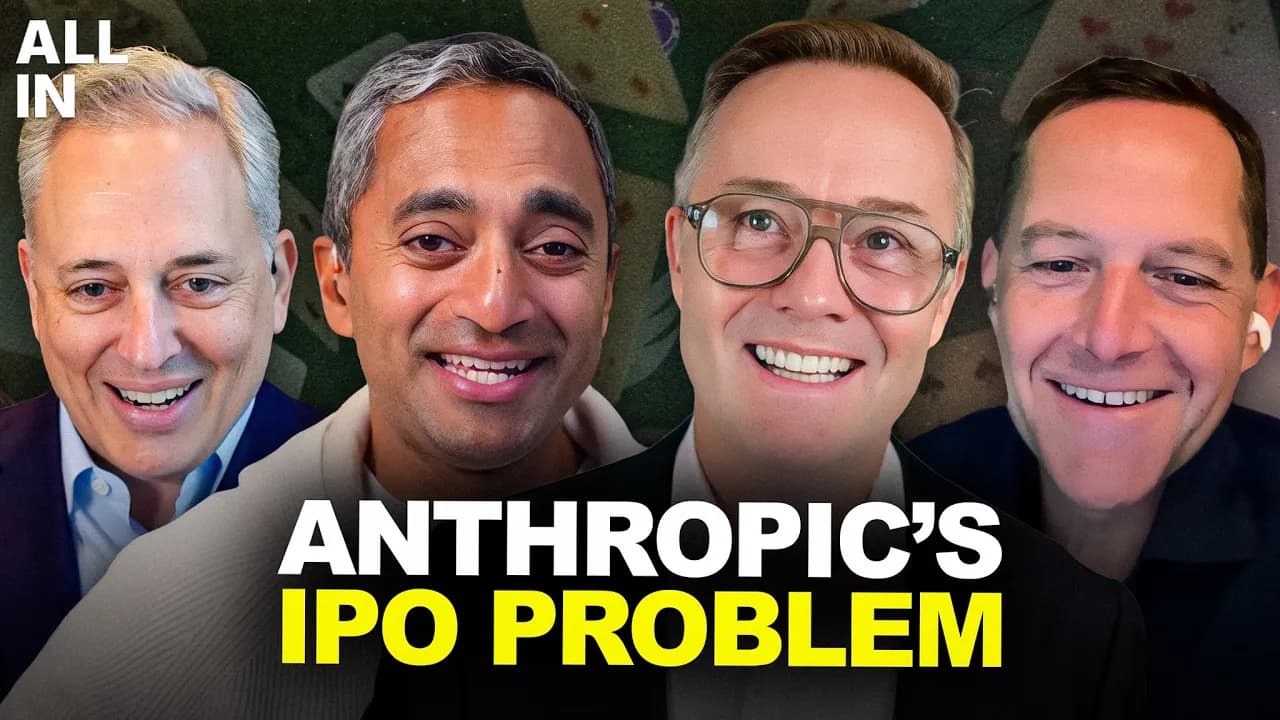
Anthropic confidentially filed IPO paperwork with the SEC and could be the first major frontier lab to go public. Polymarket gives it a 60% chance that Anthropic surpasses $1.8 trillion in market cap on its first day. The company has only 5,000 people, representing an insane amount of money divided 5,000 ways. This group of companies can do thousands of billion-dollar acquisitions. Revenue growth in this sector is unprecedented.
President Trump signed an executive order stating America is not going to slow down on AI. The US is planting its flag and saying it will compete rather than constrain. The US government realized a year or two ago that AI is key to full spectrum dominance. OpenAI passed a billion monthly active users, with nothing in history scaling this fast. Intelligence is going to go to every single person and will be accessible to them.
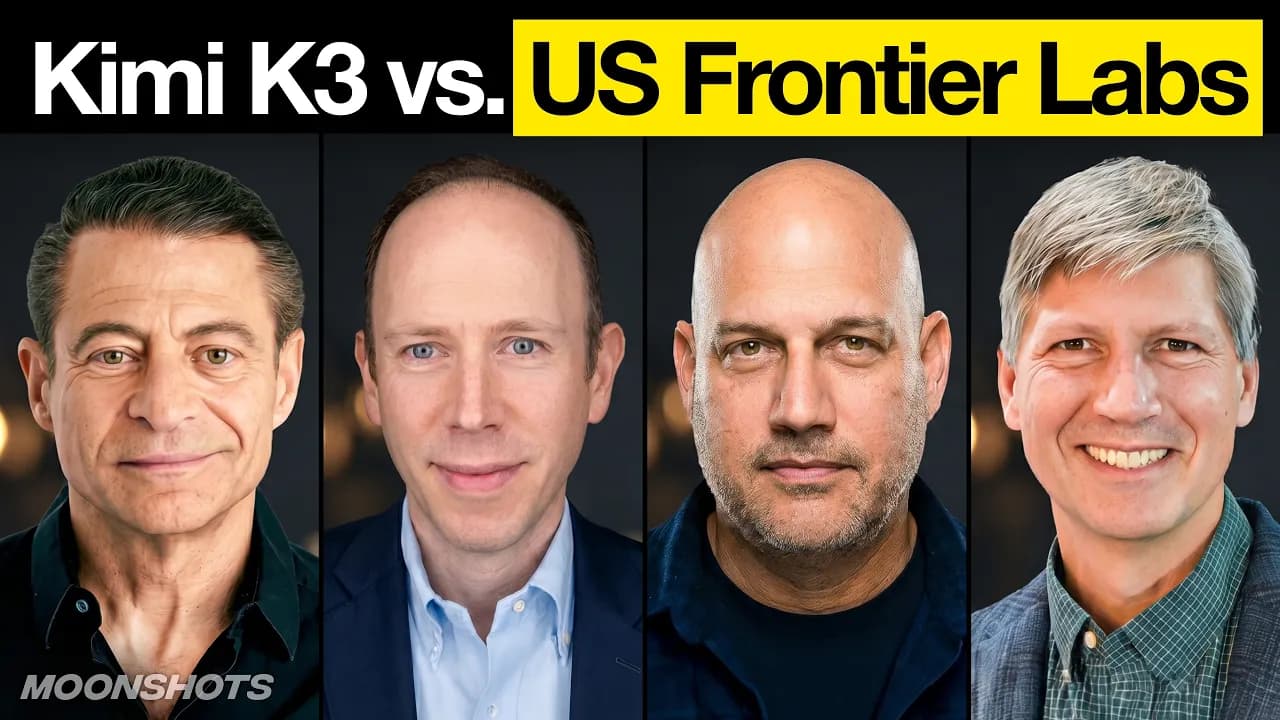
This episode of WTF Just Happening Tech on the Moonshots features host Peter D. Mandis with DB2 (the wizard of investment), AWG (Alex the in-house polymath), and Immad Wak (founder CEO of Intelligent Internet). Salem Ismael is absent. The show covers 18+ stories on AI, longevity, and the future of work, focusing on science, technology, and money accelerating toward the singularity.
Key topics include: Trump signing an AI executive order rejecting heavy regulation and asking labs to voluntarily share models 30 days before release; ChatGPT hitting 1 billion monthly active users; Anthropic filing for its S-1 with a trillion-dollar-plus IPO; and Bernie Sanders suggesting the public should own 50% of AI companies through a sovereign wealth fund. The episode closes with three multi-billion dollar longevity news stories.
President Trump signed an executive order stating America will not slow down on AI. There are no heavy-handed regulations or permission-based frameworks. The order asks AI labs to voluntarily give government access to new models 30 days before public release. Sam Altman said the new EO gets the balance right. Anthropic stated they are on board. Agencies are directed to deploy AI-powered cyber defense across government systems. This represents the US saying "we compete, we don't constrain."
This is a signpost that governmental functions like discovering zero days at scale, historically performed by the NSA, are now de facto privatized. The Mythos moment was inspiration for this executive order. Core R&D activities discovering breakthrough cyber vulnerabilities have been commodified to the point where there is a model and probably GPT-5.5 with Mythos widely reported to be about to be broadly released. Mythos has become more accessible across the EU and within the US to the private sector.
A thought experiment asks what the right way is for the executive to respond when there are private sector capabilities with dramatic national security implications. Cyber vulnerabilities are just what's possible now. In the future, breakthrough biological, chemical, physical, and other discoveries from private sector models (not government laboratories) will require policy decisions to protect national security. A delicate balance exists between not throttling American innovation (a 90-day delay could mean all the difference between US and Chinese models) and not being involved enough in pre-release review capabilities.
Three weeks prior, Trump was about to sign an order but received calls from David Sacks, Elon, and many lab heads saying it was overreaching. The old order looked more like Europe. The UK has been much more prescriptive about policies. The US government realized a year or two ago that AI is key to full spectrum dominance—a military concept requiring superiority across air, land, sea, and intelligence. The Mythos moment led to requiring 30 days at minimum, which is a very short period given how fast government works. Europe lacks the same impetus because it has never had full spectrum dominance and feels compliance is the key.
The order is voluntary, raising questions about whether it is purely a political show move allowing labs to continue business as normal. DB2 was on a call with the biggest asset manager in the world asking how their AI would give financial advice without breaking the law. The response was to talk to Donald Trump. Sam and Dario said the regulation was onerous and would slow them down, met with the White House, and the regulation was watered down. This allows self-regulation for a window of time with a meeting scheduled in three months. Lip Bhutan was told to go and was later made hundreds of millions of dollars after a White House meeting.
Self-regulation is not a bad thing in the current environment. As a way to govern a country long-term, it is not good, but in the moment, other regulation would have slowed progress tremendously. The temporary choice was right but does not solve anything in the long run. OpenAI passed a billion monthly active users. ChatGPT launched in November 2022, and roughly three years later it is used by over a billion people. YouTube took a decade to reach a billion users, Instagram took 8 years, TikTok took 5 years. ChatGPT reached it in three years.
Year-over-year growth is at 62% and holding for OpenAI. Claude (Anthropic's model) is now at 56 million monthly active users and is growing at 10 times the rate—640% year-over-year. The entire category is growing rapidly. Claude is like Apple and OpenAI is like Microsoft. There are 7 billion people that do not use these tools. It is difficult to use in China because access is restricted. Intelligence is going to go to every single person. Sam Altman has said the price of equivalent intelligence will drop by 100 times over the next 18 months. The 62% growth rate will increase, especially as companies hit IPOs and focus on customer acquisition. This growth happened without massive advertising campaigns or classical user acquisition metrics—almost all of it was organic.
Sam Altman said if he had a choice between a billion monthly active users and the strongest model, he would pick the billion monthly active users. Distribution ultimately is a stronger mode and differentiation than having the strongest model weights. For a period, GPT and OpenAI had the largest user base but not the strongest model. GPT-5.5 is now the strongest model and has the broadest distribution. This represents an amazing comeback for OpenAI—they have both the best distribution and the strongest model. Public market caps will soon allow comparison via stock prices rather than debate. There will be some product somewhere that grows faster than ChatGPT, probably distributed through agents around the world.
The time until measuring time to first billion agents using AI (not first billion humans) is approaching. The most important agent is the agent next to you coordinating all other agents, where the cost of user acquisition will shoot through the roof. The question is whether your Jarvis will be the super app from ChatGPT, Claude, or another model. That is the only game in town.
OpenAI launched Rosalind Biodefense, named after Rosalind Franklin, a British chemist who helped discover the structure of the double helix. Rosalind Biodefense gives trusted researchers in government public health agencies access to specialized AI tools for detecting outbreaks, improving disease surveillance, and accelerating vaccine development. Richard Johnson, OpenAI's national security risk mitigation lead, is running it. This represents AI's move from chatbots to biodefense infrastructure. These moves in healthcare, education, and biodefense give labs defense against people slowing them down.
The generality of AGI is starting to shrink for security reasons. Bio capabilities that would otherwise be built into general models like the GPT series are being carved out as separate fine-tuned/post-trained models only available to exclusive audiences like government agencies and trusted researchers. The same is happening with the cyber version of Mythos from OpenAI—the GPT cyber series. Advanced capabilities with security implications are not built into or exposed from the main series model available to the general public, but rather carved out into more secure, limited models available only to government agencies and trusted users. This represents the closing off of generality of intelligence in the name of security.
The same technology enabling OpenAI to deliver Rosalind Biodefense is the technology terrorists can use to develop new viruses for biowarfare. It is unclear whether OpenAI de-guarded the existing Mythos model for this or trained a new set of parameters specific to biology. The understanding is a combination of scaffolding, unshackling, post-training, and use of tools not necessarily baked in at the back end. Default tools for ChatGPT are usually code interpreter and web search. Rosalind includes other databases and tools. An unshackling at the scaffolding layer allows questions about smallpox and other subjects that would be completely guardrailed out for the general public.
In 2020-2021, Immad launched the Stanford High AI initiative to organize co-knowledge and preparedness, but big labs would not give AI because they said it was too dangerous. This is why Immad got into open source. Rosalind is an unshackled grounded version that can analyze knowledge at scale. Base models are more creative, but for preparedness they cannot analyze huge amounts of knowledge and data for detecting outbreaks and improving resilience. More biodefense tools from threat actors are expected, and the next big pandemic is probably only a few years away. Labs should invest in biodefense to befriend the public.
Peter co-signed an open letter to Congress alongside Sam Altman, Dario, Demis, and Mustafa saying laws are needed requiring DNA synthesis companies to screen orders. Today anyone can go online and order custom synthetic DNA sequences. Dozens of companies will print whatever code is sent. Most screen customers, but many do not. In 2017, a Canadian researcher spent about $100,000 on mail-ordered DNA and reconstructed an extinct horsepox virus. The same method could theoretically create smallpox. Large language models layered on top enable significant damage. Olivia Sharfman at the Institute for Progress and the Foundation of American Innovation put this forward. A bipartisan Senate bill is already in play. This is a rare moment where the industry is saying "please regulate us." Bioterrorism is probably top of the list for potential global emergencies from AI.
A future is possible where sensors in train stations, airports, bus stations, and malls constantly sequence everything through air filtration systems, looking for novel sequences. If detected, it sequences and sends to the CDC, then a vaccine program starts instantly. Viruses and pandemics can only move at the speed of airplanes, but information can move at the speed of light. This can be stopped if fast enough and with enough intelligence. DNA synthesis gatekeeping is both inevitable and inadequate. This is part of a broader set of initiatives to gatekeep the interaction between superintelligence and the physical world.
California and other municipalities are trying to regulate what can be 3D printed out of concern people will 3D print weapons, guns in particular. A lively debate has started about the right choke point for AI safety: after the fact (holding labs or users responsible), at the time of action (when intelligence tries to do something in the physical world via DNA synthesis, protein synthesis, or printing a weapon), or at the time of conception. Different countries will choose different combinations of each stage of the thought-to-action pipeline. Frontier labs will insist on using their models like Rosalind to determine whether sequences are dangerous, rather than naive pattern matching or base pair matching.
Intelligence forward-deployed to the time of synthesis with frontier intelligence is probably inevitable in the US. Previous examples include Treasury requiring photocopy machines to print yellow dots to prevent photocopying the $100 bill. Companies like Twist Biosciences already screen what they are synthesizing and have been lobbying for this. Screening costs money, and if only responsible players do it, they competitively disadvantage themselves. This requires legislation and pressure. It makes no sense not to have this in place. It is also not super hard to capture at the point of prompt and reasoning trace—if someone is trying to build a bioweapon, chemical weapon, or nuclear weapon, there must be a lot of interaction with the AI, and it is not super hard for the AI to capture and turn over that reasoning trace.
Running advanced AI models for protein folding on local hardware like a Mac Studio is not feasible. Even if possible, global bans would likely be required due to biosecurity concerns. On-premise models can be run locally using open source versions like OpenFold, the open source counterpart to AlphaFold, along with models such as ESM. Running prompts on edge devices by adapting existing models is technically possible but difficult to prevent entirely.
The real biosecurity threat does not stem from local inference but from synthesis capabilities. The public sector accounts for roughly 20% of global GDP yet uses only about 0.01% of the world's tokens. Governments should subsidize tokens to analyze every sequence submitted to sequencers as a public good. Intelligence threats and opportunities are increasing rapidly, requiring governments to scale public sector compute to mitigate risks and capture opportunities.
A proposed prize competition would solicit ideas for how governments can deploy their 20% share of economic activity through AI processes that stop specific threats at defined intervention points. The goal is to generate dozens of concrete XPRIZE challenges for the global community to solve.
An additional major gap exists around directed evolution of environmental DNA already present in the biosphere. Addressing AI-enhanced or non-AI bioweapons requires sequencing environmental DNA from all locations, not just the biosphere, to establish baselines and detect deviations from normal patterns.
Modeling these scenarios produces alarming results quickly, indicating protective measures must be implemented immediately rather than after a disaster. A global pandemic far worse than COVID cannot be addressed reactively.
Peter Diamandis, the only signer of the referenced document with a biology PhD who also understands AI deeply, is positioned to advance these biosecurity discussions while other signers focus on trillion-dollar IPOs.
Sam Altman announced OpenAI is building an in-house robotics team focused on robots that support skilled workers in building future infrastructure and creating personal robots for individual use. This follows patterns seen with Elon Musk's initiatives. The move signals frontier labs shifting toward embodied AI.
The innermost loop involves robots constructing data centers and fabs that produce chips hosting models powered by energy, extending to lunar and orbital environments including disassembling the moon for a Dyson swarm. Stargate, Sam Altman's data center initiative, has shifted toward leasing rather than building facilities. OpenAI robotics may support construction or maintenance of third-party data centers.
Humanoid robots represent the highest-productivity application for building orbital infrastructure and terrestrial compute before domestic robots become widely available.
Aditya Ramesh, who previously led the Sora team, now leads OpenAI's robotics effort, moving the entire video research team into embodied robotics. The physical robotics market exceeds the GPU market in scale and features significantly longer depreciation schedules. GPUs depreciate rapidly while robots reaching sufficient capability levels maintain long operational lives and high profitability when developed as full-stack systems.
Sam Altman and Dave are aligned on robotics as a strong 10-year investment theme alongside self-improving software. Young people considering post-AGI careers should target roles at OpenAI robotics, following the path of early software engineers who became billionaires across multiple companies. Controlling compute remains central, with robotic construction of data centers forming one component alongside custom AI chip development.
Anthropic filed confidential IPO paperwork with the SEC, potentially becoming the first major frontier lab to go public ahead of OpenAI. SpaceX currently trades at approximately $77 trillion. Polymarket assigns a 60% probability that Anthropic reaches a $1.8 trillion market cap on its first trading day, matching SpaceX's anticipated valuation. Anthropic employs roughly 5,000 people.
These labs will generate massive capital for acquisitions and ecosystem investments, with capacity for thousands of billion-dollar acquisitions. Going public forces greater disclosure, which aligns with Anthropic's safety-conscious positioning. Retail investors have historically been excluded from early equity in these companies.
Anthropic's current revenue is estimated at $50-60 billion, implying a valuation around 20x revenue. This multiple appears high but remains below historical comparables like Palantir. Next-year revenue projections of $100-150 billion would not surprise observers given the utility of the technology.
Sam Bankman-Fried's $500 million investment in Anthropic's Series E will see returns reinvested into the broader AI ecosystem, contributing to widespread billionaire creation in Silicon Valley.
Time required to reach $1 trillion valuation:
- Apple: 42 years
- Google: 21 years
- SpaceX: 24 years
- OpenAI: approximately 10 years
- Anthropic: roughly 5 years
Revenue per employee comparisons:
- Anthropic: $9.4 million per employee (approximately 5,000 employees)
- Apple: $2.5 million per employee
- Google: $2.1 million per employee
Anthropic generates nearly four times the revenue per person compared to prior leading technology companies. The first one-person unicorn has already been achieved. A one-person centacorn or teracorn is projected within the next 10 years.
Measuring revenue per agent faces challenges because agent boundaries may dissolve into end-to-end differentiable teams, making it unclear whether systems represent multiple agents or single team-level agents. The AI economy is becoming self-funding. Post-IPO capital can flow directly between AI entities without requiring legacy economy participation. A $100 billion commitment from one AI company to another creates cash flow entirely within the agent economy, independent of traditional institutions like banks or Main Street businesses.
Seed-stage valuations remain relatively stable because founders prioritize ecosystem access over maximizing initial valuations. Subsequent valuation escalations occur on extremely compressed timelines, with some companies moving from idea to billion-dollar valuation in under one year. This acceleration is unique to the AI era and expected to persist. The number of solopreneurs doubled in the most recent quarter.
Microsoft released seven in-house AI models spanning reasoning, coding, image generation, video, and transcription. All models were trained from scratch without distillation from OpenAI or reliance on external weights. Mustafa Suleyman stated that AI training compute has increased one trillionfold, with another thousandfold increase expected over the next three years.
A fine-tuned model for Excel matches GPT-5.4 performance while being 10 times more efficient. Microsoft announced a collaboration with Mayo Clinic to develop a frontier AI model for healthcare.
Microsoft is attempting to rebuild independent AI capabilities following a period of heavy reliance on OpenAI. Historically, Microsoft developed its own foundation models before partnering with OpenAI for distribution access and channel benefits. The relationship formed before OpenAI's models demonstrated clear paths to general intelligence.
Microsoft now faces compute and talent constraints relative to its ambitions. The newly released models are mid-tier, competitive with models Anthropic and OpenAI released months earlier but not current frontier systems. Microsoft operates at the level of a strong Chinese lab but lacks the resources to match the thousandfold compute increases required for continued frontier progress toward AGI.
Microsoft lacks the aggressive will to win in the current AI talent wars. Mark Zuckerberg successfully recruited talent from OpenAI by offering Mark Chen a billion-dollar compensation package, which Chen declined. The discussion emphasizes that Bill Gates historically would have found a way to secure top AI researchers, whereas current Microsoft leadership has not matched this competitive intensity. The company has momentum issues and is not doing what is necessary to attract the five or ten cannot-miss AI researchers needed to build a true frontier model alongside Mustafa Suleyman.
Fountain Life's member database reveals that 3.3% of individuals who consider themselves healthy have undetected cancer in their bodies. Most cancers detected through conventional screening are not the ones that prove fatal when found late. Early detection significantly improves cure rates and treatment ease. Members undergo full body MRI and early cancer detection screening, tools not typically used in conventional care settings. These advanced screenings are not yet covered by insurance, and the organization aims to collect data, conduct research, and democratize wellness access.
People typically do not feel cancer symptoms until stage three or stage four. The service allows members to detect issues at stage one when cancer is curable, rather than reaching later stages.
The New York Times analyzed 602 goals Elon Musk stated publicly over 15 years and reported he met only 19% of them. In 2015 alone, Musk achieved 75% of his stated goals on time. The companies he leads include Tesla as the most valuable car company, SpaceX as the dominant launch provider, Neuralink working on brain-computer interfaces with human trials underway, and xAI as a frontier AI lab and hyperscaler. Musk's personal wealth is measured in trillions.
The panel criticizes the framing as ideologically motivated and notes that Musk is directionally correct even when timing slips. The media creates controversy to drive readership because of limited budgets. Starship test flights are often framed as failures when explosions occur, missing the point that these are experimental iterations.
Approximately 10% of companies generate 90% of all venture capital returns. This distribution pattern explains why breakthrough achievements require willingness to take substantial chances. Microsoft's culture discourages risk-taking, which prevents breakthroughs and leads to repetition of existing patterns. The most misleading aspect of the New York Times article is the implication that investors are dissatisfied with Musk-led companies. Antonio Gracias stated he would invest a billion dollars if Musk invented a new urinal because everything he does works.
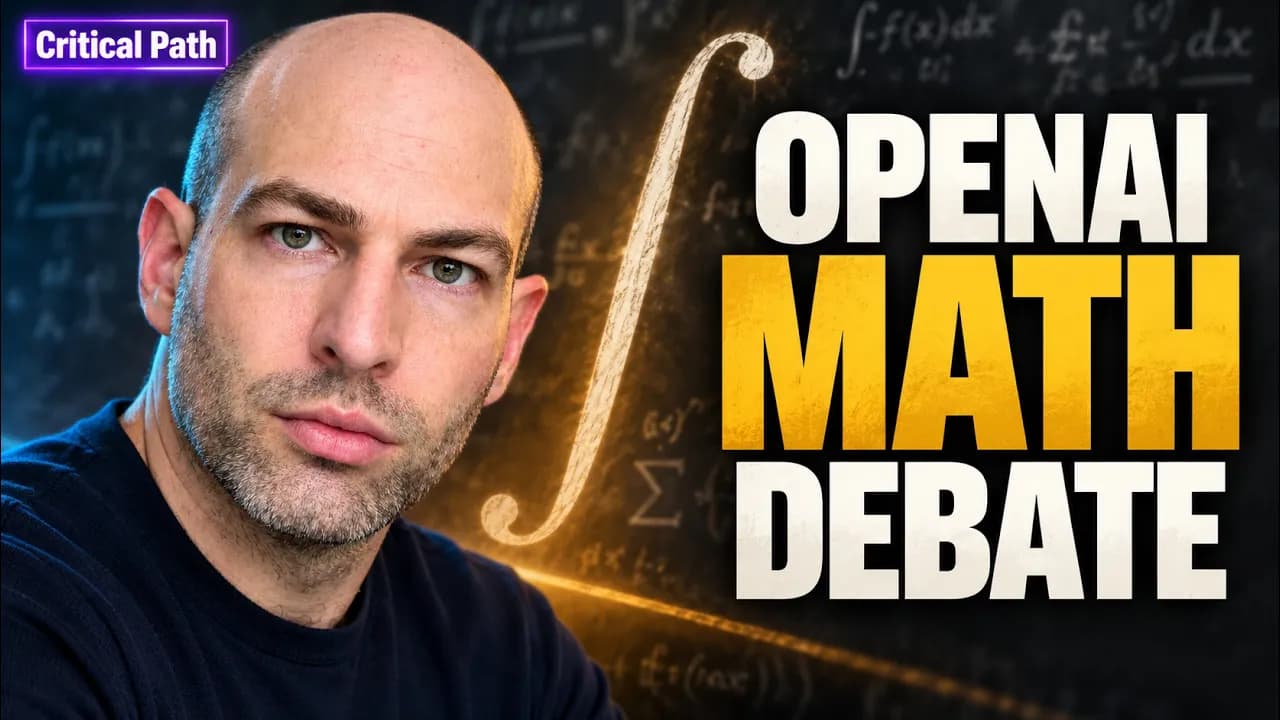
More than 130 mathematicians signed the Leiden Declaration, supported by the International Mathematical Union. The declaration warns that AI-generated mathematical proofs can appear convincing while containing subtle, hard-to-detect errors. Signatories also express concern that AI companies could influence which mathematical problems receive study and funding, potentially steering pure mathematics based on commercial priorities.
The panel views the declaration as a rear-guard action following OpenAI's solution to the Eldish conjecture regarding planar unit distances. The mathematicians are characterized as fighting for relevance and attempting to maintain their position in the field. AI is described as having already transformed mathematics, and declarations expressing fear, uncertainty, and doubt are considered on the wrong side of history.
Classical mathematicians like Paul Erdős demonstrated exceptional breadth across multiple areas. Contemporary academic structures force extreme specialization, limiting researchers' ability to see connections across domains. The Eldish conjecture solution demonstrated AI pulling from multiple different areas simultaneously.
Truly original and daring mathematical approaches are not rewarded with tenure or PhDs. Grigori Perelman's solution to the Poincaré conjecture by reframing it as a partial differential equation problem rather than topology would be frowned upon in standard academic settings. The declaration correctly identifies that models can produce convincing but incorrect results when operating at the edges of mathematical knowledge, a phenomenon described as AI confabulation and overconfidence rather than classical psychosis.
The American Federation of Teachers, representing 1.8 million educators, released a 10-point plan for AI in schools. Key provisions include no screens for pre-K through second grade, AI safety and privacy protections for K-12, limits on AI use to preserve teacher responsibility for instruction and assessment, and a proposed tech tax on big tech companies. AFT President Randy Weingarten is leading the initiative.
The panel argues that teacher unions should instead require AI literacy among all teachers. Proposing new taxes is criticized as the default solution that avoids addressing underlying problems directly. The response to technological change follows a pattern of first ignoring, then laughing at, then fighting progress before eventual acceptance.
Math Academy represents one of the most effective AI-enhanced tutoring platforms. The system uses AI to coordinate different learning tasks while incorporating the science of adaptive learning. The associated book, The Math Academy Way, compiles scientific research on adaptive learning. Eight-year-olds have completed entire high school mathematics curricula through the platform using engaging methods.
A survey targeting high school students, college students, parents of students, and teachers is collecting data on how the educational system prepares individuals for the future, levels of frustration and satisfaction, and desired improvements. Early results are described as extraordinary. The survey is available at moonshots.com/survey, with particular encouragement for Bay Area and San Francisco respondents.
Senator Bernie Sanders introduced the American AI Sovereign Wealth Fund Act, which would require OpenAI, Anthropic, and other major AI companies to contribute 50% of their stock to a public wealth fund. The proposal aims to give every American an ownership stake in the AI revolution. While a 50% equity stake is considered politically non-viable, the Overton window is shifting toward normalizing public claims on AI-generated value. A more realistic scenario might involve 5-10% stakes structured as conditions for operating on US soil and using US data and energy.
Sanders stated the legislation would give the American people a direct role in determining AI's future rather than allowing a handful of big tech oligarchs to dictate outcomes. The proposal would guarantee that trillions potentially created by AI improve lives broadly rather than concentrating wealth further. Sanders noted that OpenAI has proposed a public wealth fund, Anthropic has proposed national sovereign wealth funds with stakes in AI, and Elon Musk has advocated direct federal payments as a response to AI-driven unemployment.
The proposal is characterized as fundamentally flawed because equity stakes require liquidation to generate cash for distribution. Dumping trillions of dollars in stock would lack sufficient market liquidity and would tank the economy. Any administration facing budget shortfalls would be incentivized to sell the stock rather than raise taxes, meaning citizens would effectively own the stock for only one election cycle.
The discussion acknowledges that frontier labs have invited such proposals by exploring UBI and UBE mechanisms through their foundations. A sovereign wealth fund concept is not inherently problematic and could be beneficial for the United States. The current administration has taken 10% stakes in Intel and golden share equivalents in other companies as potential foundations for a sovereign wealth fund, following an executive order directing the Treasury Secretary to explore creating one.
A 50% equity stake would make AI companies too big to fail, as the government could not allow them to collapse. This would entrench them as the biggest political powers globally. The controller of the sovereign wealth fund would hold even greater power. An alternative proposal suggests placing Anthropic and OpenAI shares into Invest America funds for every child in America.
The principle articulated is that when a public resource generates wealth, the public should share in that wealth, with AI being built on public resources more valuable than oil. The timing of such claims is questioned, noting that the train left the station with the privatization of NSFNET and conversion from ARPANET. Pre-training tokens now come from both Americans and non-Americans, and frontier capabilities are increasingly driven by synthetic data advances rather than solely human-generated pre-training tokens.
Discussion on future government responses to AI token usage. Every single government is expected to introduce a token license, with taxation based on GDP val considered the most sensible approach.
Washington Post outlined five policy approaches for dealing with AI's impact on employment:
- Tax the robots
- Cushion the blow with stronger unemployment insurance
- Make workers AI proof through retraining and upskilling
- Spread the AI wealth through dividends and public ownership
- Do nothing and wait
Every option except "do nothing" assumes AI will be displacing significant numbers of workers.
Torsten Sllock, chief economist at Apollo Global Management, stated AI is a net job creator. Companies are citing AI to justify cuts they're making, but actual employment data shows jobs are not being displaced yet. The data and narrative are diverging.
Cognizant CEO Ravi Kumar is hiring 20,000 graduates this year alone. The job market situation is murky, with some voices predicting job apocalypse while others like Sam and Daario have reversed their position. Senator Sanders depends on doom and gloom narratives to advance policy action.
Dave sees the situation as incredibly optimistic. Sean Taylor, CEO of healthcare.com, discovered that people who understand the health insurance industry can write code and build products without an engineer. Employment across their network of companies is up 2x, not down. The ability for people who previously were not builders to now become builders is far bigger than any job loss through automation. The expansion of contributing people extends beyond core technologists to anyone who understands any business, creating a broader pool of talent than ever before.
Iman notes that competent intelligence has only just been achieved. Job losses aren't visible yet, but hiring pauses are starting to appear in the data. AIs and robots will be incredibly competent next year. Policy discussions are preparing for that future. The desired future includes robots doing everything while humans explore the universe, engage in arts and culture, with no hunger or disease.
Alex describes the discussion as turning into a moral panic episode. The long-term outcome is not AI destroying jobs. Super intelligence positions humanity to solve truly hard problems. Hand-wringing about jobs going away focuses on work that probably humans shouldn't have been doing anyway. The goal is a civilization where people solve the most interesting, hard, and valuable challenges and do what they love.
Early entry jobs are experiencing a pause on hiring rather than outright job loss. The push is toward entrepreneurship - if you can't get a job, build a job for yourself. In companies, long-tenured employees at mature companies are builders and thriving, while people coming out of college can't find jobs and are becoming entrepreneurs.
Nvidia is launching its first ARM-based PC processor, the N1 and N1X. The N1X features 20 CPU cores and 6,144 CUDA cores, putting its GPU performance on par with the RTX 5070 in a laptop chip. This represents a direct challenge to Apple, Intel, and AMD. Nvidia has owned the discrete GPU market and now wants the whole processor.
Alex is surprised by Nvidia's timing. He probably won't use it because Apple is unlikely to adopt it and he's mainly in the Apple ecosystem for laptops. Nvidia is 8 to 10 times Intel's value. Nvidia tried unsuccessfully to acquire ARM. The timing may connect to the Vera CPU portion of Vera Rubin CPU plus GPU.
The laptop industry is tiny compared to smartphone and data center industries. The strategic value lies in laptops as a leading indicator to the whole OS becoming AI-oriented. Microsoft is moving to an AI-oriented Windows, and laptops become the test bed for consumers interacting purely through AI. Nvidia would gain first direct-to-consumer contact and gather consumer data for the first time, positioning them when AI disrupts Apple.
Nvidia is now the majority of transistors coming out of TSMC at their bleeding edge node, no longer Apple. Nvidia has the pipe into frontier node semiconductor production. Laptop vendors wanting access to frontier nodes may get it from Nvidia. Intel used to be an ARM licensee but gave it up. Nvidia may now be the best way to ensure bleeding edge nodes for laptops.
Nvidia and Apple collide at TSMC, both fighting for capacity. Years ago, Apple allegedly pissed off Jensen by not using Nvidia GPUs in Macs, practically destroying Nvidia. There may be legacy bad blood affecting this decision.
Nvidia's move blocks AMD's integrated 128 GB chip play. The strategy involves Jarvis - intelligence throughout the home, upgrading homes with edge intelligence. The RTX 5070 is good enough, fast enough, and cheap enough to run a three billion active parameter model. Liquid AI's A1B model has a billion active parameters and runs super fast. Nvidia has gone aggressively into open source with Cosmos and Neatron alliances, providing the intelligent substrate and selling chips to the edge to block AMD and own Jarvis at home.
Satya Nadella addressed data center water concerns. With changes to the cooling system, the cooling loop is filled once and the data center operates with zero water consumption. Daily water usage over an entire year equals what a single restaurant would use.
Almond farming uses 1.3 trillion gallons per year compared to all US data centers using 150 billion gallons per year. Water was never a problem for data centers.
Data centers don't pollute, don't destroy local economies, and don't cause neighborhood traffic. They provide employment and tax base benefits. In the future, hyperscalers will deliver lower cost energy to neighborhoods, with deals offering free electricity for citizens in exchange for building data centers.
The water concern originated from Karen Hao in Emperor of AI accidentally putting a thousand times the water usage. The reality matches almonds or US golf courses - not a big deal, but fear causes people to attach to anything because they don't feel in control.
The default outcome is data centers moving to sun-synchronous orbit where water usage complaints aren't credible. If they stay on Earth, Microsoft and Google should colocate data centers with water production and distillation facilities to own the narrative.
Trust in media has hit an all-time low at 19%. One in five people trust what they watch on the news. AI-driven fake news and narratives will make this more challenging.
At the Washington Post during their crisis, writers wanted to tell the truth and do investigative journalism, but managers had no choice but to generate fluff to generate audience due to lost internet revenue. This created a death spiral where writers get frustrated and quit or get fired for spending too much on real stories. Peak trust in media was about 80% in the mid-70s with a straight line decline to 19% today, projected to hit zero by 2030.
Trust is built by helping people. Media is not helping people. AI should be used to build transparent, trustworthy news sources using open models, open reasoning traces, and allowing people to contribute. A massive space exists for trusted news and opinions with trusted reporters. A neolab for trusted news would be valuable.
Russia committed $26 billion to anti-aging research after making longevity a national priority. Targets include 3D printed human tissues, transplantable organs, and epigenic reprogramming by 2030. The goal is to save 175,000 lives by end of this decade. This aligns with the $101 million HealthSpan X-P prize and Ray Kurzweil's longevity escape velocity by 2033.
In the United States, average lifespan is 79 while average health span is 63, meaning the last 16 years are spent in pain and suffering. Making people healthier would save the budget through increased productivity. The goal is maintaining 40-year-old aesthetics, cognition, and mobility at age 80, driving GDP growth.
An alternative history where Russia pivots its entire GDP to longevity instead of invading Ukraine would establish Russia as the world's leading longevity outlet rather than killing people and wasting money. If you're the absolute ruler of a country in your 60s or 70s wanting to continue as president forever, longevity investment makes strategic sense.
Brian Armstrong, CEO of Coinbase, co-founded New Limit with Blake Briars. The company just raised $435 million at a $3.1 billion valuation. They're developing epigenetic reprogramming therapies to reverse cellular aging, with human clinical studies targeted for next year. First indication is alcohol-related liver disease. Aging cannot be used as an FDA target - existing diseases must be selected.
Sam Altman is backing Retro, Jeff Bezos and Yuri Milner are with Altos Labs. The $101 million Healthspan X-P prize aims to reverse functional aging by 20 years.
Everyone has an epigenetic reprogramming startup, usually AI-based or AI-guided. Multiple startups tackle epigenetic programming from different angles. The question is whether focusing on particular organs or tissues is optimal versus systemic exposure through GLP1 derivatives for achieving longevity escape velocity.
An abundance longevity trip runs every year in October at abundance360.com/longevity. Top epigenetic reprogramming companies, Frontier Labs, and the X-P prize will participate. $157 million was raised for the prize with Dave on the board. The goal is a therapy delivered in under a year that reverses functional losses in cognition, immune, and muscle - giving immune system, muscle building ability, and cognitive capabilities of someone 20 years younger. 830 teams have entered with a winner expected by 2030.
Deisi Abis stated he plans to cure all disease within the next decade, with the timeline now estimated at nine years. Dario Amodei indicated that at current rates of AI systems and biology growth, human lifespan could double within 5-10 years. This raises the question of whether individuals are saving enough money for an extra 20-30 years of life. The advice given is to take the best possible care of oneself to intercept upcoming therapies arriving at light speed.
Immad Akhund noted that $26 billion into longevity is now tractable, whereas ten years ago the concept was unfamiliar. The panel agreed this investment will almost certainly increase lifespan and save more lives than anything else. Billionaires now have clear teams and tractability for longevity projects. The focus must shift to enabling people to thrive during the critical next few years.
Peter Diamandis, identifying as the oldest in the group, emphasized that if Vladimir Putin succeeds with his $26 billion longevity journey, everyone wins because humans share the same biology worldwide. Therapies effective in Beijing will work in Boston. Immad added that longevity offers huge financial returns faster than robotics and is more accessible, encouraging young people to pursue it fully.
Verve 102 is a gene editing therapy delivered as a single infusion that permanently switches off the PCSK9 gene in the liver. Peter Diamandis currently takes Rapatha, a monoclonal antibody shot every two weeks that blocks PCSK9 proteins. Verve 102 shuts down the gene itself.
The PCSK9 gene destroys LDL receptors responsible for clearing bad cholesterol from blood. Turning off PCSK9 allows the liver to retain LDL receptors, dropping cholesterol levels. In a Phase 1 trial published in the New England Journal of Medicine, the highest dose reduced LDL cholesterol by 62%, with effects sustained up to 18 months. PCSK9 protein levels dropped 88%.
Alex noted this represents Star Trek-level medicine, combining CRISPR base editing with mRNA-based drug delivery in a one-and-done shot. To the extent LDL cholesterol drives the majority of heart disease, this functions as a potential one-time cure. Most disease is viewed as faulty human software prompts that base editing can adjust.
The drug originated from observing humans with natural mutations causing low LDL. This raises questions about other diseases and natural human variants where people never develop Alzheimer's, cancer, or other conditions. Comparable single-injection mRNA LNP therapies may exist in base editing space.
Alex addressed whether a perfect AI algorithm eliminates the need for massive compute and energy budgets. He expects substantial compute demand to persist even with optimal algorithms. A perfect algorithm could deliver several orders of magnitude capability improvement, potentially causing a DeepSeek-style demand crash for about a year. However, Jevons Paradox suggests new capacity will eventually be saturated, resuming horizontal scaling.
If algorithmic improvement hits an asymptote or ceiling, pressure shifts heavily to hardware and infrastructure improvements. Currently, algorithmic advances absorb roughly half of needed hardware improvements. The classic chess algorithm comparison shows modern algorithms on older hardware outperform older algorithms on modern hardware. Without further algorithmic gains, hardware improvements become even more critical.
Dave discussed running 170 agents, noting the goal is working backward from the future where everyone will want that many agents. He experiments with productive applications, including having agents build a particle simulator with gravity and electric charge interactions. Each agent was tasked with creating the coolest demo possible and competing. This parallel approach works reasonably well.
Agents also generate thousands of neural network research ideas daily, with few succeeding individually but many succeeding when worked in parallel. The meta strategy involves developing methods to wrangle billions of agents into a productive workforce to advance humanity, providing both practical learning and enjoyment.
Immad responded to whether an unknown lab could catch OpenAI and Anthropic. He believes it is possible but very difficult due to distribution effects. Algorithms from new labs may already match existing ones, but OpenAI and Anthropic hold data and distribution advantages backed by hundreds of billions in spending to lock in market position.
Markets tend toward winner-take-all dynamics unless a lab possesses a fundamentally different distribution mechanism. In such cases, competition shifts from technology to go-to-market execution.
Non-material abundance is harder to quantify than material abundance like goods, Teslas, or Optimus robots. Proposed metrics include happiness, access to education, creative output such as music, art, and writing, plus connection. Optionality and agency represent additional measures—the ability to choose without constraints on desired activities.
Questions about empirical, quantifiable, objective AGI definitions and common benchmarks were addressed. The podcast has discussed multiple definitions and various evals whenever frontier labs release major models. These evaluations largely correlate with each other.
For practical purposes, regressing a line through correlated benchmarks provides one AGI definition. For a more theoretical approach, Jürgen Schmidhuber's AIXI theory offers an information-theoretic formalization of perfect intelligence—a Bayesian superintelligence taking optimal actions at every time step toward given objectives.
Incubators now account for approximately 70% of unicorns and rising, compared to less than 10% 15-20 years ago. Time-to-market has compressed dramatically—companies like Figure reached multi-billion valuations in two years. Infrastructure requirements for robotics or biotech make independent starts slower without incubator support.
Democratization requires creating many more incubators worldwide rather than resisting faster growth trends. The core financial challenge is venture fund fee structures: 2% management fees cover salaries but not infrastructure costs. Investors resist 3-10% loads needed for proper incubators, yet solving this would accelerate democratization. Peter Diamandis is developing Abundance Studios to parallel Link Studios' model.
The backlash reflects genuine anti-AI sentiment rather than purely anti-corporate sentiment. Open-source AI work generated hundreds of nasty messages during media generation efforts. Fear stems from technology shifting from experimental to capable, threatening personal agency. The perception resembles taxation without representation—AI trained on public data without input on outcomes.
Targeting figures like Elon Musk or Sam Altman occurs because they represent concentrated power centers, while confronting distributed systems proves more difficult.
Average individuals can participate through four approaches: buying stock in Nvidia, Microsoft, Google, xAI, Anthropic, or OpenAI via public markets or AI-focused ETFs with modest monthly investments; using AI tools to increase earning power, such as real estate agents tripling deal volume through market analysis and communication improvements; building AI-powered businesses, now feasible without hiring engineers, marketers, sales teams, lawyers, or accountants due to dramatically reduced startup costs; or supporting political approaches like those proposed by Bernie Sanders.
The episode concluded with thanks to Immad Akhund for staying past midnight. Listeners were encouraged to subscribe for news updates and join the MetaTrends newsletter at diamandis.com/metatrends for a weekly two-minute research summary. The message emphasized that AI is happening for people rather than to them, and individuals possess agency in shaping outcomes. The next guest mentioned was Brian Armstrong, with anticipation around the SpaceX IPO.
Keep Peter H. Diamandis in your library
Save the videos and channels worth coming back to, and find them again in one place.