Blackstone's 2026 Mid-Year Investment Perspectives: Why Markets are Resilient Despite the Noise
In a Nutshell
Blackstone's mid-year outlook remains optimistic: AI-driven capex (hyperscalers projected to spend ~$800B in 2026) is the dominant growth engine, delivering resilient US earnings and double-digit revenue growth in portfolio companies. Power demand is expected to surge 40-50% over the decade, creating outsized opportunities in data centers, generation/transmission, and related infrastructure. Meanwhile, medium-term inflation looks contained as wage growth cools to 3% and productivity gains accelerate, supporting healthy debt/equity markets and a recovering real-estate sector.
These notes were generated by AI and may contain inaccuracies.
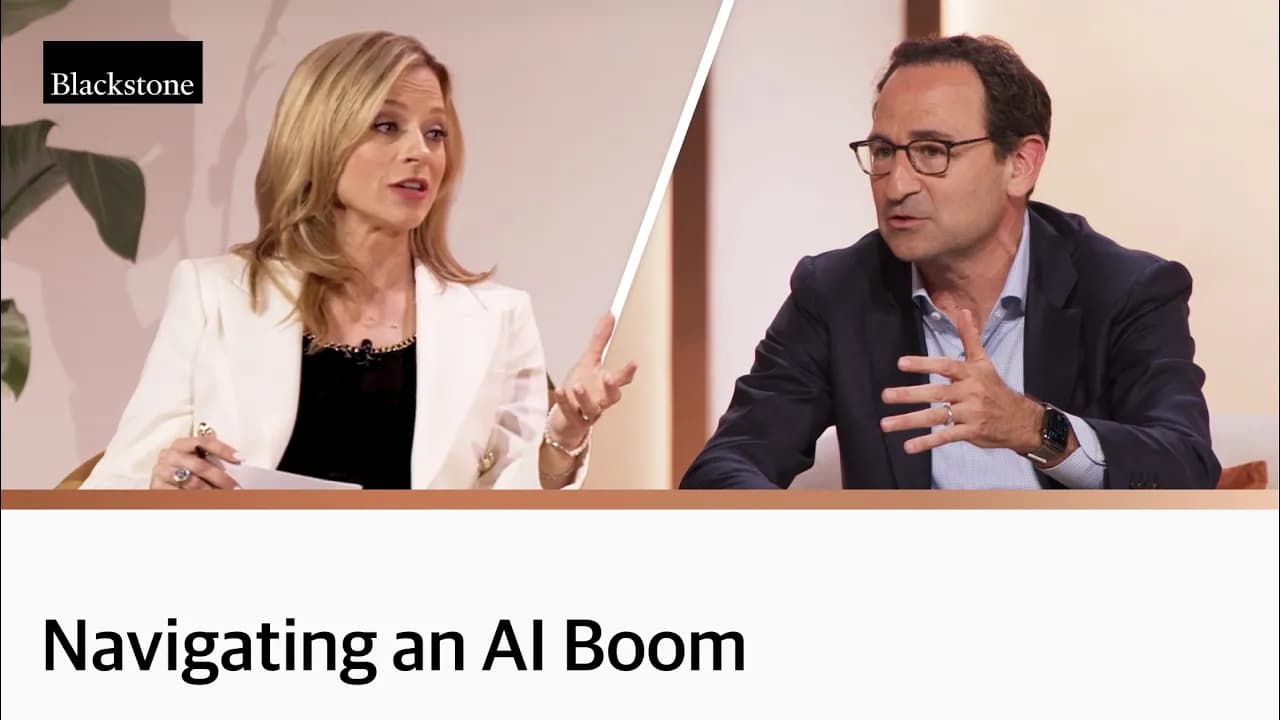
Ken and Winfield express surprise at the current investment landscape, noting that utilities have become "cool and sexy" - a sentiment neither would have predicted ten years ago. Hedge funds and other areas are becoming increasingly exciting. The conversation opens with a one-word assessment of the market outlook, with optimism expressed despite the prevailing noise.
Blackstone's insights derive from an extensive data ecosystem built on their position as the largest alternatives asset manager. The portfolio encompasses 280 portfolio companies, 13,000 real estate properties, and 5,000+ credit issuers. The 280 portfolio companies alone employ over 700,000 people, providing granular data on labor markets, wages, and hiring trends. The process involves assessing what's changed versus what remains stable, identifying patterns, and building conviction for investment decisions. Business unit heads and CEOs from the portfolio companies are formally surveyed quarterly for qualitative insights beyond the quantitative data. These inputs are distilled into actionable signals used for internal strategy development and increasingly shared externally.
The January 2026 Investment Perspectives report has largely held despite geopolitical changes and economic volatility. Artificial intelligence remains the dominant theme and has grown even more significant. Key observations include:
- AI demand: Multi-year CapEx spend creating substantial investment opportunities across debt and equity
- Growth resilience: Particularly strong in the US but uneven across regions
- Labor market: Healthy US job market with controlled wage growth
- Inflation dynamics: Recent CPI uptick driven by oil and energy (now moderating), with AI-related pricing pressure in specific sectors like Apple products
- Medium to long-term inflation outlook: Positive due to wage trends, shelter costs, and productivity gains
- Capital markets: Healthy debt and equity markets with active IPO and M&A activity
Portfolio company data shows constructive revenue and earnings growth. Regional dispersion is evident with US and Asia growing in double digits while Europe lags in lower single digits. Within sectors, energy stands out as particularly strong, driven by electrification, reindustrialization, and data center demand.
US employment shows positive trajectory with headcount growth accelerating. Post-COVID quarterly data showed steady 2-3% headcount growth (characterized as "low hire, not no hire"), with recent "green shoots" indicating acceleration toward 5% growth. Key drivers include white-collar demand for AI-related software engineers and a broader "blue collar jobs renaissance."
Current inflation presents a noisy picture with multiple drivers:
- Tariffs contributing to near-term confusion
- Energy price volatility
- AI CapEx spending creating localized pricing pressure (notably in memory/DRAM/NAND from Korea and Taiwan)
Medium-term outlook is more favorable. Wage growth in portfolio companies has stabilized at 3% (down from 5% two years ago and 4% one year ago). Shelter costs, representing roughly half of core CPI, show government data at 2.9% versus Blackstone's real-time internal calculation of 2% based on tenant data.
Productivity growth over the past three years has nearly doubled the pace of the prior fifteen years. This acceleration precedes the impact of AI, with approximately 95% of work tasks yet to be touched by AI. The supply-side AI productivity revolution is expected to be highly deflationary, with the productivity engine expected to accelerate significantly over the medium to long term.
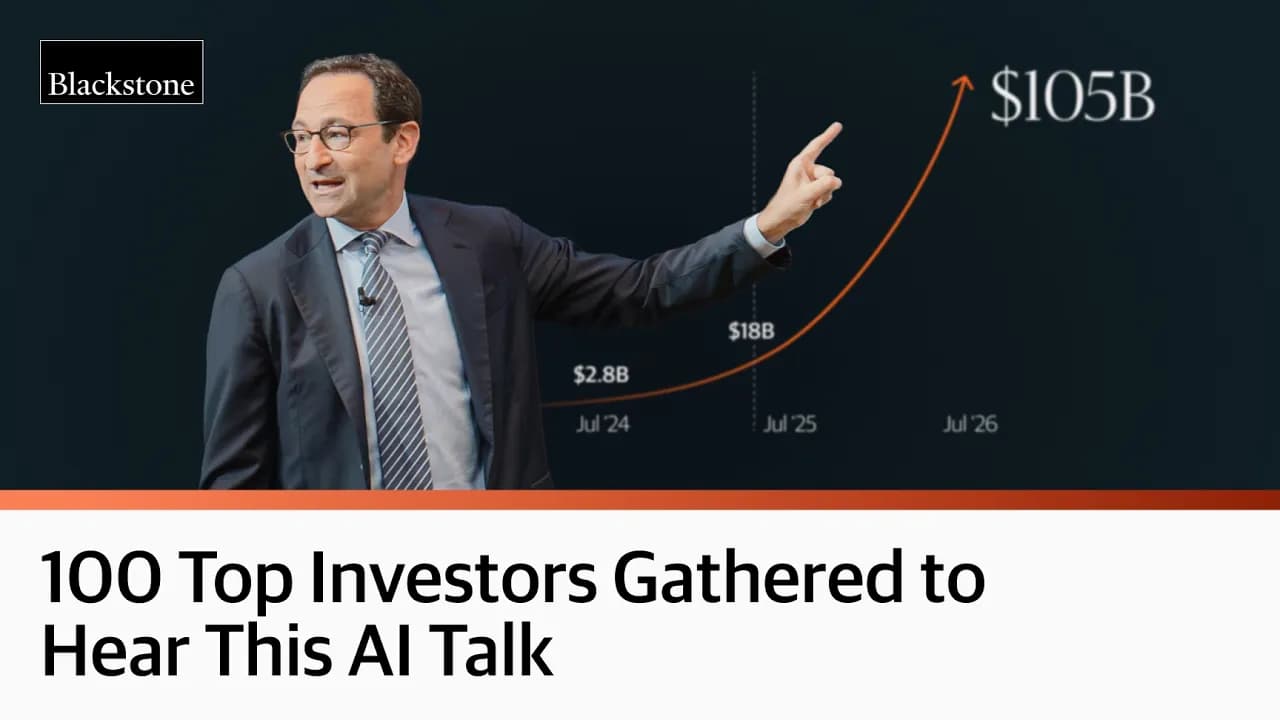
AI adoption is occurring faster than any technology in human history, with demand substantially outpacing supply. The five largest hyperscalers are projected to spend nearly $800 billion on CapEx in 2026 alone, with estimates exceeding $1 trillion for 2027 and continued growth over five years. Infrastructure requirements span three pillars: data centers, chips, and power - all capital-intensive and expertise-dependent.
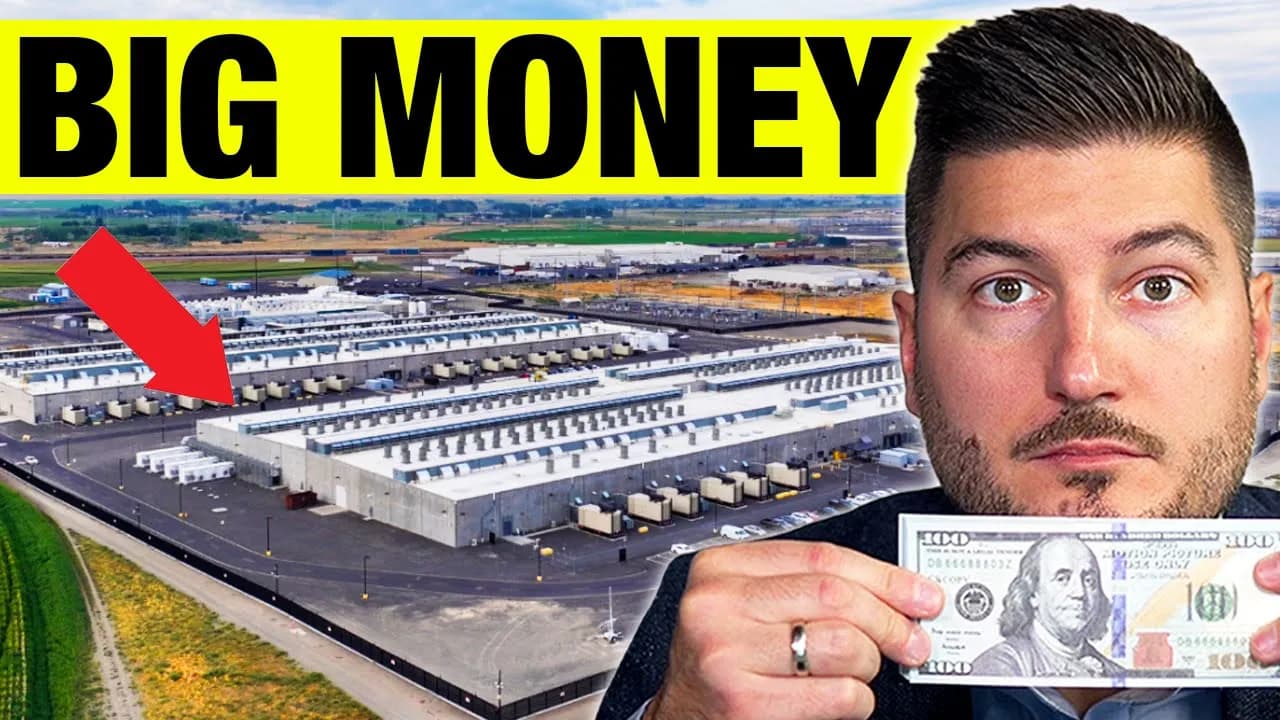
Blackstone acquired QTS, a publicly traded data center company, between 2021-2022. The investment thesis anticipated growing data needs from content creation, social media, and early AI development. Post-ChatGPT data center construction has accelerated, yet vacancy remains below 1% due to supply constraints. QTS has grown 15 times over five years, with on-site construction personnel expanding from 13,000 to an expected 40,000 by year-end.
Jon Gray articulated Blackstone's highest conviction view: power demand. After decades of flat electricity demand in the US and Europe, projections now indicate 40-50% growth over the next decade driven by economic growth, reindustrialization, electrification, and data centers. US and European grids, averaging 40-50 years old with minimal recent investment, create substantial opportunities across generation, transmission, distribution, and ancillary industries.
Real estate has entered recovery phase following post-COVID interest rate adjustments. Public REITs delivered their strongest outperformance versus the S&P in 16 years during the first half. Supply has declined significantly, with logistics new starts at decade-plus lows. Capital markets have improved with increased lending availability and tighter spreads. Portfolio performance shows record US logistics leasing in Q4, continued strength in Q1, robust data center demand, strong grocery-anchored retail, and broad hotel sector recovery including luxury segments.
Private credit continues to offer structural advantages through favorable positioning in the capital structure. Current opportunities emphasize asset-based finance within the $30 trillion market where banks control approximately 90%, creating substantial white space. These investments offer tangible collateral, strong documentation, and spreads around 250 basis points. The broader CapEx environment creates opportunities across equity, credit, private equity, real estate, infrastructure, and private credit.
Additional areas of focus include:
- Life sciences: Significant CapEx requirements creating solution-provider opportunities
- Secondaries business: Growing importance with private market expansion
- Hedge funds: Increasingly relevant for improving 60/40 portfolio outcomes
- Franchise businesses: Including investments like Jersey Mike's
McKinsey estimates over $100 trillion in critical infrastructure investment needed over the next 15 years. Historically public sector-driven, thinning government resources are shifting the burden to private capital. Current private infrastructure AUM of less than $2 trillion represents a significant opportunity relative to the total addressable market.
- Market sentiment: Optimistic
- Most important word for H2 2026: AI (over inflation, rates, or geopolitics)
- Biggest surprise: Knicks winning NBA championship
- Beach read recommendation: "The Art of Learning"
- Podcast preference: History-focused reading over podcasts; Blackstone launching new podcast in September
Keep Blackstone in your library
Save the videos and channels worth coming back to, and find them again in one place.