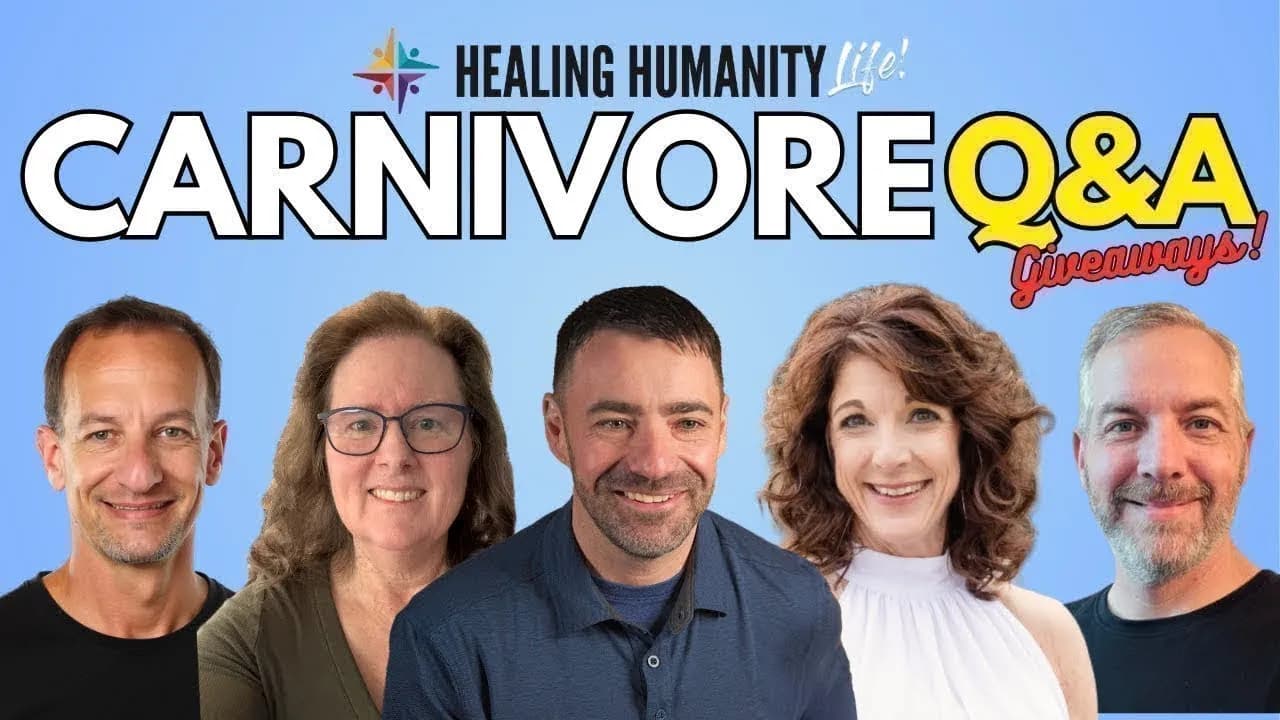
Carnivore Questions LIVE & Giveaways!
In a Nutshell
Carnivore diet Q&A panel answers viewer questions about healing timelines, medical conditions like colitis/A-Fib/insulin resistance, and practical challenges including weight stalls, histamine reactions, and post-bariatric eating. Panel emphasizes complete diet transition, working with doctors on medications, and deeper ketosis (80% fat minimum) for healing autoimmune conditions. Ruminant meats preferred over chicken/pork due to superior omega ratios, while excessive water intake and processed foods are flagged as common issues.
These notes were generated by AI and may contain inaccuracies.
Thursday night carnivore Q&A session focused on answering viewer questions. Giveaway announced for Healing Humanity shirt in blue color for best questions or healing testimonies posted with hashtag ribeye. Panel members include Adam, Ashley, Lynn, and Barb.
Healing Humanity documentary premiere scheduled for Montello Theater on June 6th. Tickets sold out within 48 hours. Additional screenings announced for Chicago. Website healinghumanity.mmov provides screening locations with more announcements coming soon. Newsletter signup recommended for early notification of new locations. Two new screenings being added in Orlando and UK.
Meatstock 2027 announced with promo code "healing humanity" for $50 off tickets. Low Carb for Better Health event scheduled September 26-27. Impact event in Kalamazoo, Michigan with Carnivorous Grandma Robin Heron also featuring the documentary.
Adam recommends diving in completely when starting carnivore, though suggests going slower if possible. Advice includes removing processed foods from home to ease transition. Started carnivore for autoimmune condition that resolved in 30 days. Also healed brain damage previously considered permanent within 5 months. Recommends 30-day trial period.
Ashley emphasizes understanding personal motivation ("why") before starting. Notes many view carnivore solely as weight loss but it addresses multiple health issues. Type 2 diabetes mentioned as reversible condition. Recommends finding examples and testimonials rather than overwhelming with information.
Living off grid Alaska asked about consuming two one-pound spicy sausages daily for 18 months without weight change. Lynn identified potential issues with processed sausages containing chili peppers that may cause inflammation or histamine reactions. Recommended mixing diet with ground beef and using only salt for seasoning to identify if additives are causing inflammation.
UK screening announced for Scott Cinemas in Bridgewater Northgate. Newsletter signup at healinghumanity.mmov recommended for updates.
Question about reversing colitis through carnivore diet. Dr. foreign reversed colitis through carnivore approach. Dr. Sophia Clemens (formerly associated with paleomedica) has case studies showing high-fat ruminant meat-based diet decreases intestinal permeability. Autoimmune ulcerative colitis may require strict lion diet approach using only ruminant meats, salt, and water.
Friend suffered stroke due to undiagnosed A-Fib. Adam notes individual results vary but has interviewed people whose A-Fib symptoms resolved on carnivore diet. Emphasizes carnivore provides optimal body function. Important warning about blood pressure medications - carnivore diet can lower blood pressure, requiring medical monitoring to avoid dangerously low levels.
Dr. Philip Ovadia's book "Stay Off My Operating Table" recommended as resource for heart-related concerns. Author is cardiothoracic surgeon who advocates carnivore diet.
Question about cooking meat on stovetop without grease spreading when lacking exhaust fan. Ashley suggests grease splatter screen. Panel members recommend air fryer, with some keeping theirs on back patio to avoid smoke detector activation.
57-year-old with likely decades of insulin resistance and pre-diabetes asked about reversal timeline. Lynn notes insulin levels can drop quickly on carnivore diet. Personal example given of A1C dropping from 5.8. Holistic approach recommended including stress management, sleep quality, sunshine exposure, and exercise beyond dietary changes. Preliminary blood work suggested including fasting insulin levels.
Question about carnivore safety with A-Fib. Panel recommends researching existing interviews and studies. Dr. Ovadia's book mentioned as educational resource explaining why ketones benefit heart function. Decision should be informed and comfortable for individual.
TKH22 takes blood pressure medication and experienced severe leg cramps on previous carnivore attempt. Adam advises working with doctor on medication titration when increasing sodium intake. Notes individual variation - some experience cramps from too much salt rather than too little. Personal experience shared of leg cramps resolving when salt intake reduced.
Carnivore chili discussed as challenging for strict carnivore due to spice requirements. Clean taco seasoning from paleo cookbook mentioned as option. Skirt steak found at $6.99 per pound recommended as good value alternative to ground beef.
S Dragon221 won Healing Humanity shirt in blue. Winners claim prizes through healinghumanity.mmov form. 50% off first month membership available with promo code life 526 for healinghumanity.life community featuring 12 weekly Zoom calls including doctor interviews, Q&A sessions, and addiction support.
A viewer with 125 pounds of muscle mass and 170 pounds of body fat asked about maintaining low protein intake around 60 grams while keeping fats at 90-91% to activate human growth hormone. The hosts acknowledged this topic falls outside their expertise and recommended consulting specialists such as doctors or Coach Lisa within their membership group.
The discussion highlighted that the membership group brings in experts weekly specifically to handle advanced questions like hormone optimization. Robert Sykes of Keto Savage was recommended as a resource, given his background as a carnivore bodybuilder who tracks detailed body composition metrics.
A viewer on keto for four and a half years, now carnivore, reported only breaking stalls through multi-day fasts. Barb noted stalls are common and emphasized the importance of examining current macros, protein-to-fat ratios, dairy consumption, and overall food intake. Many transitioning from keto to carnivore under-eat or consume insufficient fat due to increased satiety, which can stall progress. The effectiveness of multi-day fasts in breaking stalls suggests the individual may not be in consistent ketosis, possibly from excessive protein intake preventing ketone production.
Barb recommended tracking intake temporarily as an awareness tool to identify patterns, then making single-variable adjustments rather than multiple simultaneous changes. This methodical approach helps identify the specific cause of stalls and provides sustainable solutions. The timing of meals and individual responses to different protein levels should also be considered.
Adam shared that multiple individuals have successfully used carnivore diets to curb various addictions, including alcoholism, drug abuse, and gambling behaviors. The diet's impact on addiction appears significant across multiple cases.
For a viewer experiencing hives for 30 years, Lynn explained hives represent histamine reactions. Standard allergy testing may miss mast cell activation syndrome, which requires different diagnostic approaches. A low-histamine carnivore approach, often called the "lion diet," can help drain the histamine bucket by avoiding high-histamine foods.
Several factors influence histamine reactions: individual histamine bucket size varies among people, slow DAO enzyme function impairs histamine breakdown, and the MTHFR genetic variant (present in approximately half the population) affects histamine processing pathways. Lynn recommended avoiding smoked foods, potentially eliminating egg whites or whole eggs, and avoiding bacon during reactive periods. Pepper and various seasonings can also trigger reactions.
Lynn directs viewers to her YouTube channel "Midlife Carnivore" where searching "histamine" reveals a comprehensive video with an extensive list of foods, seasonings, and beverages categorized by their histamine content and potential to cause reactions.
The conversation addressed how conventional dietary advice often contradicts emerging evidence. Low-cholesterol diets and salt restriction recommendations were questioned as potentially contributing to decreased life expectancy. The hosts emphasized the value of questioning previously accepted nutritional information through personal healing experiences and community learning.
Research shared through Nutrition Network indicates only about 20% of the population shows a connection between sodium intake and blood pressure. Dr. Laura Buchanan challenged this figure, suggesting carbohydrates may be the primary factor rather than sodium. Studies on blood pressure have never included carnivore participants, and Dr. Buchanan hypothesizes that carnivores might show zero correlation between salt and blood pressure. Many carnivores consume significant sodium through added salt rather than processed foods, yet experience decreasing blood pressure as insulin levels drop.
The hosts noted the irony that saline bags (salt water) are standard hospital treatment even for patients with high blood pressure, contradicting conventional advice about sodium restriction.
A viewer from West Virginia organizing carnivore meetups in Ohio and West Virginia regions connected with Adam as a neighbor. The group discussed the growing carnivore community in Ohio despite recent flooding affecting travel.
Lynn confirmed she performs better eating ruminant meats due to their superior omega-3 to omega-6 ratio. Chicken and pork contain higher omega-6 levels than omega-3s, contributing to inflammatory responses through reactive oxygen species and inflammatory cytokines. The modern diet's high omega-6 content creates inflammatory imbalances that ruminant meats help address.
A viewer attempting to consume one gram of protein per ideal body weight asked whether this was excessive. Barb clarified this refers to ideal body weight calculations, with one gram per kilogram being the accurate measurement rather than per pound. However, many in the carnivore, keto, and paleo communities use one gram per pound of ideal body weight as a practical guideline. Protein needs vary based on goals: weight loss, weight gain, or healing specific conditions.
For healing autoimmune conditions, type 2 diabetes, or other chronic illnesses, deeper ketosis with at least 80% fat and 20% protein is recommended. Being in ketosis while monitoring glucose levels helps assess insulin resistance. Those achieving ketosis likely have some improvement in insulin sensitivity, as severe insulin resistance would prevent ketone production.
Jonathan's comment highlighted that ketones benefit brain function and can reverse anxiety issues while reducing or eliminating depression. Recommended resources include Dr. Georgia Ede's book "Change Your Diet, Change Your Mind" and Dr. Chris Palmer's "Brain Energy," along with his YouTube content on mitochondria and mental health.
Regarding type 3 diabetes mitigation through carnivore diets, the hosts noted limited formal studies exist. Hal Cranmer tracks relevant markers in his assisted living facility where carnivore and keto participants show symptom improvements. Dr. Georgia Ede's book contains additional information on this topic, as does Amy Berger's research.
A viewer asked about adding salad greens and celery while maintaining ketosis. While these foods contain minimal carbohydrates and fall within ketogenic ranges (under 50 grams daily for many people), individual responses vary. Some require under 20 or even 10 grams of carbs daily. Testing ketones after adding such foods individually helps determine personal tolerance. Michaela Peterson's experience with arugula showed initial success followed by pain return, suggesting inflammation monitoring is as important as ketone levels.
Carnivore is possible after bariatric surgery with specific considerations: eating slowly with small, frequent meals, chewing thoroughly, and pairing fat with protein. Amy, who has had bariatric surgery, successfully does carnivore but experiences dumping syndrome with excessive or poorly paired fats. Ground beef is often better tolerated than steak. Key challenges include meeting nutritional needs with reduced intake capacity, making egg yolks and small amounts of liver valuable additions.
Carrie discussed using CGMs to identify problematic foods. Viewers reported discovering that keto bread and other seemingly acceptable foods caused significant glucose spikes. One notable case involved an IHOP omelet that caused glucose chaos due to pancake batter in the omelet mix, unknown to the consumer.
Adam advocates drinking when thirsty rather than following prescribed daily amounts, viewing forced water intake as unnatural compared to ancestral patterns. Individual factors including body weight, exercise levels, diet type, and stress affect hydration needs. A one-size-fits-all approach (such as requiring 40 ounces daily) ignores vast differences between individuals weighing 75 versus 375 pounds.
Ashley confirmed that insufficient dietary fat can lower testosterone levels, though multiple factors influence hormone production. Recent findings indicate that lowering insulin raises testosterone in men but lowers it in women due to different tissue responses.
For someone three days into an extended fast with morning glucose at 81 and ketones at 4.1, Lynn recommended continued monitoring. Ketone levels above 3.0 warrant caution, and continued elevation may indicate the need to break the fast. Glucose levels appeared appropriate, though awareness of hypoglycemia symptoms remains important throughout extended fasting.
Adam addressed concerns about excessive water intake causing frequent urination and electrolyte imbalances. When water acts as a solvent in excessive amounts, it can flush electrolytes and create imbalances, supporting his recommendation against prescribed daily water targets.
Lynn mentioned their Keto Study Club resuming Tuesday afternoon sessions after a hiatus due to member circumstances. Ashley indicated potential filming in Montello related to a new documentary, with details forthcoming.
Reading through the ketogenic textbook and discussing it as they go through it. The study group includes Renee from Eating Meat to Walk, who is a retired nurse, and Carrie from My Metamorphosis, who is a data analyst. The three participants are described as "left brain people" who are learning about this way of eating.
Barb mentions having some interviews lined up, though none scheduled for this week, and advises viewers to stay tuned. The YouTube channels for Adam, Ashley, Lynn, and Barb are all linked in the description below, with a recommendation to subscribe and follow.
The show airs every Thursday at 6 PM Central Standard Time. The hosts thank everyone for their great questions and express looking forward to seeing viewers next time.
Have a good night, everyone.
Keep HomeSteadHow in your library
Save the videos and channels worth coming back to, and find them again in one place.