Congressman Barney Frank | 60 Minutes Archive
In a Nutshell
Barney Frank, as chairman of the House Financial Services Committee, played a central role in managing the 2008 financial crisis and auto industry bailouts, prioritizing government intervention to protect workers and homeowners over letting companies fail or enforcing strict market discipline. He defended his liberal approach as pragmatic, rejecting conservative criticism that he enabled risky lending through Fannie Mae and Freddie Mac, and worked closely with Treasury Secretary Paulson despite tensions over using bailout funds for foreclosures. Frank also addressed his personal life as an openly gay congressman who survived a sex scandal, emphasizing his focus on realistic policy outcomes rather than ideology.
These notes were generated by AI and may contain inaccuracies.
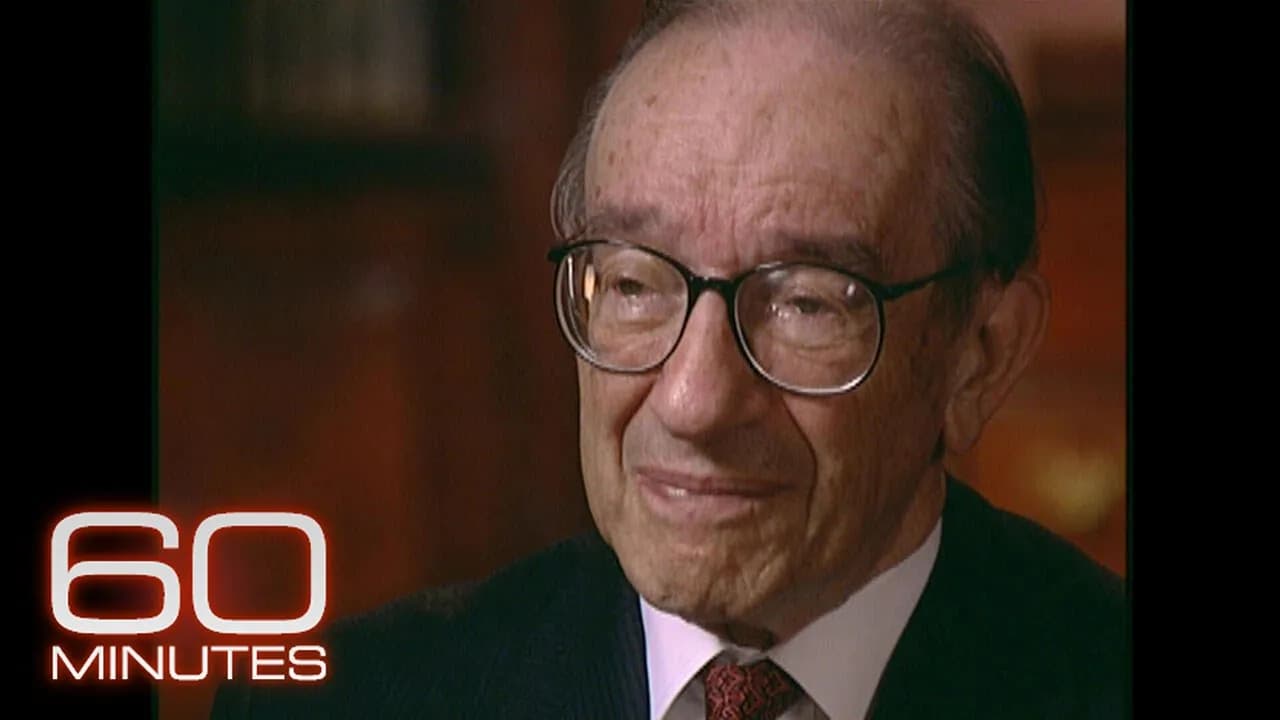
Barney Frank has been called the smartest guy in Congress and works on some of the thorniest issues. The 14-term, 68-year-old Harvard-educated Democratic congressman from Massachusetts serves as chairman of the House Financial Services Committee, overseeing banks, housing, and the auto industry. Frank has been at the center of both the $700 billion rescue for financial institutions and the bailout attempt for the car companies that failed in the Senate. He worked on both during this past week, pressuring Treasury Secretary Henry Paulson to deal with home foreclosures and negotiating with the White House on the loan for GM and Chrysler.
True to textbook liberalism, Barney Frank worked hard to keep the car makers out of Chapter 11. When asked why, Frank explained that bankruptcy allows companies to break their word and break their deals. He stated: "There's only one thing you can do in bankruptcy that you can't do outside of bankruptcy. Break your word. Break your deals. It allows you to say to the small businesses who have been catering lunches for you. Sorry, we're not paying you. It allows you to go to the workers and say, sorry, we're not paying you." Frank brought the heads of the Big Three auto companies before his committee and allowed open venting. One participant expressed: "My fear is that you're going to take this money and continue the same stupid decisions you've made for 25 years."
Frank rejected the idea that failing companies should simply die under capitalism, noting that Herbert Hoover held this view while Franklin Roosevelt opposed it. Frank stated: "Darwin said." He continued: "Yes, it's true. And Darwin was a very good biologist. I don't think he was much of an economist." When challenged about taxpayers propping up companies that made terrible decisions, Frank clarified: "No, we're not propping up companies. That's your mistake. We're propping up individuals. The world doesn't consist of companies. The world are people. The country is people." He acknowledged his support for welfare and asked whether critics would let people starve.
At a meeting on Tuesday, Frank listened to mayors of towns hit hard by car factory layoffs. One mayor suggested: "You know, there's a theory out there that you, the congressman, had this public spanking of these guys in order to cover yourselves." Frank responded sharply: "That's the kind of argument that people who do not have any idea what they're talking about like to make." President Bush reportedly nicknamed him "Sabertooth." Frank acknowledged being antisocial, stating there are thousands of people in Washington who earn a living by trying to waste his time through repetition and stupid questions.
Frank is known for being sharp-tongued and a master of the put-down and dress-down. During one exchange, he stated: "REGULAR ORDER. REGULAR ORDER. I ASK THE GENTLEMAN BE SEATED." He noted: "Television is apparently the enemy of nuance, but nuance is essential for thoughtful discussion." He also delivered direct criticism: "Let me start with that second despicable comment you just made. And I am surprised at you that you would do something like that." When Sabertooth the liberal took over the committee overseeing banking, Wall Street shuddered.
Two years later, even hardened Republicans gave Frank good reviews. He stated: "I'm very proud of the fact I think we've shown with the last two years and we will show going forward that you can be a liberal Democrat and cooperate in creating the kind of climate that's good for business as well as for everybody else." When asked if he was pro-business, Frank replied: "Oh, absolutely." Henry Paulson described Frank as a "market-savvy pragmatist who looks for areas of agreement because he wants to get things done." A JP Morgan Chase representative noted that Frank "hasn't veered off into crazy land, meaning liberalism."
Frank rejected the notion of being liberal on social issues and a pragmatist on economic issues, stating: "No, I reject the notion that there is you're talking about two different things. That's like saying are you more of a cook or are you left-handed?" He clarified: "I am a liberal. I what I'm rejecting is this liberal here, pragmatist there." Frank argued: "As a liberal, I am morally obligated to be pragmatic. What good do I do poor people, elderly people, people who are being discriminated against because of their sexual orientation if I'm not realistic about accomplishing something?"
Frank shuttled between a hearing on the bank rescue package, which he voted for, negotiating car loans, and briefing Tim Geithner, Obama's choice for Treasury Secretary. He worked hand-in-hand with Treasury Secretary Paulson to write the rescue plan for the banks and pressed Congress to get it passed. Frank noted: "All of us had to put up with this terrible financial problem. They had to put up with the financial problem and me." The relationship between Frank and Paulson soured because Paulson hadn't spent any of the rescue money to help struggling homeowners. Frank stated: "Secretary Paulson is refusing to use the money that Congress voted to reduce foreclosures. The bill says he's supposed to. Um he won't do that."
When asked how he wrote a bill allowing the Treasury Secretary to not fulfill it as intended, Frank used a metaphor: "You cannot push on a string. There is no constitutional way to force them to do things." He argued there is no way to force people to do things through legislation. Addressing concerns about unfairness in helping delinquent homeowners versus those paying their mortgages, Frank drew a comparison to unemployment insurance: "What about someone who's been working hard, 40 hours a week, maybe with some overtime and going to work every day, and then his neighbor loses his job. The neighbor starts getting unemployment insurance. The neighbor who lost his job is getting money for nothing from the government. There's some unfairness there."
Frank met with Fannie Mae and Freddie Mac on Friday. Due to his support for affordable housing for the poor, conservatives blame him for the subprime mortgage mess, claiming he enabled Fannie Mae and Freddie Mac to back riskier loans. Bill O'Reilly stated: "You're the brilliant guy who presided over the biggest financial collapse in federal." Frank responded: "Come on, you coward. Say the truth, coward." During the exchange, Frank noted: "The problem was that we passed in 1994 in fact the bill." He defended his record against O'Reilly's criticism.
Frank has been a target of criticism for years, not just because he's a liberal. He stated: "I'm gay. I'm left-handed. I'm Jewish. There's a lot of things that I'm supposed to do that I don't do." He gets reelected repeatedly as an openly gay man in Massachusetts. Frank grew up in blue-collar Bayonne, New Jersey as a Jewish kid in a predominantly Catholic community who was gay. He realized he was gay at age 13, which he found very depressing and frightening, and decided to repress it.
Frank kept his sexuality secret as he entered politics, first in the Massachusetts legislature then as a congressman. In 1986, he told Speaker of the House Tip O'Neill: "I said I just wanted to alert you that there may be some stuff coming out about my being gay." O'Neill responded: "Oh, don't be listening to that crap they say all that stuff about all this." When Frank clarified it was true, O'Neill said: "Oh, Barney, I'm so sad. I thought you might be the first Jewish speaker." Frank decided to out himself publicly. When the Boston Globe reporter asked: "Are you gay?" Frank replied: "Yes. So what?" He acknowledged this would prevent him from House leadership but stated it "has not in any way diminished my influence as a committee chairman."
The lowest point of Frank's life came two years later when a male hooker he had hired told reporters he ran a prostitution ring out of the congressman's apartment. An investigation concluded Frank didn't know anything about it, but he was reprimanded. Frank went to the floor of the House to apologize, stating: "There was in my life a central element of dishonesty." He then returned to work and became an authority on modern banking and Wall Street. Frank invests in Massachusetts municipal bonds and is out of the stock market. He predicted the crisis would end by the end of 2009 or 2010.
Frank criticized Secretary Paulson for giving rescue money to banks without requiring them to lend it. He stated: "So, in other words, the Treasury Department is not going to hold their feet to the fire to lend this money. Not only right, they're not only not going to hold their feet to the fire, they are telling them that the fire's out." Frank expressed disappointment: "I am very disappointed in this. I at first I thought he was focused too much on the financial community's tender feelings. Now I think he's focusing almost exclusively on them." He also criticized Barack Obama for not being assertive enough during the presidential transition, stating: "We saw it coming. I don't know there was any way to avoid it. Senator Obama said, 'We only have one president at a time.' Well, that overstates the number of presidents we have at this time. We don't appear to have any."
Frank reflected on his job performance, noting: "The problem in politics is this. You don't get any credit for disaster averted. Going to the voters and saying, 'Boy, things really suck.' But you know what? If it wasn't for me, they would suck worse. That is not a platform in which anybody has ever gotten elected in the history of the world."
Keep 60 Minutes in your library
Save the videos and channels worth coming back to, and find them again in one place.