CRASH WARNING: The Bond Market Just Turned Against Us — This Is Serious
In a Nutshell
Japan's 10-year bond yield hitting 3% may force the country to sell US Treasuries, which would spike US borrowing costs and trigger Fed rate hikes amid rising inflation from oil supply disruptions in the Strait of Hormuz. The Strategic Petroleum Reserve is at its lowest level since 1982, and oil prices are climbing as inflation pressures mount, contradicting Trump's calls for rate cuts. While AI stocks continue driving market highs, Walmart's weak guidance signals broader consumer weakness, and overleveraged positions at these levels carry significant risk if the Fed raises rates.
These notes were generated by AI and may contain inaccuracies.
Markets are looking pretty bad with NASDAQ's QQQ down 1%. The NASDAQ market on the larger time frame is trading still nearly at all-time highs, and SPY (S&P 500 ETF) is again trading nearly at all-time highs despite a bunch of concerns.
Japan's 10-year bond yield has hit 3% for the first time since 1996. The yield represents the interest rate that government pays on money that it borrows. Japan is at a critical point where they can either begin to sell US treasuries, which has been a very big concerning issue for the Treasury Department in the US because Japan is the largest foreign holder of US bonds.
If Japan needs to intervene with their own bond market and needs to offload US bonds by selling to bring down their yields, this means selling and dumping into the US bond market. If there's an oversupply, then yields are going to have to go higher to make it more attractive. This would mean that then that yield goes higher, and the interest that the US then pays on money that it borrows will go higher.
Two oil super tankers have been struck in the Strait of Hormuz. Oil prices are pushing higher during the pre-market session in the United States. UCO is currently up 2.94%, USO is currently up 2.31%, and WTI is up 1.83%. This follows a consecutive green day yesterday for oil.
The strategic petroleum reserve has fallen to the lowest level since 1982. The deal with Venezuela is supposed to top this off, but it is not happening. The country is getting dangerously low and seeing the implications of this at the pump, with oil prices going through the roof.
Inflation is high, with attacks in the Middle East and oil prices higher due to the attacks in Iran and the closure of the Strait of Hormuz. When oil goes higher, inflation goes higher. The Fed rate monitor tool shows the highest probability in two weeks, with a 66.4% probability that the Federal Reserve is going to raise rates.
Trump in the most recent meeting is begging the Federal Reserve to cut rates. This is the exact opposite of the position that they're currently put in. You cannot cut rates when inflation is rising. Inflation is rising because oil prices are rising, which is the main contributor to the current rate of inflation.
Trump says that the Strait of Hormuz is open and controlled by the US, but that is not true. The speaker emphasizes that there is a difference between being a Republican and a MAGA Republican, just as there is a difference between a Democrat and a liberal. There are extremists on both sides. The speaker argues that if any administration is doing something you do not agree with and you can see that is not right for the people, there is no reason to bend the knee for any politician that is enriching themselves and their family.
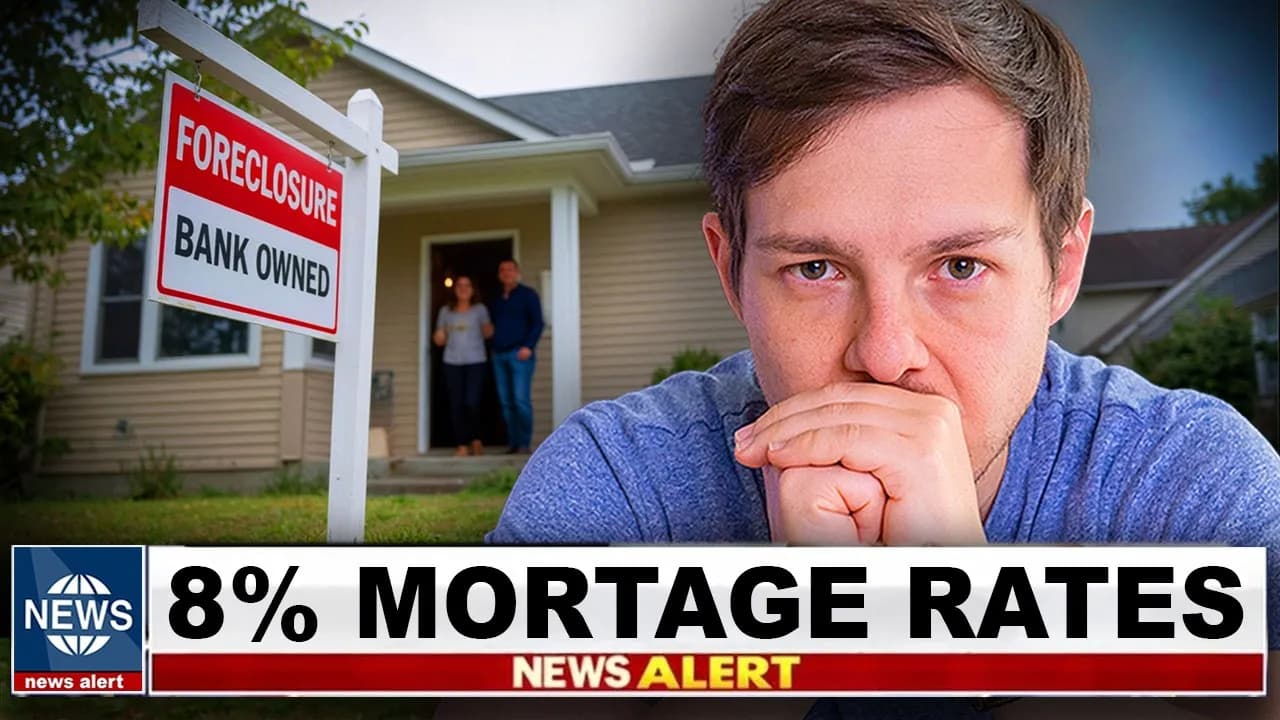
If the Federal Reserve raises rates, everything that people and businesses borrow money for - mortgages and everything else - is going to go higher. It's going to be more expensive to borrow money. Since Americans are great at incurring debt, this will contract and slow down the economy.
Markets are rational and pushing up higher because of the AI boom. The speaker loves that there is a sector that is thriving. Two things can be right at the same time. The AI sector is one of the few sectors that is actually thriving while everything else is struggling and falling behind. This is not an opinion but a fact. If you look at almost every other sector instead of just the AI infrastructure, you can see the lagging effect.
Walmart just reported one of its worst guidance in years, which is a better measure of how the average American is actually doing versus how Nvidia or these AI companies are doing.
It is great to be invested into tech with no intention of selling all long-term investments. But at these overbought levels, it makes no sense with all of these red flags presenting themselves to be overleveraged just because Trump is telling people to invest in data centers or to buy more or that markets are going to go higher.
The speaker questions whether people have not seen that from what Trump says to what he actually does are two very completely different things. He said he would bring down the deficit and they've only contributed more to it.
Gold is actually falling, which is quite odd because gold tends to be cyclical in the sense that it goes up when markets go down, but it's also going down. This is also happening with silver and Bitcoin because they've just been propped up too high in such a short period of time. It may be a technical sell-off.
The speaker closed their short fully on Nvidia, leaving themselves with one lucky share and making $3,600 on the position. The only thing bought on the dip is MSTR, which was just opened. The speaker literally just opened a long position just in case markets creep up a little bit to reap some of that benefit.
If it ends up making new lows, the speaker is break even or down $11 and will close out that trade and just wait for markets to bottom. There is no question that markets are more bullish than bearish.
At these extreme overbought levels with all of these red flags presenting themselves, there is a difference from not being invested to being overleveraged at overbought levels, thinking that markets have to go higher when everything is showing signs of uncertainty. Everything except AI. It is always the most speculative stocks that will crash the hardest when overall markets begin to fall.
Today's just one day and there is no need to panic, but understanding why there is so much uncertainty is important. The biggest reason is because now more than ever, the Federal Reserve is likely to raise rates in the next FOMC meeting.
Keep Ricky Gutierrez in your library
Save the videos and channels worth coming back to, and find them again in one place.