Did Hunter Gatherers Have Religion? - Alex O’Connor
In a Nutshell
Hunter-gatherers likely had some form of supernatural belief, but this animistic instinct is fundamentally different from monotheism's concept of a single, transcendent God or ultimate reality. The discussion distinguishes between "gods" as narrative characters within the universe (like Greek deities or spirits) versus "God" as the absolute ground of being, arguing these represent two separate religious impulses that shouldn't be conflated. Ancient Greeks probably didn't believe their gods literally but used them as narrative tools to personify existence, similar to how modern people reference "fate."
These notes were generated by AI and may contain inaccuracies.
The new "Modern Wisdom" store is open for six days only with designs that will never be printed again. The favorite design is in the "Death Metal" style, featuring a rustic horseshoe design, a snake design, and the "Wisdom Nation" world tour. All available at mwmerch.com and will not be reprinted.
The discussion begins with a hypothetical scenario of going back 150,000 years. At that time, there would have been no crops, and the weather would have been colder than usual. The question is raised about how likely it is that the first hunter-gatherers experienced some form of religious or primitive belief.
It is considered very likely and perhaps probable that hunter-gatherers had religious beliefs. Anthropologically, when examining human societies, a religious impulse is observed as a converging and global cultural evolution. There are two possible explanations: either something evolutionarily selects for this spiritual connection to divinity, or there is indeed a true divinity.
This dilemma is always present in religious debates where data can be interpreted in both ways. The "hiddenness of divinity" problem questions why God is not obvious to people if He exists. John Hick, a great theologian, writes that God wants to maintain an epistemological distance from his creatures so they have freedom of action without feeling constantly watched. The world must somehow be as if it were devoid of God's existence. Both theories explain the data, making them unhelpful.
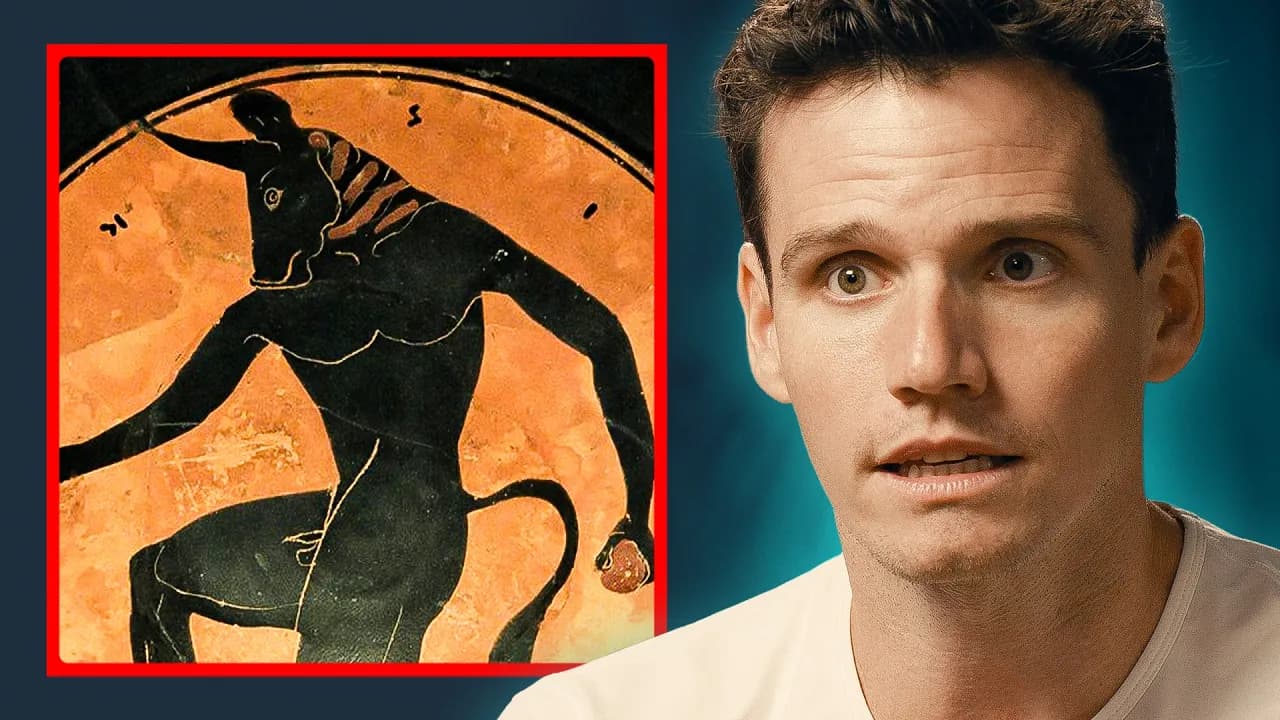
It is unfortunate that the word "God" is used in capital letters and "gods" in lowercase. Atheists often say they don't believe in your god, but you also don't believe in Wotan, Thor, Zeus, and similar deities. These lowercase gods are not one unified, immaterial God and Creator responsible for the universe's existence. They are more like characters within the created system who move, talk, communicate, and interact, resembling characters in a play.
The concept of God at the heart of the monotheistic tradition, and also Hinduism which is sometimes described as polytheistic, has an ultimate basis of reality called "Brahman," with all gods being merely expressions of him. This is no more polytheistic than Christianity, which believes in the Trinity as expressions of one unified God or His hypostases.
When people saw the world as enchanted with spirits in the forest, a god of thunder, and a sun god they worshipped, this indicates a supernatural instinct in humans that something mysterious is happening beyond human experiences. However, this is not the same as believing in the single source from which everything comes. These are two different instincts.
It is difficult to pinpoint exactly when the monotheistic conception began to develop. In philosophy, it goes back to Aristotle, whose concept of the fundamental principle that realizes reality was a completely impersonal entity that does not care about human affairs and cannot care because its nature is too transcendent.
When a religious mystic today experiences unity with God, it is very difficult to define mysticism. One key feature of the Sufi religious experience is a certain feeling of unity with God where the boundary between self and God dissolves. Meister Eckhart says: "The same earth that is God's earth is also my earth." A famous mystic was known for circling around saying "I am the Truth," where Al-Haqq is one of the names of God in the Holy Quran, expressing feelings about this connection.
It is difficult to feel the connection experienced in mysticism with the god of the green forest or with "Futan." While one may feel a kind of connection to nature in its broadest sense, one does not feel empirically connected to absolute reality. Religious pluralism is brought up because when discussing 150,000 years ago, people imagine humans who believed in animism and saw gods everywhere, but those gods are completely different beings from the God of monotheism or the concept of absolute reality.
A different word is needed to distinguish between these concepts. David Bentley Hart's book "The Experience of God" deals with this very well. When talking about those gods, a different term should be used to avoid confusion.
There is debate about whether the Greeks truly believed in their gods. These people weren't stupid—they are among the most intelligent philosophers known in Western heritage. It is questionable whether they believed that climbing a mountain would reveal Zeus sitting on a throne or that Athena went around doing things. The matter is not entirely clear, and it may have been more of a narrative tool.
The Greeks likely did not believe in their gods in the literal sense that a Christian believes in God or a Hindu believes in Brahman. The best analogy is a stuffed animal that both partners or parent and child know is just a stuffed animal, not a real dog. It would be utter blasphemy to point out that fact, and referring to the dog with the pronoun "it" while interacting with it as if it were real maintains a game that aims to personalize this creature. Both know it's just a physical object, but the game continues.
Similar patterns exist today with concepts like fate. People might say "this is fate" or "fate brings you together," but they don't really believe there is an inherent rule in the universe that dictates these occurrences. These are narrative tools used to breathe a little life into the universe. The Greek gods may have functioned similarly, with the basis of reality not being a narrative character used to explain where thunder comes from, but rather the essence of the universe itself.
The depletion of a product is a really good test of how much you like it. If you ask for more or simply continue with your life, this indicates preference level.
Element has been used for over half a decade and is the first drink consumed every morning. It reduces muscle cramps and fatigue, helps improve brain health and regulate appetite. There is a noticeable difference when taking it versus not taking it. It contains no sugar, no harmful substances, and no artificial ingredients. It is used by Dr. Andrew Huberman, Olympic athletes, and sniper teams. They have a no-questions-asked refund policy and offer free shipping within the United States. A free sample of Element's most popular flavors is available with the first purchase at drinklmnt.com/modernwisdom.
Keep Chris Williamson in your library
Save the videos and channels worth coming back to, and find them again in one place.