EEUU: Guerra y estanflación + Trampa en renta fija argentina | Cazadores de tendencias 09/04/2026
In a Nutshell
El video analiza la obsolescencia de portafolios 60/40 ante guerras y estanflación en EE.UU., con fortalezas en S&P 500, oro, Bitcoin, Brasil y commodities como petróleo (tendencia alcista por tensiones en Hormuz) y Vaca Muerta (YPF/Vista). Advierte contra la trampa en renta fija argentina: bonos corporativos (NOtes) caros con yields negativos (-3.27%) y costos de salida MEP/CCL en 4%, impulsados por salidas de fondos blanqueados y restricciones; ser selectivo hasta normalización. Recomienda diversificar en emergentes (Brasil, Arabia Saudita, UAE), metales y energía, con mesas exclusivas para inversores patrimoniales en closeinvestors.com.
These notes were generated by AI and may contain inaccuracies.
Traditional 60/40 portfolios (60% S&P 500, 40% US Treasury long bonds) are like a Tyrannosaurus Rex heading toward extinction after working well for 40 years. 2022 was one of the worst years for conservative investors with bonds declining amid war conflict, requiring a rethink.
New small table meetings for 10 investors focus on portfolio setup, advisor alignment, patrimonial planning, tax minimization, and inheritance organization. Contact Juan Pablo at closeinvestors.com for info, especially for large investors with considerable heritage to hear alternative views amid potential crisis worse than 2022.
Oil shows a trend change with relative strength despite intervention and Iran conflict. Resolution might drop prices, but unlikely to $60 short-term. Strait of Hormuz traffic won't fully normalize; likely tolls lead to higher oil prices, favoring energy and changing energy market dynamics.
VIX collapsed in last two days to pre-Iran conflict lows. VIX measures expected S&P 500 volatility and market fear: 15-20 calm, 20-30 high, >30 nervous, >60 panic. Market believes situation is organizing despite news. Futures curve shows temporary conflict conviction: spot $98/barrel, year-end futures $73.
Question: Does oil anticipate more inflation? (Invite comments.)
S&P 500 moved above 50 and 200 averages in two days after being below; weekly chart confirms no broken medium/long-term uptrend despite normal correction. Not ideal for long-term buy-and-hold like Nvidia due to high valuations; better to diversify into emerging markets, value over growth stocks, selective tech, active management.
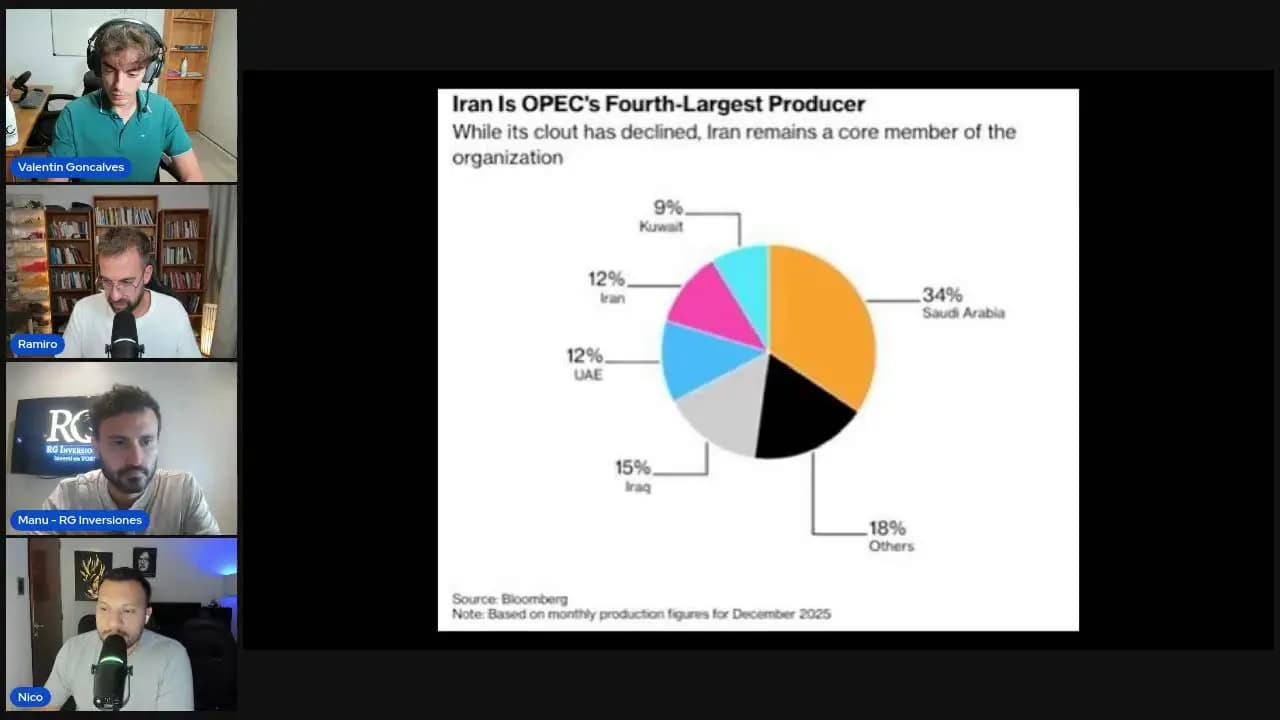
Saudi Arabia ETF up 7% in March despite conflict; prepared with oil leverage. UAE had extended correction but strong uptrend. Arab countries (Saudi, UAE) as capital protection bastions amid Europe's leftward shift to investor control/police state; greater freedoms for foreign investors. Eastern Europe developing well; Africa lacks legal security. Commodities resurgence benefits them beyond oil.
Gold had healthy correction in clear uptrend. Many assets (metals, emergings, Brazil, US sectors) had healthy corrections within uptrends after January parabolic rises (XLP consumer staples, Brazil). No signals risk metal trends; remain long metals/gold/silver in measure. Corrections allowed increasing exposure.
10-year bond yield stable since 2023 due to clashing inflation fears vs. Trump's 1% rate desire; volatile either way. For US stock continuity, yields must fall. AI productivity revolution could deflate inflation fears.
Dollar index in consolidation to 1998 lows; pre-conflict downtrend resuming post-resolution.
XLP consumer staples corrected from January unbuyable highs to attractive entry in uptrend.
Bitcoin showed favorable signals mid-war after poor year start; held relatively well vs. falling metals/stocks, in consolidation (weekly uptrend correction). In risk-on post-agreement, Bitcoin more likely to rise.
Brazil ETF new highs since 2011/2012; minimal correction on weekly chart. Key idea: low valuations, commodity-linked (plus Nubank/financials), giant producer, political stability (Lula/Bolsonaro dialectical not material like Argentina). US uncertainty diversifies flows; Brazil market cap ~$2-5B vs. US $80T. Polls favor Bolsonaro's son/governor of São Paulo; regime change would boost but not prerequisite.
Argentina MerVal in dollars broke 2,200 barrier but sideways since Q4 2024/October values. Energy shares higher, banks punished; more upside potential, dependent on global context/oil at $75-80.
Argentine fixed income trap: Emerging bonds ETF fell 4.5% on war fears, but Argentine corporate bonds (e.g., IPF 2034) rose sharply—rare divergence making them expensive. 27 bond yields 4.5%, too low. Be careful buying Argentine fixed income now.
MEP to CCL spread ~4% (3-4%); sending MEP dollars abroad costs 4%.
Recent inquiries show dollar withdrawal costs escalating: previously 3%, now 3.7%, and this week at a famous pocket house, 4%. This reflects a symptom of abundant money trying to exit via the MEP dollar market and little money entering. Dollars do enter through the official market but do not impact the market for companies using accounts with liquidation (Cuenta con Liquidación, CCL). Current restrictions persist, especially for companies, with SEPO (likely SEDI, Single Exchange Market) continuing, creating bottlenecks.
This affects Argentina's fixed income, including sovereign bonds and business obligations (NOtes, negotiable obligations). Many business obligations pay in dollars: bought with dollars in Argentina, paid in dollars abroad, allowing avoidance of the current 4% cost. Current performance of most operated business obligations shows negative yields, e.g., number 2 (orange card) at -3.27%, paying in May. To receive those dollars in May via CCL and withdraw, one loses 3.27% plus transaction costs, equating to about 4% loss.
Outflows stem from end-of-year release of blanking money (likely 'blanqueo', tax amnesty funds), with early months seeing wins on titles held by blanqueo participants waiting to withdraw. Undeniably, more funds exit this lane than enter. This is critical in a context where negotiations (NOtes) should have corrected but instead became more expensive, creating an undesirable divergence.
I really like negotiable obligations structurally, it's perfect, but it's difficult and you have to be selective with what you buy today.
To make them attractive:
- Government resolves restrictions, enabling free flow so convergence occurs without paying 3% to exit dollars.
- Normalization of funds: market decline to accommodate supply-demand imbalance (excess outflows, low inflows in this lane), aligning prices with two months ago.
If emergency bonds fall while NOtes rise, it's a divergence avoiding buys. Be super selective when buying.
YPF and Vista have corrected, especially Vista. Decision depends on specific portfolio holdings rather than absolute terms. Both are worth holding in portfolios, viewing Argentina as a small risk allocation in a global portfolio.
If not holding, consider waiting short-term for resolution of 'war' issue (likely market volatility or geopolitical tensions); agreement could cause further correction for better entry. Structurally, higher oil balance benefits Vaca Muerta ongoing.
For recent strugglers wanting to capitalize on oil balance, it's case-specific. Graphs are not parabolic, unlike metals or energy ETFs. A week ago, taking profits made sense for large positions in YPF or Vista (e.g., clients with heavy weight trimmed). Depends more on individual cases than general terms.
Hope you enjoyed the program. Subscribe, like, comment (even complaints help the algorithm). Next Cazadores de tendencias every Thursday, plus YouTube, newsletter, notes. QR code and description link to private investors' table meeting with Miguel, Blas, Máximo, Juan, Tomás.
Next week: Tomás and Miguel (dynamic duo, Batman and Robin). Hugs, see you next week, excellent Friday and weekend.
Keep Club de Inversores in your library
Save the videos and channels worth coming back to, and find them again in one place.