Elon Musk says robots and AI will end money
In a Nutshell
Elon Musk's prediction that robots and AI will make money irrelevant is wrong on timing and substance: scarcity of land, matter, energy, and time will persist, so money will continue to ration positional goods like prime real estate, while most everyday goods and services get cheaper. Physical robots will take 15+ years to reach homes at scale, but companies will deploy them in workplaces within 5-7 years. The real bottlenecks are data center opposition, energy infrastructure, and misaligned messaging that focuses on job losses rather than abundance—while open-source AI development and massive private investment (projected $7.6 trillion by 2031) represent the path toward sustainable abundance if political resistance doesn't derail progress.
These notes were generated by AI and may contain inaccuracies.
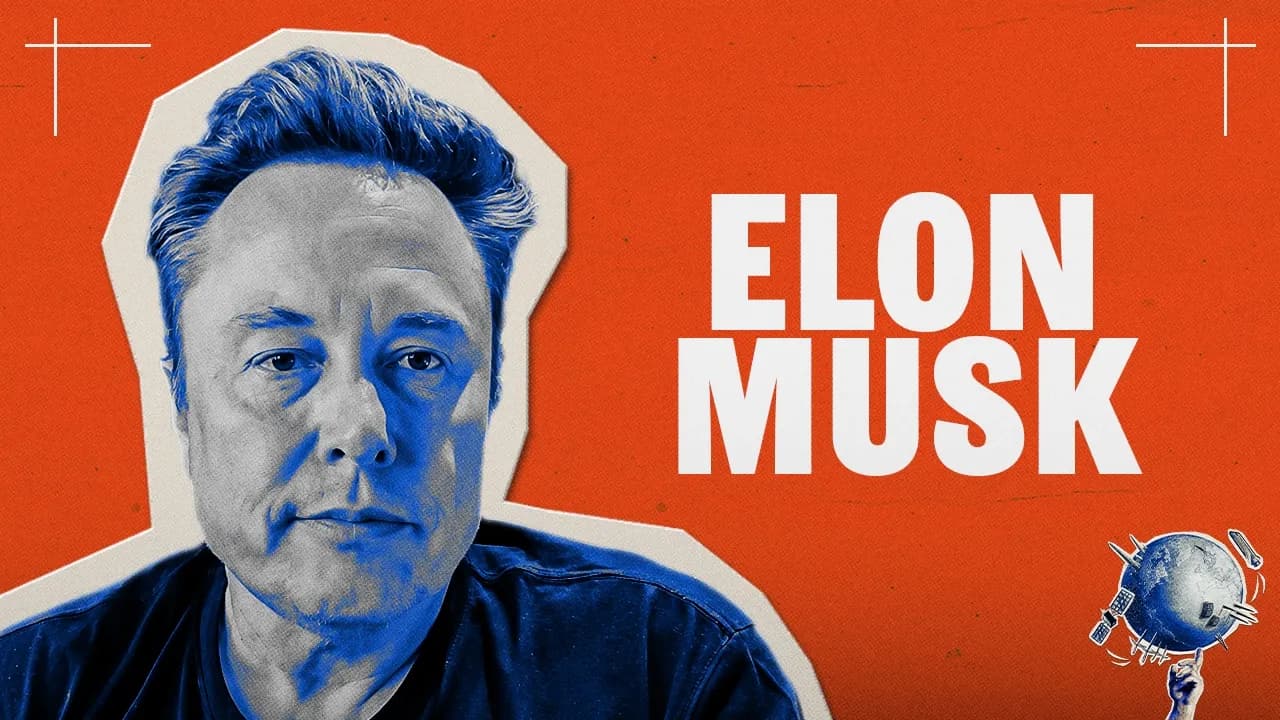
Elon Musk stated that in his version of the future, projected 10 years forward, money is not going to matter. The statement suggests people should not worry about retirement savings and should enjoy life because what is coming is too good. The speaker notes this was not shocking coming from Elon Musk.
Daniel expressed disagreement with Elon Musk's timeline for the robotic revolution, arguing it will come later than Elon predicts. He suggests 15 to 20 years before seeing more of what Elon describes. Daniel believes Elon is missing an important point about human behavior regarding brands and positional goods.
Daniel argues that money matters because people care about different brands. It is not just about having basic food, housing, or cars, but about brands. When something is in limited demand, people want it. Daniel uses the example of Malibu, stating that even if a new Malibu is created, the rich will still choose to go to the original Malibu rather than a replica.
The discussion references economic research from the 1960s to 1980s on positional goods. The concept addresses what remains scarce when goods become abundant. Digital goods can be replicated infinitely, making them essentially free, and intelligence is becoming free. A Twitter quote mentioned states that the median AI is already smarter than the median human.
The four elements that remain scarce despite technological advancement are time, matter, energy, and distance. Information can be transmitted instantly across the globe, but physical constraints persist. Energy remains a main input, and scarce molecules are a huge input. The global bandwidth has increased exponentially from two bits per second during the British Empire era to current levels.
Most goods and services that people care about on a day-to-day basis could become much cheaper. Food could get cheaper through solar agriculture and fully robotic logistics networks. Labor inputs constitute over 50% of the cost of building a house, suggesting housing could decrease by 50% or more with mass production.
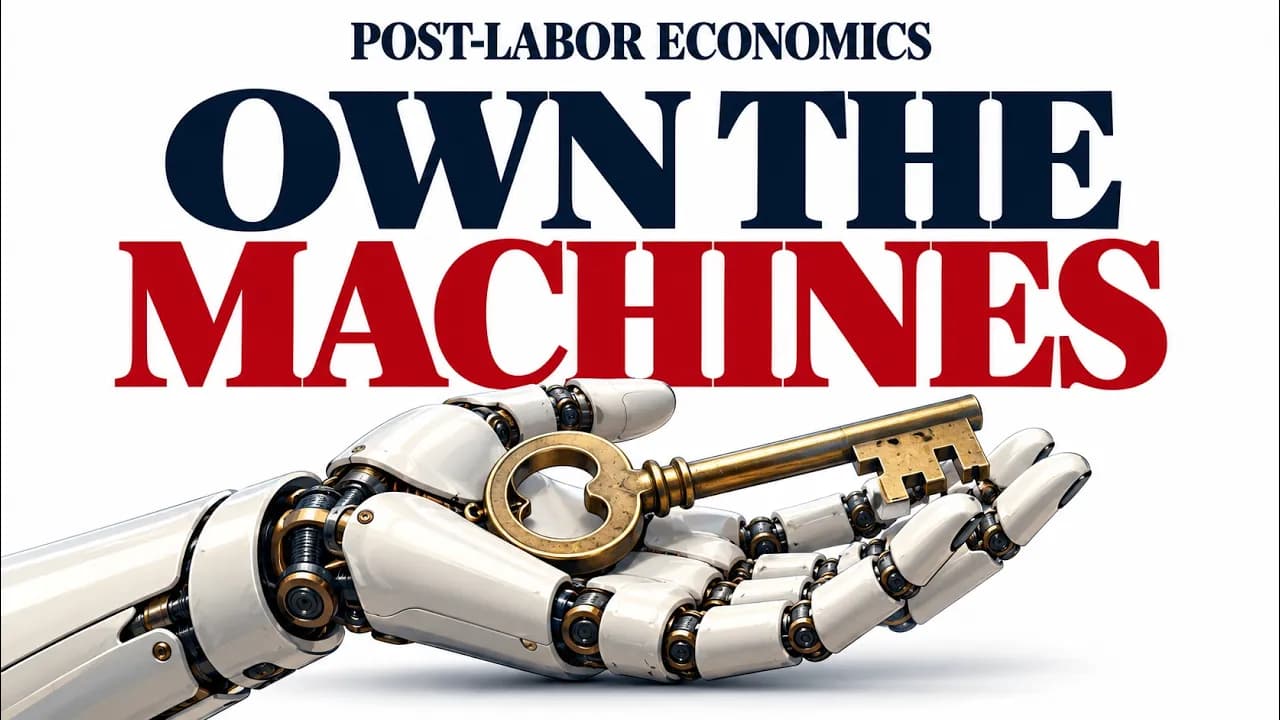
Money will stick around because it serves a useful purpose. Using a Star Trek level thought experiment, there is only one Paris, and many people will want an apartment overlooking the Seine. Money is the best way to express the intensity of preferences. Credits would simply reinvent money from first principles. Some goods and services will become free, but this is the nuance.
The statement was interpreted as an attempt to provide a positive and optimistic message. If society plays this right, the future will be economically better than the present. People will not need to worry about basics being taken care of. Other factors like status, recognition, self-actualization, and positive impact could become more valuable than accumulated wealth.
The definition of basics is a moving target. In the 1980s, a two-bedroom house was considered adequate even with two children, but now people expect four-bedroom houses. Younger people consider two to three big concerts per year and international holidays as basic requirements for a decent living. The bar for what constitutes basics will continue to move.
Hedonic adaptation and lifestyle inflation are significant factors. There is a movement toward technoc primitivism where the ideal lifestyle involves living in eco-villages, raising children, and spending more time in nature. However, whenever a new iPhone is released, many people want it, and cars in America continue to get bigger over time.
Society has not yet experienced physical abundance at scale. Information and knowledge are already abundant, but physical goods becoming available at fraction of current costs would represent a new experience. At some point, there are diminishing returns in the quantity of material goods because of maintenance and cleaning requirements. This could lead to prioritizing human connections and simpler lives.
Real-life experiences are inflating at a much quicker pace than electronic experiences. Five tickets to Taylor Swift are becoming much more expensive compared to a gaming console like a PS5. There is only one Taylor Swift, but building a PS5 will gradually become cheaper or better relative to salaries.
Companies need to consider whether they have a future-proof product or something that will trend toward zero. Businesses that play this correctly can generate incredible productivity, creativity, and stability on the path toward a fully automated economy. This represents the most creatively productive window possible for businesses.
The timeline for humanoid robots is estimated at 15 years until a robot can show up at a door and perform tasks like babysitting, mowing lawns, or plumbing work. Elon Musk is considered too optimistic, believing the timeline is 5 to 7 years. AI capabilities may be ready within 5 years, but hardware scale production and local compute requirements will take additional time.
Current robotic development is at the GPT-2/GPT-3 equivalent stage of robotic foundation models. Companies are using teleresence operators with VR goggles to solve problems, recording data that feeds back into training models. ChatGPT launched in November 2022, meaning less than four full years of progress have occurred. If robotic AI advances at similar speed, 2030 could see robotic foundation models ready for prime time.
Having a billion humanoid robots everywhere will have unprecedented societal impact. Robots will be smarter than humans, everywhere, faster, and stronger. The rollout is expected to begin by 2030 at the latest, with 2032 potentially seeing 18-month backlogs as robots become the next home appliance.
When washing machines, dishwashers, and automatic dryers entered middle-class households, servants were no longer needed for tedious tasks. Humanoid robots will represent this transformation to the nth degree, capable of mowing lawns, fixing things, and downloading packages to become plumbers or electricians.
Households may be delayed in accessing robots because companies will purchase them first. The calculation ensures businesses will prioritize robot deployment. Robots at work are expected within the 5 to 7 year timeline Elon suggests, while home robots may take longer.
New York State implemented a one-year data center ban, primarily focused on grid interconnects and environmental impact rather than taxation. This includes concerns about supplying enough water and power. The ban represents a shift from 42% opposition to data centers last year to 75% opposition currently.
Opposition to data centers is bipartisan. On the left, concerns focus on equality and opposition to billionaires and industrialists. On the right, older voters express NIMBYism concerns about property valuations, noise, and local impact. Golf courses use three times the water of data centers, while almonds in California use 60 to 90 times more water than all American data centers combined.
The data center ban is viewed as geopolitically significant. The concern is that the US is jeopardizing its future by restricting data center development. China is expected to win in humanoid robotics due to production capacity, but the West can maintain leadership in frontier AI only by staying ahead on data centers.
Placing data centers in low Earth orbit or oceans could eliminate neighborhood objections and accelerate research investments. SpaceX is already planning orbital data centers. On the negative side, restricting data centers could handicap the United States in global competition. The anti-data center sentiment reflects a broader failure of AI messaging to generate optimism. Most discussion has focused on job losses, economic collapse, and robotics takeover.
Approximately 70-75% of the United States and Western populations are concerned about AI, while Chinese populations appear more enthusiastic and view it as an opportunity for improvement. In a positive scenario, the current debate pushes society toward space-based solutions and removes the data center conversation entirely.
From a rational geostrategic, industrial, and economic perspective, the clear signal is to invest heavily in solar, nuclear, fusion, bio, hydro, wind, and chips. The concept of solar sovereignty suggests that energy demand will force America to become a solar-dominant economy through market forces rather than command structures. China covers lakes, mountains, and available surfaces with solar panels while simultaneously building coal plants weekly and 20-30 new nuclear reactors.
Chinese survey responses reflect what the CCP wants to hear. Americans view criticizing government and business as a democratic pastime. A rule of thumb states that louder nations indicate more functional democracies, while quiet nations with universal agreement suggest dysfunction.
Personal experience from former Yugoslavia demonstrates how a beautiful, stable, safe, prosperous European nation collapsed within 12 months into barricades and civil war fueled by national and religious divisions. This technology and proper adoption could serve as a savior if implemented correctly.
American resistance to AI stems from multiple dimensions. Billionaire hatred plays a significant role, with Mark Zuckerberg being the least popular among tech billionaires. Additional resistance comes from academics and professionals who argue against automating tasks they enjoy, even when technically capable, to preserve their sense of specialness and job security.
Opposing data centers has become a method of protecting personal identity and social status for mathematicians, physicists, coders, lawyers, and other professionals. Human resistance stems from primitive primate brain responses that perceive threats to existing ways of life, specialness, status, and security. People resist even to their own detriment unless they see personal benefit in the new system.
In a pure direct democracy, 75% of Americans might vote to ban data centers permanently. Socrates was skeptical of pure democracy for this reason. Short-term individual interests often conflict with long-term collective benefits. Democracy's superpower lies in the ability to change values and directions over time.
When working with companies to identify AI impact, some groups receive no direct benefit based on their current work and salary. These individuals may lack motivation to pivot. Some powerful operators within companies deliberately delay AI acceleration because it serves their personal interests. In democracies, populations can easily agree to step on the brake, which harms the entire country despite short-term individual benefits.
The news cycle and attention economy limit focus to 15 seconds or less. Negative messages capture audiences more effectively than positive ones. The focus must shift to genuinely positive stories about AI benefits. Medical breakthroughs, cancer solutions, genetic disease treatments, new materials, energy sources, and productivity improvements represent untapped positive narratives.
Fortune 500 companies spend tens of millions annually on AI because they receive real value, not entertainment. Anthropic's ARR reached $50 billion. Moderna stock increased 170% after announcing the world's first personalized cancer vaccine, with generative AI playing a major role. A viral story featured a man who used generative AI to create a personalized vaccine for his dog Rosie with tumors.
Palantir faces unpopularity due to AI surveillance applications. AI autonomous weapons represent another concern. However, the question remains whether living in a nation with these capabilities is preferable to one without them, especially given China's work on massive autonomous drone warfare. The incentive structures and race conditions can push development in undesired directions.
Companies like Anthropic shifted messaging away from AI killing everyone, as that narrative died in 2024-2025. Current concerns focus on jobs, surveillance, weapons, and data centers. The anti-data center debate will likely resolve as power issues prove solvable, water concerns prove trivial, and new ordinances address local issues.
AI layoffs are underestimated by official numbers. Major companies including Oracle, Amazon, Dell, Meta, and Microsoft have announced cuts. Laid-off employees from these companies, often strong operators earning $500,000, may become contractors earning under $100,000. Junior positions are disappearing entirely, preventing workforce entry. Mid-managers face elimination of delegation layers, forcing rapid pivots to strategic management or high-end individual contributor roles.
112,000 American job cuts through May were directly attributed to AI, making it the largest single cause for five consecutive months. Beyond direct layoffs, jobs never materialize—entry-level positions and advancement opportunities disappear. Solopreneurs and small companies operate without employees using only AI, demonstrating reduced demand for human labor.
Official unemployment stands at 4.1%, but U6 unemployment (underemployed and marginally attached) exceeds 8% without declining. The precariat now includes 70 million Americans in gig work, temp work, or contractor roles with reduced security. The traditional American dream of one full-time job with benefits is in structural decline.
Despite concerns, employed individuals open to learning AI tools convert this into competitive advantage. Two cohorts emerge within employers: those embracing AI become more productive and successful, while those rejecting it face eventual risk. Companies with traditional ranking systems face disruption as AI amplifies some individual contributors beyond higher-ranked colleagues while diminishing others.
Current corporate structures cannot accommodate employees suddenly worth significantly more or less. Companies retaining old structures will keep weakest employees and lose strongest ones. An example involves a marketing professional promoted twice to lead AI transformation after demonstrating capacity to build automations for others. This represents the messy transition from industrial revolution organizational structures to post-industrial frameworks.
The transition to AI-augmented organizations involves first movers who are figuring out the new structures while laggards struggle with implementation. Many business leaders are hesitant about the scale of org chart recalibration coming down the pipeline due to legal, financial, and technical risks. AI itself remains a moving target, creating uncertainty around implementation approaches.
When AI properly amplifies people, there's potential for an automation intelligence premium - extra value an individual leader can generate through effective use of technology. This applies to every human in the organization. The critical question becomes how to properly and equitably distribute this additional value being created.
Most organizations in the first wave made copilots available to thousands without support or training, and whatever value was created through savings and productivity was simply absorbed by employees who could complete work in fewer hours without mechanisms to measure or distribute that value. Key questions include: what part of the value should an employee gain back through less work or higher pay, what portion goes back to the company for increased productivity and profitability, and what portion should go to consumers through cheaper or higher quality products.
The feared answer is that if productivity gets discovered, headcount gets reduced. Leaders must first be convinced that value can be created, then face measurement problems where increased throughput of internal workflows can lead to quality degradation without proper safeguards - known as the work slop phenomenon.
People are rationally incentivized to hide, sabotage, or lie about productivity to preserve their situation. This pattern existed long before generative AI, particularly in technology where people with cushy jobs do whatever they can to preserve their circumstances. Examples include employees playing games like Elite Dangerous during meetings while letting them run in the background, with senior developers noting that as long as things work, there's no micromanagement.
The best move is to be proactive whether as an individual contributor, employee, manager, or business leader. Trust and incentives are the two most important ingredients to get cooperation. The purpose is to make life better and easier for everyone across the organization.
Elon Musk announced Terraab, an end-to-end factory in Grimes County, Texas, that will produce all required chips, memory, and processors to power his empire. The facility spans 100 million square feet - approximately 3.6 square miles - completely enclosed and doing one thing. SpaceX is building this as a completely vertically integrated end-to-end production of chips.
This addresses a major physical bottleneck for producing more AI, as data centers require chips to function. The ultra-pure silicon and water requirements make chip manufacturing location-specific due to different contaminants in water depending on location. The chip fab is described as the "bomb factory" in geostrategic terms, while the data center is the "fortress" or forward operating base.
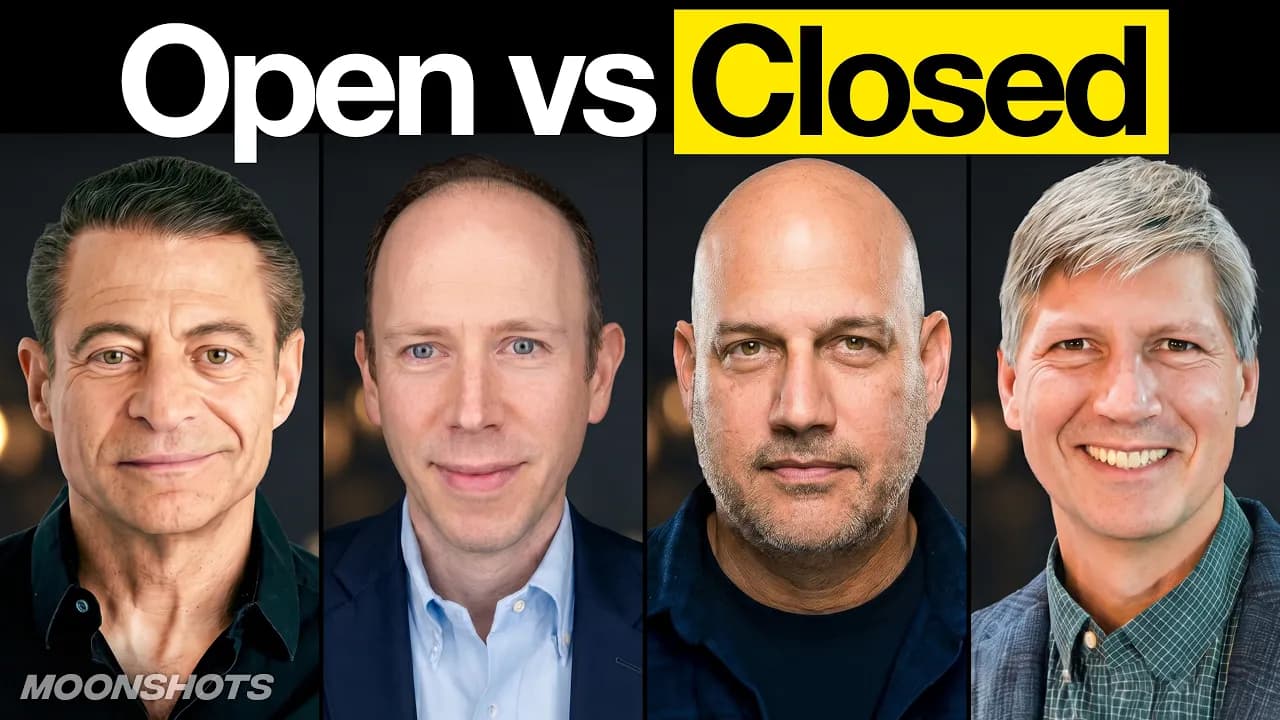
The biggest geostrategic competition of this century is almost entirely open source, with American labs and Chinese universities publishing open source research and collaborating - a stark contrast to Cold War dynamics where university research wasn't shared across the Iron Curtain. This competition is viewed as generative for humanity as long as it doesn't become a hot war.
On the American side, this represents private sector investment rather than government funding like the Cold War nuclear race. This is described as potentially the biggest investment in the history of civilization, privately driven by business.
Elon Musk's ability to think and act long-term with both SpaceX and Terraab is highlighted as important for the future of the US and healthy competition with China, as he doesn't need to think quarter-to-quarter or meet stakeholder targets.
Elon is laying the infrastructure for the age of sustainable abundance. The steps needed for a fully automated economy are being taken through these moves. The scale of investment is unprecedented - big tech AI capex of 2025-2026 has already eclipsed the Manhattan Project, Marshall Plan, Apollo program, and interstate highway system. The projected AI capex from now until 2031 is 7.6 trillion dollars.
This represents the largest civilizational project in human history. The current period is viewed as the final decade of the dark ages, with the goal of creating an age of sustainable abundance where future generations look back at current times as when people were still dying of illness and cancer, similar to how we view deaths from cholera and plague.
The rate of change is accelerating with a compression factor. The first industrial revolution took about 150 years, with each subsequent revolution cut in half to a quarter. Current revolutions occur in approximately seven years, meaning the next seven years will bring as much technological capability change as previous centuries.
Office work is expected to change dramatically. The American dream since the 1950s of getting an office job and becoming a knowledge worker will be viewed as strange, like voluntarily sitting in a box for eight hours pretending to enjoy meetings - compared to sad bears in zoos who survive but aren't in their natural habitat.
Mark Zuckerberg advocates amplifying rather than automating, arguing everyone should have a personal super intelligence on their shoulder. His five overarching points include: open source as defense against China and domestic concentration of power, personal super intelligence available to everyone, user-defined values rather than Silicon Valley defining ethics, pushback against over-regulation, and recognition that data centers produce tremendous value and tax revenue.
Zuckerberg views LLMs as the next generation of CPUs - unlimited processing power that you buy as hardware. Nvidia announced a $6 billion partnership to develop frontier open source models. The argument against legislating human values from Silicon Valley is that people should be able to remove guardrails and fine-tune models as needed.
Appropriate regulation should include consumer protections and privacy, but not FINRA-like bodies requiring approval for every model training run. The criticism of Zuckerberg's hyperindividualism - that personal AI won't help with collective challenges like climate change - is rejected as flawed, since democracy operates when people have more information, and personal AI represents the most powerful tool for better information access.
Meta's position behind in the AI race makes open source advocacy strategically advantageous, as the company has high barriers to entry in social media and can add free AI without hurting its business model. The need for frontier models to remain somewhat closed source is acknowledged to ensure investment flows continue at maximum development speed.
The manifesto is viewed as the best possible response to the current moment, though action must follow words to create frontier open source models competing with closed source alternatives.
Superintelligence offers unprecedented equality by providing every human being access to capabilities that amplify their potential. A child in Africa could have access to a doctor capable of diagnosing their grandmother, and potentially generating drugs at local community hospitals within a couple of decades. This represents the future that should be pursued.
Beyond personal superintelligence in everybody's pockets, manufacturing, governing, and societal superintelligence will power all these domains. The end state involves personal amplification enabling people to organize their lives according to their preferences—called freedom and liberty—while superintelligence automates the economy to provide everything wanted and needed in abundance.
Evidence from mobile technology demonstrates this trajectory. People in third world countries having access to WhatsApp has lifted many out of poverty by enabling them to know in what city they can sell their goods rather than walking in the wrong direction. Superintelligence will 10x this effect.
Partial free healthcare becomes possible with a super doctor in every pocket, making that aspect of healthcare immediately and totally free. This vision contains significant elements of the socialist dream, making it surprising that more people do not embrace this aspect of AI.
Many people want control, believing their party or ideology should be in charge, and they fear other people becoming equally empowered. The argument for keeping AI in the box and not distributing it widely resembles saying only librarians should have access to the internet because it's otherwise too dangerous. This approach contradicts how technology develops.
The same objections were made about books and print when the printing press was first created, with claims that only the church or monarchy should have access because it would otherwise be too chaotic. While the French Revolution and events in the Austrian Empire created messiness across Europe for many centuries due to more ideas, no one in Europe today advocates returning to the Renaissance.
Competitors like OpenAI and Anthropic, along with AI safety researchers, view unrestricted release of highly capable models as deeply irresponsible, pointing to instances where AI has been used for hacking or creating deep fakes. Critics argue that the balance of power Zuckerberg imagines represents a recipe for chaos, questioning whether humanity-killing technology should be open-sourced.
Models are already overly regulated, producing opinionated outputs based on article prevalence in training data and arbitrary rules. For example, OpenAI previously refused to make jokes about overweight women while happily generating jokes about overweight men.
Open source and open weights represent the ultimate direction forward. Those concerned about safety should champion open source to actually see the source and understand the openness. From a cybersecurity perspective, it should never be up to a single Silicon Valley company to determine appropriate model usage based on how models are used.
When US companies faced AI-augmented cyber attacks, they required open-source models they could fully control for defense. Intel does not place muzzles on CPUs or attempt remote management to shut down CPUs being used for disliked purposes.
Open source proves valuable for researchers, cybersecurity labs, and universities. University collaborations predominantly use open source models because they are cheaper, offer version control, allow fine-tuning, and enable examination of weights and vector spaces.
Powerful open-source AI serves as one of the best tools for aligned AI, cybersecurity risks, and bio-risks by putting capabilities in the hands of good actors. While bad actors will also gain access, restricting open source means only unaligned open-source AI would be available elsewhere.
Reality operates as an anarchic cybersecurity environment with countries including Indonesia, Russia, China, and America. Without a one-world government capable of policing everything—which presents separate complications—zero trust and defense-in-depth approaches are necessary. There was never going to be a singleton or single Skynet as the risk factor.
The scenario involves dozens of models and proliferation of open source, which represents a very good outcome for everyone.
Critics suggest Zuckerberg creates self-serving narratives to preemptively fight government regulation that could hurt Meta's business model, appease investors regarding massive capital expenditure for AI data centers, and pacify local communities angry about energy and water demands of Meta's infrastructure.
While business owners rationally advocate for policies that don't harm their business models as part of open societies, and fiscal responsibility requires addressing investor concerns on quarterly calls, the publishing of manifestos does not make someone inherently problematic.
Technical experts challenge Zuckerberg's definition of open. While Muse Glimmer represents an openweight model that can be downloaded and run locally, it is not truly fully open-source because Meta guards the training data and underlying code used to create the model.
Different levels of openness exist: open data, open algorithms, and open weights. However, openweight models can generate training data for other models, providing unlimited data generation capability. Most research remains open source from Stanford, MIT, Chinese universities, and Google, with algorithms published openly.
Meta and Google operate as walled gardens for measurement purposes. Agencies have requested more open measurement across platforms, which would provide marketers greater value, but internal calculations show walled gardens remain more profitable.
Zuckerberg's pro-open source stance benefits Meta without hurting it, and he may not advocate open source when it would deteriorate Meta's barrier to entry.
Barrier to entry represents a significant factor since frontier model training requires enormous capital. By 2032, frontier models will cost approximately a trillion dollars to develop. Subsequent AI generations will likely require international consortiums involving America, France, Germany, Japan, Google, Microsoft, and Nvidia pooling resources.
In such scenarios, open weights would become the default approach since contributors should receive benefits from shared resources.
Keep David Shapiro in your library
Save the videos and channels worth coming back to, and find them again in one place.