Essentials: How to Optimize Your Hormones for Health & Vitality | Dr. Kyle Gillett
These notes were generated by AI and may contain inaccuracies.
## [00:00] Introduction to Hormone Health Discussion
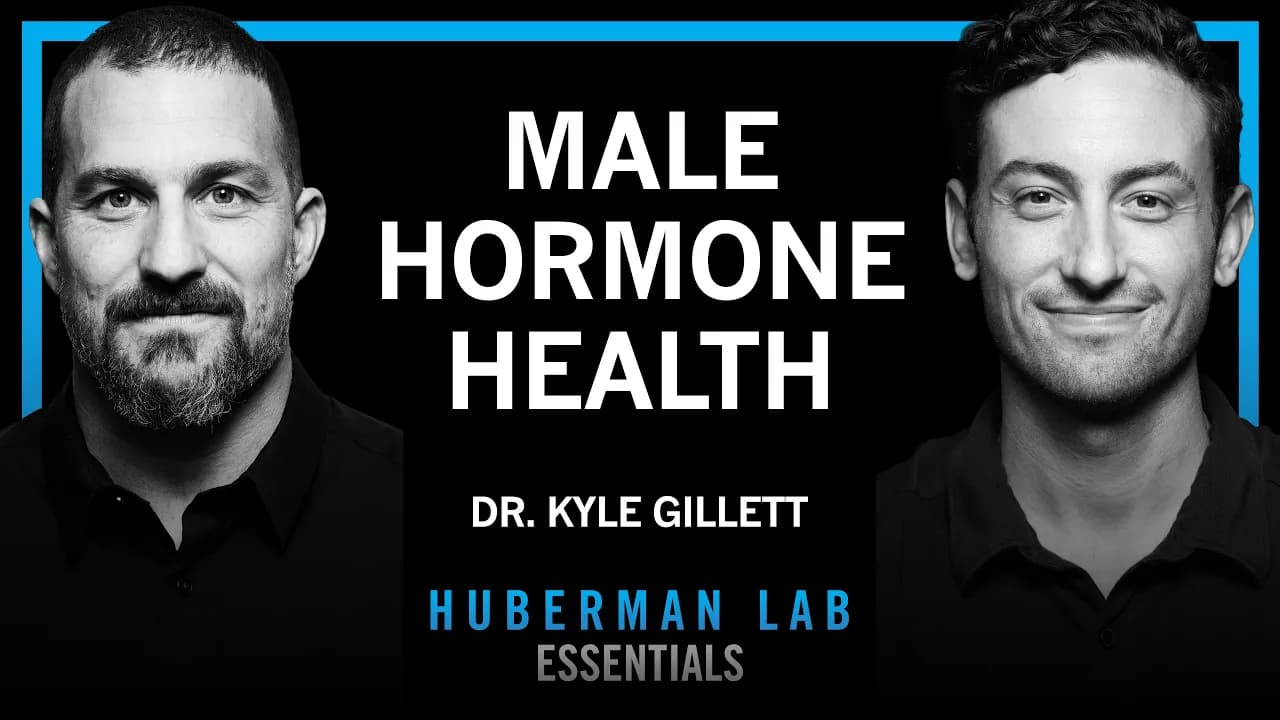
Welcome to Huberman Lab Essentials, revisiting past episodes for science-based tools for mental health, physical health, and performance. Andrew Huberman, professor of neurobiology and ophthalmology at Stanford School of Medicine, discusses hormone health and optimization with Dr. Kyle Gillett.
Initial Patient Assessment
Dr. Gillett asks probe questions during physical exam and history: history of present illness (if complaint), social history, family history for genetics and hormone health insights. Even without complaint, compare current state (e.g., at age 50) to age 20: what has changed?
My energy is not as good as it used to be. My focus is not as good as it used to be. My athletic performance is not as good as it used to be.
These symptoms justify lab workup including basic hormones; no pathology needed.
Gender Differences in Accessing Hormone Data
Women have more objective data (menstrual irregularities, absent/heavy periods). Men hesitant to discuss libido or energy, feeling less masculine, despite wanting testosterone levels.
Law of diminishing returns: small lifestyle interventions long-term > intense short-term.
- Diet and exercise (especially resistance training) strongest.
- Caloric restriction helpful for metabolic syndrome epidemic.
- Stress optimization (cortisol, mental/societal/family health; optimize as household).
- Sleep optimization (key for mitochondrial health).
- Sunlight (outdoors: move more, cold/heat exposure).
- Spirit (body, mind, soul; spiritual health impacts body/mind even if others optimized).
Individualized like car fuels (race car vs. diesel truck) for performance/genetics. Genetic polymorphisms affect carb/sugar metabolism (even unopposed by fiber). Use biofeedback (how you feel) or genetic testing (expensive, needs expert interpretation).
Blood Testing Recommendations
Every 3-6 months for preventative purposes; fasting and non-fasting.
150-180 minutes minimum zone 2 cardio per week. More zone 2 reduces need for long caloric restriction. Resistance training particularly helpful.
Caloric Restriction and Intermittent Fasting
For healthspan (not scale weight). Improves testosterone if obese/metabolic syndrome (Mayo Clinic Proceedings systematic review). Decreases testosterone in young healthy men without metabolic syndrome.
Intermittent fasting ok at caloric maintenance (not deleterious); improves overnight growth hormone spike (more significant than post-meal) and IGF-1 (helps older ages more).
- Still good GH output if avoid food 2-3 hours before sleep; diminishing returns for longer fasts.
- IGF-1: endocrine (liver-synthesized/released) vs. paracrine/autocrine (e.g., post-resistance training, local muscle action improves body composition; injected IGF-1 at physiologic levels does not).
Hormone optimization improves sleep (sleep also optimizes hormones).
- Growth hormone deficiency (adults/children): directly causes poor sleep; replacement therapy significantly improves (e.g., children).
- Vasomotor symptoms of menopause/andropause: lower progestogen activity worsens sleep.
- Low testosterone in men causes poor sleep.
- TRT can cause poor sleep via sleep apnea (dose-dependent risk, even in eugonadal men; higher dose = more risk) or initial hyper-sympathetic state (overactive androgen receptors after hypogonadal period).
For health optimization, know testosterone as important as progesterone/estrogen. For pathology prevention (breast cancer, osteoporosis), estrogen/progesterone more important.
Women have significantly more total testosterone than estradiol (different units: pg/mL vs. ng/dL); even more DHEA. Most test free testosterone (unbound, smallest proportion).
SHBG (sex hormone binding globulin) binds androgens strongest: DHT > testosterone > androstenedione/DHEA > estrogens (e.g., estradiol weakest).
DHT very strong androgen (DHEA weak, testosterone moderate, DHT strong); all bind androgen receptor (AR on X chromosome, from mother).
Helps effort feel-good/motivation like testosterone.
Diet/supplements affect: high plant polyphenols inhibit 5-alpha reductase (testosterone to DHT).
- Examples: turmeric, black pepper extract.
- Avoid bioavailable curcuminoids if low DHT or insensitive AR (genetics/lifestyle).
Hair Loss Options (Maintain DHT Benefits)
Topical/local strategies to decrease AR activity/scalp DHT conversion without systemic effects (e.g., reduced affect/libido/drive, prostate/sexual issues).
- Dutasteride mesotherapy: localized injections in male pattern baldness areas (men/women); repeat periodically; acts only locally.
Underdiagnosed (10-20% prevalence); spectrum/continuum, not fully penetrant; often discovered via infertility/subfertility in 30s (weaker to severe forms).
Rotterdam criteria: androgen excess, insulin resistance, polycystic ovaries (ultrasound not required).
Symptoms:
- Androgenic: acne (hormonal), hirsutism (chin hair), deepening voice, male pattern baldness.
- Insulin resistance: obesity, prediabetes, fasting insulin >2 (over six mentioned), metabolic syndrome.
- Oligomenorrhea: >35-day cycles, <9 periods/year.
- Infertility: <35yo trying >1 year; >35yo >6 months.
Treatment:
- Optimize body composition, reduce body fat, treat metabolic syndrome.
- Metformin (insulin sensitizer; not for all).
- Inositols: myoinositol (insulin sensitizer), D-chiroinositol (weak anti-androgen); type matters (female/male).
Cannabinoids (THC/CBD) do not reduce testosterone. Smoked marijuana increases aromatase -> estrogen up -> pituitary LH/FSH down -> testosterone down (like opiates).
High alcohol, potent GABA agonists (barbiturates, benzodiazepines, non-benzos) decrease testosterone.
Prescription TRT does not cause prostate cancer (normal aging does: autopsy 50%+ at 80yo, 90%+ at 90-100yo). Testosterone fuels existing cancer growth.
Individual assessment: balance fast aging (abnormal) vs. very slow aging.
Dopamine-prolactin like wave pool: even waves, avoid overflow/crash.
Estrogen upregulates PRL gene -> increases prolactin synthesis. Prolactin inhibits pituitary testosterone release.
Dopamine agonists decrease prolactin-producing cells.
Avoid prolactin increasers: mu-opioid receptor agonists (e.g., casein/milk protein, gluten).
Pheromonal/hormonal crosstalk (including prolactin) between partners; menstrual cycle alignment in women together.
100% time together (work/live 24/7) hard: no dopamine reprieve. Trips renew excitement (like new relationship).
Build space intentionally; plan ahead for prolactin rises (child/pregnancy/breastfeeding).
Plan ahead for both partners' prolactins to be high, dopamines low, and testosterones low during predictable crises. Every relationship goes through a crisis that is personal between the two partners. Plan ahead with good times, not necessarily supplementation or time apart.
Peptides are heterogeneous: very dangerous and very safe ones exist. Favorite peptide is insulin, the original peptide, which can kill if dosed incorrectly. Insulin should be prescribed by a doctor (OTC like ReliOn or NPH exists, but ideally prescribed for diabetes). Peptides should be prescribed by doctors; several are FDA approved. Growth hormone is a peptide hormone (not steroid).
Growth Hormone Releasing Hormone (GHRH) Peptides
Risks: Tumor growth, cancer (similar to type 1 diabetics with high GH but low IGF-1, high cancer incidence).
Benefits: Lipolysis, decreased body fat, increased lean body mass (achievable with other interventions); cosmetic benefits for hair/skin/nails (use topicals instead).
Most people do not need GHRPs.
BPC-157 (Body Protective Compound 157), bio-identical to gastric protective compound 157 produced in the stomach. Aging causes atrophic gastritis, reducing intrinsic factor (peptide binding vitamin B12), leading to age-related B12 deficiencies, more colitis, diverticulitis.
Increases VEGF (vascular endothelial growth factor), promoting blood vessel growth. Opposite of Avastin (VEGF inhibitor, WHO essential medicine for cancers like colon cancer). Avoid if cancer or high cancer risk.
Not FDA approved, but standard of care (most common non-insulin/GH peptide). Anecdotally/clinically well-tolerated short-term. Use early for injuries (improves blood flow to low-flow areas like cartilage/ligaments, worse with age). Example: Russian gymnast's Achilles full rupture healed in one month, likely using BPC-157 or similar.
Prescription versions available; non-prescription often contaminated with LPS (lipopolysaccharide), causing inflammation (lab-used to induce fever/systemic inflammation). Work with physician and good compounding pharmacy to avoid LPS. Internet sources ship to anyone; users feel 'tingling/fever' (LPS, not good for brain).
Three FDA approved indications:
- Hypoactive sexual desire disorder (mostly women, pre-menopause, hormones in check): Bremelanotide (PT-141), increases libido. Nasal spray (central CNS action), injectable, troche. Works for men too, relatively safe.
- Lipodystrophy: Same as tesamorelin (Egrifta).
- Rare genetic condition: Poor melanocyte proliferation (hypopigmentation, not albinism), morbid obesity, poor childhood outcomes; used in kids.
Risks: Family history/undiagnosed melanoma – increases alpha melanocyte stimulating hormone (MSH), may grow melanoma. Avoid long-term; advocate dermoscopy/skin checks.
Conceptualized as Venn diagram: body, mind, soul – all must be healthy together. Spiritual health affects mental/physical physiologically, regardless of atheism/religion/origin beliefs.
People compartmentalize (doctor for physical, pastor for spiritual, therapist for mental), but integrate all three for cornerstone health. Interdisciplinary clinics improve outcomes; this is upstream (body/mind/soul before specialties).
Well-received by patients of all backgrounds. Personal journey; no pushing specific beliefs. Excellent rapport possible regardless of differences.
Caffeine effect on testosterone, estrogen, other hormones: Only if affects sleep. Works on adenosine, slightly improves allergies; negligible otherwise.
Thank you. My pleasure.
Keep Andrew Huberman in your library
Save the videos and channels worth coming back to, and find them again in one place.