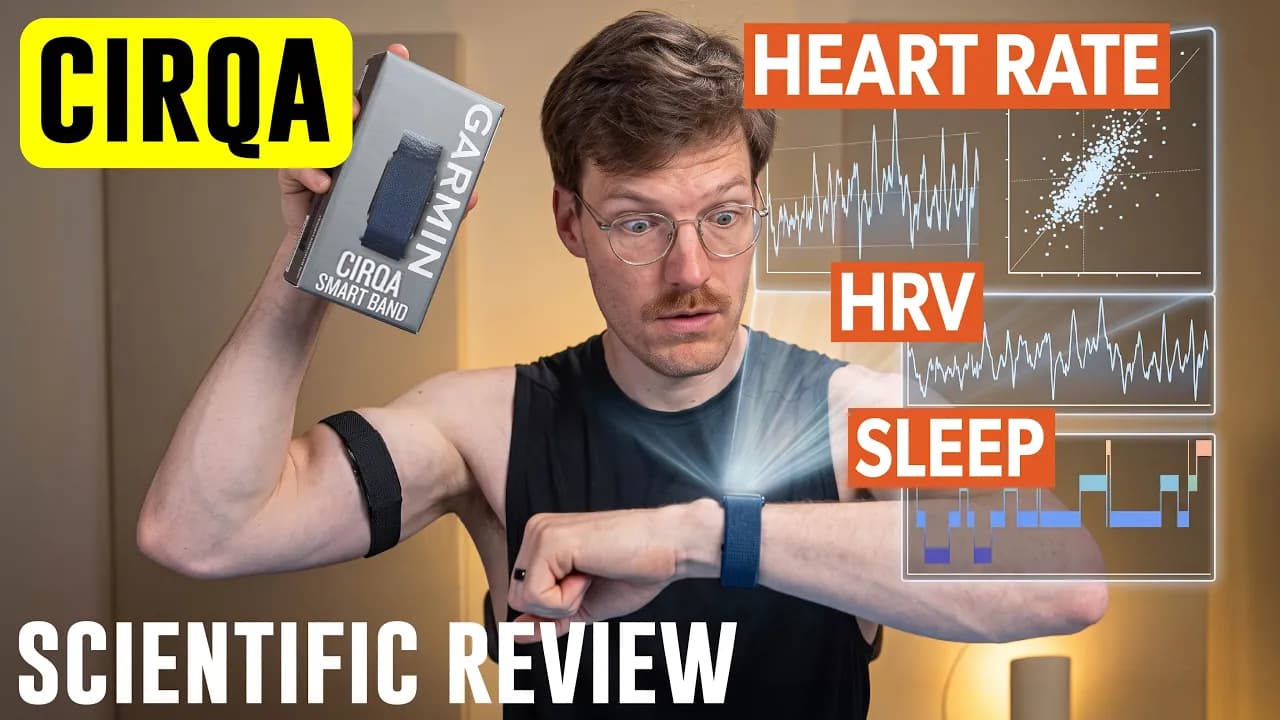
Garmin Sensors: Newer ≠ Better?
In a Nutshell
Garmin's Elevate V5 optical heart rate sensor (Forerunner 570) shows no major performance edge over V4 (Forerunner 165) for running (correlations 0.97-0.98) or cycling (0.95-0.97) on tester Raphael's right wrist, with both deemed "good enough" despite trailing top competitors like Apple and Pixel Watches. The biggest surprise: massive accuracy drops on the left wrist for both sensors due to factors like blood flow constriction from straps or physiology, far outweighing V4 vs. V5 differences—experiment with wrists before upgrading. Reviewers should test both wrists; no need to upgrade from V4 if satisfied.
These notes were generated by AI and may contain inaccuracies.
Is there a big difference in performance between the top-of-the-line Elevate V5 sensor in Garmin devices and the older Elevate V4 sensor in cheaper devices? Tested on colleague Raphael for several weeks: Garmin Forerunner 570 (Elevate V5) vs Garmin Forerunner 165 (Elevate V4). Focused on outdoor cycling and running. Results surprising; main finding unrelated to sensors but another factor affecting performance, impacting how reviewers test watches.
Rob is a post-doctoral scientist specializing in biological data analysis. Video fully data-driven, N=1 limitations, plans bigger tests later.
Horizontal axis: heart rate from reference Polar H10 ECG chest strap. Vertical: Forerunner 165. Perfect agreement on or near blue line. One deviation, otherwise excellent. Correlation 0.98 (max 1.0).
Individual runs:
- First run: red (165) and blue-green (reference) agree perfectly; minor trouble during break/short interval quick changes.
- Second run: minor deviation, otherwise excellent.
- Third run: almost perfect, small deviation.
Forerunner 165 good enough for running on Raphael; no need to upgrade to newer sensor.
Correlation 0.97, slightly lower. Points very close to blue line, potentially tighter at higher rates. Individual runs:
- Overlaps reference almost perfectly.
- Some deviations: increases not detected by reference, other deviations.
- Interval run: good job, minor deviations.
- Short run: good, minor deviation.
Both sensors perform well for running with minor deviations.
Cycling harder due to wrist tension and bumpiness. Points super close to blue line, more deviation than running, correlation 0.95. Good enough.
Example rides: really good, pretty good (details not fully caught), good enough, nothing major to complain about.
570 tiny bit better, correlation 0.97. Points close to blue line, more deviation in medium heart rate range.
Example rides: pretty good (deviation), pretty good, not much to complain (struggled beginning, missed dips), good enough.
Running overview: devices plotted by correlation with reference (top-right best). Forerunner 165 and 570 close; 165 slightly better (not statistically significant). Not as good as top performers (Apple Watches, Pixel Watches, some Huawei), but good enough for running. No big distinction between sensor types on Raphael's right wrist. 165 has slight weight advantage over 570.
Cycling overview: 165 good, 570 tiny bit better, close to Raphael's prior Forerunner 970 test. Not as good as Pixel Watch, Apple Watch, but good enough.
Running channel next to full-time scientist job is expensive (pays editor Alex, buys most Garmin watches). Support via Amazon affiliate link (any purchase, e.g., coffee beans, toilet paper; commission helps). Other links in description for discounts on Garmin, Coros, Polar, Apple Watch, Pixel Watch, Oura ring, Whoop strap, Eight Sleep pod.
Worse results with Forerunner 165 on cycling (left wrist). Devices shuffled randomly between wrists, tracked per day.
Update: Raphael wore strap higher on left arm, constricting blood flow, explaining worse left arm performance vs right.
Implications: individual physiology affects left/right wrists; tightness of clothes, jewelry, straps impact heart rate tracking. Winter may degrade performance (colder, less blood flow, tighter clothing). GPS potentially worse with thick layers blocking signal.
Reviewers: max one device per wrist. Rob saw left wrist better on himself without other devices. Combination of physiology and factors like straps. Effect bigger than V4 vs V5 difference.
Biking overview: much better on right wrist for both 570 and 165.
Running: Forerunner 570 and 165 substantially worse on left wrist than right (same devices, random shuffle over days). Biking left wrist: points away from blue line (too low/high heart rates).
Lessons for users: experiment with left/right wrist for better readings. Consider inside wrist (future video idea).
For reviewers: test on both wrists (still N=1).
Example left wrist traces (165 biking): slight shift (algorithm best fit), okay with deviations, bigger deviations, shift due to low heart rate mismatch.
570 left wrist: less deviation, higher correlation; okay traces with shifts, misses low readings.
Surprising huge left/right differences; glad tracked per day.
No major difference Elevate V5 vs V4. Potentially 570 better on left wrist (more consistent?). Neither top performers, good enough on right wrist, not on left.
If happy with V4, no reason to upgrade; no major boosts expected. Experimenting with wrist gives more performance boost than sensor switch (N=1 basis).
Future: test other brands on Raphael for left/right differences; hypothesize on perfusion/measurability.
Affiliate reminder: links for Garmin Forerunner, Enduro 3, Fenix 7, Whoop, Oura, Eight Sleep pod, Amazon anything.
Suggested videos: Coros Pace 4 (Coros didn't want reviewed), Athlytic Pod.
Keep The Quantified Scientist in your library
Save the videos and channels worth coming back to, and find them again in one place.