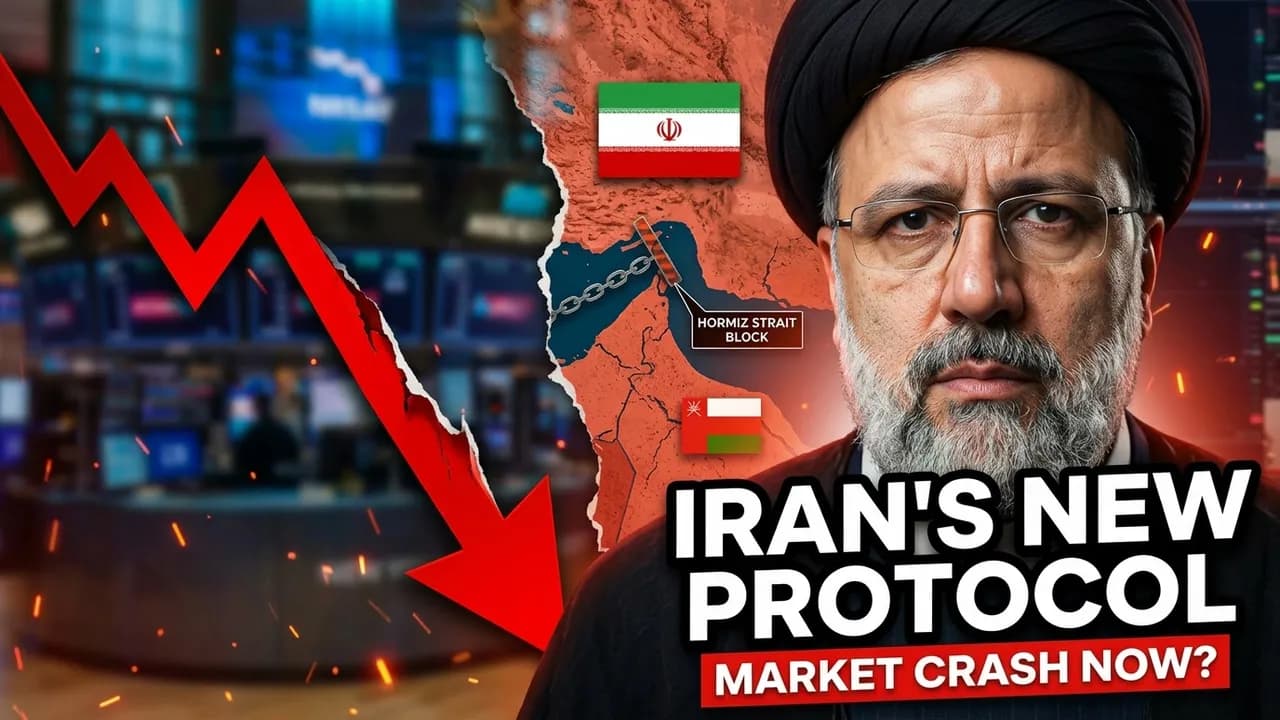
Global Markets Are Selling Off… What You Need To Know
In a Nutshell
Markets are selling off on geopolitical tensions from US-Iran conflict, with oil above $90 and global bond yields spiking—Japan's 10-year near 3% and US 10-year near 4.8%. The Fed now has a 68% chance of hiking rates at the September 16 meeting, while Trump is signaling restraint to avoid further market disruption. Technical support sits at NASDAQ 700; shorts are being taken on lower highs/lows with intraday exits, while beginners should wait for clear reversals rather than trading at open.
These notes were generated by AI and may contain inaccuracies.
Markets are set to open in 3 hours and 15 minutes for the United States. The speaker is currently in Italy at 12:18 p.m. local time. Today includes a wedding commitment preventing a later update. On the 5-minute timeframe, direction remains bearish with lower highs and lower lows. Yesterday's lows were surpassed, but markets opened with a sell-off, bottomed, then recovered before forming an overbought reversal that was rejected. The primary movements were the sell-off, recovery, and subsequent sell-off. From open to close, markets were relatively flat, with the same pattern occurring currently. QQQ is down half of a percent.
This serves as a reminder for beginners who feel compelled to trade at market open. Patience is essential, allowing the market to establish its direction for the day rather than fearing staying in cash until a genuine opportunity emerges. The preference is for trading either extremely oversold or overbought reversals, as these provide clearer signals for potential upside or downside once price action confirms the move. The approach involves waiting for sufficient opportunity to present itself before taking action.
Live trading sessions normally occur daily at market open when not traveling. Lifetime access requires a one-time payment via the second link in the description, with a current sale available. Over $500 billion has been wiped from Asian markets. The decline stems from escalating US-Iran conflict with both sides launching attacks. An update indicates Trump wants to hold back on further attacks. The assessment is that Trump cannot afford additional uncertainty given that bond yields indicate a high likelihood of a rate hike at the next meeting.
The current assessment suggests Trump will call off the retaliation attack on Iran. Oil has surged above $90 as supply distribution risks grow. Global bond markets are selling off sharply, with the 10-year Treasury yield rising to nearly 4.8% and Japan's 10-year yield nearly hitting 3%. Treasury Secretary Bessnet has stated that Japan needs to begin possibly raising interest rates. Japan's rate hike odds have jumped to 97%, adding pressure to the Japanese tech market. Rate increases will slow the economy and increase borrowing costs for businesses, individuals, and government.
Japan is one of the largest foreign holders of US treasuries, creating carry trade risk. The August 2024 carry trade event required Federal Reserve intervention when there was a rapid shift due to hedging between the Japanese yen and US dollar. Trump's statement indicates he could care less about Iran and prefers the current position on the strait, suggesting the Iranian people should stand up and fight. The current assessment is that Trump is attempting to create internal disruption in Iran while recognizing that markets cannot afford retaliation. The position on the strait appears inconsistent given the need to address oil reserves currently at nearly 40-year lows, creating negative implications across stock, bond, and oil markets.
Inflation is beginning to rise with average Americans feeling the pressure. The likelihood of a rate hike in the next two weeks is significant. The Fed rate monitor tool provides probability assessments for Federal Reserve rate decisions. For the September 16th meeting, there is a 68.1% probability that the Federal Reserve will raise interest rates. Rate hikes increase borrowing costs for individuals, businesses, and government. Trump's position has been to request Federal Reserve rate cuts.
The FOMC operates as a committee rather than individual decision-making. Kevin Walsh represents one vote among many, and if sufficient members vote for rate increases, individual votes become insignificant. Japan's 10-year yield reaching current levels is historically significant, representing one of the highest levels in 15-20 years. This increases borrowing costs and will slow economic activity. These developments are occurring globally while US markets attempt to trade near all-time highs.
NASDAQ maintains common support around 700, which has not been broken. Aggressive shorts will wait for confirmation rather than acting prematurely. Intraday shorts are acceptable with daily position closure. A break below 700 would create a significant gap to fill based on previous lows around 650. Markets remain more bullish than bearish overall. Shorting carries greater risk and should only be undertaken by those who understand risk management, as beginners should avoid this approach without proper risk acceptance.
Current short position is being partially closed with $1,200 in gains for the day, though earlier gains were higher. The time advantage from Italy allows taking advantage of pre-market activity with lower highs and lower lows, shorting into the close. Lifetime access to the LPP team requires a one-time payment with current $299 discount available. Access has remained available to members since 2018 without recurring subscriptions.
Keep Ricky Gutierrez in your library
Save the videos and channels worth coming back to, and find them again in one place.