Helping E-Commerce Business Owners Scale
In a Nutshell
Alex Hormozi shares tactical advice for scaling e-commerce businesses from $2M-$6M to $10M-$38M, emphasizing reinvesting profits as an "experimentation budget" to test broader ad keywords via bridge pages, building defensible brands over fleeting direct-response products, and militant recruiting for sales talent with concrete behavioral training. Key examples include Elevate Customs doubling leads by shifting to colder markets (10:1 ROAS potential), Ethan delegating founder "junk tasks" via VAs while focusing on one winning brand for exit, Samantha scrapping a risky SaaS pivot to optimize her $3.5M hair extensions wholesale/salon cash flow, and Sasha outsourcing logistics to scale Whatnot live sales to $100K/day. Free $100M Scaling Roadmap at acquisition.com/roadmap provides a 10-stage blueprint across core functions to identify and break constraints.
These notes were generated by AI and may contain inaccuracies.
In 2021, sold e-commerce company Prestige Labs with Gym Launch for $46.2 million. Six months ago, broke Guinness World Record for fastest selling non-fiction book, generating over $16 million in a weekend using a Shopify store. Answering questions on scaling e-commerce businesses with tactical solutions.
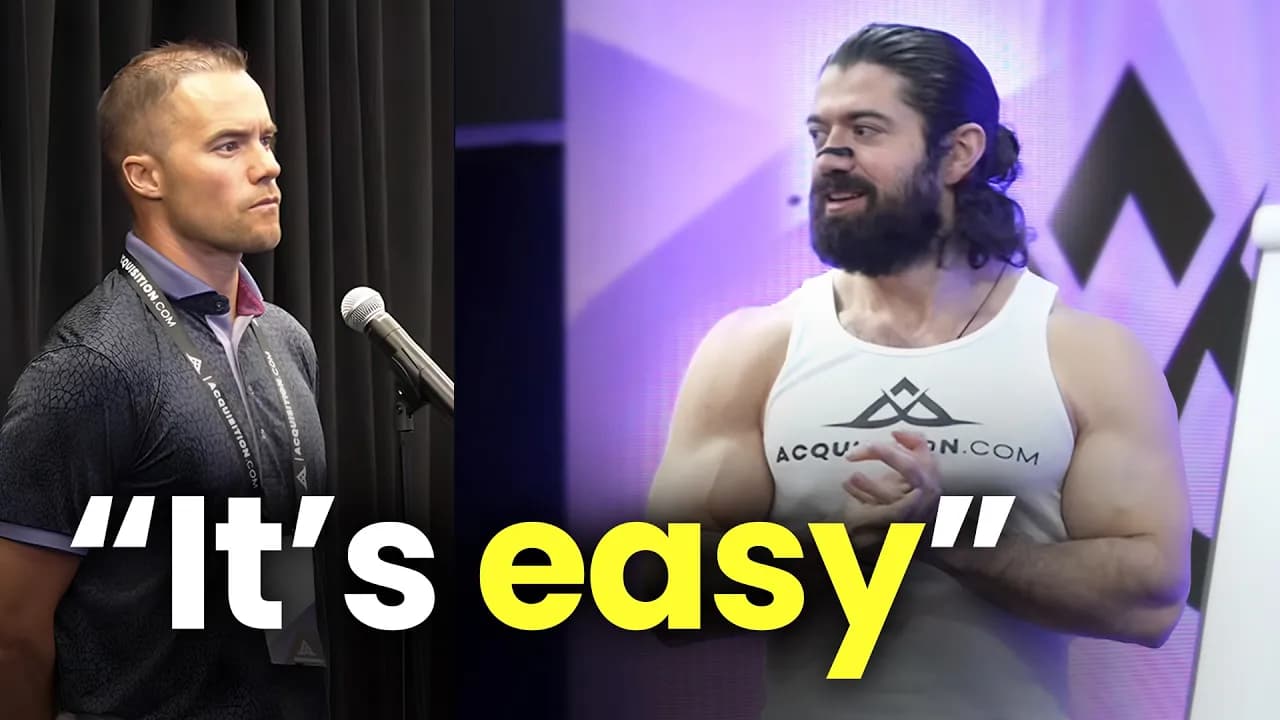
Max and wife run Elevate Customs, building and selling luxury gaming tables like pool tables, casino tables with cool backlights and one-off custom pieces. $2.5 million revenue/year, goal $10 million. Sell mostly via Google ads ($15-20k/month), invoices, phone calls. Want to 2x-3x leads without breaking the bank for quality leads.
Currently can't scale spend due to lower quality leads and keywords. At $20k/month, haven't saturated market for custom gaming stuff; could go to $2 million/month before saturation. Issue is media buying and wrong keywords. Margins 20%, $500k profit/year.
Treat extra profit as experimentation budget: burn $200-300k on bad keywords to find 6 more scalable to $100k/month, 5x business. Shift mindset from entrepreneur to investor: focus on return on capital, reinvest $500k profit to reach $10 million faster.
Side Quest: Reinvestment in Service Businesses
For service businesses with cash flow, reinvest in:
- Talent and culture: Hire better team to uplevel, raise prices via virtuous cycle (good work → demand > supply → higher prices → better talent → better job → higher reputation → higher prices).
- Brand: Big aspirational moments (e.g., Red Bull space jump), not direct response ads.
If can't charge more, not better than competitors. See all profit not needed for living as experimentation budget to test keywords, finding money-printing machines. Current keywords print at 10:1 ($250k spend for $2.2M revenue, profitable after COGS). Need to find another hundred.
Scaling Ads to Colder Markets (Eugene Schwartz Levels of Awareness)
Levels: unaware → problem aware → solution aware → product aware → most aware (existing customers). Current keywords target product/solution aware. To expand (10x clicks), use broader keywords (e.g., "home projects", "accessories"), bridge pages/advertorials mimicking sales path: keyword → advertorial → sales page. Colder clicks cheaper, ocean of volume.
Problem aware examples: "Is your house boring?", "Extra room unused?" Lead them through journey. Good media buyer knows this; broader keywords compete more but bridge pages convert.
acquisition.com/roadmap 10-stage roadmap from zero to $100M+ across software, physical products, services, brick-and-mortar. Breaks down by 8 business functions, constraints/symptoms, steps to graduate. Free.
Ethan sells direct response e-commerce products (branded drop shipping), all paid media, $3M/year run rate (4 months old, 4 SKUs, different brands). Background in paid traffic/affiliate. Goal: $15M run rate, portfolio of 4-5 brands to exit.
Built teams/systems for priorities, happy with talent/output. Issue: founder stuck with "junk drawer" of niche/random chores (20 min/week each), tedious/low leverage.
Can spend more (hired funnel team, operations strategist). Not a spending constraint yet. Will always have founder tasks; delegate less important ones.
Use VAS (virtual assistant services), contractors for sporadic/project work (e.g., spun up 15 editors for launch ads, QA, then off). Fiverr for tedious tasks, train VA/contractor. Tons of cheap/good Shopify contractors. List regular tasks, ship to piecemeal contractors: trade 20 hours for 2, scale to manager role when revenue supports.
Running only paid ads (3-4 channels), planning influencers. Few succeed with portfolio model due to rising CAC, shrinking margins, supply chain, dupes on Amazon. Media arbitrage works to ~$10M, then caps with low margins/cash flow.
Build one brand with product you believe in, recruit believing influencers/affiliates (not mercenaries). Focus effort on clear winner, drop losers. Direct response doom loop: revenue up → margins compress → sell to maintain team → high-liability nonprofit.
Brand + product completes loop: amazing promise/associations → purchase → product reinforces → virtuous cycle to household name ($50M-$500M exit). Defensibility: patent/legal (hard small) or brand (people buy despite cheaper knockoffs). Private equity buys brands, not products.
Find legit/defensible product (9/10 market fit), invest in brand. Continue making money short-term while building long-term play.
Samantha owns hair extension company in Australia: salon ($900k, 50% margins, no scale desire) + wholesale/e-commerce ($2.6M so far this year, 100% growth, 30% month-on-month, 30% margins). Both run without her.
To make sellable at high valuation: years of ops restructuring, recruitment, reducing owner dependence, systems. Service-based product businesses don't scale without heavy input. Wants SaaS pivot.
SaaS idea: online booking system for salons/service businesses with AI. Differentiator: bridges revenue-profit gap (pull data), AI as motivational coach with real-time analytics on team, services, numbers, margins (e.g., weekly calculates team revenue/product costs). $500k build, $120k/year maintain, but it's
Stockists are already salon owners who buy and trust the business. They want and use the product. Founders subscribed already. Need only 150 subscribers to maintain costs, already achieved. With 2,000 weekly stockers subscribing, potential $2 million/year.
One of the difficulties is telling someone what they want to hear versus what I think. Fine line between leaving everyone happy and integrity.
Sorting question: Assume your position and advise despite disagreement, or tell what you should do? Chooses latter.
Getting into SaaS as someone who never built software, self-funding it—distribution base doesn't mean sell everything they can buy.
What if I've already paid for it? That's sunk cost fallacy. Some of the best money spent is deciding to stop spending bad money.
Organic audience growers mistake: Grow audience, sell product, reinforcing event. Then make another product. End up with four mini-businesses serving same customers when real constraint is audience growth.
Current revenues: E-commerce (wholesale) $2.6M, salon $900K. Vast majority B2B to stylists; 50% trade accounts. Hair extensions recurring every 8 weeks.
Business is sellable; not unsellable due to operations. Need more customers.
Current business more chill and cash positive than SaaS. SaaS won't make money for years; commit to zero profit for 7 years. Competitors don't have two other businesses.
Business lean: Wholesale and salon from house, $500/week expenses. Margins too small to scale extensions.
I would just like to make money online while I sleep and don't want to work anymore. Software is the worst way.
Confront current business: Improve margins, get more acquisition (more content, ads to stylists, offset front end, plays in salons to make them more money with extensions). Hunters close deals, farmers maintain. Constraint: Production time and capital.
Investing $500K in wholesale yields $150K margin vs. subscriptions (lose it).
I've built more software companies to a billion than you have.
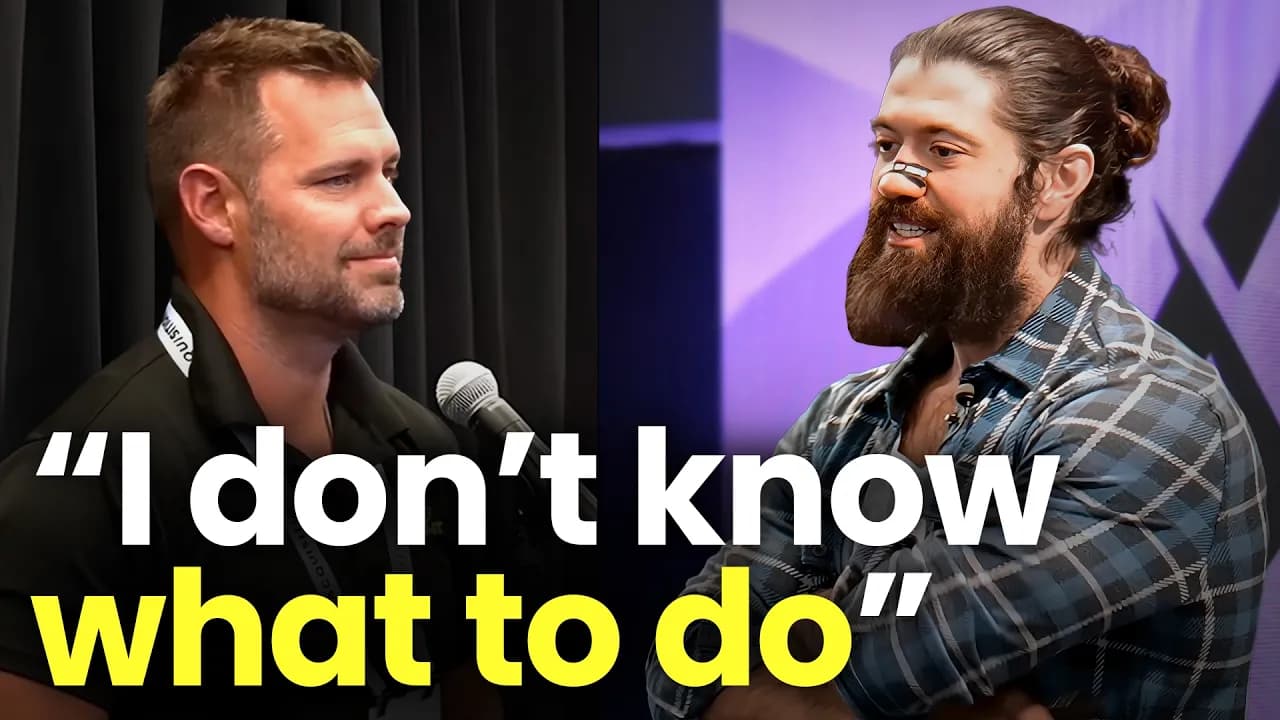
Sasha sells designer bags and sunglasses, $6M/year, goal $38M (~$100K/day). Stopping factor: Recruiting.
Inspired by content, built great team via militant recruiting. Sell on Whatnot, 110K followers. Go live 5 hours/day, get tired. Three salespeople. Could do $100K/show if live more.
Need two more on-camera salespeople. Also recruiting for packing (own logistics/warehouse for fast shipping, show products live).
Outsourcing logistics recommended unless key differentiator (shipping commoditized). Focus on distribution and sales, not warehouse ops.
Current recruiting: Indeed ads. Need militant process, multiple interviews.
Sales requires skill: Motor skills, presentation, entertainment. Buy or build talent?
- Buy: Faster, expensive (e.g., Amazon affiliates/micro-influencers already live streaming/selling).
- Build: Cheaper, longer, harder (kiss more toads, hire for trainable soft skills).
Profitable per show ($5-7K profit). Cash-based accounting. Reinvest all gross profit into inventory, causing cash crunches. Need strong finance person for forecasting, not just bank balance.
Pay salespeople percentage of profit. Contract exclusivity for affiliates.
Warehouse roles commoditized; hire for pulse, good leader. Core: Train people to sell.
Break down training into concrete behaviors (voice, body): Raise voice, talk faster, shoulders back—not "higher energy." Avoid amorphous words; compress training time.
Develop sales training for stable of salespeople 24/7.
House cleaner became top seller (copy-paste of Sasha). Issue: She's yesterday's version, mishandles situations. Solution: Put her in front of camera to sell, not manage.
Gift: $100M Scaling Roadmap (200+ hours, 10 steps breaking scaling stages: product, marketing, sales, customer service, IT, recruiting, HR, finance). Free at aquis.com/romap; plug in business info. Thank-you page: Book call for help breaking scaling constraints.
Monthly workshop at headquarters with real team (marketing, emails, ads, copy, sales, finance, recruiting). They spot constraints. Space limited, no pressure.
Keep Alex Hormozi in your library
Save the videos and channels worth coming back to, and find them again in one place.