Here's What a $1 Million Portfolio Would Pay You Every Year
In a Nutshell
A $1 million portfolio can generate roughly $40,000–$51,000 annually, but fixed-income options like 30-year Treasuries deliver unchanging payments that lose half their purchasing power over 30 years at 2.5% inflation. Flexible strategies—such as the 4% rule with inflation adjustments, dynamic spending caps, or a hybrid mix of Treasuries, broad equities, and dividend-growth holdings—preserve income growth and reduce sequence-of-returns risk. High headline yields often mask return-of-capital distributions or capped upside, so total return and long-term sustainability matter more than initial cash flow alone.
These notes were generated by AI and may contain inaccuracies.
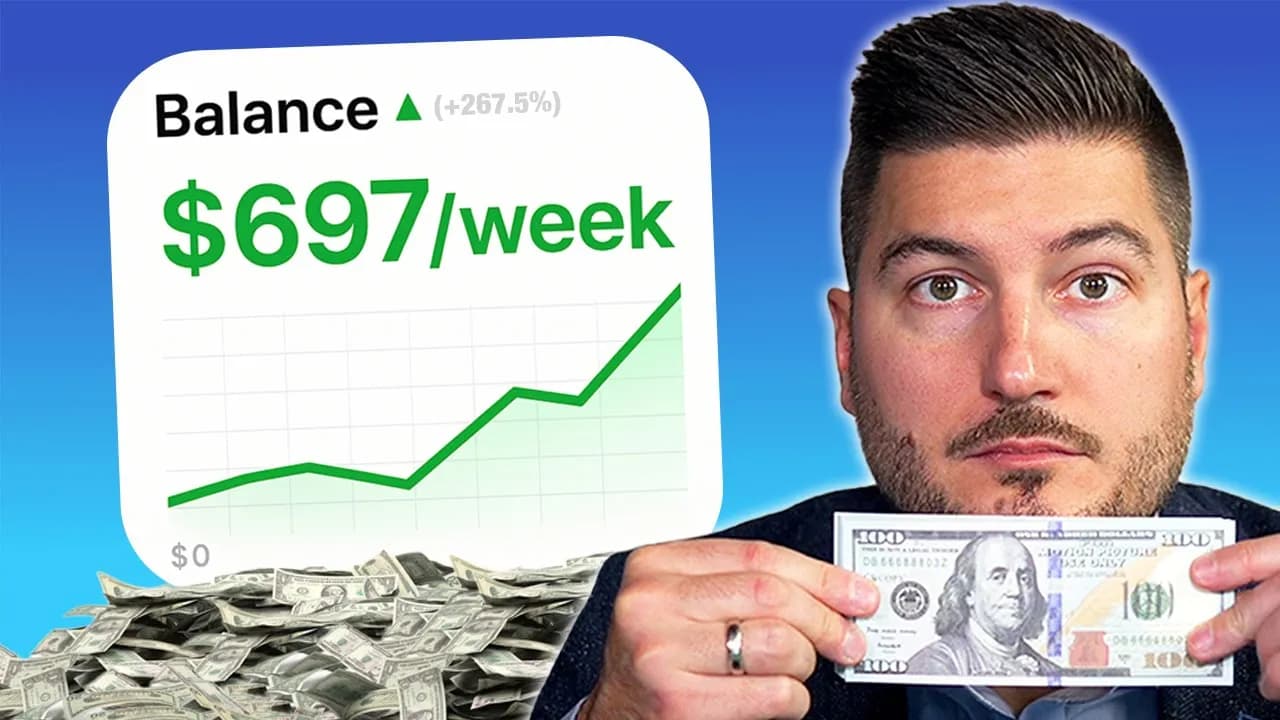
$1 million can produce the equivalent of about $51,000 per year using one of the safest investments on the planet. The problem is that 30 years from now, that exact same $51,100 could buy about half as much stuff. Factors to consider include inflation, market risks, taxes, and whether income has any chance of growing over time. If your paycheck never increases, eventually your lifestyle can't increase either.
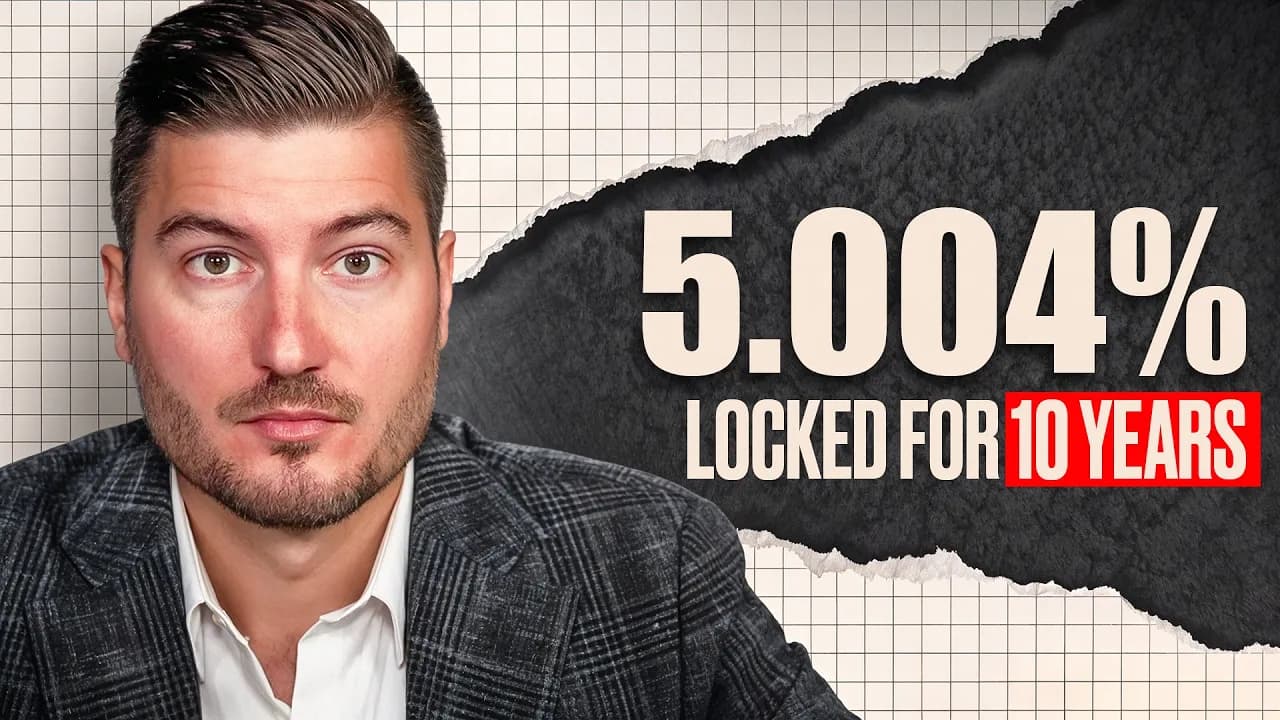
The 30-year Treasury par yield as of July 20th, 2026 was about 5.11%. If you had $1 million invested at roughly that yield, you generate the equivalent of about $51,100 per year in interest, or about $4,258 per month before taxes. 30-year Treasury bonds normally pay interest every six months, not every month. You're literally lending money to the United States government and in return they pay you interest before returning your principal when the bond matures. Treasuries are often considered a risk-free rate in the finance world because they have extremely low default risk.
If interest rates move higher after you buy your bond, the market value can fall. That may not matter if you plan on holding it until maturity, but it matters if you need to sell it sooner. Your income never changes over those 30 years - it's $51,000 this year, $51,000 10 years from now, and still $51,000 30 years from now. Meanwhile, with inflation, everything around you keeps getting more expensive including groceries, insurance, health care, and property taxes. The key is focusing on purchasing power rather than income all by itself.
Assuming inflation averages 2.5% per year, the $51,100 per year would buy about $39,900 worth of today's purchasing power after 10 years, roughly $31,200 after 20 years, and after 30 years that same $51,100 payment feels more like $24,400 does today - basically cut in half. When the $1 million principal comes back after 30 years, it still stays $1 million on the statement, but adjusted for 2.5% inflation, its purchasing power is only roughly $477,000 in today's money.
The historical 4% framework generally starts with a withdrawal equal to 4% of the portfolio during the first year. If you retire with $1 million, your first year withdrawal would be $40,000. After that, the dollar amount is adjusted for inflation. The $40,000 can come from dividends, bond interest, or selling a few shares. Cash flow is cash flow, and this gives you a lot more flexibility.
When stocks get crushed, high-quality bonds may fall less or remain stable or sometimes even rise, giving you another place to pull money from. If the stock market drops 35% during your first year of retirement and you're forced to sell stocks to cover living expenses, you're selling at some of the worst possible prices. This is called sequence of returns risk - the average return over 30 years could look perfectly fine on paper, but if the bad years happen right after you retire, the damage can be much harder to recover from.
Vanguard has researched dynamic spending strategies where withdrawals can increase during good markets and decrease modestly during weak markets. You could cap annual spending increases at 5% and cap it at 2.5% pay cuts. If the market goes from $1 million to $1.1 million in a strong year, you could increase spending to $42,000. If the market goes from $1.1 million to $950,000 in a weak market, you could reduce spending by 2.5% to $39,000. This small amount of flexibility can reduce the number of shares you sell after a major decline.
Dividend investors usually focus on the biggest yield they can find. A 6% yield looks much better than 3.3% - you receive $60,000 instead of $33,000 on $1 million. However, sometimes a yield is high because the share price collapsed, the company is paying out more cash than the business can support, or you bought a complicated income product with a great distribution and terrible total net return. Dividend growth investors accept less income today in exchange for a payment that may grow over time.
SCHD as of July 2026 had a trailing distribution yield of about 3.3% and an expense ratio of about 0.06%, holding 103 stocks. $1 million invested at that yield would produce around $33,000 during the first year. Using a hypothetical 6% annual dividend growth rate, $33,000 grows to roughly $59,100 after 10 years and around $105,000 after 20 years. Starting yield tells you what you're getting paid now, while growth tells you what that income might become in the future.
A hybrid portfolio could include $300,000 in treasuries, $400,000 in stocks, and $300,000 in dividend growth. Using a 5.11% treasury yield, the treasury portion generates $15,330 per year. The $400,000 in stocks at 4% generates $16,000 a year. The $300,000 in dividend growth at 3.3% generates $9,900 a year, for a total of $41,230. The trade-off is that two parts of the portfolio now have the chance to grow.
The treasury portion gives dependable cash flow. The broad stock option gives diversified ownership in businesses and the flexibility to sell more after strong years and less after the weak ones. The dividend portion gives cash distributions with the possibility of income growth. The hybrid portfolio leaves you with several places to pull money from - when stocks crash, the treasury income keeps arriving, when stocks have a great year you can trim shares, and when dividend payments grow, your cash flow may receive a raise.
A 10% distribution doesn't mean you earn 10%. Part of that payment may come from options premiums, capital gains, return of capital, or the funds selling assets themselves. Covered call ETFs can produce high distributions, but they also give up some upside because the fund sells call options against its own holdings. If the stock market rises 25% and a covered call fund captures only part of that gain while paying a large distribution, you need to look at the total net return.
$1 million is a huge accomplishment, but the number alone doesn't answer the income question. Your spending matters, your age matters, Social Security matters, and taxes matter. A 45-year-old trying to live on the portfolio for 50 years has a different problem than a 70-year-old receiving Social Security and a pension. Start by figuring out the minimum amount your household actually needs each year, then separate necessary spending from optional spending. Build dependable income around the necessary expenses and let the growth portion of the portfolio support the rest. Keep enough cash or short-term treasuries so you're not forced to dump stocks during a bad market.
Keep Marko - WhiteBoard Finance in your library
Save the videos and channels worth coming back to, and find them again in one place.