How I cope with AI anxiety
In a Nutshell
AI FOMO stems from fears of missing money (e.g., OpenClaw creator's OpenAI job), status, opportunities, and security amid rapid AI advances. Coping strategies include recognizing we're early in AI's timeline with untapped opportunities like post-labor economics, accepting uneven wins without envy, positioning yourself via skills/low-impact living, grounding in historical recoveries (e.g., Industrial Revolution), rejecting zero-sum competition for positive-sum open-source creation, and getting offline with timed boredom breaks. Focus on controlling your actions, family history of resilience, and building abundance over ordinal rankings.
These notes were generated by AI and may contain inaccuracies.
Talks about AI FOMO (fear of missing out). Value in being real. Breaks FOMO down into four components: money, status, opportunity, and security. Minimizing AI is sticking head in the sand; assumes viewers don't want that.
Money
Lots of money to be made with AI. Simplest FOMO: "I could have made so much money." Example: Pete Stigler (likely Pete Stiger, creator of OpenClaw) built it in a few months, went ultraviral, now has six- or seven-figure job at OpenAI. Personal example: speaker has worked on cognitive architectures for four years, thinks "that could have been me."
Status
Social status is huge; all social animals care about it, part of human operating system. Fortunes and fame being made. Speaker has channel with almost 200,000 subscribers, but status depends on prestige, not just follower count—others are way more famous. High rate of social flux makes primate brain aware of changes. Shows pretty view. Introduces dogs: brown Heidi (Australian Shepherd working line), blond Mandy (Carolina dog husky mix).
Opportunity and Security
Opportunity: layer above, missed opportunities for money/status. Security: drives anxiety—knowing you'll be okay, family okay. All drive fear/anxiety hence FOMO.
1. We're Still Very Early
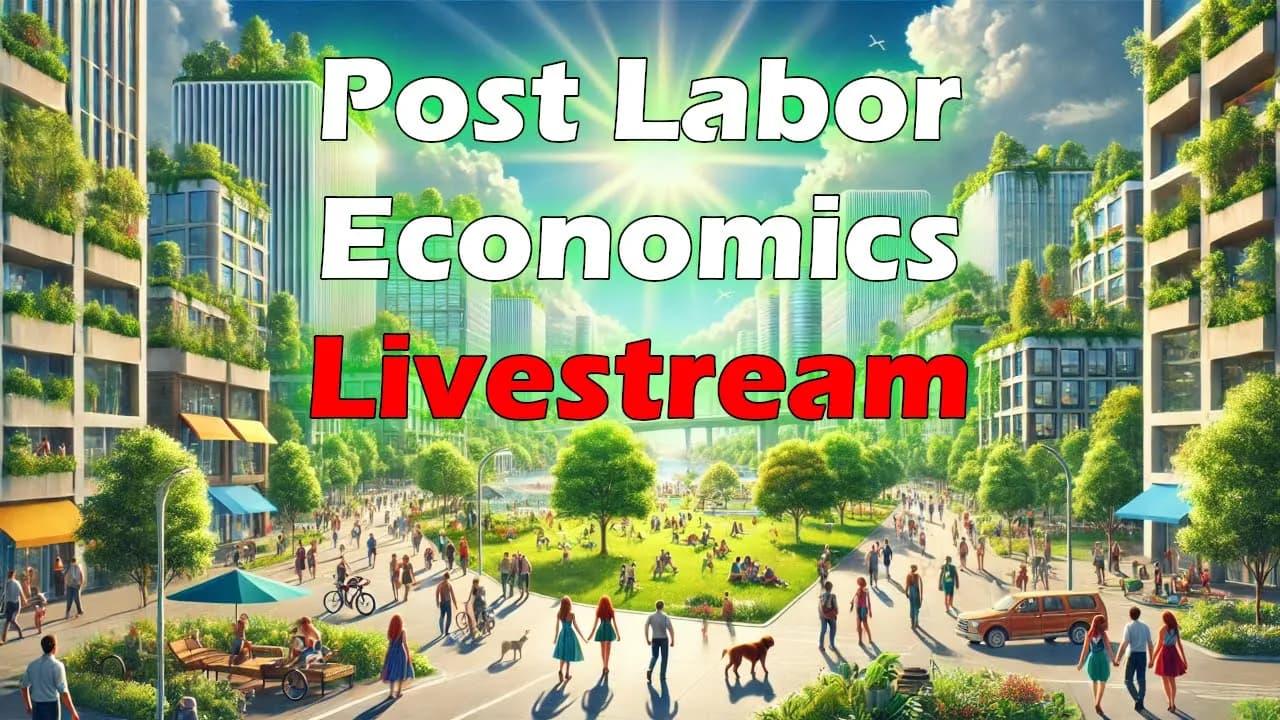
Lots of new opportunities haven't manifested. Personal example: started YouTube channel before ChatGPT with GPT-3 experiments, had ~5,000 subscribers when ChatGPT popped off, reached 100,000 in 9 months. Growth slowed as AI influencers saturated landscape. Next: post-labor economics as big opportunity, hopes to be ahead of curve. Like "don't let any good crisis go to waste."
2. Accept Some Win Big, Others Way Bigger
Some YouTube channels pivoted from gaming to AI with decade+ production quality, blew up faster. Business people make more money. Avoid envy/resentment (natural responses: "what are they doing that I don't?"). Recognize "that could have been me, that sucks," be happy for others, own jealousy of influencers/business leaders/developers. Focus on what you control (critic of stoicism, but relevant). Next actions under control.
3. Position Yourself Well
Redirect FOMO/envy energy productively: develop skill, thought, content. Doesn't have to be for money. Example: moved to smaller town, bought affordable cottage on edge of town for low-impact, low-cost living.
4. Keep Grounded by Focusing on History
Industrial revolutions, Engels' Pause, Luddite rebellions—things went bad but recovered. Avoid entitlement: ancestors dirt poor (dad third-generation immigrant from Europe). Aunt's story: lived in shack on beach, no power/running water. Inherited financial trauma—dad made $500k/year but kept ancient riding lawnmower (poverty mindset), wasted time/money maintaining it. Speaker learned opposite: spend to keep things working (e.g., stranded 9 hours on vacation due to old truck). Focus on grand arc of history and personal/family history—if they survived poverty, you'll be fine. Personal: homeless briefly during Great Recession (lived in car for a month, survived; not same as chronic unhoused).
5. Let Go of Competition
FOMO is ordinal game (winners/losers, zero-sum thinking). Goal: create positive-sum system, win-win (PVE: player vs. environment, not each other). Enemy is despair, fear itself. All code open source: inspires/solves problems, creates abundance world where speaker captures value long-term. No royalties, but satisfaction (e.g., memory thing solved problems; weekly messages: "you've changed things for me"). Builds consensus for positive-sum.
6. Get Offline
Been on couch 18 months, more online than preferred. Turn off computer/phone/TV for 15 minutes to reset. Uses egg timer: set to 1 hour, get bored—within 5 minutes, cleaning/tidying/chores; after hour, no need to turn back on, feel better. Advice: turn phone/YouTube off, be bored, use egg timer if available.
Keep David Shapiro in your library
Save the videos and channels worth coming back to, and find them again in one place.