How Legora Went From YC to $100M ARR in 18 Months
In a Nutshell
Legora scaled from YC to $100M ARR in 18 months by building a three-feature legal AI platform (chat agent, tabular review, Word add-in) and executing aggressive global sales. The founder maintained founder-mode intensity, rejected single-feature competitors, and secured Benchmark funding through high-conviction pitching despite limited networks. Long-term moats come from proprietary workflows, user data, and enterprise integrations rather than raw model capability, with the company now expanding agents to handle complex multi-step legal processes like M&A diligence.
These notes were generated by AI and may contain inaccuracies.
The legal technology industry typically produces boring, bland marketing that makes automotive parts look exciting. After brainstorming with a bottle of wine in the office, the team decided to pursue Jude Law for an AI-powered law campaign. They approached an agency that initially said it was impossible due to Hollywood's anti-AI sentiment among actors and screenwriters. After six months of chasing, Jude initially declined. The team then arranged a call to demonstrate the product, customer testimonials, and quotes from the customer Slack channel called "customer love," where lawyers shared stories like reviewing a thousand agreements in one day and getting home to see their family for the weekend. Jude agreed to participate but insisted on staying true to his own identity rather than becoming the face of the brand. The campaign used the tagline "there's a new phase of law." Jude brought his own screenwriter from Saturday Night Live and the cinematographer from Oppenheimer. The resulting film was humorous and set a high bar for the marketing team going forward. The campaign achieved 17 touchpoints and generated leads, including one through someone's mom who recognized the brand.
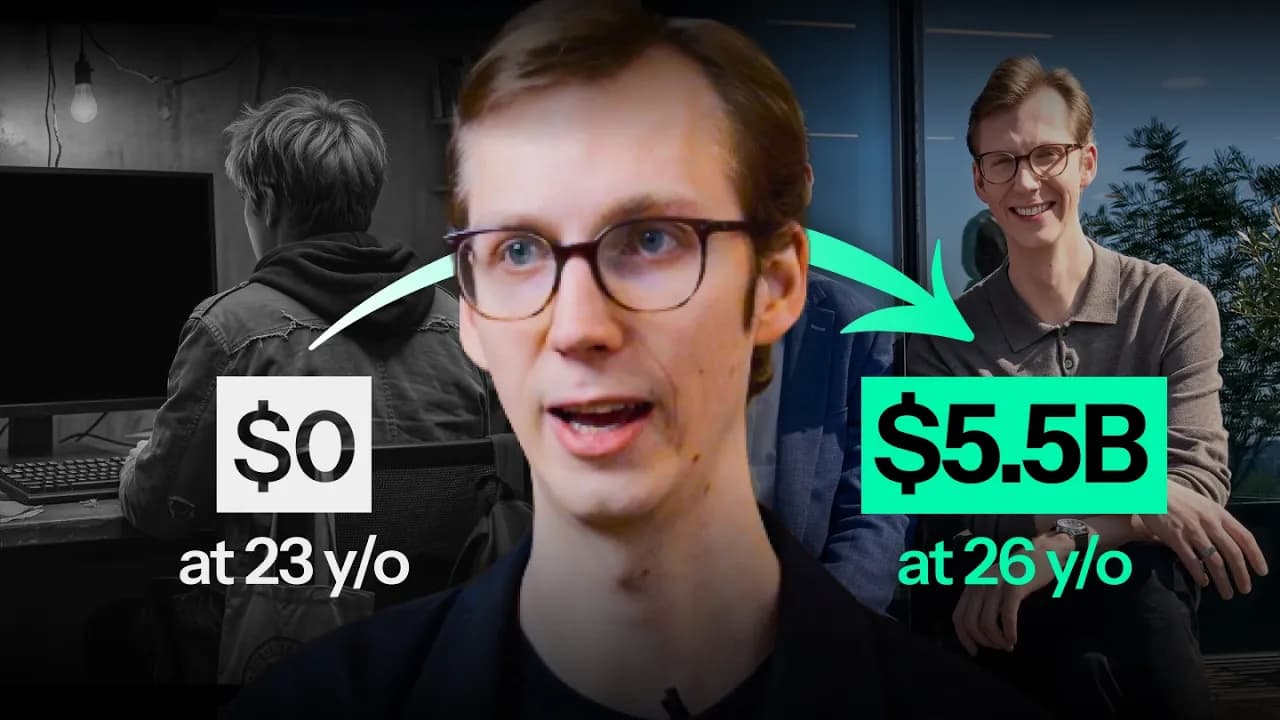
During school, the founder pursued diverse experiences including computer science, business studies, McKinsey, and work at two other YC startups. They worked only one week at a startup with Anton before declining a full-time offer to finish their degree. They viewed these experiences as valuable exposure to different paths. Law picked them rather than the reverse. They assessed risk as low when working on the startup over the summer while holding a McKinsey offer. Upon YC acceptance, they formally declined the McKinsey position. Multiple Lagora employees followed a similar pattern, with 10-15 people who had McKinsey offers. CTO Jake kept a McKinsey offer for six years after an internship before finally declining.
The team started working in summer 2023 and applied through an early applicant program for the winter batch, which was the first major AI-focused cohort. They noticed significant improvement between their first interview and three months later. After acceptance in August, they gained time to refine the product before YC began. The founder initially expected many companies in the batch to already have significant traction and revenue. Instead, they discovered Lagora had among the highest revenue in the batch. The team arrived with both confidence and imposter syndrome, anticipating competition from MIT and Google PhDs. They brought approximately 10 employees to San Francisco, housing engineers in an Airbnb where they worked intensely. The environment resembled a work camp with minimal sleep, sales calls running from 1 a.m. to 10 a.m. using laptop lights, and cheap food. The team had clarity on their direction, unlike many other companies. The founder returned to Sweden to focus on sales while the team managed customers. They described running around Stockholm with a briefcase, surprising chief innovation officers, knowledge managers, and legal partners who were unaccustomed to enthusiastic legal technology salespeople. Half the prospects thought the founder was on cocaine due to the high energy. The team leveraged the fact that the largest firm in the Nordics was already a customer. A tactical hot swap occurred where the U.S. team returned to handle customers while the founder attended YC for fundraising.
YC provided significant investor reach and signaling value for first-time founders with limited networks. The founder scheduled approximately 80 investor meetings in a single week. They acknowledge delivering strongly under pressure despite a weak practice round. At Benchmark, they pitched for 30 minutes to Peter Fenton and Chathan (now on the board). After the meeting, Peter Fenton reportedly said the founder was perfect except for being from Sweden. The founder viewed this as motivation. They noted that investor rejections can accumulate and erode confidence, making it critical to maintain energy and conviction because investors can detect uncertainty. The founder described the ability to generate confidence on demand during high-stakes moments.
The team views Lagora as their life's work. The founder decided personally that this is their company. This level of commitment increased their care and ambition. They aspire to remove "legal" from "legal tech" and build a company with breadth similar to Google or Alphabet, which leveraged search and advertising success to pursue self-driving cars. They referenced Facebook's attempt with Meta as an example of ambitious expansion. The founder previously built VR video games and experienced nausea during testing. They want Lagora to become Europe's largest tech company, noting that SAP currently holds that position. They see a unique moment where technology democratizes access to tools and talent, with ambition as the remaining requirement. Fifteen percent of Lagora's engineering and product organization consists of ex-founders. The culture emphasizes collective strength with the phrase "apes together strong."
In October 2024, the company reached general availability with 30 employees and three core features: an agent and assistant, tabular review, and a Word add-in. They created a three-page product manifesto committing to be best-in-class across chat, tabular review, and Word integration. Competitors existed that focused exclusively on single features—one company achieved nearly 50 times Lagora's revenue ($1M ARR at the time) by concentrating solely on tabular review. Lagora has since surpassed these competitors and converted many of their clients. The founder emphasized maintaining a longer-term strategic horizon despite operating in a fast-moving environment. They referenced advice to write a science fiction novel describing how lawyers will work ten years from now, arguing that building toward that future requires sustained grinding rather than opportunism.
The company has surpassed $100M ARR. Headcount grew from 40 people one year prior to nearly 500 employees across San Francisco, Chicago, Texas, New York, London, Stockholm, Germany, India, and Australia. The company is expanding globally because lawyers operate similarly worldwide. The internal sentiment is that the team has reached base camp and the real climb is beginning. The organization runs with significant founder-mode energy, with product departments led by ex-CEOs operating at high velocity. A major capability shift occurred over Christmas with improvements in model intelligence. The product approach evolved from augmenting individual lawyer tasks to building proactive agents. With access to enterprise documents and emails plus tools for manipulating file trees, agents can now handle multi-step workflows such as M&A due diligence. An example involves agents structuring data rooms according to templates, identifying missing content based on diligence questions, and executing tasks that take 20-30 minutes. Lawyers now provide broader instructions and let agents work in parallel, similar to working with Cursor or Claude Code. The team views themselves as approximately six months behind code tooling because code is binary, has easier context problems, and benefits from extensive pre-training.
Founders frequently ask what happens if OpenAI or Anthropic builds competing products. The founder compares this to earlier concerns about Google and references the database and infrastructure competition between MongoDB and AWS. The critical question is identifying defensibility assuming continuous exponential or linear improvement in model intelligence. If models eventually handle all tasks autonomously, the opportunity disappears, but the founder does not believe this represents the end state. Lagora focuses on proprietary inputs and outputs, workflow moats, and user behavior patterns. The team recognized they needed to achieve significant scale to establish these advantages.
Keep Y Combinator in your library
Save the videos and channels worth coming back to, and find them again in one place.