How To Build A 20x Company
These notes were generated by AI and may contain inaccuracies.
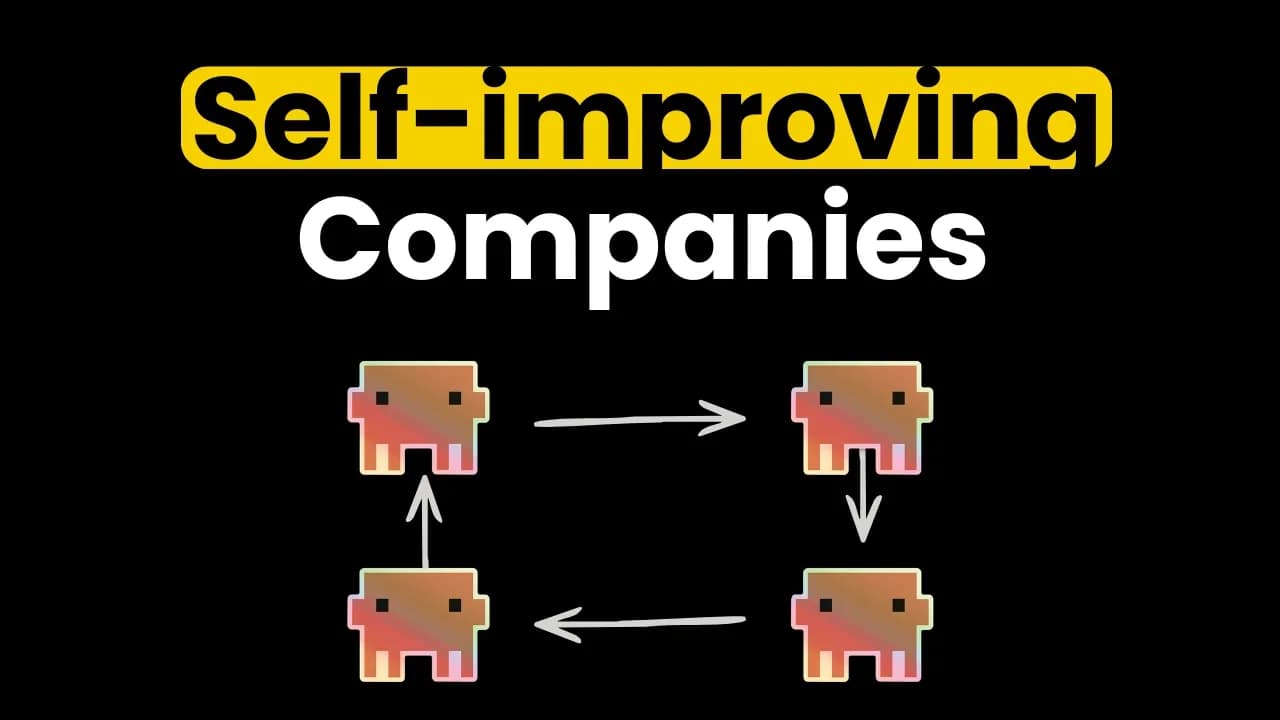
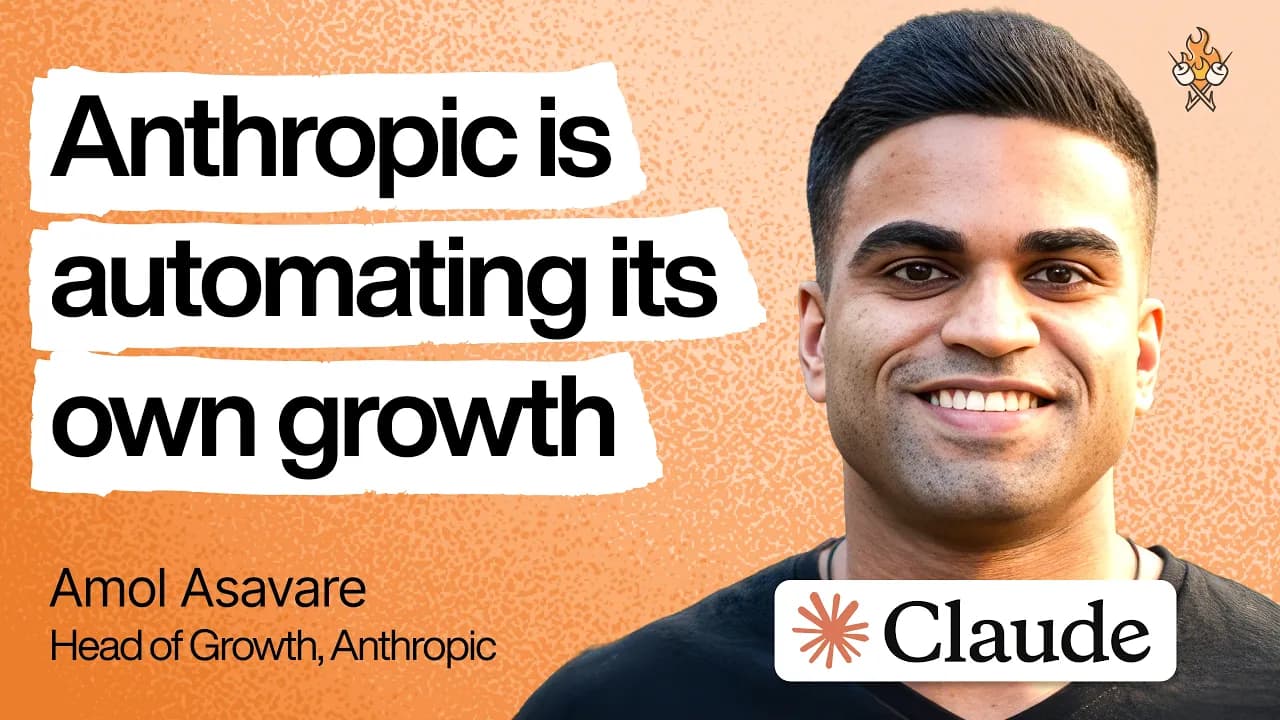
Claude Code feels like AGI is here. One of Anthropic's engineers writes: "Claude wrote Claude Co-work. Us humans meet in person to discuss foundational architecture and product decisions. But all of us devs manage anywhere between three and eight Claude instances, implementing features, fixing bugs, or researching potential solutions." The team developing one of the most sophisticated AI products uses this AI internally to improve their product. This points to a fundamental shift in how startups operate. The best teams automate all internal functions, often tiny teams beating huge incumbents thanks to internal automation. Their leanness is their superpower.
These are called 20x companies. Parker Conrad, founder of Rippling and Zenefits, coined "compound startup" to describe companies building multiple integrated products in parallel rather than focusing narrowly on one thing.
The theory of the compound software business is that there's this island of product market fit that's over the edge of the horizon line that's harder to get to. But if you can build multiple parallel applications at once, you can get there and it ends up being a much more powerful type of product market fit that's much harder to displace.
The 20x company evolves this idea applied to internal automation. Instead of narrowly automating a few things like writing code or customer support, they build automations across all internal functions: code, support, marketing, sales, hiring, QA, and more. This makes each employee orders of magnitude more powerful, postpones hiring sales and ops staff, keeps payroll down, and prevents culture drift.
The phrase 20x company was coined by founders of Giga ML, which builds voice-based customer service agents for enterprise. They closed DoorDash as a customer against incumbents 20x larger.
When we got DoorDash as a customer, we were approximately four to five engineers going against players with 100x engineers. We coined the term 20x company because we beat these much bigger players 20x us by having a better product and better numbers.
Giga closed DoorDash and several other Fortune 500 companies using Atlas, a powerful internal agent.
Atlas can do anything within the product: use browsers, edit policies, write code, anything.
Atlas expands each engineer's range.
Before Atlas, every engineer worked on four to five problems at once, bottlenecked by boilerplate for customers like integrations. Now with Atlas handling boilerplate, each engineer's scope doubles or triples.
Atlas acts as a full-time AI employee working with one human FTE to service dozens of accounts.
We have only one human FTE servicing companies like DoorDash. We're in pilots with 10+ Fortune 500s, each with volumes over 500,000 or a million calls a day. This is possible because of Atlas; the person focuses on customer relationships, requests, and turning them into feature requests.
Building an AI teammate is one approach. Another is an AI-integrated source of truth for instant context. Legion Health, building an AI-native psychiatry network, created a custom internal interface for care operations pulling patient history, scheduling availability, insurance codes, and more.
This interface is used daily for anything not yet automated: digging into patient backgrounds, journey status, rescheduling appointments, prescription issues, messages that might get lost. All at fingertips for every care ops member.
This kept ops headcount flat while scaling revenue.
We've grown 4x in the past year without hiring a single net new person. 4x patients, thousands monthly, dozens of providers, but one clinical lead, one patient support, one billing person. In typical healthcare, those are departments, call centers, groups doing manual work.
A third approach: build custom agents for each employee's workflow and preferences. Phase Shift, building agents to automate accounts receivable, is a 12-person team against companies since 2006 with hundreds of employees.
The key to moving fast as a 12-person team is bringing AI into every manual process and automating with AI agents.
They ask employees to document manual tasks and build custom agents.
We say: what do you spend your time doing? Make them document, then build quick AI agents.
This culture delayed hiring entire functions.
Avoided hiring a design person; 12-person company leverages Magic patterns, engineering builds all front-end designs.
These approaches aren't mutually exclusive: build AI teammates, unified source of truth, and custom agents. Companies doing this stay lean with record-high growth rates. This is the new way to build; startups figuring it out first will win.
Keep Y Combinator in your library
Save the videos and channels worth coming back to, and find them again in one place.