Huawei Watch GT 7 Pro - Full Scientific Review!
In a Nutshell
The Huawei Watch GT7 Pro delivers excellent heart rate tracking (99/100 score) across most exercises except weightlifting, where performance drops significantly. Sleep stage tracking shows improvement over previous generations but remains only average (64/100), with poor REM sleep detection. GPS performance appears good based on limited reliable data, though the watch's premium build and features don't justify the €429 price over more affordable Huawei alternatives with similar data quality.
These notes were generated by AI and may contain inaccuracies.
Huawei announced the Huawei Watch GT7 and GT7 Pro with early access provided for testing. The focus is on the GT7 Pro series with the normal version to be discussed in a future video. Many testing results are expected to translate to the non-pro version due to mostly identical sensor sets. The video covers heart rate tracking during exercise, sleep stage tracking performance, and GPS tracking with some testing problems encountered.
Rob is a post-doctoral scientist specializing in biological data analysis, focusing on data and data science. The approach dives directly into testing results while waiting for additional information from Huawei about differences between the GT7 series and previous generations.
Indoor cycling represents the easiest exercise to track due to minimal movement, lack of bumpiness, and minimal wrist tension. Testing against the Polar H10 ECG chest strap reference shows excellent performance. Points align closely to the blue reference line with a correlation of 0.99, approaching the maximum correlation of 1.00. Example sessions demonstrate the GT7 Pro (red) overlapping very well with the reference (blue-green) across all tested sessions. The watch calibrated initially but showed super good performance overall, matching the expected Huawei performance level.
Running shows a small code bug causing slight alignment issues in plots, requiring manual correction of correlation values based on good alignment. Overall performance remains very good with most points on or close to the blue line and correlation still at 0.99. Example plots reveal some moments of deviation, particularly in the beginning of runs. Performance is slightly less optimal for running compared to indoor cycling, though deviations are very minor.
Outdoor biking reveals some deviations from the reference, with points appearing below the blue line (detected too low heart rate) and a few above (detected too high heart rate). The correlation remains high at 0.98, considered very good for outdoor biking. Example sessions show mostly good overlap between the GT7 Pro (red) and reference (blue-green), with some deviation moments and occasional timestamp issues. Overall performance is described as some of the best available for wrist-based wearables.
Weightlifting presents significant challenges due to high wrist tension affecting blood flow detection. The GT7 Pro shows correlation dropping to 0.93, with issues particularly in the higher heart rate range where points below the blue line indicate detection of too-low heart rates. Example sessions demonstrate incomplete peak detection, with some peaks properly detected and others missed or partially detected.
The GT7 Pro's performance is compared against other devices and previous generations (GT6 and GT6 Pro). The device performs better than 72% of tested devices for indoor cycling, 80% for outdoor cycling, close to 80% for running, and close to 75% for weightlifting. The GT6 showed slightly better correlations and percentiles, though this may be due to testing variation. The GT6 Pro performed better than roughly 75% of devices for spinning and biking, with a 0.79 correlation for running.
The GT7 Pro receives a rounded score of 99 based on correlations, qualifying as perfect performance (99.0 or higher). The GT6 achieved the same perfect score, with both devices performing similarly enough that neither can be declared superior. Heart rate performance falls between great and perfect, with recommendation for all exercises except weightlifting.
Sleep stage tracking represents the main difference from previous Huawei generations with an updated algorithm previously tested on the GT5 and GT5 Pro. Testing methodology uses the Z Max EEG headband as reference, providing brainwave measurements as a scientific silver standard. The reference device appears on top in overview comparisons, with the GT7 Pro on the left. Perfect agreement would show 100% values along the yellow diagonal.
Deep sleep agreement reaches 91%, considered quite good. Light sleep agreement is 62%, rated as okay. REM sleep agreement struggles at 37%, with the reference's REM sleep often predicted as light sleep. The watch detects extra deep sleep and extra REM sleep during periods when these stages likely weren't occurring.
Example sessions show the reference on top and GT7 Pro on bottom. The reference shows 1-2-3 deep sleep segments with an in-between phase that the GT7 Pro mostly detects, though with some extra deep sleep detected. REM sleep detection shows significant issues, with the GT7 Pro detecting very little REM sleep early in nights and excessive REM sleep later, failing to show proper sleep cycles.
Sleep cycles typically start with deep sleep and light sleep, ending in REM sleep. The reference shows 1-2-3-4 complete sleep cycles, but the GT7 Pro data doesn't reveal these cycles clearly. The first half of nights shows no detected REM sleep, with excessive detection near night ends.
Comparing performance using average sensitivity over three sleep stages and worst-case performance shows the new algorithm (GT7 Pro, Fit 5 Pro, Fit 5) performing differently from the old algorithm (GT6, GT6 Pro). Average sensitivity has improved, though REM sleep performance remains low. The new algorithm moved from fourth tier to low third tier performance, representing improvement but not reaching first or second tier.
First-tier sleep stage tracking performance is reserved for five brands: Eight Sleep Pod, Pixel and Google devices (Fitbit), Apple Watch, Whoop strap, and Oura Ring. The cheapest option is the Fitbit Air at approximately $100, offering good sleep stage tracking though awake detection may not be perfect.
The GT7 Pro shows improvement over previous generations but isn't competitive with top-tier devices. The scoring moved from "meh" to "okay," with GT6 and GT6 Pro receiving scores of 50-51 compared to the GT7 Pro's 64.
GPS testing encountered problems when connecting the GT7 Pro to an iPhone without maintaining continuous charging. After 2-3 days without syncing, satellite information pushed by the phone became outdated, affecting GPS tracking. The first run on August 21st shows acceptable performance with minor deviations near walls, rated as quite okay or fine.
The 3D view shows signals close together on the left side with slight deviations compared to map reference, representing an overall shift. Near a large wall, more deviation occurs with signals pushed left or right. Subsequent runs 2 days later show signals scattered across the map, likely due to outdated A-GPS data. The watch may have lost precise satellite positioning information.
Cycling tests suffer from the same satellite data sync issues. Consistency shows some deviation, with the map view revealing the watch placing the user on car roads incorrectly in some locations. Some areas show signals closer together where expected, while other sections show deviation. Despite the handicap, performance remains reasonably acceptable.
Based on the single reliable run, GPS would receive a score of 85, considered really good. The cycling results aren't the worst despite the A-GPS handicap. The GPS performance appears quite good based on limited reliable data, though final judgment requires retesting with daily phone syncing.
The GT7 Pro demonstrates reliable data in some aspects and less reliability in others. Heart rate tracking during exercise is great, sleep stage tracking is okay (improved from meh), and GPS tracking seems quite good based on limited reliable testing. Battery life is really good, and data quality is acceptable depending on user priorities.
The GT7 Pro costs 429 euros with titanium alloy case, ceramic bezel and back, and sapphire glass. It weighs 56g with a 1.47-inch AMOLED display (466x466 resolution) achieving 3,000 nits peak brightness. Battery life includes 12 days typical use, 7 days with always-on display, or 21 days with light use. Full wireless charging takes approximately 1.5 hours.
Health features include heart rate, blood oxygen, stress, temperature, and sleep stage tracking. The Pro model includes ECG and physical readiness score functionality not available on the non-Pro model. Sports features include 100 workout modes, route navigation, training load data, and AI running plans. Cycling features include a virtual power meter for rough estimates rather than professional cycling use.
Pro-only features include golf course features, detailed maps, trail running support, altitude profiles, and free diving to 40 meters. The device supports Bluetooth calls, notifications, GPS, NFC, and Curve Pay. It works with both Android and iOS, though message replies and voice assistant are unavailable on iPhones.
The standard GT7 maintains the same display but uses stainless steel and plastic construction instead of titanium and ceramic. The non-Pro version lacks ECG, depth sensor, free diving, golf features, and advanced maps. The large standard model is rated at 7 days typical battery life.
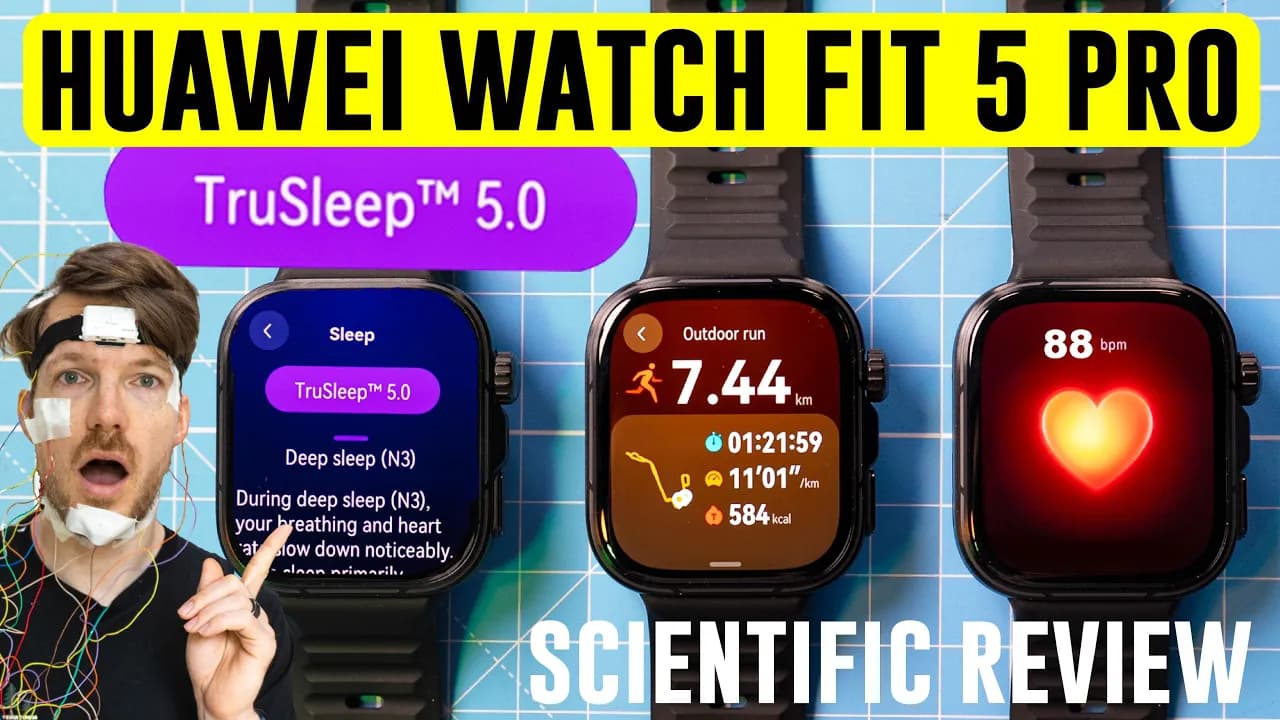
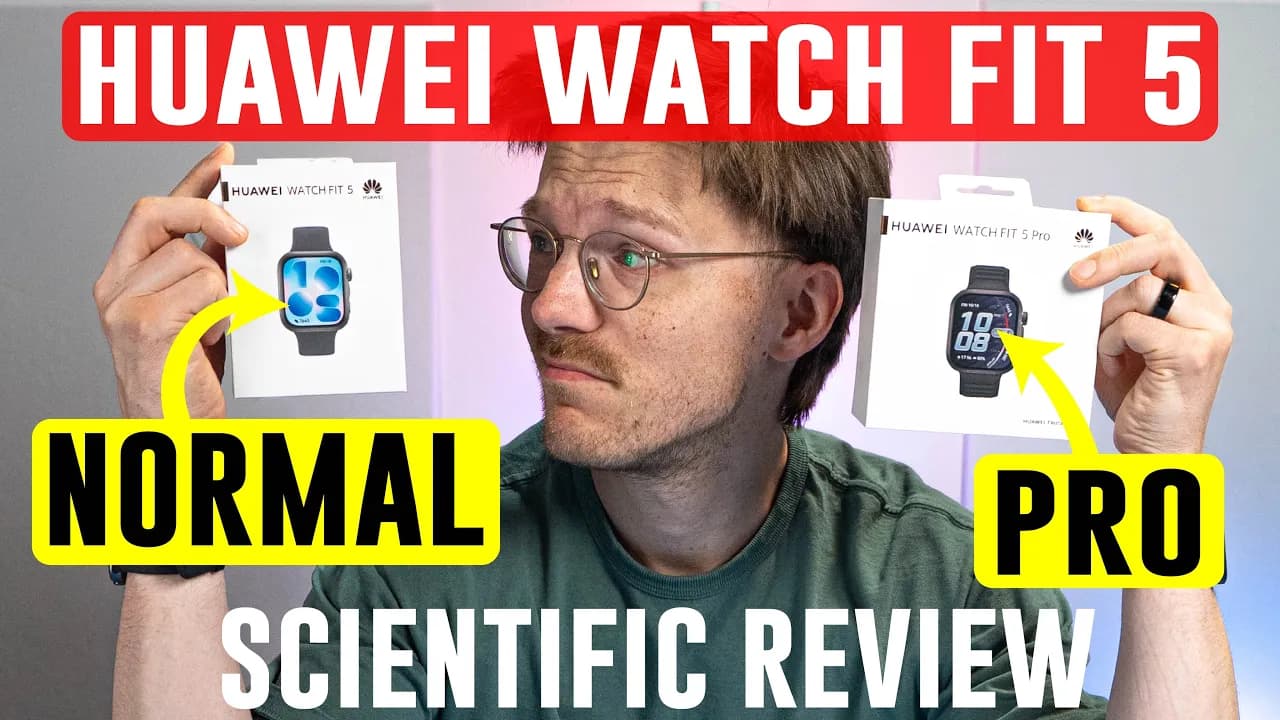
The GT7 Pro isn't considered a major improvement over previous versions. The reviewer would likely prefer the Huawei Watch Fit 5 or 5 Pro due to preferred form factor, with data quality expected to be similar across models.
If you do end up getting yourself a Huawei Watch Fit 5, maybe you want a GT7 Pro, you want to get yourself a Whoop strap, an Amazfit Helios strap, an Oura Ring, an Ultrahuman Ring, another device, or anything at all on Amazon for that matter, even something as small as toilet paper or coffee beans, you want to support the channel and get the best discount possible, there's a bunch of affiliate links in the description below.
Given that you watched this video on the Huawei Watch GT7 Pro, I think you will like this video on the Fitbit Air and this video on my favorite sleep improvement device, the Eight Sleep Pod.
Keep The Quantified Scientist in your library
Save the videos and channels worth coming back to, and find them again in one place.