"I Just Turned $12 Into $200,000!" – WTF Is Happening To Investing?!
These notes were generated by AI and may contain inaccuracies.
Heads or tails? Heads you double your money, tails you lose everything. Betting everything on a coin flip is insane, but many people do the financial equivalent daily—not because they're dumb, but because playing it safe guarantees falling behind. Young people aren't investing; they're betting. One trader uses this strategy to pay rent monthly. Others turn $12 into $100,000 or claim to have cracked a system Wall Street hides. Prediction markets are replacing investing for a generation. 94% of people lose money. The biggest mistake happens before money touches the market.
Heads you hit like, tails you subscribe. Coin landed tails, so subscribe. Picture of a koala as thank you. Thanks to Surfshark VPN for sponsoring.
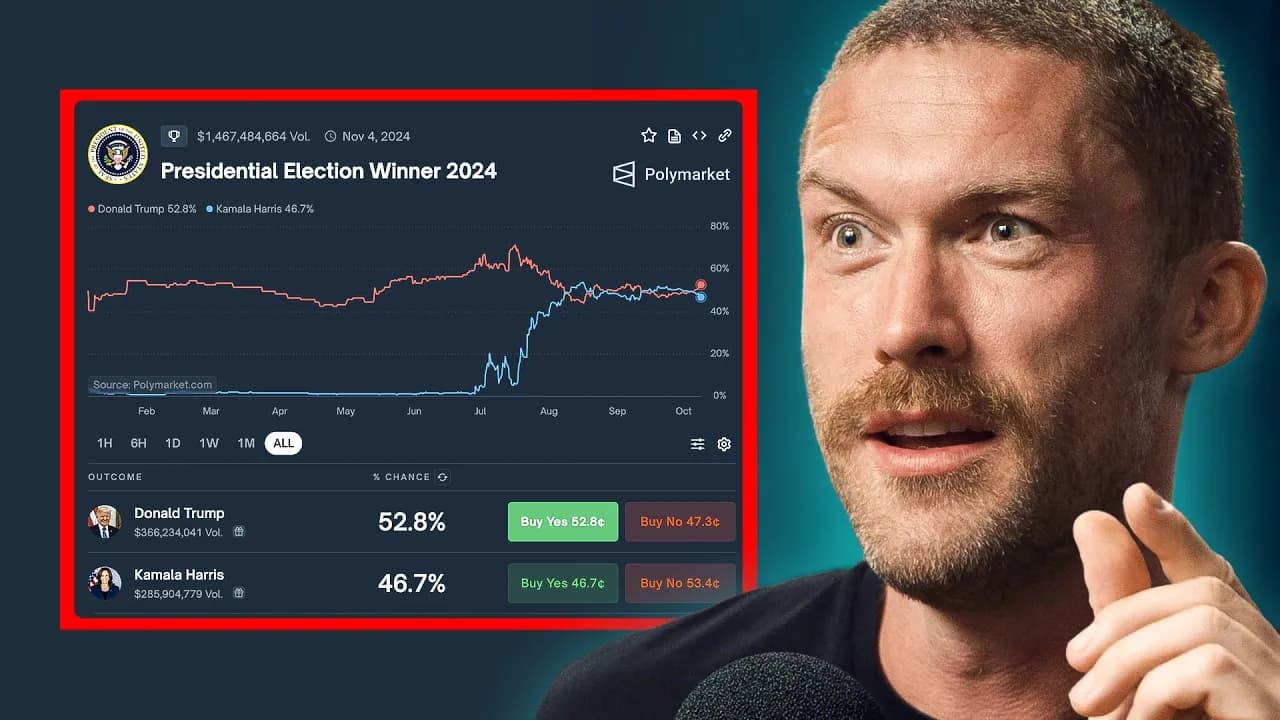
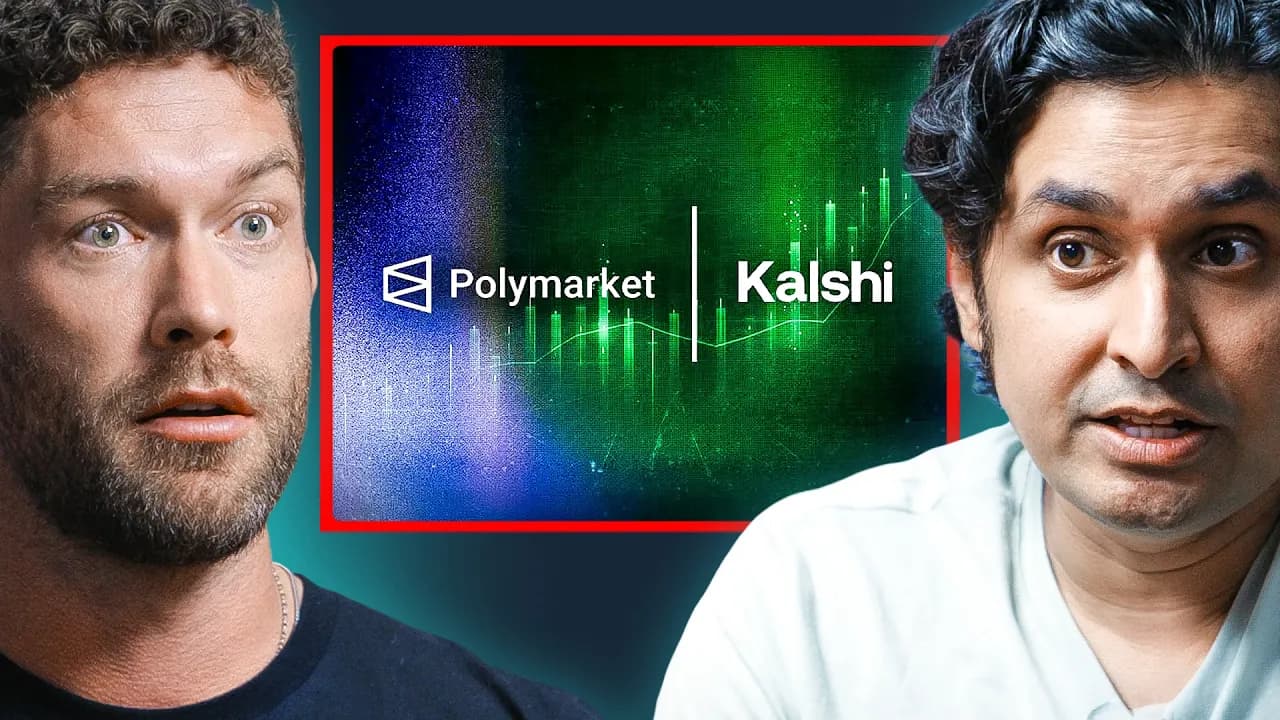
Legally, gambling differs from prediction markets. Prediction markets allow betting on events like Oscar best picture winner, Trump saying 'autism' in State of the Union, or Juul relaunching mint flavor. Unlike gambling's randomized payout fixed by the house, prediction markets offer event-based futures contracts—a marketplace to speculate on event likelihood. Value moves with market sentiment, no fixed house edge. You're trading against others who think they know more. Purpose: financial hedge if outcome happens.
Example: Car washer loses income in bad weather; buys 2-cent contracts on snow. No snow: lose small investment. Snow: 50x return offsets income loss. This applies to any financial derivative—prediction markets are gambling disguised as futures. Defense: Grain futures were once called gambling until Supreme Court approved for hedging.
Most aren't hedging. Traders turn $1,000 into $200,000 in months. Some follow high-success traders; others buy 99% probability events for consistent profit.
Kalshi users lose money faster than sports gamblers. Retail traders pull back from stocks, feeling it's impossible to beat, turning to all-or-nothing bets that seem transparent. Young traders prefer betting on Grammy winners or TikTok ban over analyzing P/E ratio—they understand Grammys, not financial statements.
Betting funds come from savings and long-term investments. For every $1 spent betting, $2 less into investment accounts; net investments fall 14%. Federal Reserve report: Young adults less likely to have retirement accounts or savings. With little to lose, high-upside low-probability bets feel rational in scarcity.
Stats: 70% of Polymarket traders lost money; 0.04% captured 70% of profits. Kalshi takes piece of trading volume—over $1 billion in a day. Bottom quarter of Kalshi users lose 28 cents per dollar bet vs. 11 cents on other gambling sites. Kalshi calls report extortion; analyst stands by data for transparency.
Same phone with brokerage and event contracts erodes investing-gambling barrier. Losing faith in traditional investing—compounding too slow, home ownership unreachable—makes high-risk bets common.
Winners predetermined before betting. Surfshark VPN sponsor: Encrypts data, masks IP, blocks ads/trackers/malware/phishing, no logs. Use code 'graham' at surfshark.com/graham for 4 extra months free, 30-day guarantee.
Robinhood faced scrutiny for gamifying investing via behavioral nudges, push notifications pushing risky trades. Q1 2020: Robinhood users traded 9x shares vs. Fidelity, 40x vs. Charles Schwab, 88x options contracts relative to average account.
Robinhood made investing fun, interested non-investors, zero fees—but profits from frequent trading. Frequent traders worse off financially; speculation mirrors gambling, e.g., YOLOing life savings into Robinhood stock pre-earnings.
Shift: Strip long-term investing illusion, replace with event betting. Investing buys cash-flowing companies that expand; event contracts are zero-sum—no expanding pie, dividends, compounding—just outcome. Charles Schwab head: Event contracts might hedge, but sports/entertainment uncorrelated to portfolios. Barron's: Investing shares space with speculation's dopamine rush.
1/3 of Gen Z sees prediction markets as future, everyday life.
Suspected insider trading: Scary-accurate bets unlikely random. Trader bet Lady Gaga and Ricky Martin at Super Bowl—both happened. Trader bet pre-US Venezuela invasion. Strategies to copy traders.
Legality gray: Platforms barrier of truth. Kalshi founder on CNBC:
If you're a dancer knowing the lineup and bet, that's insider trading? Counting Walmart parkers for sales estimate isn't insider. Executive with numbers is. Same rules for Kalshi. Manager tells girlfriend who tells salon—not regulated. Responsibility not on them.
Insider laws for SEC-regulated stocks/securities; prediction markets are CFTC-regulated derivatives. Insider as breach of duty, high conviction bar—many get away. Founders: Insiders improve accuracy as truth tool.
Kalshi prohibits: Material non-public info holders, those influencing resolution, source agency employees/affiliates.
Markets accurate: 4 hours pre-end, leading outcome correct 94%.
Prediction markets favor insider knowledge; active traders most sophisticated. Betting as investing leads to overtrading, disasters. No issue with personal choices if entertainment budget.
Stats post-legal sports betting: Household investments decline, savings down, retirement contributions fall, debt up, credit scores drop—for meaningful subset.
People feel behind: $5k invested 8 years doubles but won't cover rent hikes; $100/week won't buy house for 35 years. $1k on 1-in-1000 for $90k appeals despite irrationality.
Advice:
- Treat as entertainment: Set hard cap, assume zero, don't confuse luck with skill.
- For durable wealth: Not reliable—winners early, informed, capitalized, hidden strategies. Edge not with casual Twitter scroller.
Biggest risk: Bets replacing investing. Investing: Win without others losing. Stack boring wins 10-20 years for freedom gamblers chase.
Real hedges: Emergency fund, pay high-interest debt, increase income, learn skills. Place event contracts on unique insights only after basics—after like/subscribe.
Keep Graham Stephan in your library
Save the videos and channels worth coming back to, and find them again in one place.