If I Had ONLY 5 Years to Become a Millionaire, Here's What I'd Do
In a Nutshell
To become a millionaire in five years starting from zero, prioritize aggressively increasing income through scalable skills, then slash housing costs, invest 30%+ of earnings into simple index funds, and upgrade your social circle. Track every dollar, automate investing, eliminate high-interest debt, and maintain a small emergency fund to stay consistent. The path is straightforward but demands long hours, discipline, and discomfort most people avoid.
These notes were generated by AI and may contain inaccuracies.
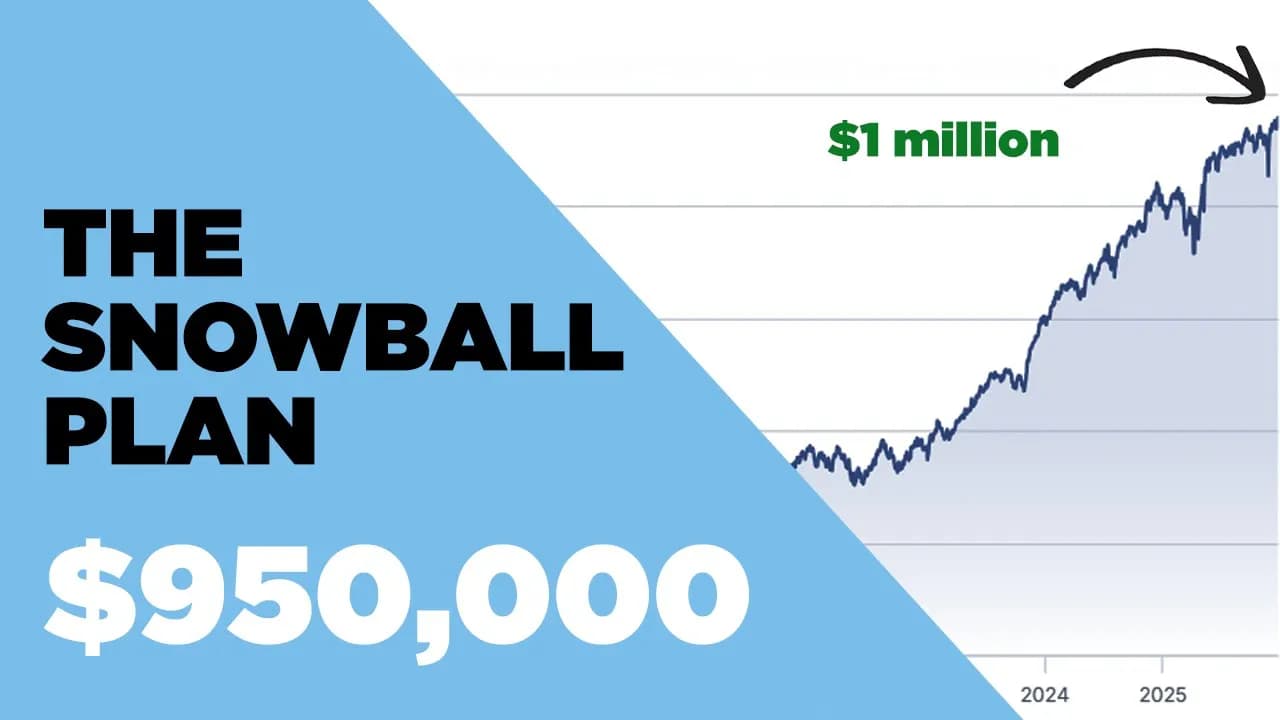
Most people think becoming a millionaire takes 30 or 40 years. If starting from scratch with zero in the bank, the goal is reaching a million dollars in five years through specific moves in the right order, not with crypto or get-rich-quick schemes.
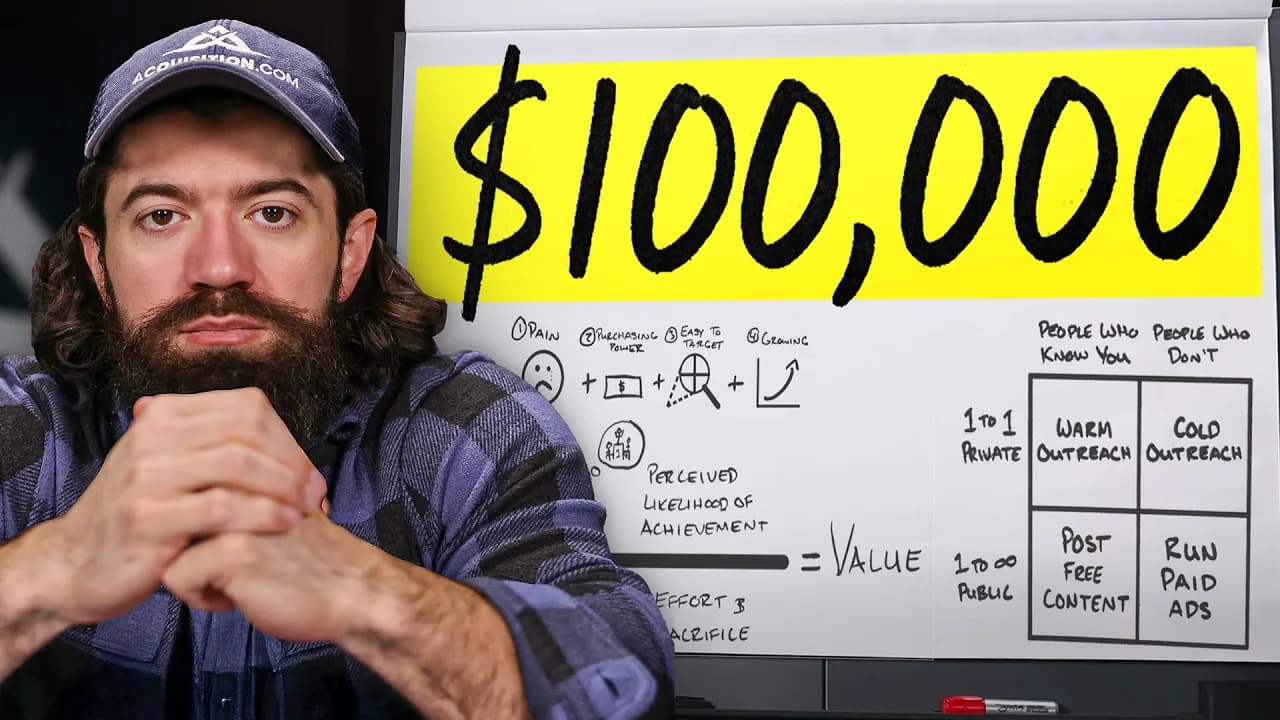
The first step is attacking income first rather than budgeting or tracking expenses. If earning $50,000 a year, cutting expenses still leaves that ceiling in place. Pushing income to $100,000, $150,000, or $250,000 raises the ceiling higher. The absolute fastest path to building wealth is banking more money. Most personal finance advice focuses on squeezing more out of existing earnings, which works for people with 30 years to spare, but many don't have that timeframe.
The key question is identifying what skills come naturally and how to monetize them for a bigger audience. Working one-to-many through YouTube videos instead of one-on-one allows scaling. This may require working 60 hours a week or more. The channel was built on nights and weekends on top of a corporate W-2 job. Becoming a millionaire in five years requires working longer, harder, or smarter, or a combination of all three.
Income increases through a combination of skills and monetization, creating the rocket ship effect, while cutting costs is deprioritized. A $50,000 ceiling limits every aspect of life including investing and spending capacity.
The second step is cutting out the biggest expense, which for most people is housing. According to the BLS consumer expenditure survey, the average American household spends 33% of their total budget on housing. Spending $2,000 a month equals $24,000 a year, and over five years that's $120,000. The solution is getting a roommate, moving into a duplex and splitting costs, or house hacking. If owning a home, rent out a spare room or basement.
Being house poor prevents wealth building. People think in terms of payments and stretch mortgages to 30 or 40 years. For someone in their 20s, house hacking means buying a duplex and living in one side while renting the other, or buying in an appreciating area and renting rooms. A friend bought a large condo in an up-and-coming area that appreciated significantly, with roommates paying the mortgage.
The third step is investing aggressively. Most people contribute just enough for the employer match at 3%, 4%, or 5%. According to Vanguard's How America Saves 2025 report, the average employee contributes 7.7% of their paycheck. This works for retiring at 65 but not for becoming a millionaire in five years. The target is putting 30% or more into assets that increase in value, primarily low-cost index funds for most people.
On a $75,000 annual salary, five years brings home $375,000 total. At a 30% investing rate, that's $112,500 from disciplined investing alone, plus market growth and compound interest. The investing rate must increase after maximizing income and remain consistent over time.
The fourth step is upgrading your circle of friends and associates. You are the average of the five people you spend the most time with. People around you shape your ceiling. If everyone in the circle is comfortable where they are, comfort becomes the norm. Friends from high school may still make the same jokes about being broke at age 35 or 40. To grow, expand to a circle where others are doing things not yet accomplished or are at desired levels. The goal is being the least experienced or least knowledgeable person in the room.
The fifth step is keeping it simple. When building real money, the urge to get fancy appears quickly with triple leveraged ETFs, hot IPOs, or options trading. Simple works but takes time and isn't sexy. Keep the portfolio in a straightforward mix of index funds, ETFs, and individual stocks believed in. If adding real estate, avoid over-leveraging and maintain low loan-to-value ratios.
Complication adds risk rather than returns. The S&P 500 was up 24% in the past year at the time of recording. The most reliable path to a million dollars is boring, diversified investing done consistently over time.
The sixth step is tracking every dollar and automating to remove friction. Even with strong income and investing rates, wealth leaks without tracking. Maintain a real budget system knowing exactly what comes in and goes out monthly. Automate every investing contribution and savings transfer because motivation doesn't last and discipline has limits. Set up automation once and let it run.
The seventh step addresses bad debt and building a safety net. Bad debt is paying interest on something decreasing in value, such as high-interest car loans or credit cards. According to NerdWallet's 2025 household debt study, the average American household carries $11,149 in revolving credit card debt at over 20% interest. Every dollar going to interest is a dollar not compounding favorably. Bad debt compounds backwards and works against you daily.
While eliminating bad debt, build a safety net of $3,000 to $5,000 accessible. Without this cushion, unexpected expenses like car repairs, medical bills, or appliance failures force pulling money from investments and restarting the cycle. The emergency fund breaks this pattern.
Everything discussed is simple but none of it is easy. Increasing income requires discomfort. Working at a publicly traded bank while building the channel from November 2017 until quitting the job in April 2019 took about a year and a half to two years of grinding without initial compensation. It requires doing what others don't want to do to reach where others cannot be.
Resources mentioned include a free 7-day roadmap and whiteboardfinance.com, a private community at $10 per month or $100 per year offering courses on budgeting, real estate investing, and stocks, plus weekly live streams.
Keep Marko - WhiteBoard Finance in your library
Save the videos and channels worth coming back to, and find them again in one place.