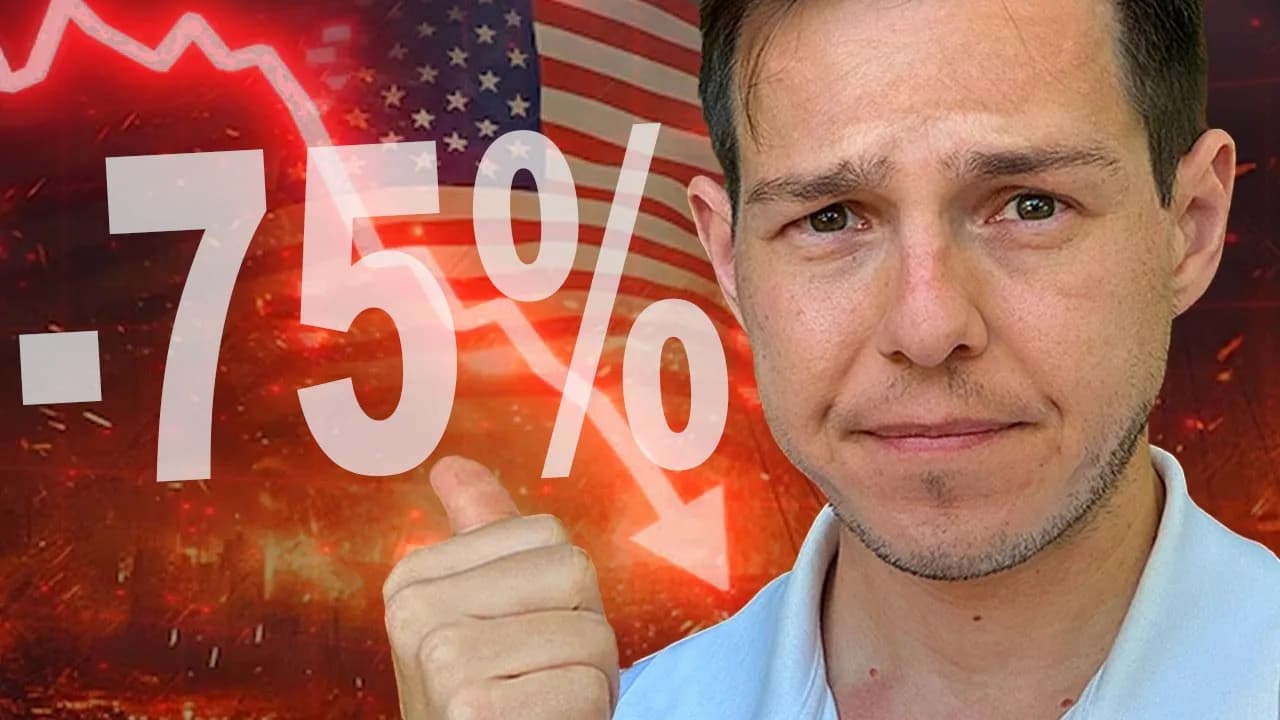
Jack Mallers Steps Down As CEO As Bitcoin Company $XXI Crashes 91%
In a Nutshell
Jack Mallers resigned as CEO of 21 Capital after the Bitcoin treasury company lost nearly $1 billion on its 43,500 BTC holdings, with the stock crashing 91% from its peak. The company burns $260 million annually with zero revenue and offers no advantage over simply buying Bitcoin or a Bitcoin ETF. Mallers is shifting focus to Strike while similar Bitcoin treasury plays like Satuma Technology are shutting down after 80% investor losses.
These notes were generated by AI and may contain inaccuracies.
The second largest publicly traded Bitcoin holder had its CEO step down. The speaker is not pro-Bitcoin and does not care for it, but believes in the right to buy Bitcoin. The speaker does not understand the point of companies like 21 Capital.
21 Capital is a publicly traded company that acts as a Bitcoin treasury. The company buys Bitcoin and purchased it toward the middle to the end of last year when Bitcoin was around $80,000 to $100,000. Bitcoin is now down 40-50% from those levels. The company does not generate any operations beyond buying Bitcoin. The speaker questions why anyone would invest in 21 Capital instead of a Bitcoin ETF.
The speaker compares 21 Capital to the Michael Saylor approach. Jack Mallers is described as a young, trendy individual who was previously celebrated by large crypto Twitter accounts for buying millions of dollars worth of Bitcoin. The speaker notes how the same community that glorified him is now turning against him.
The speaker states that the crypto community supports individuals when their actions are advantageous and scolds them when they become disadvantageous. Jack Mallers bought Bitcoin while sentiment was positive but purchased too much at elevated levels. The speaker notes that the simplest approach is not to overextend at overbought levels.
21 Capital stock is down 91% from its highs. The speaker attributes the previous high valuation to hype and momentum, stating that fundamentals eventually matter. Jack Mallers had stated around the IPO that he wanted to remain CEO until his death, but has now stepped down.
Jack Mallers is stepping down as CEO of 21 Capital to focus on Strike. He and his board could not agree on the direction for 21 Capital. A planned three-way merger is now dead. Mallers stated that serving Bitcoiners has always been his mission and that Strike is where he will carry it forward.
The speaker's initial reaction is that Mallers stepping down will end up being good for both Strike and 21 Capital. The speaker identifies as one of the largest shareholders of Strike and states they are a big fan of the team at Tether. The speaker claims these individuals are net positive for Bitcoin and Bitcoiners worldwide.
21 Capital holds 43,500 bitcoins with a total cost basis of $3.69 billion. The current Bitcoin value is $2.9 billion, representing a loss of nearly $1 billion. Shareholders have lost 91% of their investment value in approximately one year. The speaker questions how this can be considered net positive for investors.
Jack Mallers had annual compensation of $600,000, an annual bonus up to $700,000, and total reported compensation including equity and option grants up to $140 million. Mallers acknowledged he could not agree with the board on company direction and chose to walk away. His options are going to expire and become worthless.
Shareholders of Mark Moss-backed British Bitcoin Treasury Company Satuma Technology (SATS) voted to sell all remaining 668 bitcoins, return capital to shareholders, and shut down the company. Investors lost approximately 80% of their investment.
21 Capital loses $260 million per year with no revenue generated. The company holds Bitcoin purchased at elevated levels. Technical analysis shows uniformly bearish indicators with a sell summary suggesting continued near-term downward pressure. The stock trades at a price-to-book ratio of approximately 54 with a book value of $9.93 versus the current price of $5.34.
The speaker questions why anyone would invest in a publicly traded company that burns through $260 million annually when they could buy Bitcoin directly or purchase a Bitcoin ETF. The speaker describes the entire community as focused on leverage rather than direct ownership.
Jack Mallers will now focus on Strike, another company that buys Bitcoin. The speaker questions whether the goal is to buy Bitcoin at low prices, wait for rallies, and gather more investors to purchase additional Bitcoin. The speaker describes this as resembling a Ponzi scheme.
The speaker states that 21 Capital engaged in bag holding Bitcoin using investor capital. When Bitcoin prices declined, the company could not take action. The company gathered attention and capital through hype, but when hype faded, reality set in as Bitcoin's price action remained bearish.
The speaker notes that nearly 10 years after 2017, there is no meaningful implementation or adoption of Bitcoin technology. Bitcoin functions as a speculative tradable asset rather than a technology with practical use cases. The speaker states there is nothing wrong with speculation but objects to calling it the future when it does not provide utility.
The speaker views speculative markets as entertainment. They believe people making money from Bitcoin are those who know how to trade it, not those holding long-term at current levels. Early adopters who bought below $1,000 benefited, but current promoters are pushing acceptance of Bitcoin. The speaker contrasts this with blue chip companies that report real earnings and are not down 91% in one year.
The speaker advises being careful at elevated levels, using examples from memory chip companies and semiconductors. Investors should not use leverage. Having capital on the sidelines allows investors to view market pullbacks as opportunities rather than threats.
Keep Ricky Gutierrez in your library
Save the videos and channels worth coming back to, and find them again in one place.