Japan Is Starting To Break
In a Nutshell
Japan is deliberately forcing Japanese money to return home through higher interest rates, pension fund repatriation directives, and potential Article 589 capital controls, which will end the 30-year yen carry trade that funded trillions in global investments. This shift threatens US bond markets, mortgages, and stock prices because Japan was the largest reliable buyer of US Treasuries and the source of cheap borrowed yen. The yen's rapid strengthening will signal the unwinding of global leverage as investors sell foreign assets to buy back the stronger Japanese currency.
These notes were generated by AI and may contain inaccuracies.
Japan's economy is starting to break. All global stock markets, portfolios, and 401ks are partially built on borrowed Japanese money that is now being asked to come back home. An anonymous Twitter account called Uto posted three viral tweets in Japanese that gained millions of views. The first tweet stated: "The measures being prepared by the Bank of Japan will affect the lives of billions of people. To the people of the western countries, I offer my deepest apologies. This is not a personal matter. May God's blessings be upon you." The account has developed a reputation as a market oracle and Bank of Japan insider because previous posts have proven accurate.
Twelve days after the first post, Uto posted again: "Japan's wealth is returning to its homeland by any means necessary. The Bank of Japan has so decided." Last week, a third tweet stated: "Article 589 will be cited far more frequently than you imagine. Foreign borrowers should not assume that past approvals guarantee future funding. A warning to all borrowers who think they can continue to refinance through Japan. Article 589 is universal."
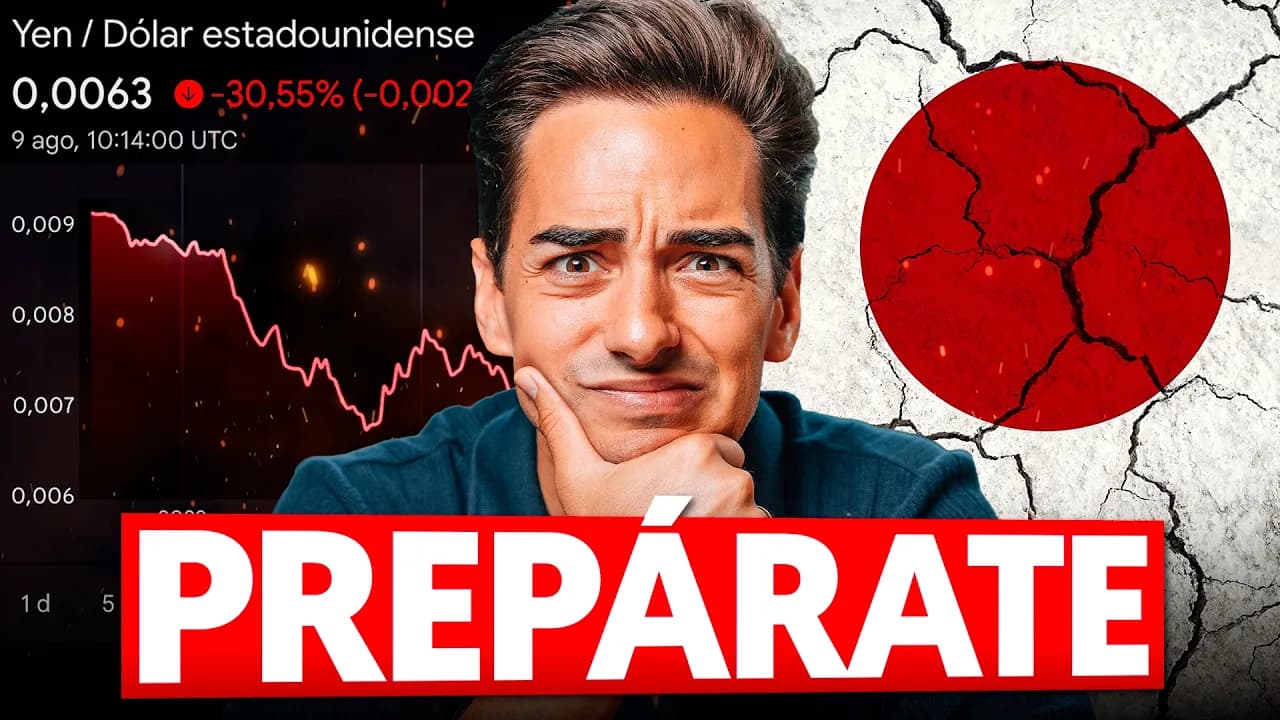
Japan's economy is breaking as evidenced by the yen reaching its lowest level against the dollar in 40 years. Japan's government bond yields have increased significantly, typically only happening to emerging markets during debt crises. This should not occur in the world's biggest creditor country. Japan spent $73 billion defending its currency and increased interest rates to levels unseen since 1995, but these measures failed to strengthen the yen.
In economics, there are supposed to be two types of economies, but reality shows four: developed, undeveloped, Argentina, and Japan. Japan has broken every economic rule yet survived with over 200% government debt to GDP, exceeding Greece's debt when it collapsed and higher than any hyperinflating country. Japan's economy was considered a miracle in the 1980s, with the land under the Imperial Palace in Tokyo worth more than all California real estate. The early 1990s bubble burst led to three decades of deflation with no price or income increases.
To combat deflation, the Bank of Japan lowered interest rates to zero and maintained them for 30 years. Free borrowing made the 200% debt-to-GDP ratio manageable since interest costs were negligible. Japan avoided collapse because it owed money to itself rather than foreigners. The Bank of Japan holds 48% of all Japanese government bonds, Japanese insurance companies hold 20%, Japanese banks hold 14%, and foreigners own less than 8%.
While the world printed money for 20 years, Japan maintained scarce money supply. Since 2004, US money supply grew 280%, Canada's grew 370%, but Japan's only grew 90%. This combination of scarce money and zero interest rates created the yen carry trade, allowing investors to borrow yen at 0%, convert to dollars, and buy assets paying more than zero percent returns. This generated trillions in global investments funded by Japanese borrowed money.
Japan became the world's biggest foreign holder of US government debt, holding over a trillion dollars in US treasuries. The GPIF (Government Pension Investment Fund), the world's largest pension fund, holds hundreds of billions in US bonds and stocks. When US borrows money, tech stocks rise, or Bitcoin increases, Japanese money likely plays a role.
The system worked only because interest rates were zero. Japan's rates are now rising, breaking the economy. The pandemic in 2020 led to trillions flooding markets, broken supply chains, and rising energy prices, causing global inflation. By 2022, Japan experienced 2% inflation for the first time in decades.
While other countries raised interest rates to fight inflation, Japan held rates at zero despite 200% debt-to-GDP ratio. This decision broke the yen as money flowed from zero-interest yen to 5% US dollars. The yen's strength collapsed from 110 to 150 to 160 per dollar. Japan's lack of natural resources means nearly all energy is imported and dollar-priced, making yen collapse increase inflation pressure.
Japan's economic pressure led to a psychological and cultural change. After 30 years without pay raises due to zero inflation, workers now demand and receive raises, marking the biggest wage increases in over three decades. A Middle East war created an oil shock, pushing energy costs higher. A new Tokyo government wants increased spending and more bond issuance despite already high debt levels.
Japan faces two choices: maintain zero rates to keep debt manageable while watching yen destruction and inflation erode retiree savings, potentially leading to revolution, or increase interest rates to save the yen, causing real interest on 200% debt-to-GDP, awakening the dormant bond market, and generating losses on the Bank of Japan's balance sheet. No third option exists where everything remains unchanged.
Japan attempted a middle option by raising rates slightly and intervening heavily, resulting in the worst of both worlds. The yen trades at approximately 160 per dollar, the lowest level in 40 years. JP Morgan identifies 164 yen per dollar as a critical threshold. Japan's 10-year government bond yield rose from 0.25% in 2022 to 2.7% currently, with 30-year bonds at 4%.
Last week, Japan experienced contradictory market signals: inflation at 1.6% (below the 2% target for five consecutive months) while the stock market fell over 2% (losing 30 trillion yen) and bond rates increased. This contradicts normal market behavior where low inflation should boost bonds. Japan's bond market now trades on supply concerns rather than inflation, with investors demanding higher yields due to increased risk.
Hedge funds are heavily shorting the yen, with CFTC data showing approximately -150,000 contracts representing $11-12 billion in visible bets against the yen. Most currency trading occurs in private bank deals not reflected in this data. The Bank of Japan spent $73 billion buying yen in April and May, temporarily strengthening it for three weeks before reversal. June's rate increase to 1% failed to strengthen the yen.
Japan has determined it cannot defend its currency through purchases. To strengthen the yen, Japan must change where money lives through repatriation. Japanese 30-year bonds now yield 4%, making domestic investment attractive for the first time in 30 years. On July 10th, Japan's finance minister announced the GPIF should move investments from foreign to Japanese assets. The GPIF holds $230 billion in US treasuries alone plus hundreds of billions in US stocks.
Following the GPIF directive, Japanese insurance companies are shifting behavior. Bloomberg data shows life and casualty insurance companies moved from being net sellers of Japanese bonds for two years to becoming the biggest buyers in three years. These purchases are funded by selling US treasuries, converting dollars to yen, creating buyers for both yen and Japanese bonds while selling US assets.
Japan was historically the most reliable buyer at US bond auctions and the number one foreign holder of US debt. Reduced Japanese demand for US treasuries forces the US to offer higher interest rates to attract new buyers. The 10-year US Treasury bond currently yields approximately 4.7%, near all-time highs. Consumer borrowing costs like 30-year mortgages are partially influenced by Japan's actions.
Japan may use Article 589 to force wealth repatriation, which allows lenders more control over where money goes by preventing interest charges without prior agreement. On July 20th, Japan passed legislation recognizing crypto as a financial asset, allowing Japanese banks to hold crypto. This serves as both incentive for capital repatriation through tax cuts from 55% to 20% and a mechanism to offload government debt onto stable coin issuers.
Japan is adopting the US stable coin model where companies like Tether become major US Treasury buyers. Japan's stable coins will be backed by Japanese government bonds, creating buyers for Japan's massive debt. Historical data shows that yen strengthening correlates with global market stress: 1998 Long-Term Capital Management collapse, 2008 global financial crisis, 2011 record yen high during global fear, 2016 Brexit, March 2020 COVID crash, and August 2024 when a quarter-point rate increase triggered a 12% drop in Japan's stock market and 3% drop in US markets.
Every single time the yen got stronger really fast, it meant that markets somewhere in the world were starting to break. The yen going up is not what causes these things to happen. It's usually the other way around. A crisis happens, the borrowed yen trade unwinds, everyone buys back yen, and the yen goes up really fast as everything else goes down. The yen is kind of like a proxy or a measure for how much global leverage there is, how much money borrowing is going on.
Today, obviously, the yen is not going up. It's a very weak money. It's having a hard time going up partially thanks to the world betting against them. What makes this time so different is that in 1998, in 2008, in 2020, 2024, the yen going up was not intentional. But this time, a stronger yen is the plan. All the things we talked about in this video like the repatriation, the rate increases, article 589 and all these rumors, all of that looks like that the goal of Japanese policy right now is to make this line go up, to make the yen stronger.
What happens next is anybody's guess. If you're interested in seeing how I'm preparing and more of my thoughts about the economy, those videos live in the premium member section where you'll also get access to my main videos earlier. If that is valuable to you, the link is down below. And don't forget to deposit $100 with Weeble to grab your 12 free stocks. Thank you for watching this very long and complicated video. I hope you have a wonderful rest of your day. Smash the like button, subscribe if you haven't already. I'd love to see you back here next time. Take care.
Keep Andrei Jikh in your library
Save the videos and channels worth coming back to, and find them again in one place.