Japan’s Currency Crisis Is Now America’s Problem
In a Nutshell
Japan's massive yen carry trade—borrowing yen at ~1% to buy US Treasuries at 4-5%—is unraveling as the yen hits 40-year lows. Japan's emergency intervention requires selling US Treasuries, its largest holding, which floods the market and pushes long-term yields higher. This creates a feedback loop where the interest rate gap between the US and Japan forces repeated interventions until either the Fed cuts rates or Japan raises them enough to end the trade.
These notes were generated by AI and may contain inaccuracies.
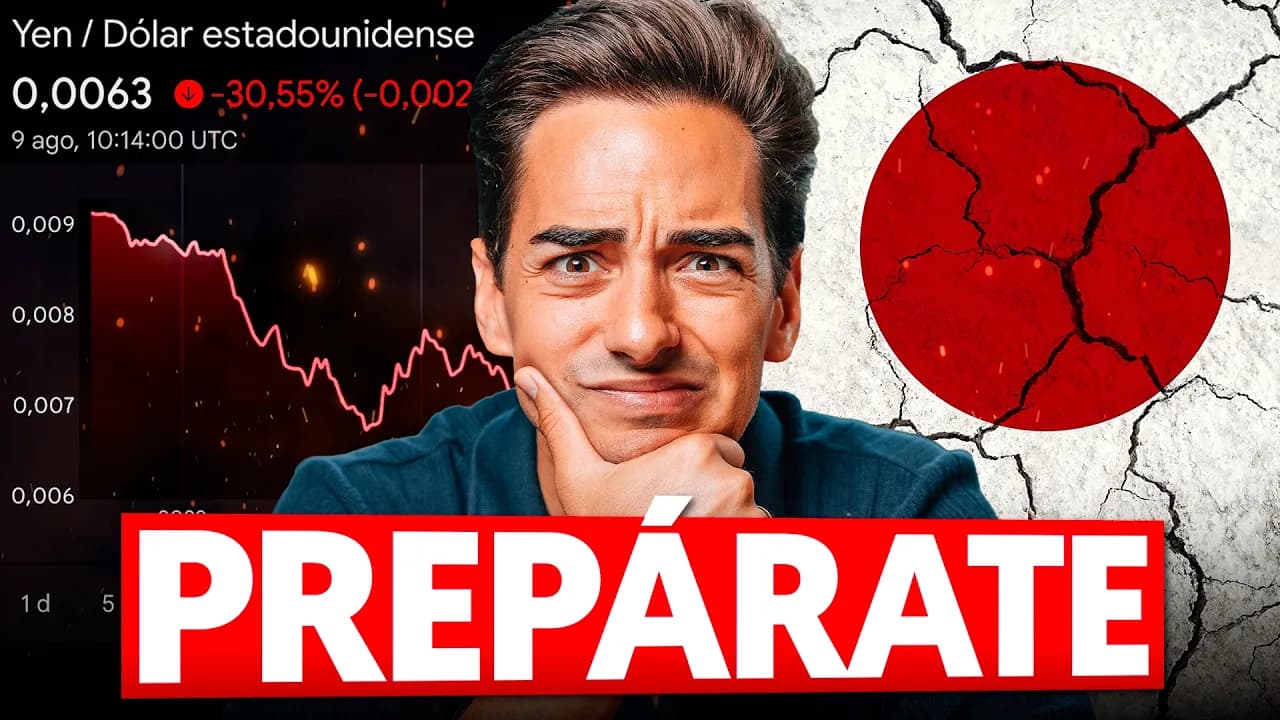
United States banks have been warned to prepare for a possible intervention of the Japanese yen after its value recently fell to its lowest level in 40 years. Japan holds so much of its own money in US dollars that if forced to sell to prevent their currency from collapsing, this could trigger a global reversal across the entire economy.
Global economies are interconnected where what happens in one country affects others. When a currency is weak, money flows out into something safer, typically US dollars or US Treasuries as the reserve currency of the world. Every country has their own currency, interest rate, and inflation indexed to how many dollars they can purchase, creating arbitrage opportunities where traders borrow cheap in one currency and buy US dollars at higher interest rates to profit the difference.
For nearly 40 years, the value of the Japanese yen has been on a steady decline due to decades of deflation, an aging population, and weak demand keeping interest rates near historic lows. Japan maintained this system because inflation was non-existent until the United States raised interest rates at the fastest pace in history to battle record-high inflation from 2022 and 2023.
Traders borrowed yen at approximately 1% interest, converted to US dollars, and purchased US Treasuries earning 4-5% interest. For example, borrowing 1.6 million yen at 1% interest converts to $10,000, which can then purchase 12-month Treasuries earning 4%. After 12 months, the $10,400 converts back to approximately 1,650,000 yen, allowing repayment of the original loan plus interest while retaining roughly $400 profit, all while the yen's steady decline against the dollar enhanced returns.
On Friday, July 31st, Japan announced an emergency intervention to buy back their own currency with US dollars to prevent the yen's value from crashing. Japan is the single largest foreign holder of US Treasuries on the planet, so when they sell dollars to buy yen, they flood the market with US Treasuries, pushing interest rates higher and affecting mortgage rates, borrowing costs, and stock values across the entire market.
The Federal Reserve controls short-term borrowing between banks but does not control long-term interest rates like 10- to 30-year Treasuries, which are dictated by supply and demand. These long-term rates affect mortgage rates, corporate borrowing, and the value of every stock in portfolios. Treasury yields are driven by supply and demand - when countries buy US Treasuries, yields go down, but when countries sell Treasuries, prices fall and yields rise.
Japan is not the only country selling US Treasuries - demand has recently fallen to 10-year lows because other countries facing higher inflation due to rising oil costs are selling their Treasury holdings. This caused the 10-year Treasury to cross its 100-year moving average, representing a century-level event.
In 2024, Japan ran the exact same strategy with two rounds of emergency intervention, spending nearly 10 trillion yen defending their currency. The yen bounced about 5% off its 34-year low for a few weeks before falling to hit a 38-year low just weeks later. The most recent intervention saw Japan spend a record $59 billion, causing the yen to rise from 163 to almost 157 (its biggest weekly gain since February), but by Friday afternoon it had fallen back down to 160.
The underlying problem remains that the Bank of Japan holds interest rates at 1% while the United States holds rates at 3.5% to 3.75%, with three members voting to go higher. Until this gap closes, every dollar Japan spends is merely kicking the can further down the line. There are only two ways this ends: either the gap closes gradually through Bank of Japan rate hikes and US rate cuts, or the gap closes rapidly through a currency unwind that could cause a quick downturn similar to 2024.
The next checkpoint will be September 16th when the Federal Reserve is expected to raise interest rates another 25 basis points, which would widen the gap further and force Japan to intervene again.
This represents the second time the US has stepped in to coordinate with Japan in 30 years, previously occurring in 1998 and 2011. The Treasury calling banks to intervene demonstrates this is a significant issue showing the United States is more intertwined with Japan's currency situation than expected. The likely outcome involves short-term panic selling and volatility followed by a slow grind back to normal, especially if the Bank of Japan hikes rates enough to make the carry trade unprofitable. The worst-case scenario of a complete unraveling is considered unlikely given Washington's close monitoring of the situation.
Keep Graham Stephan in your library
Save the videos and channels worth coming back to, and find them again in one place.