Jon Gray on AI Infrastructure and Compute Demand | Blackstone Q2 2026 Results
In a Nutshell
Blackstone's Q2 results show the firm monetizing early AI infrastructure bets through data center sales and partnerships with Google, Anthropic, and Broadcom while reporting 26% earnings growth. The core thesis is that AI compute demand is outpacing supply, evidenced by 7x LLM spending growth and hyperscalers signing long-term contracts, unlike past speculative bubbles. Private credit remains stable with strong institutional inflows, while the firm sees AI as a new economic operating system requiring massive physical investment that will drive returns despite near-term rate and market headwinds.
These notes were generated by AI and may contain inaccuracies.
Blackstone reported earnings of $1.52 per share, exceeding estimates of $1.35, on revenue of $3.8 billion, also ahead of expectations. The firm manages more than $2.3 trillion in assets under management. The quarter delivered 26% earnings growth, following 25% growth in Q1.
Blackstone has been executing a strategic pivot into the AI world, with AI infrastructure investments generating significant returns for investors across their vehicles. The firm began this journey in 2021 with the acquisition of QTS, their large data center platform. Since then, they have invested at scale across the AI ecosystem, including energy and electrical equipment, data centers, neoclouds, and foundational models. The seeds planted through these early investments are now delivering returns.
Recent monetization includes the sale of a data center portfolio at a large gain and the sale of a major battery storage company for $7 billion. The firm announced multiple AI-related partnerships in the quarter, including:
- Partnership with Google around their TPUs
- Partnership with Anthropic for technology deployment
- Partnership with Broadcom for chip financing
Blackstone positions itself at the intersection of AI and the physical world, believing in a global shortage of compute and investing thoughtfully across debt and equity opportunities.
When considering the sustainability of current capital spending levels, the key framework is supply versus demand analysis. Unlike the 1990s telecom boom or the 2008-2009 housing crisis, where supply exceeded demand through speculative overbuilding, the current AI infrastructure market shows demand growing rapidly ahead of supply.
Evidence of accelerating demand includes:
- Anthropic's revenue run rate has grown five-fold since the beginning of the year
- Portfolio companies have seen a seven-fold increase in large language model spending in just six months
- Strong returns from powerful applications at portfolio companies
On the supply side, data centers and power plants are not built speculatively. Enormous investments require long-term contracts from large, low-leverage, investment-grade companies. There is currently a shortage of compute, with hyperscalers and large language model companies ready to take any available capacity for 2026-2027.
Despite potential capital misallocations and individual company failures, the aggregate view is that AI represents a new operating system for the global economy. The enormous physical investment required will pay significant dividends over time.
Regarding capital market constraints, while gravity from capital markets exists and cost of capital may rise for non-investment grade companies, responses will include more equity raises. The key question is whether companies are getting returns on their investments.
Historical precedent from Amazon demonstrates that years of heavy investment in warehouse networks, despite criticism, proved to be a sound decision. Limitations will exist due to the scale of build required, power constraints, and potential political pushback, but leasing activity remains strong.
Blackstone's data center platforms have demonstrated strong demand:
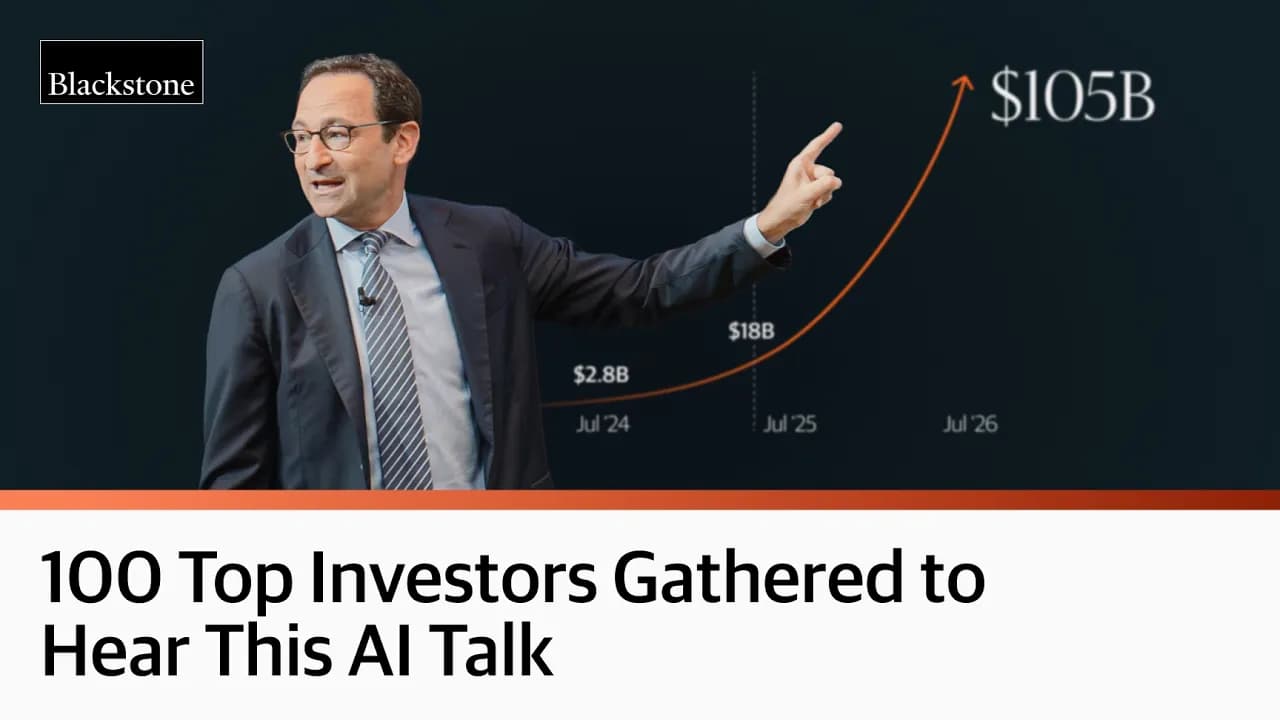
- Leased 1 gigawatt in 2024
- Leased 2 gigawatts in 2025
- Expect to lease at least 7 gigawatts in the current year
This represents more than $100 billion of data centers and another couple hundred billion dollars of chips. While limitations exist and markets may create friction, the underlying demand for compute and productivity gains supports continued investment, though the pace may slow.
Private credit shows differentiated performance across client segments. Institutional clients including insurance companies and pension funds continue allocating at scale, attracted by premium returns relative to tight liquid credit spreads. These investors are expanding from non-investment grade to investment grade private credit, providing financing for digital and energy infrastructure.
On the wealth side, inflows have slowed amid market noise, but this is viewed as temporary. Concerns about private credit crisis scenarios are dismissed as overstated. While returns may normalize due to default rates and lower base rates, systemic crisis is not anticipated. Early in the current quarter, redemptions are down significantly.
BCRED has seen muted inflows but significantly reduced redemptions. The key determinant for future flows is performance delivery. BREIT, Blackstone's private REIT product, is delivering strong performance with returns up more than 10% over the last 12 months and achieved the best net inflows last quarter in almost four years.
Blackstone stock is down slightly over 20% year-to-date. Market focus centers on private credit concerns and elevated rates' impact on transaction activity and real estate asset classes. The market tends to be short-term focused.
Blackstone emphasizes delivery of strong client returns, evidenced this quarter, supported by strategic moves in AI, life sciences, secondaries, and Asian private equity platforms. The firm offers approximately 4% dividend yield, four times the market average. The served market continues growing as investors seek private market access for diversification and return benefits across individual, insurance, and institutional segments.
At Blackstone's Monday morning investment meetings, discussions around interest rates and Federal Reserve policy consider:
- Energy prices have increased
- Lingering tariff effects persist
- Core inflation remains relatively subdued away from energy and AI infrastructure
- Shelter rate growth in owned rental housing is approximately 1.5%, about half the government data rate
- Labor market wage growth has declined from 5% to approximately 3%, favorable considering productivity gains
The current inflation picture is viewed as a near-term supply shock. When geopolitical conflicts settle, energy prices are expected to decline. No price-wage spiral is evident. The Fed is expected to remain patient given the data, with room to wait and monitor developments.
Keep Blackstone in your library
Save the videos and channels worth coming back to, and find them again in one place.