Market Crash Incoming? Here's What Just Happened
In a Nutshell
Markets sold off sharply after Iran rejected peace talks, erasing overnight gains and triggering heavy losses in semiconductors, with SK Hynix down 9%, SanDisk 12%, and ASML 8%. The trader is holding long positions (down $3-4k), buying dips on names like Micron while trimming on strength, aiming to limit losses to $5k and avoid revenge shorting. Next week’s FOMC decision and earnings from Microsoft, Meta, Apple, and Amazon add volatility risk, while rising bond yields and low US oil reserves remain key concerns.
These notes were generated by AI and may contain inaccuracies.
Markets dropped after NASDAQ was up nearly 1.5% during overnight and pre-market trading, reaching highs of 695 just a few dollars away from 700. The market rejected these highs and began selling off, leading to new lows below Friday's levels. Semiconductor and memory chip stocks were hit significantly harder than the broader market. SK Hynix dropped 9% on the day, SanDisk fell 12.4% and reached as low as 14% down at one point, ASML declined nearly 8%, and Micron sold off after initial support attempts.
The biggest mistake in this scenario is not cutting losses or trimming positions, but rather revenge trading by opening shorts when markets are already down 5-7%. Overtrading just because markets move against you is problematic because individual traders are irrelevant to the market's direction. The approach involves buying the dip on Micron, recovering part of the position through aggressive buying at signs of support, trimming when recovered, and now being down $3,000 to $4,000 on the current position while maintaining a long stance. The goal is not to lose more than $5,000 on the day, with excitement about potential oversold reversals based on price action confirmation.
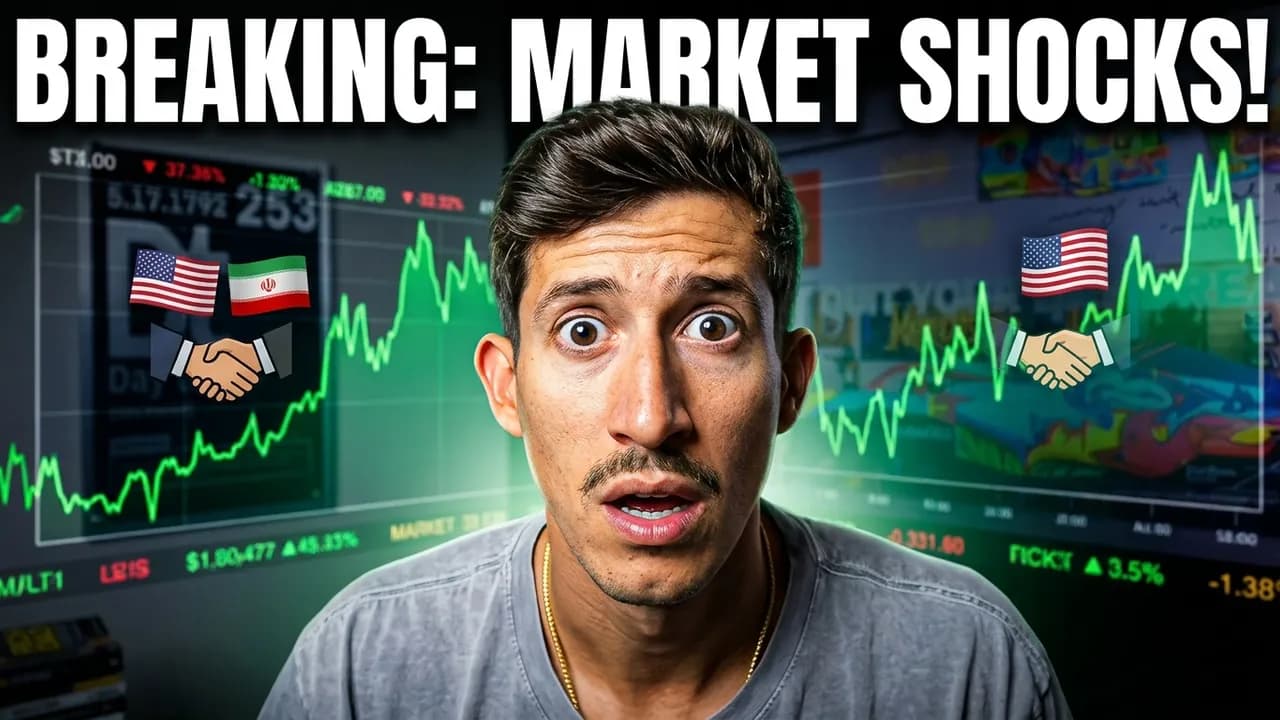
The S&P 500 erased all gains and turned negative after Iran rejected peace talks, which was part of the process. The peace deal or ceasefire announcement that appeared agreed upon from the US side is no longer being accepted by Iran. Trump has overused peace talk and ceasefire announcements multiple times, making markets skeptical of these claims. The US strategic oil reserves hit the lowest level since 1983, which explains Trump's openness to potential peace talks. Bond yields are beginning to creep back up, directly impacting the rate at which the US government borrows. There are also reports of very low munitions stockpiles, which Trump has denied, though he typically denies everything until forced to acknowledge reality.
The South Korean market decline is exacerbating problems in the semiconductor and memory chip space. Nvidia first gapped up based on news of a new partnership worth $200-250 billion, but the stock led AI chip stocks lower after a $500 billion partnership announcement with SK Group. The market may be reacting negatively because these partnerships could be overleveraging Nvidia. Market sentiment has shifted such that news that would have pushed Nvidia to new all-time highs three months ago is now being viewed as potentially overspending by companies.
Sentiment is always changing, and traders must stay updated with current market sentiments to know when to be aggressive versus conservative. The ability to tolerate being wrong until being right is crucial, without making the situation worse by adding more to a wrong position instead of trimming or waiting for confirmation. The dollar amount traded allows for buying dips on relevant and valuable companies without overextending, avoiding the use of leverage or stressful positions. The key question is whether the position aligns with intentions and the timeline required for the opportunity to fulfill itself.
A big week lies ahead with Microsoft, Meta, Robinhood, Apple, and Amazon all reporting earnings. Additional concerns include continued Middle East attacks, rising bond yields, and inflation concerns. The FOMC rate decision is scheduled for Wednesday, likely presenting significant volatility. Never sell yourself the idea that it cannot get worse when buying the dip aggressively, as this is one of the biggest mistakes investors and traders can make. Markets cannot be predicted, and the job is to work with the market and take advantage of valued opportunities.
Position management involves trimming when the stock rips up higher and adding when it sells off lower, working with the same dollar amount rather than adding more to the position. This approach chips away at losses while lowering the average purchase price. The strategy works with market highs and lows rather than committing to a single entry point. For those choosing to buy the dip, the question is whether they can tolerate the time required for recovery, as feeling stressed indicates going in too aggressively too early.
Daily live trading sessions occur every morning at market open, allowing observation of real trading decisions, market reactions, and news impact. The LPP lesson library contains structured content and concepts discussed in the trading approach. Access involves a one-time payment for lifetime access rather than a subscription model, with members from 2018 still maintaining access. Over 5,000 free videos are available on YouTube for those preferring self-directed learning.
Keep Ricky Gutierrez in your library
Save the videos and channels worth coming back to, and find them again in one place.