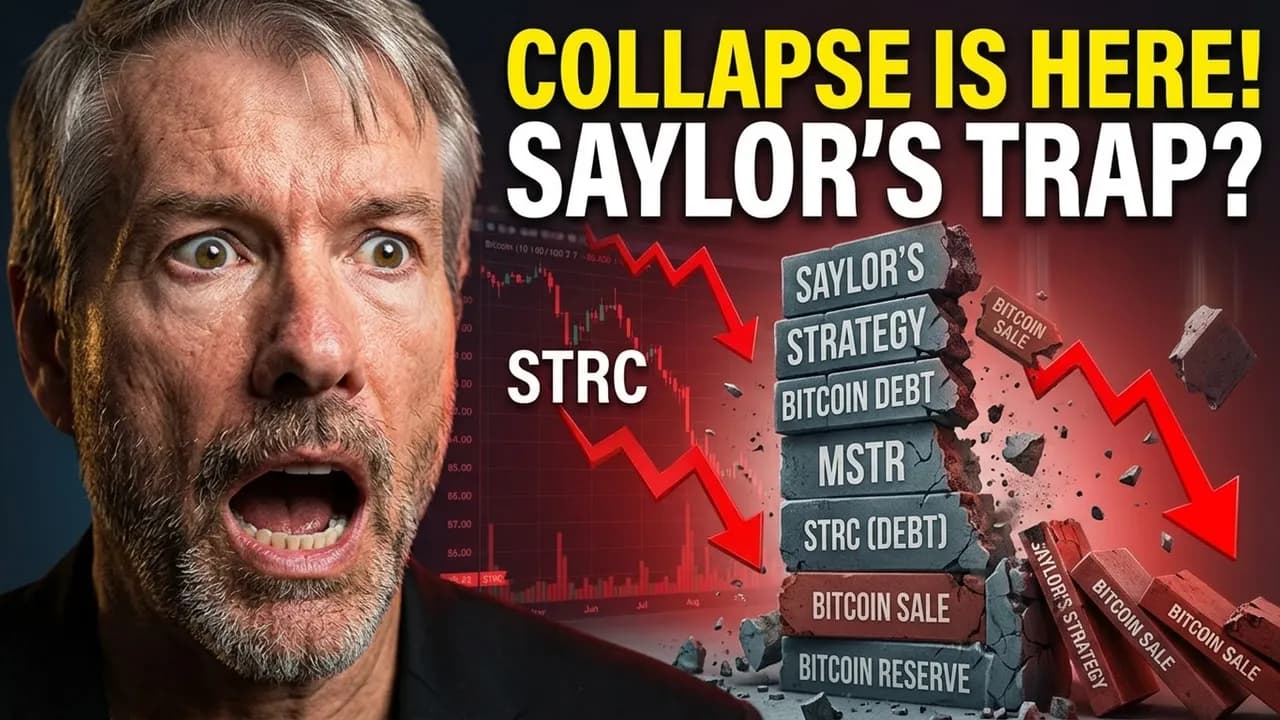
MicroStrategy Dumps $1.25 Billion Of Bitcoin | Here's Why
In a Nutshell
MicroStrategy launched a program to sell up to $1.25B of Bitcoin to fund operations and meet dividend obligations on its preferred securities, marking a reversal from its previous "never sell" stance. The timing—during a 50% Bitcoin drawdown and amid solvency concerns—suggests the company is raising cash out of necessity rather than strategic planning. While the announcement provided short-term relief to MSTR shares, it highlights underlying financial pressures and raises questions about the sustainability of its Bitcoin treasury strategy.
These notes were generated by AI and may contain inaccuracies.
MicroStrategy announced a Bitcoin monetization program allowing the company to sell BTC to fund operations, with over a billion dollars involved. Michael Saylor is launching this program that permits the company to sell Bitcoin to meet operational needs. This represents a shift from Saylor's previous position of never selling Bitcoin.
Bitcoin is currently down 50% from previous levels. The program was announced during this downturn rather than when Bitcoin traded near all-time highs around $126,000. If this had been part of the original strategy, the sales would have occurred at higher price points rather than during the current decline.
MicroStrategy faces solvency issues and needs cash reserves to meet dividend payment obligations to investors in STRC. The company changed dividend rates from 11.5-12% to 12%, making the securities more attractive. Based on the recent raise, the company should have sufficient cash on its balance sheet for the next 12 to 17 months to remain liquid and meet dividend payments.
An open class action lawsuit remains against MicroStrategy despite the positive catalyst from the monetization announcement. The program may alleviate some negative selling pressure currently affecting both Bitcoin and MicroStrategy stock.
The decision to sell Bitcoin at a loss during one of the lowest points in the past two years indicates the company needs fiat currency to fulfill dividend commitments made to investors. This would have been more convincing if executed when Bitcoin traded at all-time highs rather than during uncertain times when desperate measures are typically taken.
Saylor made a commitment to potentially buy back both preferred securities and MSTR common stock, though this is considered unlikely to occur. MicroStrategy has a history of diluting investors rather than executing buybacks. The company does not have to buy back a billion dollars worth of stock.
Saylor stated in an interview that he created STRC with ChatGPT by arguing with it. This has led to memes about using ChatGPT to build buyback plans to save the company. The announcement of selling Bitcoin from a Bitcoin treasury company to pay dividend obligations raises questions about the strategy.
STRC is down 20% over the past month while MSTR is down 50% over the same period. Following the announcement, MSTR shares are up 8% on the day but remain significantly lower on a monthly basis. The announcement acts as a short-term positive catalyst that alleviates selling pressure.
Multiple red flags indicate uncertainty and solvency issues. The company is buying time by adding cash to its balance sheet because it anticipates conditions may worsen. Solvency concerns include the risk of liquidation or forced selling by the SEC. The timing suggests the company wants to get ahead of potential new lows rather than executing this as part of a planned strategy.
President Trump announced that Iran requested a meeting scheduled for tomorrow in Doha, Qatar, indicating potential progress on diplomatic matters. The NASDAQ experienced significant volatility during today's market open, rallying then selling off into negative territory before a V-shaped recovery, now retesting previous highs.
The MAG 7 stocks led the rally while semiconductor stocks led the sell-off, with MU and SanDisk down approximately 10% at one point. AI and semiconductor companies experienced significant declines while the broader market showed mixed signals. The market appears overbought at current levels with patterns suggesting potential correction similar to previous rejections at these levels.
During uncertain times and elevated market levels, investors should adjust exposure based on market conditions. When the NASDAQ and S&P 500 sell off, broader market selling typically follows. Shorting carries greater risk and is not recommended for beginners. Investors can prepare for potential pullbacks by waiting for better entry points rather than attempting to predict exact timing. The current market shows buying pressure but remains at levels where previous corrections occurred.
Keep Ricky Gutierrez in your library
Save the videos and channels worth coming back to, and find them again in one place.