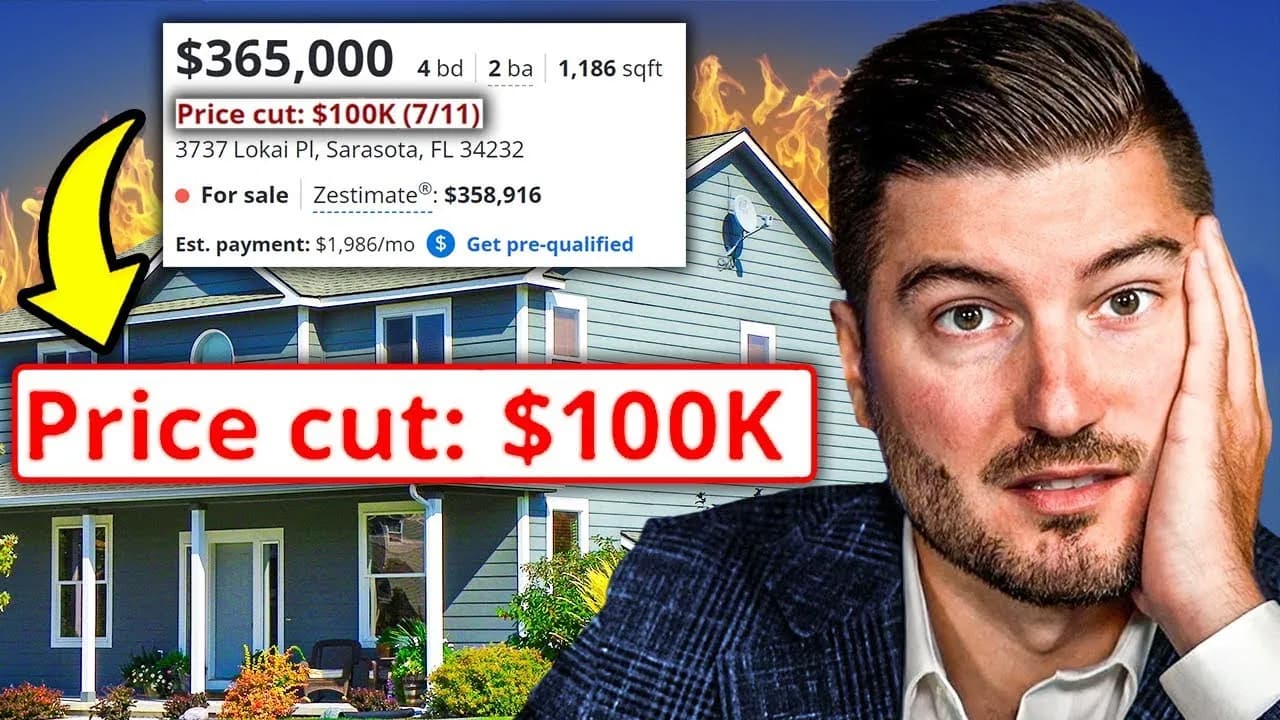
Mortgage Rates PLUMMET – What This Means For Home Prices!
These notes were generated by AI and may contain inaccuracies.
Trump announced plans to inject hundreds of billions of dollars into the housing market to lower monthly home prices. Historically, such moves flip the market into overdrive or make housing more expensive, fueling rumors of another bubble. Graham is selling off all his real estate this year, listing another in a few months, aiming to have all but one property by year-end, due to the 'great housing reset' per Redfin. Discussion covers 2026 market, Trump's plan impact, and effects with falling mortgage rates.
Appreciates likes and subscriptions. Shows picture of a triplex as thank you. Thanks Surfshark sponsor.
On January 8th, Trump tweeted he'd drive down mortgage rates by purchasing $200 billion in mortgage-backed securities (MBS). Banks bundle mortgages into MBS sold to insurance companies, pensions, hedge funds, institutional investors at market rates. $200 billion purchase pushes MBS prices higher, lowering yields and thus mortgage rates. Analysts predict 0.25 to 0.5 percentage point drop, boosting purchasing power by up to 6%. 30-year mortgage rate dropped to 5.99%, matching February 2023 low. In short supply market, benefits go to sellers; cheaper financing lets buyers pay more for same homes.
2005-2007 bubble: builders overbuilt, no-money-down mortgages flooded market, collapse followed. Post-bubble, construction never returned to pre-2006 levels. 2020 pandemic worsened: low rates led to refinancing, then rate hikes locked people in (payments up 50% if moving). Combined with low building, keeps prices high. Now seeing 2019 inventory levels; may soon enter buyer market. By end of 2025, sellers outnumbered buyers by 530,000, widest gap since 2013.
2000: median home price $120,000 (1.7x household income). 2024: $412,000 (5x median income). Buyers over 70 outnumber under 35. 2026: 7x ratio, near all-time high, worse than 2006 bubble's 6.8x. Rates from 6.5% to 5% could add 6 million affordable buyers if prices hold. Redfin: incomes rising faster than prices starting next year, first since Great Recession. Still, 6% rates need $110,000 income for median home (double 2020). Ownership costs rising fast: 8% of borrowers pay more in taxes/insurance than mortgage.
Surfshark VPN secures online activity, encrypts data, masks IP, blocks ads/trackers/malware/phishing, no logs. Use for travel, public Wi-Fi, geo-restricted streaming. Code 'gram' at surfshark.com/gra for 4 extra months free, 30-day money-back guarantee.
$200 billion MBS injection to lower payments. 0.25% rate drop boosts purchasing power 3%; 0.5% drop 6%. Short-term: prices may spike as buyers lock in rates. Realtor.com chief economist: boost to demand puts upward pressure on prices, offsetting affordability. Cheaper financing raises prices to equilibrium without supply increase. One-off intervention, not ongoing like 2020; MBS market $11 trillion, Fed holds $2 trillion—$200B is 2% of Fed's. Won't spur building.
Zillow: 1.2% national rise. Fannie Mae: 1.3%. Redfin: 1%. Strong markets: New York suburbs, Cleveland, St. Louis, Minneapolis, Madison WI. Declines: Nashville, San Antonio, Florida markets. Realtor.com: 2.2% increase. All forecasts negative after 3% inflation (e.g., 2% gain = 1% loss).
Properties yield identical returns elsewhere without risk/hassle. One has $600,000 equity at 4.5% return (down from 12%). Expenses up: insurance doubled, water bill +50%, repairs +50-100%. LA limits rent to 90% CPI, can't keep up. Selling now with falling rates boosting value, reallocating sans tenants/overhead/CA policy. Bought 2012-2019 at 3% fixed rates, never raised rents for good tenants. Policies driving out investors; replacements worse for LA.
Prices softening, more inventory, buyers gaining upper hand. Location-specific. For buyers: stick to affordable range, don't rush/FOMO, negotiate—many listings sit months, some overpriced/chasing down. Rules changed: higher costs, slower appreciation, higher rates—scrutinize every purchase. Not anti-buying/crash prediction, but no longer no-brainer. Cash out, reallocate for better risk-adjusted returns. Don't assume old playbook works; compare rent/buy, avoid past performance bias.
Keep Graham Stephan in your library
Save the videos and channels worth coming back to, and find them again in one place.