Once You Hit $100K The Math Does Most Of The Work For You
In a Nutshell
Investing $100/week at 8% annual return hits $100K after 12 years of grinding (60% your contributions, 40% market growth), marking 1/3 of the journey to $1M—not 10%—as compounding flips to outpace inputs. From years 12-18, your money doubles to $200K with you contributing just 31% of the growth; by year 36, total contributions are $187K but the account reaches $1M (82% market-generated), snowballing to $80K/year passive growth. The real challenge is enduring the slow early phase for psychological momentum, higher contributions, and career progress that turbocharge results.
These notes were generated by AI and may contain inaccuracies.
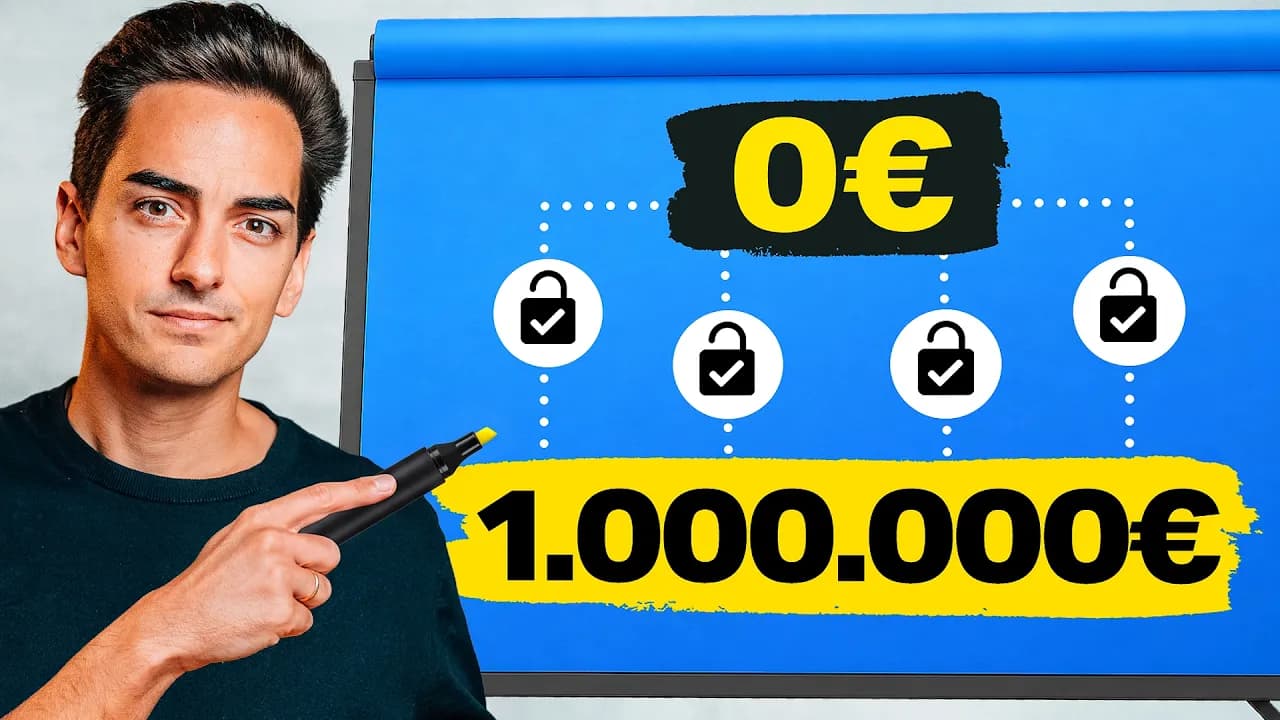
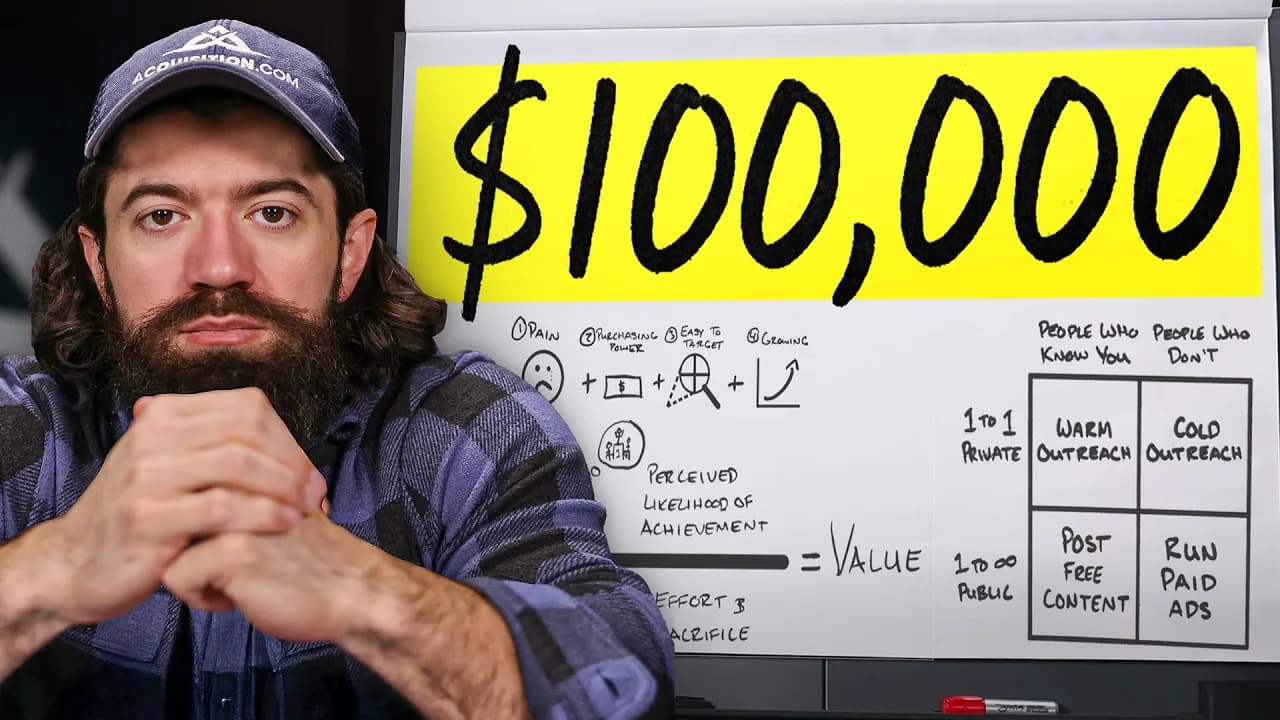
$100 a week or $14 a day costs about the same as a fast food meal, two specialty coffees, or an impulsive online purchase. The goal is $1 million. The key is understanding what happens at the $100,000 mark. Once you cross that threshold, dynamics shift significantly. Whether working towards your first $100,000 or planning next steps, this explains how the math works, why $100,000 is actually 1/3 of the way to a million, not 10%, and what changes at that milestone.
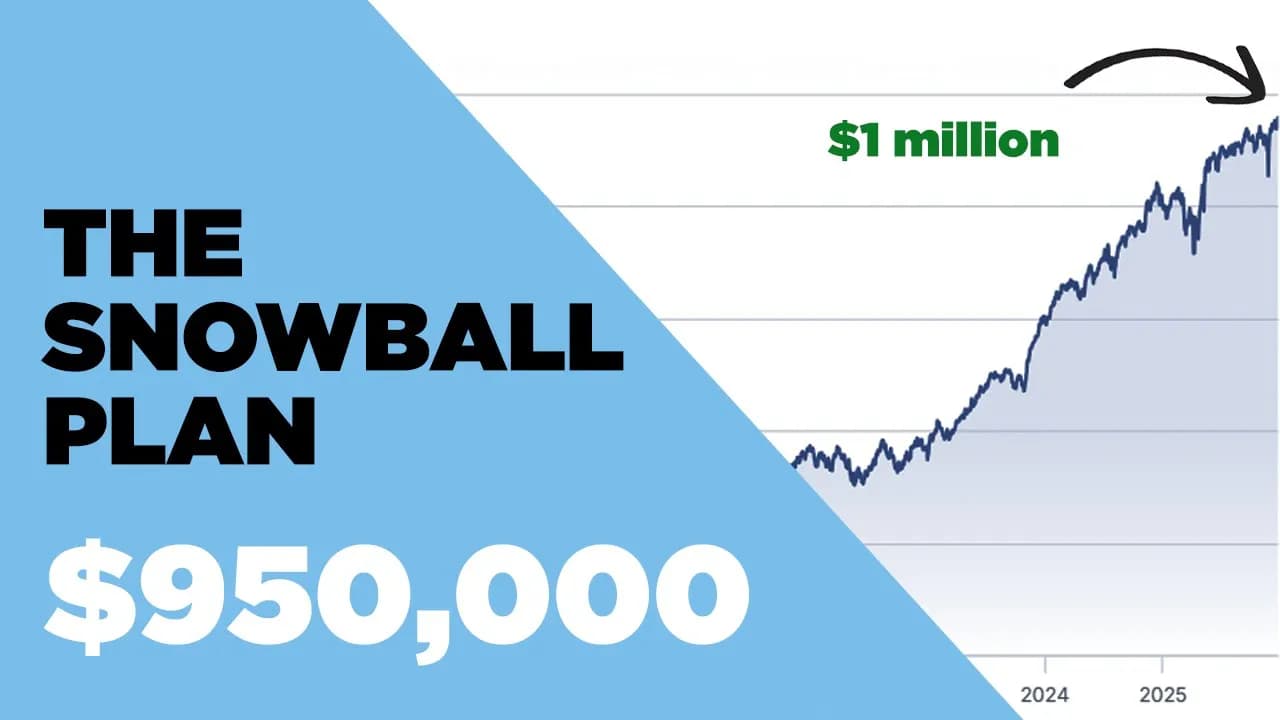
Compound interest means your money earns a return, and those returns earn their own returns. It's like a snowball: small at year 1, massive by year 36. Most understand it in theory but not in practice because numbers look boring for a long time. You're grinding and saving, account barely moving, wondering why bother. Then one day you wake up with a nice nest egg. Every great snowball starts as a snowflake. Have patience to let it roll.
Think of dollars as employees or soldiers. You're the CEO of your financial company allocating resources to grow it.
Investing $100 a week ($5,200 a year) at 8% average annual return. S&P 500 nominal return is closer to 10%, but adjusted for inflation, it's 7-8% in real purchasing power. Use conservative 8% to avoid projecting shortfalls.
Over 36 years, personally contribute $187,000 out of pocket. Total account value crosses $1 million. Market generates roughly $800,000 in growth. You contributed 18% of the final number; money contributed 82%. This ratio argues for starting early and staying consistent.
Phase 1 is years 1-12, the grind. Investing $100/week at 8%, after 12 years hit $100,000. Personally contributed over $62,000; market chipped in about $40,000. 60% is your own money; you're doing the majority of heavy lifting. Investments are warming up but you're still carrying most weight.
Analogy: Getting a big water wheel turning or pushing a boulder up a hill. Many quit here. Like losing fat: count calories, caloric deficit, eat healthy, but weight doesn't come off at first, then it does all at once. After 5-6 years (like 5-6 weeks dieting), it feels like nothing's working, but it is. Stick with it.
Phase 2: years 12-18 (6 years). Double net worth from $100,000 to $200,000 in 6 years, not 12—timeline compressing. Personally contributed $31,200; investments generated over $68,000 in returns. First time money outworks you. Compound interest line crosses contribution threshold—the flip after 12 years of building.
At $200,000, you're halfway to $1 million in terms of math momentum, not dollars (20%). Second half looks nothing like first half.
Assumes consistent investing, but math accelerates with growing income. Ask: Are you progressing in career? Satisfied or just glad it's over? Clear next step or waiting? Feel good staying in role another year?
Income doesn't outgrow direction. Strawberry.me is a career coaching platform matching you one-on-one with a professional for clarity, structured plan, roadmap. For promotion, salary negotiation, career move. Virtual, flexible, affordable. Go to strawberry.me/marco for 50% off first session.
Phase 3: years 18-36. Compound interest becomes tangible. By year 36, account at $1 million. Total contributions $187,000; market $800,000. At $1 million at 8%, adds $80,000/year in appreciation without selling shares.
Go from grinding to first $100K to growing net worth by $80,000/year. Market-dependent: 20% drop takes $1M to $800K, but long-term average 7-8% after inflation.
By year 45, over $2 million, generating $160,000/year at 8%. All from $100/week decades ago. Get rich slow story.
When you hit $100,000 invested, you're 1/3 of the way to a million—not in dollars (10%), but in compounding journey, effort, time. At $100K earning 8%, generates $8,000/year automatically. Golden goose working around the clock, base grows yearly.
Road after $100K tilts downhill, gets easier. Contributions still matter but less as percentage of growth ($187K input for $1M). First $100K is hardest, building the base everything compounds on. Treat as launching pad, not milestone.
Psychological shift at $100K: Proof strategy works. Like seeing abs in caloric deficit—you stick with it, get leaner.
Three factors:
- Increased motivation
- Increased contributions (save more or earn more)
- Financial changes (career progress, higher income)
Trifecta accelerates compounding. Like dieting: more energy, focus, intentionality. Same financially: planned "meals" lead to more motivation, bigger contributions, bigger income.
Investing since 2006. Real obstacle isn't math ($100/week, 8%, 36 years = $1M)—it's the 12-year beginning stretch. Feels like nothing happening, like early dieting (eating cottage cheese/salmon, still fat). Consistency tests you in market, diet, business.
Time in the market matters. Second-, third-, fourth-order effects from discipline.
Whiteboard Finance University (whiteboardfinanceuniversity.com): private community, full courses, live streams Thursdays 5pm EST, shows all buys (e.g., insane April trades). $10-20/month to change financial foundation. Better than fast food or gym membership.
Share video, like, bell, subscribe. Send LongHorn gift card. Have a prosperous day.
Not here to entertain, to educate. Makes dry subject fun, like chatting with a friend.
Keep Marko - WhiteBoard Finance in your library
Save the videos and channels worth coming back to, and find them again in one place.