Our latest music reports | 60 Minutes Full Episodes
In a Nutshell
Pyam Kascade's piano method replaces traditional sheet music with numbers and letters, achieving a 96% diploma completion rate in four years versus the typical 1-2% in twelve, with students composing original works and winning major competitions. Hans Zimmer and Hadti Parti are backing its national expansion. Meanwhile, the Kanneh-Mason siblings demonstrate family-driven classical excellence across seven virtuoso careers, while Cajun and Zydeco traditions in Louisiana show cultural music thriving through family inheritance, emotional connection, and modern fusion despite language decline.
These notes were generated by AI and may contain inaccuracies.
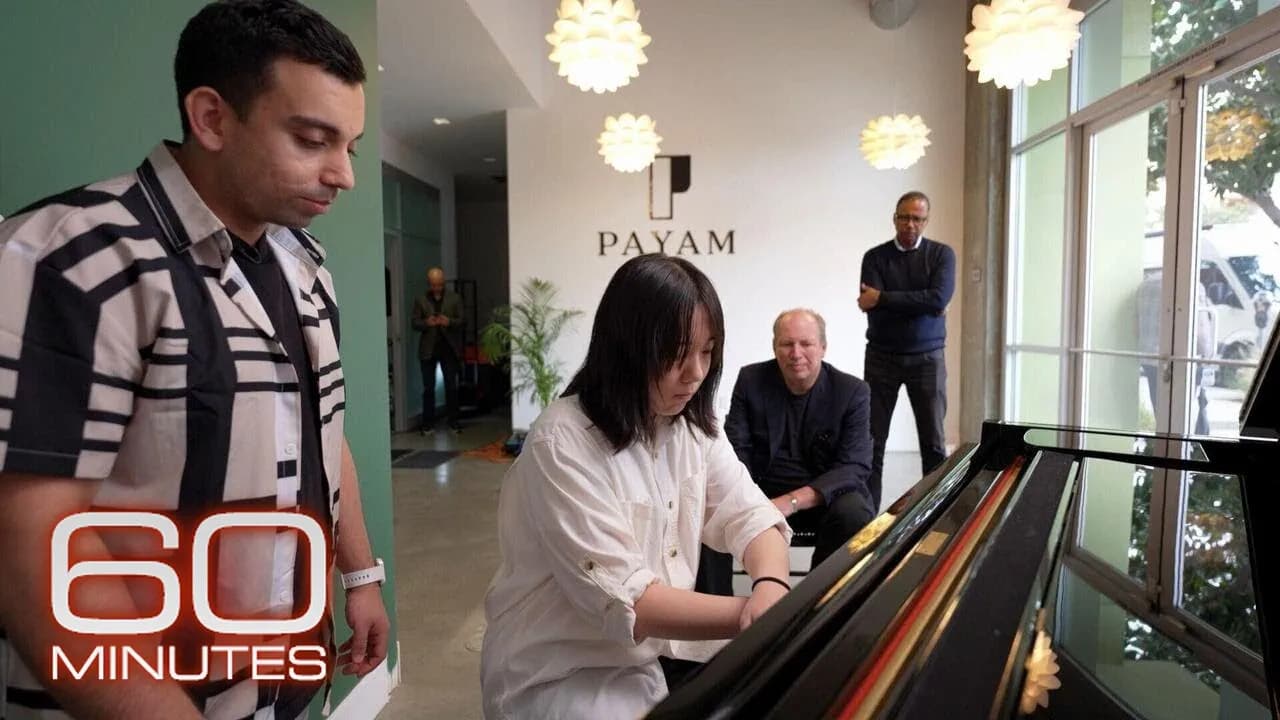
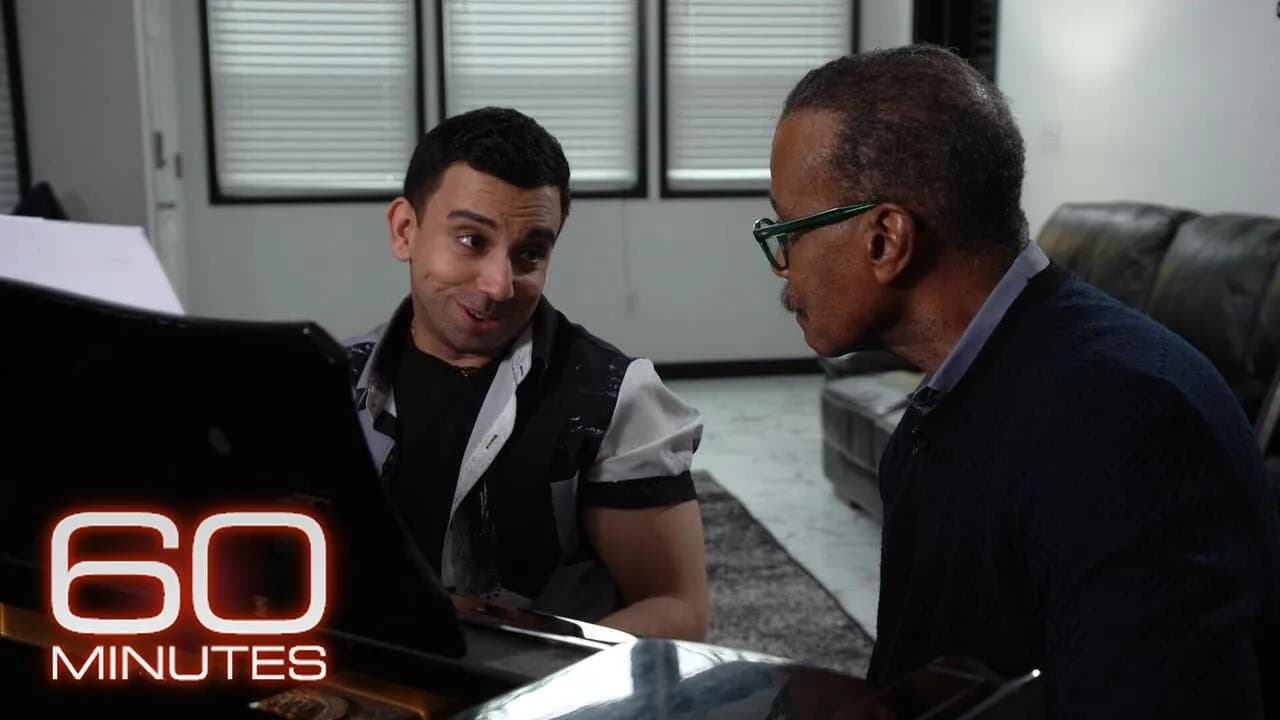
Pyam Kascade, a 32-year-old son of Iranian immigrants, developed a new piano teaching method that has students loving their lessons. Students are sweeping national competitions, and Kascade has won support from tech innovator Hadti Parti and Oscar-winning composer Hans Zimmer.
Piano's not supposed to be fun. It's supposed to be strict. It's supposed to be stressful. It's supposed to be like this very intense instrument you're learning. And we're like, why? Like, why can't it be fun? Why can't we actually enjoy the songs we're learning?
Students do not just learn piano; they love piano. Lessons take place in a converted home in the Seattle suburb of Bothell, Washington. Pyam and his team of young teachers, all former students, give lessons. Students are charged between $75 and $100 per lesson. Students range from preschool beginners to high school talents.
In traditional piano education, about 1 to 2% of students reach diploma level, taking about 12 years. In Pyam's school, 96% reach diploma level in about 4 years.
Kascade agrees that discipline, hard work, and rigor are required to become a phenomenal pianist. However, when students enjoy what they are doing, they do not realize they are putting in the time.
The Pyam method begins not with sheet music but with ABCs and 1 2 3s, writing numbers on piano keys. A song taught to three-year-old students uses numbers 1 and 5. Students are not reading notes or looking at sheet music. They play games such as 1 2 3 followed by 1 1 2 5, building coordination.
The approach uses tools students already know—numbers and letters—to learn music. Just as students learning Chinese would first use ABCs and 1 2 3s before Chinese characters, Pyam students eventually shift to sheet music as they progress through 18 levels of the curriculum.
Level 2 to Level 13 takes students about a year and a half to two years. During this time, students learn songs they actually enjoy.
Hans Zimmer, who has written scores for more than 150 films and won two Oscars including for The Lion King, had an unconventional music education and was asked to leave eight schools. Zimmer was drawn to Pyam's method because it embodies the playfulness and unconventionality he wished he had experienced.
Most of Pyam's students do not aspire to be concert pianists. The method's standout feature is teaching students to compose original songs at young ages. Delara, age 12, has written her third composition.
Pyam wrote his first original song at age 9 as a gift for his newborn sister. At age 11, he entered an original composition into the National PTA Reflections competition and won.
In 2024, Pyam Music submitted 41 students to the Reflections competition out of 300,000 nationwide. They won 13 out of 15 district winners, 5 out of 5 Washington State first place winners, and 4 of the 14 national medals awarded.
Students are encouraged to play around with tempo, style, and mood even when learning others' compositions.
Hadti Parti, co-founder and CEO of code.org, met Pyam when his 12-year-old son Darius enrolled. Code.org teaches coding with blocks and dragging/dropping rather than ones and zeros or angle brackets. Similarly, Pyam Music teaches with ABCs and 1 2 3s before introducing music notation.
Parti is now CEO of Pyam Music with the goal of expanding nationally. The plan is to open Pyam schools across the country. Investors include Hans Zimmer.
To this day, I just remember these piano lessons as being horrible. And here's a man who figured out a way of giving children this opportunity to have absolute happiness, you know, love music and love themselves.
Zimmer visited the Santa Monica, California location and listened to students including Darius, now 19, play compositions.
Parents report their children have fallen in love with music. Charad Salastani's daughter is nine. Sashuati Saniel's daughter Ana is 15. Julia Ying's son Jonathan attended through college. Parents note increased confidence, that learning can be fun, and that students want to work hard.
Stewart Copeland, drummer of The Police, partnered with naturalist Martin Stewart on the album Wild Concerto. The album features animal sounds from Stewart's archive of nearly 100,000 recordings collected over decades. The Police sold more than 75 million records. Copeland began composing after Francis Ford Coppola hired him to score Rumblefish, focusing on rhythm and found sounds.
Copeland arranged barking dogs, clacking billiard balls, and pile drivers in rhythmic loops for film scores. He later wrote classical music and an opera.
Martin Stewart began recording at age 11 in bluebell woods near his home in Middle England. His first recording was a Eurasian blackbird. Stewart believes his mission is to fight for animals and the environment.
We're losing some of the most precious species on Earth. I can go back to places that have been monitored over a period of 20 years and the change is significant. And audio has done that. Audio is the barometer of the planet.
Stewart has the last known recording of the golden Panamanian frog. The northern white rhino is extinct in the wild. He recorded a howler monkey and a crocodile that swallowed one of his microphones. A hyena recording from Namibia's Skeleton Coast is included; Copeland adopted hyena love sounds as part of his relationship with his wife.
Stewart is living with cancer and fears mass extinction. He hopes Wild Concerto will draw people to appreciate animal sounds and help preserve the archive.
The seven Kanneh-Mason siblings—Geneva (23), Aminata (20), Sheku (26), Braimah (28), Isata (29), Konya (25), and Mariatu (16)—are all virtuoso musicians under age 30. They have toured the world, recorded chart-topping albums, and won prestigious awards. They perform in every combination.
The siblings describe an unspoken connection and telepathy when playing together due to growing up listening to each other. They credit their intensely musical, loving, and supportive environment.
Parents Kadiatu Kanneh-Mason, born in Sierra Leone, and Stuart Mason, born in London, did not plan for their children to be musicians. Music was one of many after-school activities including cricket, football, tennis, and gymnastics. The eldest, Isata, started piano at age 6; younger siblings imitated older ones.
The children attended local public schools and practiced three to four hours daily. All seven were selected for the junior program at the Royal Academy of Music in London, traveling two hours each way every Saturday. Any extra income went to instruments and lessons. The family nearly defaulted on their mortgage multiple times.
The home became an informal music school. Weekly Sunday concerts were held in the hallway with siblings giving feedback from the stairs. The pressure came from knowing music world standards and from each other as the toughest critics.
Pressure for the Kanneh-Masons comes from knowing the standards in the music world. Kadiatu Kanneh-Mason states that the children have always called the shots regarding career strategy, and decisions have never been about clicks, likes, or commerce. In 2015, the family agreed to appear on Britain's Got Talent for good exposure, but only if they could include real classical repertoire rather than a pop-heavy set list.
The family turned down opportunities to milk their story and the novelty of seven children for a reality show. They wanted to be classical musicians and be really good at what they did. They maintained their convictions despite commercial pressures.
Sheku won a major British music award and caught the eye of a certain couple in search of a wedding entertainer. When he performed at the marriage of Prince Harry and Meghan Markle in 2018, the world heard him play. Sheku became a bonafide star, the first cellist ever to crack the top 10 on the UK album charts. He has posed for British GQ.
Sheku presents as the quietest of the siblings and perhaps the least comfortable wearing the cloak of celebrity. When he plays the cello, he transforms and draws packed audiences. He performed in London on a $3 million Venetian cello he has on loan.
All seven siblings still perform as a family from time to time. Kadiatu has pivoted, devoting herself to writing fiction. Aminata tried out acting school, but music tugged her back and she decided to return to conservatory. Braimah branched out too, touring with the dance pop band Clean Bandit before returning to classical. The youngest, Mariatu, plans to go pro.
The four current professionals are busy recording or touring. In the spring, Sheku will take the stage as artist-in-residence at the New York Philharmonic.
The Kanneh-Masons have come into the public as a unit. They balance the collective with carving out individual identities. One sibling noted that it probably gets easier as you get older because you start to gain more confidence and more knowledge about what kind of things you want to be doing. Musically, it gets easier because they play different instruments, are different ages, and play different repertoire.
There are still some strings attached. Out of all the sisters, two look the most similar, so people often confuse them. One sister was told, "Oh, you played so well last night at Carnegie," when it was not her. Another was told, "I saw you on TV this morning," and replied, "No, you didn't. I was asleep."
The siblings confess they remain fiercely competitive when apportioning dinner or playing board games. Regarding competition in their careers, they emphasize being inspired by those around you. If someone is doing something that you're not able to, you should feel encouragement and inspiration to want to do that. However, comparison about external things like who is doing which concert can cause everything to crumble very quickly.
Rivalry based on external achievements is considered a very weak base. They joke about who got the biggest piece of pizza, but they draw a line that will not contaminate their music. They draw the line at music because their instruments are such an integral part of themselves, and it would be like deeply attacking the other person. This is another way the Kanneh-Masons maintain harmony, an orchestra greater than the sum of its parts.
The idea that the United States has become one big bland conformist culture is countered by Cajun country in the marshy interior of southern Louisiana. No passport is needed to enter, but it is an exotic land like nowhere else, with its own cuisine, language, landscape, and pacing. The singular sound of Cajun music and its cousin Zydeco resists easy description but is intoxicatingly catchy, often sung in French.
Cajun music is experiencing a most unlikely renaissance. The sun is out and living is easy on the bayous of Louisiana. The fish are jumping, and the cypress trees grow high. On dry land, the music hangs in the humidity.
In Eunice, Louisiana, the Savoy family has lived on this patch of land for eight generations. Music is often a family inheritance. The Savoys are considered the Von Trapp clan of Cajun country, Acadiana as it is known. Joel is a Grammy-winning producer and musician, often accompanied by his brother Wilson, also a Grammy winner. Their father Marc, an accordion maker by day, is a prominent musician in his own right, as is their mother Ann, who once recorded with Linda Ronstadt.
Cajun music typically features a Cajun accordion and fiddle, sung in Cajun French. They play two-steps and waltzes. It has a very unique, syncopated rhythm that you don't hear in a lot of other kinds of music. The syncopation drives the music, and it has a hauntingness about it. The music has soul.
These sounds are sourced from the unique blend of people that converged on Cajun country over the centuries. Music is born out of this swirl of different cultures. The accordion arrived with some part of the population, and the fiddle arrived with a different part. The syncopation comes from people encountered here, including African-Americans, Creoles, and Spanish. It is also a social music. Anytime there's music, there's somebody hanging out, somebody cooking. These things are just part of life. It is always inclusive.
When the sun sets in Acadiana, the volume turns way up. This music is the soundtrack in dive bars and in the old French "salles de danse" dance halls that stud this landscape. While it is not topping Billboard charts, the music is experiencing a resurgence as young audiences step once again to those accordions, fiddles, and washboards.
People might think of New Orleans when they hear Louisiana, but Southwest Louisiana has a totally different sound. Chubby Carrier is a Grammy-winning accordionist from Church Point, Louisiana. He tours with his group, the Bayou Swamp Band. Zydeco is a relative of Cajun music, born out of the French-speaking Black Creole community.
Chubby Carrier shared a story about a couple who came to see him play. The wife said, "Honey, you got to come see this. That's a Black gentleman with an accordion in his hand." She thought she was coming for Lawrence Welk. When Chubby started playing his songs, she started looking over to her husband saying, "Wow, this is great."
Jordan Thibodeaux is the frontman of the touring band The Revelers. He states that the sounds are from their community and bury into your heart when you're little. It is not some hipster ironic thing. Most of the people that do these kinds of dances are as far removed from a hipster as you could possibly imagine. Jordan is Cajun music's equivalent of a rock star. Through his music, he has become something of a global ambassador for Cajun country and its way of life.
Jordan has a saying that appears in some of his song lyrics: "You either live your culture or you kill your culture. There's no in between." He means there is a vanishing of cultures and dialects to create one generic human, which is sad to him. He gets up every day and lives his culture. He believes it is every individual's responsibility to maintain who they are as a people.
Time was, Louisiana French could be heard on every street corner in both Cajun and Creole communities. Jordan learned French from his grandmother. Today, the language is dwindling as the march of Americanization proceeds. If the language is diminishing, Cajun music becomes that much more important as a transmitter. There are countless kids who are learning the language just from the music.
The Cajun story starts in Nova Scotia where this French-speaking people led a peaceful life until they didn't. In the middle of the 1700s, the conquering British kicked out the Acadians, shortened to Cajun. Expelled, they found an improbable home amid the backwaters of French Louisiana. From the craggy North Atlantic to the delta and bayous of the Atchafalaya Basin, the largest swamp in North America, Jordan gave a tour of the land that shaped his Cajun ancestors. They adapted to survive and then thrive in this new and sometimes hostile environment.
Jordan learned to swim in the water. His mama would take the kids, put them on life jackets, and throw them out the boat to go swim so they could fish in peace. She would say if you see an alligator, let her know. If you can't see him anymore, let her know.
The Cajuns didn't come with much, but they did bring their old French melodies. They sing a lot while fishing. Jordan's youngest daughter likes to sit and sing while they fish to get the fish to come.
There is an unwritten rule in Cajun country: you can't have the music without the food. Joel Savoy and his family invited the crew into their kitchen. They were cooking some shrimp étouffée. Étouffée is a French word that means smothered. Joel learned from his father. A lot of people ask what the recipe is, and he says he doesn't know. New York has gumbo in Michelin star restaurants, but it is not the same.
Joel proposed a toast to his grandmother who lived in the house. With her lack of gentility, she would always say, "Quit your babbling. Sit down and let's stuff ourselves." The music, the food, the drink, the "bon temps," the good times—these traditions braid all the communities here, but with slight twists.
Chubby Carrier's father and grandfather were sharecroppers who played music at night. He showed the difference between the blues-heavy Zydeco he grew up with and the more country-infused Cajun sound. He took one of his grandfather's songs and played it with a Zydeco sound, then took that same song and sped it up to turn it into a Zydeco song.
Though entwined musically for decades, the Black Zydeco and the white Cajun scenes couldn't mingle much in the Jim Crow deep south. Chubby was met at the El Sid O's Zydeco & Blues Club, a dance hall in the town of Broussard Bridge. He remembers when Black bands and patrons weren't allowed in. He wonders what his dad and grandpa would have been thinking watching him play this venue where they wouldn't have been playing. They fought the fight, and now his dad and granddaddy are in heaven looking down, saying how good it is and how sweet it is.
Today, the Cajun and Zydeco crowds overlap like never before. The music has found new audiences with new sensibilities.
Virtually all the musicians interviewed have seen a surge in popularity. Last year, Nate Williams's streaming audience jumped by more than 3,000%. Nate describes his style of Zydeco as not traditional. It is a fusion. He uses keyboards, synthesizers, and a lot of R&B. Nate learned to play from his father, also a renowned Zydeco musician. Pushing musical boundaries is not always frictionless.
Nate's dad has always been encouraging, but sometimes his face shows he would like more accordion or more French in the music. At the end of the day, they come to a compromising understanding that this is Nate, and that is his father.
Jordan's band tours across the country and internationally. The band met after they'd played a packed show in the Red Hook neighborhood of Brooklyn. They ponder what precisely is fueling this interest outside Louisiana. People don't speak French and aren't getting the lyrics, so what are they connecting to?
The belief is that it is the emotion. If the band is playing and is happy, the audience can see and feel that good tone. The same applies if the song is horribly sad; it makes you feel a little sadness inside and you connect on that emotional level. True music is emotive. You are going to feel it, and everybody wants to feel something.
Keep 60 Minutes in your library
Save the videos and channels worth coming back to, and find them again in one place.