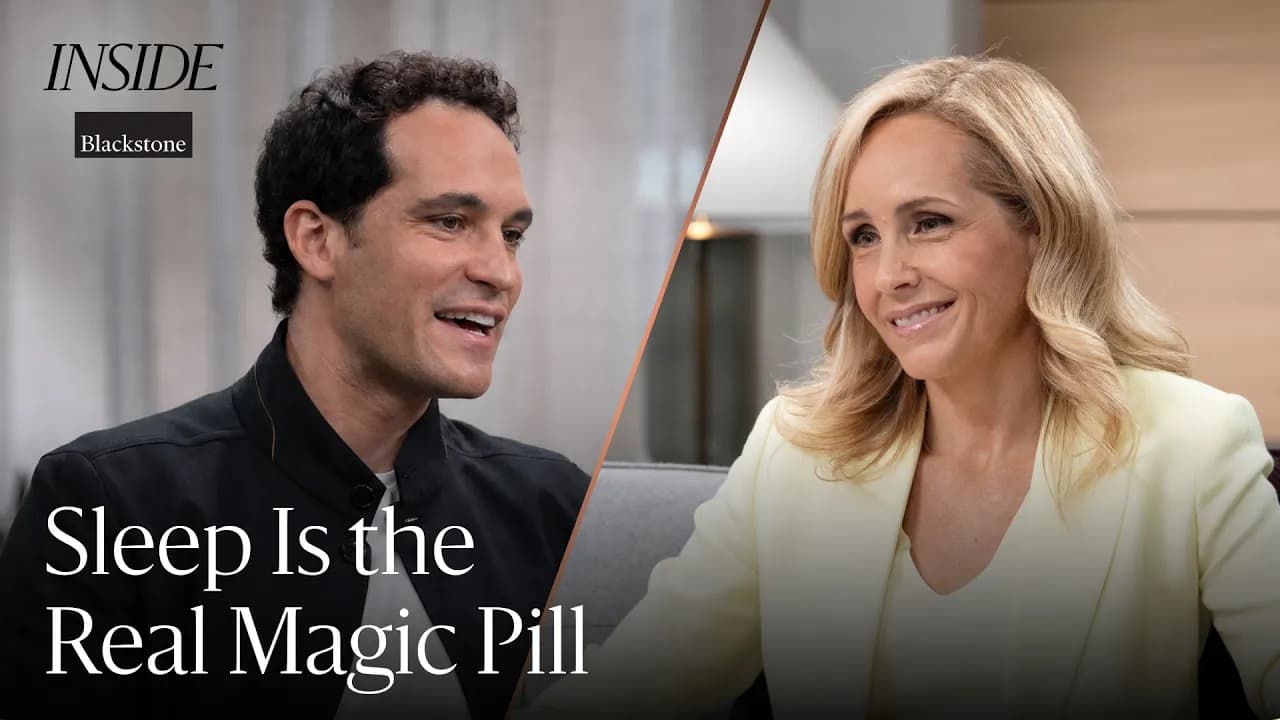
Oura’s Tom Hale: What People Don’t Tell You About Being CEO
In a Nutshell
Tom Hale, CEO of Oura, reveals the unglamorous reality of CEO life: immense stress from ultimate responsibility, more "kibble" than champagne, and owning all failures despite team successes, while fostering non-hierarchical cultures via Slack visibility and challenging ideas across levels. In scaling from 200-2,000 employees, he stresses hiring slow/firing fast, delaying middle management with ambitious internals, maintaining work>people asymmetry to avoid politics/bureaucracy, and preserving missionary passion over mercenaries. Key strategies include Oura's successful $6/month subscription shift for ongoing software value (high V/P ratio, no rollback despite backlash), cultural fusion of US hustle and Finnish socialism via in-person gatherings, customer proximity hacks like NPS rituals, and selective partnerships like Gucci for retail/distribution breakthroughs.
These notes were generated by AI and may contain inaccuracies.
By paying attention to work at all levels of the company from lowest to highest, commenting "Hey, that's a really good idea or have you considered this?" creates a culture where it's okay to have ideas that move up and down. People challenge the CEO, building confidence that the best idea will emerge, not just the CEO's idea. This fosters a non-hierarchical culture unbound by time, geography, or role.
Tom Hale is CEO of Oura, known for the Oura Ring. Host had a severe snowmobile accident in early 50s, lying at bottom of cliff thinking he would die, burnt out after 15 years as HubSpot CEO. Tom, a corporate executive, in early 50s decided he wanted his shot as CEO. Discussion covers unexpected aspects of CEO role: good, bad, ugly. Tom spent career in companies of 200-2,000 employees, the "messy middle" where bureaucracy and middle managers slow progress. Topics include keeping momentum, managing US capitalist and Finnish socialist teams.
Four years ago, snowmobiling in Woodstock, Vermont with son, snowmobile went off cliff, hit bottom in million pieces, no one knew location at 4 PM, thought both would die. Decided to make big life changes, including no more snowmobiling and not wanting to be CEO anymore.
Bucket list item to check off. Wanted to prove to himself he had it in him. Harder than expected, not the work but responsibility, stress, waking at 4 AM worrying if it will work. Pressure from board, employees, customers who put faith in CEO; buck stops here. Host felt similar stress around 100 employees, leading to first panic attacks.
People think it's more fun than it is. Ratio of kibble to champagne favors kibble. Less fine-grained building and pride in details, success belongs to team not CEO individually, but CEO owns failures from decisions, direction, or systems set up. Not glamorous despite podcasts; not main part of experience. CEO absorbs all company [] under the [] umbrella. Analogy: on a boat, when going great CEO warns about problems on other side; when terrible, shows light on horizon.
Host's: Steve Jobs, Jerry Garcia, dad. Tom's: Steve Jobs (recovered Apple, champion of creative professionals), Gandhi (humility vital for CEO), Maya Angelou ("people will remember how you make them feel"; unintended consequences greatest risk, leaving people feeling wrong way devastating).
Younger CEOs emulate Elon's work ethic, 996 culture, hardcore approach. Tom works 996 approximation but modifies: must include recovery, reflection, not constant anxiety/activity. At Oura (health, mindfulness, recovery products), pushed toward performance ("get job done, do what it takes") without losing rest values. Balance key: different company parts at different times/stages peak at 996 or recover; can't run everyone at redline always, dial up/down intentionally.
As leader of Finns (previously colleague), experienced non-hierarchical, socialist society. First trip: sauna (hot then freezing water), felt passed test of Finnishness. Second office in Oulu (near North Pole): no sauna, stripped to skivvies, sat in freezing river 45 seconds monitoring heart rate on Oura Ring to stay alive, then just towel.
~Half employees each. Can't force single culture; shared elements like product passion, health mission. Distinct cultures coexist, stimulate each other, propagate ideas; diversity strengthens company. Post-pandemic push to performance harder in Finland.
COVID as shared health crisis pulled team together, changed remote norms positively. Post-COVID, humanity in recovery; established in-person connection without offices via funded 2-3 day intense gatherings at team/organization/company levels to build cultural/social capital (100,000 generations optimized for in-person).
CEO lurks in Slack, comments on great work at all levels: "Hey, that's a really good idea or have you considered this?" Encourages ideas moving up/down, challenges to CEO, non-hierarchical culture unbound by time/geography/role.
Steve Jobs: "when the bozos come." Hiring less rigorous, bozos (well-intentioned but not committed/mission-driven) slip in; identify and correct. Risk losing passion/spirit/mission that got to 200. Preserve it for most interesting company phase. Over 2,000: managing managers of managers mutes influence. At 200-2,000 CEO can directly touch 2,000 people via Slack presence, knowing names/work, specific praise ("noticed what you did, really great"), huge impact. Also give negative feedback: "expect more from you," personal accountability.
Startup: limited work/people, selective. 200-2,000: more people than work, grow careers fast (powerful human capital use). Over 2,000: more people than work, politics from fighting for best work. Keep asymmetry favoring work over people: explicitly no political culture, make examples of political behavior, hire non-political leaders modeling non-hierarchical behaviors.
Delay as long as possible. Favor internal promotions to identify true believers with passion/mission. Avoid no-ambition managers (Dilbert pointy-haired boss, empty suits managing to minimize complication). Hire ambitious middle managers aspiring to CEO (they'll leave eventually); most effective against bureaucracy. Empower and hold accountable: "You've got to do this," don't micromanage.
Resist layers (no senior directors, directors, VPs, senior VPs; stay flat). Promote internals to middle management for mission alignment. Empower ambitious managers accountable without barking for them.
Create a company culture that reinforces risk-taking: give middle managers the keys to the car—drive fast, but don't crash. Support them through risks and provide the best advice. Use asymmetry: spend time talking to middle management to root out Dilberts and encourage high performers. Model success: "Hey, do what Sal's doing. Sal's doing an amazing job."
In B2B, distance between CEO and customer grows with layers. Hacks to stay in touch:
- Programmatically pull in voice of the customer (e.g., NPS surveys, share verbatim feedback in rituals and meetings).
- At HubSpot, invite a customer to every board meeting and do customer panels.
- Set culture and job expectations for customer interactions: cruising Reddit, talking on airplanes, or direct B2B customer talks. Create time and expectation for more input.
- Frame success around customer needs, solutions, narratives, and values. In health (Oura), customer stories like "You saved my life," "You got me pregnant," "You saved my father's life," "You helped me change my life" are motivating. This flywheel drives 10-30% extra performance through customer understanding and empathy.
Mercenaries show up around 200 employees, especially in sales. Need both missionaries and mercenaries—ratio varies by company (sales-driven vs. marketing- vs. product-driven). Avoid mercenaries in product/engineering; want passionate builders of beautiful, expressive things.
- Find passionate people or make them care (e.g., SurveyMonkey mission: "giving a voice to people who don't have voices," resonating as amplifying employees/customers).
- Elevate missionaries; for go-to-market, need commercial instincts (correlated with mercenary viewpoint). "Mercenary" is caustic—really want people who solve customer needs, drive commercial outcomes, thrill of the chase, victory in customer wins. Not zero-sum. Maybe 80/20 ratio.
Historical model: buy ring once (typical hardware). Introduced $6/month subscription—controversial, customers unhappy. Strategy: To be most competitive hardware company, be great software company. Hardware model fixes value at ship; disincentivizes ongoing value (all value goes to next hardware version, like iPhone 13 to 14). Subscription earns stripes monthly, delivers periodic software value.
$6/month is low bar (two cups of coffee); value priceless (e.g., bed early, predict sickness, optimal procreation timing). Value-to-price (V/P) ratio in multiples. Contentious internally: against hardware single-price expectation. Avoid zombie subscriptions (low value, high inertia price)—don't poke sleeping bears. Three-part rollout:
- Invest in software/science for monthly improvements (SaaS-like releases). Best retention in 30 years of subscriptions—V/P always >1.
- For existing Gen 2 customers: pathway via Gen 3 upgrade discounts (crazy for hardware); become lifetime subscribers (free software forever). Highest loyalty, no churn disincentive.
- Not freemium (50% free value); full function if pay, minimal if not. Many renewed after lapse (e.g., dead credit card)—24 hours later, saw value worth price. Keep V/P >1.5-2 for retention/loyalty.
Noisy internet backlash as new CEO. Felt it—read Reddit, responded on LinkedIn: "If we invest, we deliver more science/research/value." Sometimes won arguments; converts became advocates (10x reach). Transition: unqualified success. Never considered rollback except once (garage at Salesforce Tower, painful phone call). "The only way out is through"—rollback would validate critics, no recovery. CEO lesson: Be comfortable being uncomfortable. Magic happens there, especially pioneering (Oura defined new hardware subscription model).
One subscription tier ($6/month). Avoid complexity/entropy—complicates, raises prices, creates friction/adversarial customer relations. Goodwill in gap between what they'd pay and actual pay. New features go in for free as promised; keep V/P >1.5-2. Exception: non-linear value like Natural Cycles (FDA-cleared digital contraceptive, $20/month add-on atop Oura). Avoids hormonal/surgical birth control. Complexity kills—for consumer/single-decision products (easy churn), keep simple so customers compute "Enough value for $6? Yes."
Most partnerships fail without aligned incentives. Be selective: mission alignment + incentive alignment for durability (like marriage, survives rough moments). Classes: platform partners (robust/scalable access); close ones (e.g., Natural Cycles—mutual aid). Vertical product: serve ICP deeply. Horizontal/broad: partnerships for complete solutions/go-to-market (e.g., Salesforce force.com). Gucci: Started from women's feedback (more appealing/beautiful; prior diamond Oura ring loved). Gucci had successful non-tech black ring with gold torsion/interlocking G's (Roman emperor vibe—boss). Gucci priced at $999 (vs. Oura $299). Marco Bizzarri (ex-CEO): "No-brainer because of Oura value." Sold out in 5 weeks. Power of non-utility fashion/intangible value. Partners as distribution + value. Gucci gave design, and...
Gucci provided value through design, Gucci brand, power of collaborations, and customer base. They had retail distribution; Oura didn't sell on its website—sales via Gucci's website or stores. Gucci was first channel partner. Sold like hotcakes, top markets Japan and Middle East. Insight: Oura Ring is jewelry expressing something about you; people want to see it on their finger, check shape. Retail is critical channel, gave confidence to enter retail—now in Target, Best Buy, Costco, everywhere. Puts object of desire in focus, unlike website.
Terms: Gucci paid $299 for each sold. Distribution partner. Other elements with subscription. Gucci famous for collaborations.
This is scarcity, by the way.
HubSpot early days: Salesforce partner, sold sales software, HubSpot marketing. Salesforce older, bigger. Attended Dreamforce waiting for "Salespot." In 2012, Salesforce launched it. Painful, but pivoted, worked out.
Apple announcement: Similar stomach feeling as Dreamforce? Thinks about major tech platforms entering. Reasons sleeps soundly:
- 2/3 Oura Ring wearers have second wearable, most often Apple Watch.
- Complementary: Oura measures at night (Apple Watch charging on bedside); Apple provides daytime utility (notifications, alerts, screen). Oura is quiet background check engine light for body.
- World of multiple health wearables that interoperate.
- Oura measures long periods at rest (night), clean data/signal. Finger accuracy 50-100x stronger signal than wrist, more info stored/derived.
Data is oil for AI predictions/inferences; Oura has huge advantage.
Grew up in software, thinks in software terms. Advice for hardware:
- Barriers lower now, resist shortcuts.
- Famously didn't manufacture in China; opening US factory for customer caring about security/privacy. Not easy (cheapest/fastest in China), but controlled process—competitive advantage, built art/science of Oura Rings, lead over copycats.
- Think power of hardware-software interplay in business model: Not hardware with optional subscription; integrated subscription product.
- Master hardware constraints: laws of physics, cost, physical inventory, forecasting. Get really good before scaling/spending.
- AI changing game: iterate/test/model 1000s of designs unprecedented.
Intentional mid-career: operated every function—ran call centers, sales team, product (training), field time, M&A executive, internal startups, big businesses. Diversity gives empathy for functions, assess leaders, see interplay at fine grain.
Goldman Sachs CEO (non-founder) said same.
Coaching first-time CEOs:
- Way more stressful than thought, ramps at 100 employees (employees, spouses, kids, parents counting on you). Got on SSRI, panic attacks.
- Constantly selling: customers, employees, investors, partners—surprises technical founders.
- No one's coming to save you (VCs, co-founders won't). Responsibility bigger than exec.
- Complaints contained: only to co-founder.
- Almost every CEO faced traumatic crisis (e.g., Parker's first startup blowup, Deal drama)—needs thick skin. Crises feel endless; public dunking on X/Reddit.
- Brutal hours (996 early days).
- Firing never easier.
- Company and personal brand merge; can't think out loud (hallway comment leads to immediate action).
Tom expert 200 to 2000 without losing mind; many die there (slowdown).
- Hire slow, fire fast (harder than said; founders too patient).
- At 200, VPs → director layer (professional middle managers); push off, keep wide span of control (not Jensen Huang's 60, but wide), avoid middle layer.
- EV (enterprise value) > TV (team's value) > MEV (my value)—pounded into HubSpot; push back on TV sub-optimization.
- Hires: 50% been-there-done-that, 50% homegrown (institutional knowledge undervalued).
- Elon vector alignment: employees as vectors (different sizes/power); align all same direction. Lightweight planning helps.
Tom shifted to subscription ($6/month), kept simple/not overcomplicated.
- 11th commandment: pricing goes up over time. 12th: gets more complicated (sales loves, products don't).
- Founders match supply-demand/willingness-to-pay perfectly → complicated/expensive.
- Startup mode: gap between curves = goodwill (word-of-mouth). Don't maximize; less adversarial, maximum value.
Keep Sequoia Capital in your library
Save the videos and channels worth coming back to, and find them again in one place.