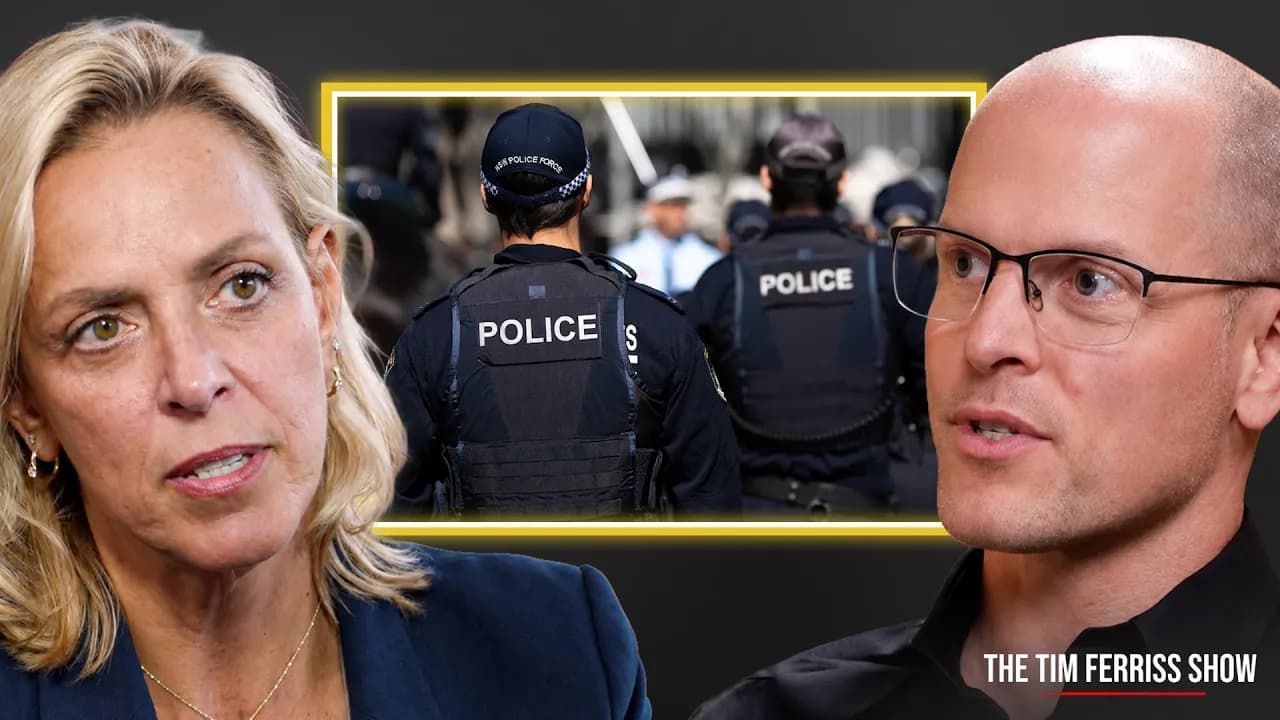
Pelted With Bricks for 5 Days as a Rookie Cop — Cathy Lanier
In a Nutshell
Cathy Lanier recounts her chaotic first day as a rookie cop during the 1991 Mount Pleasant riots in D.C., triggered by a language barrier-fueled shooting of a Latino man, leading to five days of being pelted with bricks and bottles while standing line in riot gear without radios. She critiques the police's brute-force response amid poor community communication, emphasizing the need for officers to embed in neighborhoods, understand local needs, and problem-solve rather than escalate. Post-riots, daily foot patrols taught her the satisfaction of making tangible differences in people's lives despite chain-of-command frustrations.
These notes were generated by AI and may contain inaccuracies.
Cathy Lanier describes the Mount Pleasant riots in Washington, D.C. The night before her first day out of the academy, two police officers on foot patrol in the patrol district attempted to arrest a Latino male for drinking in public. He did not speak English. The department had few Spanish-speaking officers despite a huge Latino population, creating a significant communication gap that hindered effective policing.
During the arrest, after one handcuff was applied, the man pulled a knife on the officer. The officer shot him. The partner cuffed the second wrist, removed the knife, and called paramedics. The community only saw a handcuffed person who had been shot.
The Latino community gathered, forming a large crowd around 11:30 PM. By 1:00 AM, riots broke out: police cars were burned, stores looted and set on fire.
Lanier arrived at the station at 5:30 AM for roll call on her first day. She introduced herself as the new rookie. They handed her a gas mask, told her to hop over the counter, exit the back door, and get in a van with 15 other cops equipped with gas masks and riot sticks.
The van dropped them at the corner of Mount Pleasant Park Road, fully engulfed in fires, looting, with people throwing bottles, bricks, and stones. Rookies received helmets but no radios—Lanier relied on her partner's radio, as she had no training on it. They stood in line, pelted with bricks and bottles for 5 days—a trial by fire.
Lanier understood the community's frustration: entire Mount Pleasant neighborhood was Latino, English not spoken, poor communication with police who were pushing people around without effort to clarify the story. This experience taught her the importance of community inclusion.
If you're a police officer and you are not embedding yourself in that community and understanding who the people are in that community and what their needs are and how to communicate, you're really not going to be successful.
Interviewer notes some might quit after such an intense first day, expecting only tuition reimbursement. Lanier thrived in the environment. Dropped off with riot sticks, helmets, gas masks amid gas canisters fired into the crowd, she analyzed: knowing the incident's origin, she thought they were not handling it correctly—not a win situation, should be done differently.
From the minute I hit the ground... watching... analyze the way that we were doing things and thinking why are we doing this this way? There's a better way to do these things.
Brute force doesn't always work; it was a problem to solve, not met with problem-solving but brute force.
After riots ended, Lanier walked foot beats daily, problem-solving 6-8 times per day on 911 calls—responding to crises, helping people. Frustrating at the bottom of the chain of command as a line officer unable to make certain decisions, but every day she made a difference in someone's life, no matter how small.
Keep Tim Ferriss in your library
Save the videos and channels worth coming back to, and find them again in one place.