Reimagining Biotech with Jake Becraft of Strand Therapeutics — Tim’s Founder Kitchen
In a Nutshell
Strand Therapeutics is building programmable mRNA medicines that reprogram tumors or immune cells in vivo to trigger immune responses, moving beyond liver-only delivery and direct tumor injection toward systemic, plug-and-play treatment. The core bottleneck is not discovering therapeutic proteins but solving potency, specificity, and delivery to make these therapies scalable products that fit existing infusion infrastructure rather than bespoke, ultra-expensive manufacturing. Jake Becraft argues the US is losing ground to China’s fast clinical trial system and must reform its IND process—shifting initial oversight to certified hospital IRBs like Australia’s CTN model—to cut costs, speed first-in-human testing, and keep biomedical innovation and capital from flowing overseas.
These notes were generated by AI and may contain inaccuracies.
The United States is massively losing to China in clinical trial infrastructure. China has built an industrialized version of clinical trial infrastructure for first-in-human trials that is so efficient and massively quick that they are able to go faster and cheaper into the thing that matters most, which is first-in-human trials. What started as a place for American companies to come run clinical trials to get data and then take it to the FDA and then do larger trials in the United States has now created a flywheel structure within China where now just Chinese companies run their clinical trials faster than the American companies and then bring their Chinese discovered drugs to the United States. The capital flow and risk capital then says these companies are more efficient and will fund these sorts of aspects.
Strand designs what are called next generation genetic medicines. You have DNA inside of your cells. The DNA makes RNA copies of itself and then that RNA makes proteins. Life is all proteins. Your skin, your hair, your organs, every cell is basically just proteins stacked together. That is everything that we are. You do not really see the DNA and the RNA. It is very small. The protein is what we think of as like our being. The way to actually intervene in disease and get to its core is to create the correct proteins. If you have a deficiency, everything from an enzyme problem to a rare disease to cystic fibrosis, it is usually a problem with a protein that is being incorrectly made by a cell. Over decades, what has gone wrong with that protein and what would need to go right to fix that protein or how you would replace that protein correctly has been figured out. What has not been figured out is how to make the cells do that because it is a very complicated problem to tell certain cells in the body to do various different things.
Strand is focused on building the delivery mechanism. They know what proteins need to be made and where they need to be made. The task is to get the message of what type of protein to the place in your body where they need to be made and to do that effectively and safely. They have figured out a way to take that message which is in the form of a molecule called RNA. Many people are familiar with it from the COVID vaccines but those are very small examples of what RNA could actually be utilized to do. They have found a way to send those messages into the body into diseased areas where they can access the cells and essentially return the cells to a state of homeostasis which either corrects the problem or in the case of cancer removes the problem.
The first time they met was in Boston at a dinner. Also at the dinner was another biotech CEO, Phil Strandwitz, and Jaime, a leading professor at the MIT Media Lab, a polymath, healthcare entrepreneur, and advisor to anyone who wants to know fancy things. Tim was already an investor in Whole Biome, Phil's company. He loves what Jaime is up to and was very interested in what Jake is building as well.
There were a lot of reasons Tim became very interested in Strand. One is the technology and the results. The images that Jake showed him were compelling. The second is that Jake is a founder builder who is technical but for whom this company is existential. Jake is not a hired gun CEO who has been brought in. This is very much entwined with his identity and personal mission. Tim finds that attractive. Quite interrelated with that is the fact that Tim found Jake to be a very good communicator over that dinner. Tim learned a lot. Jake recommended a number of books to Tim at the dinner and then afterwards. Chief among which was the Genentech origin story, which is one of the best business books Tim has ever read. It is unbelievably good because it also made it past all the Genentech sensors with actual contracts, screenshots of contracts, negotiations, mistakes, all of the serendipitous lucky moments and unforced errors by universities and so on that had to coalesce for Genentech to even survive. It is an incredible story.
Jake also seemed very aggressive without being haphazard. Jake was furious at the dinner when Tim started trying to get an idea of the general biotech scene in Boston and asking questions about various startups and figures and companies at how conservative and dogmatic a lot of folks are. The status quo is the default. In contrast, Jake is taking big swings.
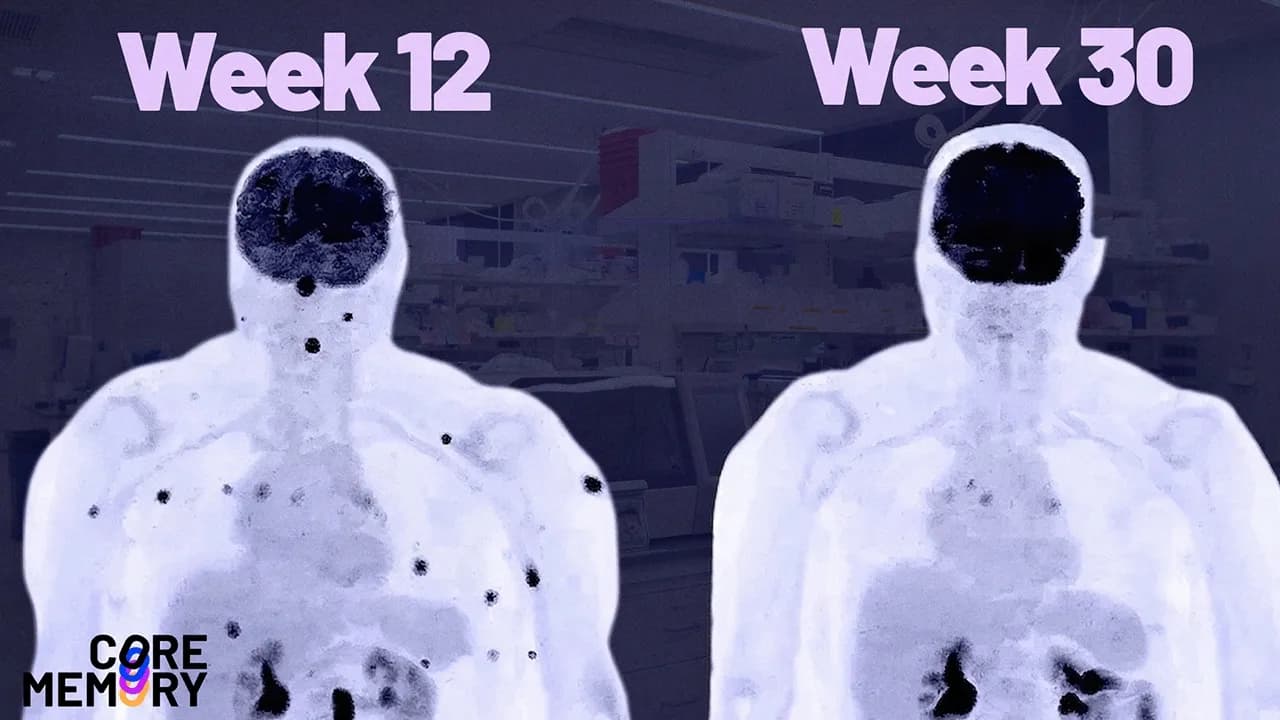
The image Jake showed Tim was a photo of one of their patients, one of the very first patients that entered their trial. The way these early stage trials work in oncology with a patient with stage 4 melanoma, you end up with patients who have exhausted every option by the time they end up in your trial and they often have pretty progressed disease. This patient had melanoma, which is a skin cancer. They had not only aggressive cutaneous metastasis across the surface of their body in the skin, but they had visceral metastasis, which is actually what kills you in melanoma. It was in their lungs and other areas including muscle deposits and bone deposits. In addition, this patient had had multiple other therapies that historically melanoma responds very well to.
The current state of affairs in melanoma and in some cancers is that there are immunotherapy drugs. The biggest blockbuster of the last few years is a drug called Keytruda from Merck. It is an incredible miracle drug that won a Nobel Prize a few years ago. In melanoma, if you respond to that drug, a lot of patients do, that is great. If you do not, the likelihood of survival begins to diminish very quickly. This patient had had Keytruda. They had had a whole number of other drugs through many lines of therapy. You get a drug, your cancer responds or it does not. If it does not respond you go to the next and the doctor the oncologist cycles you through a number of drugs. This patient was at a fairly advanced hospital that not only had given them the standard of care and then the second line standard of care, they had given them actually a number of other drugs trying to help the patient stay alive.
The photo is in the ASCO poster. ASCO is an abbreviation for the American Society of Clinical Oncology. It is a meeting every summer in Chicago that is the big breakthroughs in clinical medicine for oncology. It is the top of the top in a lot of ways for people with big results and small results. They had presented this photo there. The photo itself is quite striking. It is basically a body riddled with cancers. They are everywhere. You do not have to be an oncologist to look at that scan and understand the extent to which this patient responded. Just riddled and then no more.
One of the greatest accomplishments in Jake's career thus far is being able to say that they did help a person. If that was just one person, one patient, that would be a wow what a career. They dream of more. They have big ambitions at Strand for how many people and the scale at which they are going to be able to help people. However, that was the first time that Jake really felt like their science went out into the world and it took someone's grandmother and not only kept them alive, but they are a year and a half in and they still have no detectable lesions.
There is one other bigger generalist investor who had come into the round personally. Jake had been having a conversation with them about something in oncology that is called the Kaplan-Meier curve. The Kaplan-Meier curve, if you are looking at oncology results, is sort of a survival graph. You maybe look at like two years and you look at from 100% where you start the study and then it looks like a step ladder going down. The standard of care line has some amount of people like steps down and you want to have your drug be significantly above that, either having more people alive longer or you have what they call the long tail where everything goes to zero in standard of care at a certain time point but you have an amount of patients that just look cured and they continue on for many years.
In drug development people get very used to looking at those graphs and sort of making very statistical calls and saying this does not look like it is active or this drug is not that great. One of the things Jake has tried to zero in on with some generalists and some of their larger investors who maybe are not from the biotech world is to say when we look at these steps, these are lives. The lines that go down on this, the vertical part of the step is someone's loved one dying. But the ones that go horizontal and every time you see something go further along that is someone who got to experience even if it is just three months, you have no idea what that means within that person's life. When we take that Kaplan-Meier curve and those steps and we zero in on each patient, we start to look at them and we start to say this is a patient that did not think they would see Christmas in 2024 and they just celebrated the new year of 2026. That is meaningful in what they are doing now.
There is a difference between a good drug and a good product. The good drug is can someone take this and it does something like injecting a therapy into someone in a way that is very hard to replicate but did a great thing for that individual person. It is a good drug fundamentally. It helped that person. A good product is much more where the idea of how we get medicines to people comes into play.
There is something else they are working on called in vivo cell therapy. There is an entire type of science where they have discovered how to take the immune cells out of a patient, take their immune cells out, reprogram them so that they learn how to attack cancerous blood cells and then put them back into a patient. They are phenomenal drugs. There are people who are about to die of myeloma and then they get this drug. But the drug costs $750,000 to make just to manufacture. It costs three months of time to manufacture. It is very hard to see a world in which that drug has a large impact on the patient population because of the fundamental cost, the COGS, the cost of goods sold, not biotech, just straight business. The cost of doing it and the time it takes to get it to people, that is a bad product.
If you could say instead of taking the cells out of the body, if you could reprogram them while they are still in the patient, now you have a good product because you know if you can make the cells recognize the cancer, the immune cells program to activate against the cancer in the same way, but make it an outpatient procedure where a patient just gets hooked up to an IV bag for 2 hours and then goes home. That is a phenomenal product.
In cancer, you have chemotherapy. You also have immunotherapy which is the ability to activate the immune system to attack the cancer directly and that is what some of the biggest blockbuster drugs of all time are currently, Merck's Keytruda, Bristol Myers Squibb's Opdivo and then there is a number of other types of immunotherapies which are classified as checkpoint blockades. What that is is your cells essentially have a way to tell the immune system that they are your cells. So you do not want your immune system to attack your own body obviously. And so one of the mechanisms that you have is this IMU signal that your cells can send to the immune system. Cancers hijack that mechanism to protect themselves from being attacked by the immune system. What was figured out was a way to block those signals. That is the entire field of immunotherapy. Not the entire field, but a vast majority of the field of immunotherapy and the successes of the last decade of treating cancer and also commercial success for a lot of these companies has been based on further refining better checkpoints. The problem with that is that they are all very similar mechanistically. And so if one does not work, if you have cancer and you are given Keytruda and it does not work, the chances that the next types of therapies will work since all of them are very similar mechanistically, the chances diminish quite drastically.
A second theory from going back to the 90s was if instead of just blocking the cancer's ability to hide from the immune system, if that is not enough, what we actually need to do is we need to activate the immune system directly. And it would be best if you could send that activation signal from the tumor itself. So now you have a tumor instead of just blocking the tumor's ability to hide. You actually have a tumor that is sort of screaming like, I am a foreign object. Please come and eat me. That is kind of how immune systems kill things, like eat the other cells.
The issue is this is not new. This is basic science from immunology from the 90s. The problem is there has not been a good way to get the tumors to send those signals. They have tried to make the signals in the lab and then inject them into the tumors. The problem is the signal just goes away immediately and then it is circulating in the body and the immune system does not know what is sending the signal. They have tried everything they can to make this signal artificial and get it into the tumors. Every single time they do it, it is either not enough in terms of no efficacy or it activates the immune system in all sorts of places they do not want it and it causes all sorts of toxicities.
What they are doing with their medicine is delivering the instructions into the cancer cells in a way that causes the cancer to basically send its own signal out. So it is artificial in that they have made it in a lab, but instead of making the signal, they are making a message that tricks the cancer into sending the signal. That is drastically different. It makes a huge difference in both safety and efficacy because now you are recapitulating how the signal works naturally. If the cancers were not cancerous, if they were just deregulated and cells were starting to grow out of control, your cell would naturally send the signal and be like, Oh no, something is wrong. And your body would take care of it. You actually generate cancer all the time in your body in terms of disregulated cells. Your immune system just comes in and takes care of it before it becomes a real problem. That is when you get tumors. That is when you get the disease we call cancer.
What they are doing is resetting that system. They are having the tumors resend the signal out. What they created in that first drug was a very simple administration procedure. You take their genetic medicine and you inject it into the tumor directly. What that does is the immune system comes into the tumor and it kills it. But then it gets activated by that killing process and it learns what the tumors look like and it can better identify the other tumors that have been hiding throughout the body.
In the case of this patient, they injected into cutaneous, meaning just under the skin, nodules, instances of cancer. The follow-up question was then how do you suddenly get to the visceral instances. That is what is being described. Within the world of oncology, that is something called the abscopal response or the abscopal effect which means that one tumor is sort of what you have put the activating drug into and that is where the immune system will attack first but now the immune system is activated and educated to go and kill the other tumors. It is not new in the fact that Jake did not come up with that name. It has been observed in limited other settings of a few other drugs that people have gone out with. The problem has been that it has been very limited in terms of the abscopal response that other people have seen. For instance, you would have a patient with a tumor, maybe a melanoma patient. They would have a cutaneous lesion, a skin lesion on their chest, and then they would have another one on their shoulder, and you would inject the one on the chest, and the shoulder one would also kind of shrink. They are in the same region. The immune system is sort of fighting the cancer in the same region, but you would not necessarily see that happen in the lungs. One of the big push backs on a drug like the one they took to the clinic two years ago was, you do not die from having tumors all over your skin. You die from when they metastasize into your lungs and into your liver and impact the organ functioning. That is how patients die of melanoma. So if you are only able to address the tumors that you can either inject or that are near the injected tumors, you will not have an effective drug if a patient already is further along.
They are to Jake's knowledge one of the first companies, if not the first company, to demonstrate a direct injectable drug into the tumor that in a large number of patients, this is not a one-off. There was not one miracle patient that had that. That is a beautiful photo of that patient. Jake is so happy that they are still on the trial and still doing great and it is amazing. But this is about being broadly applicable because that is how you actually impact population level lives. They are the first company Jake is aware of to show this sort of extent of abscopal response in visceral deep organ metastases in a multitude of patients. Really right off the bat, this is from the very first patients they put on this trial at the very beginning of it, they began responding. That is very uncommon. It is very uncommon to have patients on a phase one trial on the drug 6 months later. Of their first three patients that ever entered this trial in the summer of 2024, two of those three are still on the trial 18 months later. That is something that is fairly shocking.
If they were a traditional biotech company, they would be really happy with all of this data and they would say let's take this forward. However, the real message of Strand and what they can accomplish in genetic medicine is they do not have to stop at just injecting into the tumors. There are a number of concerns with injecting tumors from a product perspective, not a drug perspective, but a product perspective. The difference between a drug is all about does this work and a product is about how will these patients get these drugs. Injecting directly into a tumor is doable and most oncologists can handle it, especially for skin cancer patients. But as you go to rural health communities, it gets harder and harder to have doctors that have that training. And as you get to other sorts of tumors beyond skin cancer patients, some of their skin lesions have been removed by a surgeon. And then you go beyond skin cancer. How are you going to inject a patient with non-small cell lung cancer. You start to get this idea of there is a limited amount of patients you can access. So you have a product limitation.
In cancer, the way that cancer patients are actually treated is that there is an infusion clinic. You go to the infusion clinic. The oncologists and the nurse practitioners and everyone technicians hook you up to some sort of an infusion and then the oncologist can monitor multiple patients at a time. That is what the infrastructure looks like right now of how patients are treated. If you want to have the largest impact in medicine, you need to make medicines that plug into existing infrastructure. As much as you want to tell everyone, hey, change everything about how you think about treating patients, the way to have a near-term impact is to build drug solutions that can plug into existing infrastructures. If they become a giant biotechnology company that has all sorts of resources, maybe they can talk about changing how everyone gives drugs, but for right now, if they want to be able to help the most amount of patients in the near term, they need to plug into that infrastructure. They need to find ways that they can access organs. In addition the bloodstream is also a really good way to get around the body believe it or not.
The bloodstream carries oxygen throughout the body, making intravenous administration of genetic medicines the holy grail for the last 30 years. The fundamental problem has been that genetic medicines administered into the bloodstream are filtered by the liver, trapping the field in treating only liver diseases for three decades. The joke in biotech has been: step one, prove it works in the liver; step two, question mark; step three, treat all diseases. After 30 years, step one has been solved, but step two remains the critical unsolved challenge.
When people say the issue is delivery, this answer is incomplete. The challenge is actually three problems disguised as one: potency, specificity, and delivery. The speaker describes this as three children in their father's trench coat pretending to be an adult. People want simple solutions, but the reality is more complex, and after 30 years no one has solved this piece.
The speaker references Elon Musk's first principles thinking, using the SpaceX example: the barrier to commercial space flight was dollars per kilogram of launch. By identifying that the cost center was disposable rockets, the solution became reusable rockets that land themselves—an initially insane-sounding idea. At Strand's founding, the main goal was not the first drug but solving the step two question mark. The speaker acknowledges their 2018 pitch deck was highly technical with zero market insight and describes it as awful.
The speaker states we are standing on the precipice of a revolution in genetic medicine. Near-term, many cancers will become chronic diseases rather than death sentences. Multiple technology lines are converging that people are not fully appreciating. While there is focus on AI-based drug discovery and exquisite proteins designed to edit genomes, what is missing is the medical infrastructure to get these discoveries into patients and the places they need to reach.
The critical issue is how discoveries—whether made by humans, LLMs, or high-throughput robotic screens—will reach patients. The speaker warns that medicine is moving toward smaller, niche indications and more refined, potentially bespoke treatments. The technological and design capabilities will advance much faster than the infrastructure to deliver medicines safely and effectively at scale. Strand's goal is to impact patients' lives as a commercial organization, not to cure mice of cancer.
Success in the current tumor trial would mean having an instruction manual for delivering genetic medicines to tumors. The payload is the protein the cancer is tricked into making. Once the infrastructure exists, a completely new protein could be designed and delivered to tumors in six weeks. The only gating factors would be building new infrastructure components and the FDA's speed in testing new things. The general high-level safety profile will be known.
The same approach is being designed to get into T-cells to temporarily influence the immune system, enabling treatment of autoimmune diseases and allowing patients to revert to pre-treated states without permanent genetic modification. Each success lays groundwork for the broader infrastructure. The biotechnology industry will either be dragged into this future or built anew by new players.
Policy leaders globally need to think critically about handling, enabling, and empowering the future of medicine, as incentives and scope will look very different in ten years. Policy leaders determine the rules by which healthcare is played. Healthcare is similar to the space industry: policy leaders are both arbiters of what is allowed and major payers.
Medicine is changing from hoping to give one drug to two million people to making 100,000 variants of a drug for 10,000 people, or 10,000 variants for 100,000 people. Both regulatory and payment systems need to adapt. Innovators must build systems that remain good products at scale; if costs increase 10,000 times, it will not work. The speaker is fascinated by how policy and incentives shape highly regulated industries.
The last major productive collaboration between worldwide policymakers and the United States occurred in the 1980s and 1990s when biotech took off and recombinant proteins were harnessed. The Genentech book is referenced as a valuable historical study. Henry Termeer of Genzyme is described as the actual quarterback of policy innovation, working with government officials on what this new class of medicines would look like. The Orphan Drug Act resulted from these conversations. The speaker argues for more productive collaborative conversations now because things are changing rapidly.
The White House AI report exists, but a similar report is needed for biotechnology because change is rapid and will be accelerated by AI. Without productive conversations, two negative outcomes are possible: only the ultra-rich can access disruptive drugs, or the inability to pay and support the ecosystem makes innovation an uninvestable thesis, causing great innovations to die.
When spending time in DC, the question is what to lead with in a 30-minute meeting with a staffer. The speaker suggests starting with the Christmas story and photos, then moving to the SpaceX analogy of reusable rockets creating a payload-agnostic engineering platform. Once the platform exists, what gets launched is up to the user. The hard work is developing the engineering platform.
Good drugs die because they never make it into production at scale in healthcare. The psychedelic medicine space is referenced as an analogy: an eight-hour experience requires infrastructure incompatible with current healthcare systems. The MDMA-assisted psychotherapy FDA advisory committee failure is cited—coupling psychotherapy with the drug created regulatory confusion because the FDA does not regulate psychotherapy. This led others to pursue methylone with a shorter half-life that could fit into an hour and be decoupled from therapy, making more progress.
The hand-wavy delivery answer is both right and wrong. It is wrong because the real problems are potency, specificity, and delivery together. It is right in that if you cannot plug the therapy into healthcare and deliver it to end patients, effectiveness in small clinical trials does not matter. Even if cancer cannot be cured, turning it into a manageable chronic disease would be transformative, similar to how HIV shifted from a death sentence to a chronic condition managed with maintenance drugs.
The speaker was in DC discussing two needs: building common-sense regulations that allow cheaper testing of new medicines in humans, and recognizing that medicine is fundamentally changing. AI is making highly motivated people 10x better, and multiple technology threads—genetic medicines, sequencing technologies, computation, and AI—are converging to change medicine. Policy makers respond to the idea of breakthrough versus incremental innovation.
Policy makers like conversations about medicine economics. Branded medicines are 8% of US healthcare spending, while hospitals represent 26%. Medicines that reduce hospitalizations increase life expectancy, keep people in the workforce and in their homes, and reduce the larger cost center of hospital care paid for by Medicare and Medicaid. All medicine can be viewed as preventative if it staves off hospitalization.
The speaker asks what is in it for policy makers to help. The first ask is to streamline how new medicines are tested in humans in clinical trials. An op-ed was written on accelerating first-in-human trials and making the United States a more innovative powerhouse.
Current regulatory processes create significant barriers that increase both time and cost of bringing new medicines to market. Reducing these inefficiencies would change the economics and incentives around building new drugs, enabling companies to generate more diverse data for training AI models on what actually makes a difference in humans. Historical benchmarks show that companies like Genentech and Genzyme in the 1980s and 1990s brought medicines forward at a fraction of today's cost and time.
Global competition is intensifying as countries in Asia and the Middle East make investments into biotechnology earlier, recognizing high-leverage opportunities in future health. The United States maintains advantages but must address systemic impediments to remain competitive.
An Investigational New Drug (IND) application is required for first-in-human Phase 1 clinical trials in the United States. One company's first trial IND reached 22,000 pages, requiring professional writers and systems, costing millions of dollars to prepare. The supporting studies and manufacturing analytics added further millions, resulting in total application costs of approximately $25 million and taking 18 months to complete.
In contrast, China and Australia enable faster first-in-human trials through hospital-based Investigational Review Boards (IRBs). Australia utilizes professional centralized IRBs that operate in a for-profit model to assess trial fit for hospitals.
The high cost and time required for FDA IND approval pushes companies toward top-tier hospitals like MD Anderson and Sloan Kettering rather than broader networks. This creates multiple problems: many capable U.S. hospitals are excluded from running first-in-human trials, patients exhaust standard-of-care options without access to experimental treatments unless they can travel to major centers, companies face overburdened trial sites, and IRBs at those sites become overwhelmed processing submissions.
The FDA's safety review occurs before IRBs even evaluate trials, creating an inefficient sequential process.
The recommended alternative shifts initial safety oversight to hospitals and their IRBs, which already assess safety, efficacy, and patient population fit. The model follows Australia's Clinical Trial Notification (CTN) system, where sponsors notify regulators of intended trials rather than seeking pre-approval for most drug types. Certain drug categories would still require formal regulatory approval.
Patient safety remains paramount under this model. Hospitals have strong incentives to prevent harm in trials, and IRBs can be certified by the FDA. Centralization of IRBs would allow multiple hospitals to share review infrastructure rather than requiring each institution to maintain its own board.
This approach would free the FDA to focus on efficacy and safety data for final drug approvals while enabling more hospitals to participate in early-stage trials.
Companies already conduct research in countries like New Zealand due to reduced regulatory burden. Australia provides a more comparable scale model to the United States. China has industrialized first-in-human clinical trial infrastructure, allowing faster and cheaper trials than U.S. processes. This efficiency has created a flywheel where Chinese companies conduct trials domestically, then bring discovered drugs to the United States, attracting capital away from American development.
While states pursue biotechnology development, the highest-quality activity concentrates in established hubs. Boston has dominated biotechnology for 30 years, though San Francisco increasingly rivals it due to greater availability of risk capital and openness to radical ideas. This environment attracts both substantive innovation and hype-driven companies, but the presence of low-substance players is considered an acceptable cost for enabling transformative breakthroughs.
Over the past decade, regulatory systems have accumulated requirements without periodic reassessment of necessity. The FDA currently shows greater openness to transformation than in previous years, with interest in building regulatory science capabilities and embracing technologies for clinical trial analysis. A 50% likelihood is assigned to implementing a CTN-like system within the next two years.
Failure to reform carries existential risk for U.S. drug development competitiveness, as capital flows to more efficient jurisdictions. Countries like the UAE actively pursue aggressive bets to attract innovation through technology infrastructure, quality of life, and streamlined processes.
Trials are currently conducted in the United States and Australia. Allied countries sharing similar values on global future direction should collaborate on innovative solutions to shared challenges. Not all countries qualify for such partnerships.
Strand faces resource limitations that prevent advancing all promising programs simultaneously. The company is exploring novel partnership models beyond traditional pharma-biotech collaborations, seeking both intellectual and capital participation from global partners for indications including diabetes and polycystic kidney disease. Early biotechnology founders demonstrated extreme resourcefulness, such as Genzyme's placenta mobile that collected hospital placentas to purify proteins for rare disease drugs.
Strand is shifting away from describing its technology as "programmable" or a single universal platform, as these terms create confusion. Instead, the company positions itself as building multiple distinct platforms for specific tissue and cell targets. Current platforms include tumor delivery and T-cell delivery, each proven with supporting data. The tumor platform (ST00003) enters the clinic six months ahead of schedule but applies specifically to tumors, not other tissues like liver or kidney.
The SpaceX analogy illustrates this approach: different vehicles (Falcon 1, Falcon Heavy, Starship) serve distinct use cases with increasing complexity. Similarly, tumor injection differs from autonomous bloodstream delivery to tumors, which differs from T-cell delivery, kidney targeting, or brain delivery. Each represents a separate development challenge and opportunity.
Strand is seeking novel business models and global partners interested in these platform-specific opportunities.
After the initial piece was written, the team focused on how to frame the message so people could digest both what needed to happen fundamentally and the urgency of it. The Washington Post placed the piece in their op-ed column, and it spread across biotech and medical policy communities. Some readers found the idea new and compelling, while others were surprised by the pressing risk of the biomedical industrial base moving overseas to China, with the US contributing to the problem by creating its own barriers.
After the op-ed ran, the team analyzed what was working, what was confusing, and what elements drove engagement. This process involved testing different approaches to see which framing captured attention and drove people into the core message. One surprising finding was the effectiveness of an opportunistic tone that acknowledged problems while emphasizing that they could be fixed, rather than presenting a purely negative outlook.
Approximately a day after the op-ed ran, congressional staff reached out about organizing a hearing on the risk to the US biomedical industrial supply chain and industry in relation to activities moving to China. The team used insights from the split testing to reframe the story for the congressional testimony, presenting the problem but emphasizing that solutions were possible and within policymakers' power. This approach was received much more positively than a purely alarmist framing.
Within about two weeks of the op-ed and testimony, the president released policy objectives that included the exact idea of removing barriers to getting early-stage experimental medicines to American patients through FDA reform. This rapid turnaround from initial op-ed to inclusion in presidential legislative priorities demonstrated the impact of strategic messaging.
The team used Pikfu (pfu.com), a platform that combines human input with AI to split test headlines and other content elements. Five different headline options were generated, and the two strongest internal candidates were tested. The goal was not necessarily to change the published Washington Post headline, but to identify messaging and emphasis that could be used in person, on stage, and in other communications. The winning headlines from the testing were then used when sharing the article to optimize click-through rates.
The conversation emphasized not just simplifying messages generally, but specifically making them appealing and actionable for policymakers. The comparison was made to non-fiction books: a title like "why kids are all depressed and it's only getting worse" may discourage readers, whereas "why kids are all depressed and it's not the only way" suggests potential solutions and generates higher engagement. The same principle applies to policy communications.
From the initial conversation about two months prior to the recording, the core message had moved from concept to inclusion in presidential legislative priorities. The team expressed satisfaction with the timeline and the progress achieved. The messaging successfully combined urgency about the problem with a clear solution, avoiding the trap of endless hearings without action. The approach emphasized that without reform, the US risks having medicines developed or discovered in China while simply paying the bill.
Trips to DC over the past year revealed that many constituents approach policymakers primarily to complain, which results in being heard but not necessarily seeing action taken. The more effective approach involves presenting a problem with urgency, explaining why it needs attention, and offering a solution or part of a solution. Bringing the solution up front helps prevent immediate disengagement.
A fundamental truth of storytelling emerged: no one will learn until they care. The first goal is to make someone care about the issue. Once engagement exists, deeper learning can follow. Scientists often operate in environments where colleagues already care about scientific topics, creating a "spoiled" context where motivation is implicit. However, when communicating with investors, policymakers, or broader audiences, explicit motivation is required.
After the op-ed and congressional testimony, several documents were shared for feedback: an investor update document and a primer on mRNA and programmable medicine. Edit suggestions included starting the primer with the story of AlphaFold rather than high-concept or abstract material, as stories help ground readers and prevent drifting even when they understand the concepts.
Even though the Washington Post headline could not be changed, the split testing results enabled the use of different headlines when sharing the article. The winning headlines from the statistical testing were unambiguous and provided optimized messaging for top-of-funnel engagement.
The working headline for the longer piece is "RNA medicine and the rise of platform therapeutics." The piece aims to introduce what a platform therapy or therapeutic platform could be, explain why it changes medicine, and explore implications across near-term, medium-term, and long-term timeframes. Specific questions addressed include what could reach the clinic next year, what could be possible in five years, and the 10-to-15-year trajectory.
Biotechnology and space rocket companies share key characteristics: long investment time horizons, high upfront costs, and binary outcomes where the drug works or does not, or the rocket reaches orbit or fails. The rocket industry, particularly through Elon Musk's early 2000s efforts with SpaceX, engaged policymakers effectively to enable rapid innovation and the ability to take multiple shots. Current medicine development faces similar constraints to early commercial space efforts, where rapid iteration was difficult.
For approximately 20 years, biotech companies have claimed their medicines are platforms, though these claims have often been inaccurate. A platform therapeutic builds common technological infrastructure that enables multiple different medicines to be developed from it. This differs from traditional drug development, where each molecule is designed individually in the lab, tested in patients, and moved through trials. If successful, the company gains experience, but the technology itself does not build cumulatively on prior work. Learnings are generally public through FDA documents and published clinical trial results, so each new drug essentially restarts the process.
Moderna's RNA vaccine platform demonstrates the platform concept. While the COVID vaccine was developed in 62 days from identification of the COVID sequence to a testable vaccine, the company had spent 12 years previously developing baseline technology including particles and RNA sequences. This pre-existing infrastructure enabled plug-and-play substitution of the COVID sequence where a flu sequence had previously been used. The 12 years of prior work across flu vaccines and other vaccine types made the rapid COVID response possible.
Realizing the future of medicine requires advances in two distinct areas. The first is new drug technologies, specifically programmable medicines that are more advanced, safer, controllable, adaptable, and personalizable. The second is physical deployment infrastructure, including small-scale manufacturing and clinical supply chains that can deploy medicines nationally and globally so that advanced treatments are accessible in local neighborhoods.
At Strand Therapeutics, the focus is on solving the problem of getting different proteins into different areas of the body, analogous to SpaceX developing various rocket types to deliver different payloads to orbit. The current bottleneck involves diseases where the therapeutic protein is known but delivery to the target location remains impossible. AI tools including DeepMind and AlphaFold are accelerating the ability to design proteins for virtually any function, and new AI research tools are improving disease understanding. This creates a situation where solutions are known but delivery mechanisms lag, shifting the bottleneck from discovery to deployment and testing.
The current structure of medicine development in the United States and the capital formation ecosystem is heavily incentivized toward making minor incremental steps and pursuing single assets at a time. Biotechnology in the US is not set up from a venture capital standpoint the way technology companies are. In tech, founders frequently state they are building generational companies. In biotechnology, over 90% of companies operate with a different model: they take an idea from point A (initial concept) to point B (some evidence it works), then sell the asset. This resembles real estate development more than traditional technology entrepreneurship, reflecting a private equity asset development mindset.
A SpaceX-like moment in medicine would require radically decreasing costs and dramatically increasing capabilities, similar to how SpaceX targeted cost per kilogram to orbit. The core challenge is both technological execution and capital markets. Elon Musk was not yet a billionaire when he began SpaceX; he was a 130-millionaire who committed substantial personal capital and repeatedly stated he would simply start another company if it failed. Musk demonstrated exceptional capital formation ability through storytelling and attracting large pools of capital around a long-term mission.
Capital formation refers to fundraising and the ability to aggregate significant dollars behind ambitious, long-horizon missions. Deep technology fields—including space, quantum computing, and biotechnology—require patient capital due to extended R&D timelines. Traditional biotech capital pools struggle with long-term bold investments, resulting in very few high-risk, high-reward shots being permitted. The goal is not simply to build a better biotech widget or mousetrap for a single exit, but to fundamentally change how medicines are built.
Building a research engine that continues advancing even after initial drug revenues requires capital partners aligned with 10-, 20-, or 30-year massive returns rather than short-term IRR between the current quarter and next year. These partners exist both inside and outside the United States. The CEO's role includes reaching those partners and communicating the story in digestible form: not just curing cancer, but explaining how curing cancer represents one step toward solving disease broadly.
Government agencies like NASA move slowly due to structural resistance to change. SpaceX and Amazon provide models of patient capital deployment. Amazon is notable for training Wall Street to accept long periods without profitability. Jeff Bezos maintained break-even financials by design. Reading Bezos's investor letters from the IPO through subsequent years reveals how Amazon communicated vision consistently, made multiple bets (not all successful), and remained undervalued for a long period until AWS became recognized as a major business, driving share price from approximately $120 to over $1,500.
Saying what the company is doing publicly attracts partners and reminds internal teams of the long-term destination. This daily repetition functions like a mantra: changing the pace of medicine. When an exit opportunity appears, the clarity helps determine whether to take it or stay on the path. Stakeholders and shareholders must be stewarded responsibly, but understanding intrinsic value versus market cap prevents being swayed by near-term perception. During the dot-com bubble, Bezos reinforced that Amazon was not its market cap.
High-conviction investors identify moments that are post-conviction (insiders know it will work) but pre-consensus (the broader market has not yet recognized it). OpenAI experienced an internal post-conviction moment in the late 2010s before tools like DALL-E and ChatGPT existed. The consensus moment arrives later, when the technology's transformative impact is no longer debatable. The task is to reach internal post-conviction and then build toward the post-consensus phase.
The Moderna story carries political baggage due to COVID vaccine polarization. A cleaner historical analogy is the original biotechnology platform: recombinant insulin production. Previously, insulin was harvested from pig pancreases. Genentech's innovation involved inserting the human insulin gene into bacteria, allowing bacterial production of the protein. This same platform approach enabled subsequent products such as Herceptin and growth hormone. Genentech's story parallels Genzyme's contributions. The coastal rivalry between San Francisco and Boston biotechnology cultures dates back decades.
In the 1980s and 1990s, pharmaceutical companies consolidated (Bristol-Myers Squibb formed from three separate entities). Large companies realized they could no longer conduct internal research efficiently and began acquiring smaller firms. Capital markets responded by building companies specifically for acquisition by big pharma. The industry began skating to where M&A capital was pulling. A current market phenomenon called "short the launch" reflects this dynamic: when a biotech company receives approval and attempts to commercialize independently, public investors often short the stock, expecting execution failure due to lack of commercial infrastructure.
When the entire innovation ecosystem orients around what a small number of large acquirers want to purchase, entrepreneurial dynamics become distorted. Companies begin trying to anticipate what corporate development teams at big pharma will want in one to two years rather than pursuing ambitious independent visions. This contrasts with technology, where acquisition by Google or Meta can be a successful outcome without the entire industry being dependent on such exits.
Genentech and Apple share structural similarities. Art Levinson served as CEO of Genentech (1995 onward) and later became chairman of Apple's board, replacing Steve Jobs around 2011. There is a documented friendship and partnership between Levinson and Jobs. Both companies represent rag-tag groups building ambitious platforms under uncertain conditions. Silicon Valley deep tech investors (Andreessen Horowitz, Playground Global) have increased biotechnology investments in the last 5–10 years, recognizing cultural and technological parallels.
When Steve Jobs returned to Apple (around 1998), he eliminated roughly 80% of product lines, refined the remaining offerings, and created the smartphone era that displaced BlackBerry. The iPhone functions as a delivery system for technology and services. Successive iPhone models improved capabilities, form factor, and functionality. Apple built its own delivery channels (iTunes) while enabling third-party developers to reach consumers. The core value lies in delivery solutions: satellites for global internet, software distribution platforms, and in medicine, the ability to reach any cell type with a precise protein.
For medicine, the equivalent of a delivery platform is reaching any cell in the body and delivering the exact protein required. This represents the long-term ambition beyond individual drug assets.
In the near term, mRNA medicines will follow traditional development pathways: design, creation, testing, and delivery to patients, with a focus on larger patient populations. On a 10 to 20 year timeline, the technology enables personalization once delivery solutions are well understood and infrastructure for manufacturing, clinical deployment, and global patient access is established.
The economics currently do not support bespoke therapies, but this mirrors the early challenges faced by other technologies. The economics of Spotify did not work in 2001 when access was limited to desktop computers. The company became viable with the widespread adoption of smartphones, allowing users to access music in their cars and elsewhere. Similarly, 2011 represented a much better time for Spotify to scale as a company.
The future of medicine points toward hyperpersonalization. Efforts to build personalized medicine are already underway.
A notable example is the case of baby KJ, covered in the New York Times last year with involvement from Jennifer Dana and multiple hospitals. The team corrected a genetic condition in the infant. The baby's genetic problem required a change in the liver, which was successfully addressed. This approach works for certain liver-based diseases, but has limitations for conditions such as kidney disease and nerve degeneration, which cannot be solved in the liver.
Additional solutions beyond liver-targeted approaches are needed, along with infrastructure that creates an economically viable path for bespoke medicines.
Personalized systemic CRISPR base editing therapy was used for the first time in baby KJ to save the infant from a fatal liver condition. While CRISPR generated significant early excitement, it has not yet fully delivered on those expectations. The discussion notes that further exploration of these topics may occur in future conversations.
The conversation concludes with mutual appreciation and an offer of future assistance, with contact information noted as readily available.
Keep Tim Ferriss in your library
Save the videos and channels worth coming back to, and find them again in one place.