SanDisk Selling Off After Amazing Earnings – What Now?
In a Nutshell
SanDisk's strong earnings with $39.25 EPS and 372% YoY revenue growth triggered an 8% selloff due to concerns over sustainability of 83-85% gross margins and cyclical memory chip business risks. The company has 4+ year contract visibility, 103% QoQ data center growth, and a $14B buyback program, but faces potential margin compression and broader market weakness. Despite 890% prior gains, the stock trades at 44.4x P/E with 15.7% upside potential, prompting a wait-and-see approach after a 400% YTD run.
These notes were generated by AI and may contain inaccuracies.
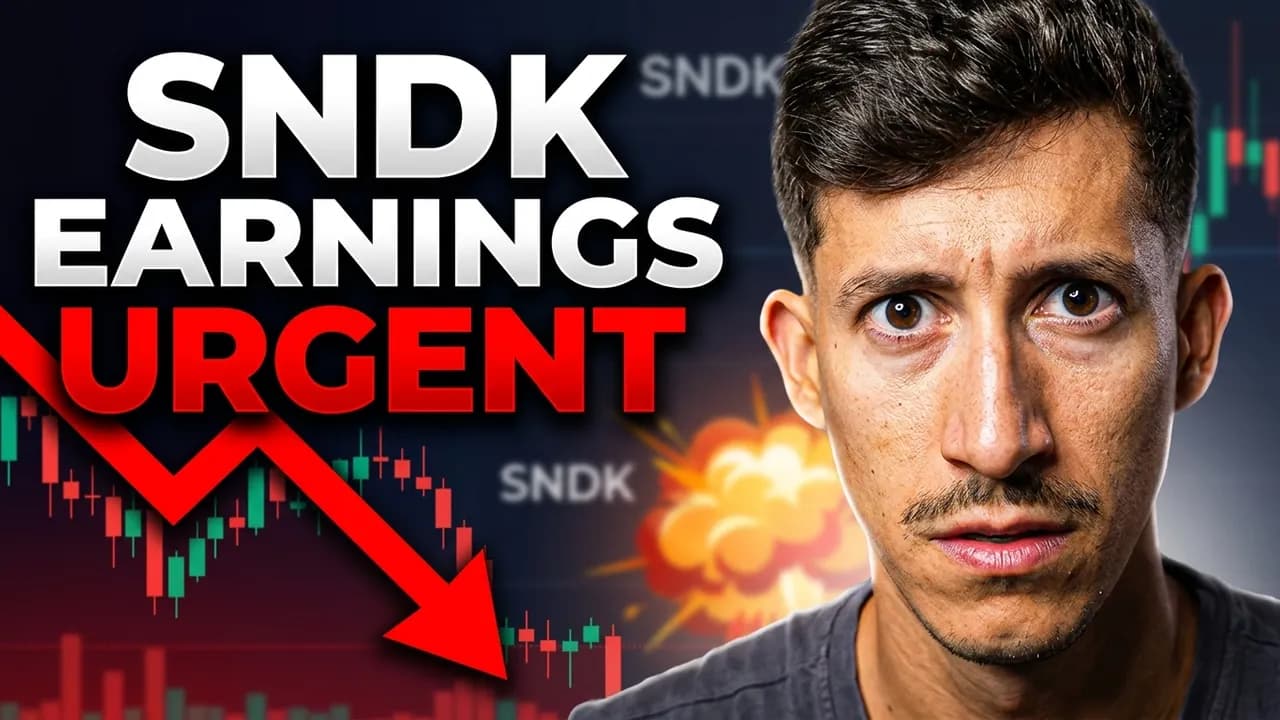
SanDisk reported strong earnings but the stock sold off 8% on the day. Western Digital dropped 11.8% and App 111 fell 27% before recovering to a 15% decline. The sell-off occurred despite the company posting exceptional financial results across all metrics.
SanDisk delivered a significant earnings beat with EPS of $39.25 per share. Revenue reached $8.9 billion, representing a 7% beat over estimates. Year-over-year growth was extraordinary with EPS growing 13,434% and revenue increasing 372%. Quarter-over-quarter performance showed EPS up 68% and revenue up 51%.
According to Fair Valley analysis, SanDisk has approximately 15.7% upside potential. The price-to-earnings ratio stands at 44.4 times earnings, described as not incredibly expensive but also not super cheap. The company generated $13.1 billion in revenue with $4.5 billion in net income.
Revenue guidance came in at $10.3-10.8 billion compared to the $11 billion estimate, representing a minor miss. Adjusted EPS guidance aligned with expectations without a significant beat. The standout metric was adjusted gross margin guidance of 83-85%, which is considered exceptionally high.
The 83-85% gross margin level raises questions about sustainability. The concern centers on whether SanDisk can maintain these margins long-term given aggressive price increases on top-performing products. If margins decline to 80%, then 75%, then 70%, and eventually back to 60%, this would significantly impact the company's premium valuation.
Memory chip companies are viewed as cyclical businesses where high demand periods tend to be short-lived. However, SanDisk's weighted average contract duration exceeds four years, with the company sold out for the next four years on average, providing substantial demand visibility.
SanDisk data center revenue jumped 103% over the last quarter and 1,298% year-over-year, representing significant growth in this key segment.
SanDisk approved a $14 billion share buyback program, demonstrating management confidence in the company's prospects. This contrasts with companies like MicroStrategy and Tesla, which do not buy back shares even when significantly overvalued.
Microsoft's AI sales disclosure shows that approximately 70% comes from OpenAI, creating concentration risk around a single customer relationship.
SPY reached all-time highs recently while NASDAQ approached record levels. Despite SanDisk being the best-performing stock of 2026, it remains down 42% from its peak after reaching 890% gains earlier. The speaker suggests there may be undisclosed concerns about the company's ability to sustain current profit levels.
SanDisk presents an opposite profile to Tesla, trading at a high valuation while generating substantial profits. Tesla generates significant revenue but operates with razor-thin gross margins and no longer receives government subsidies.
After a 400% year-to-date gain, the speaker is considering waiting for more clarity before adding to positions. The plan is to maintain some exposure to SanDisk but limit allocation size pending further information about Wall Street's reaction and business sustainability concerns.
NASDAQ is testing a critical resistance range. A break below support could trigger a significant gap down. Broader market weakness would likely impact technology stocks including SanDisk. The speaker is monitoring the Iran-US peace deal negotiations, which were originally due today but have been extended multiple times.
Risk calculator tools are available to plan trades based on win rate, risk per trade, risk-to-reward ratio, and number of daily trades. An economic calendar is also provided on the LPP landing page for market preparation.
Keep Ricky Gutierrez in your library
Save the videos and channels worth coming back to, and find them again in one place.