Securities Investigation Into Michael Saylor | Here's What's Really Happening
In a Nutshell
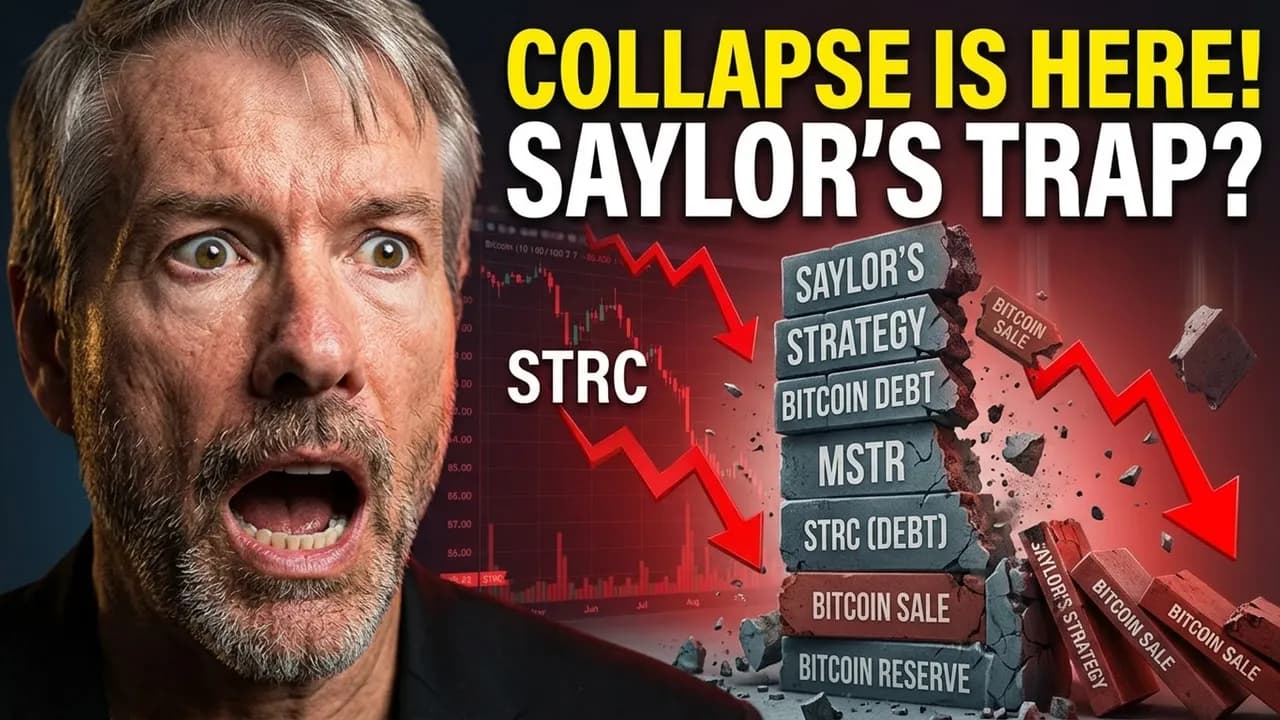
A law firm is probing Michael Saylor for potential securities claims tied to STRC's 11.5% yield product, now down ~22-25% from its $100 level, leaving investors facing years of recovery just to break even. MicroStrategy itself has plunged over 50% in 45 days and 82% from highs, with Saylor's Bitcoin-buying strategy funded through borrowing and share dilution rather than company profits. The core warning is that these leveraged, dividend-dependent structures risk a death spiral if Bitcoin sales are ever needed, and investors who ignored repeated risk signals bear responsibility for losses.
These notes were generated by AI and may contain inaccuracies.
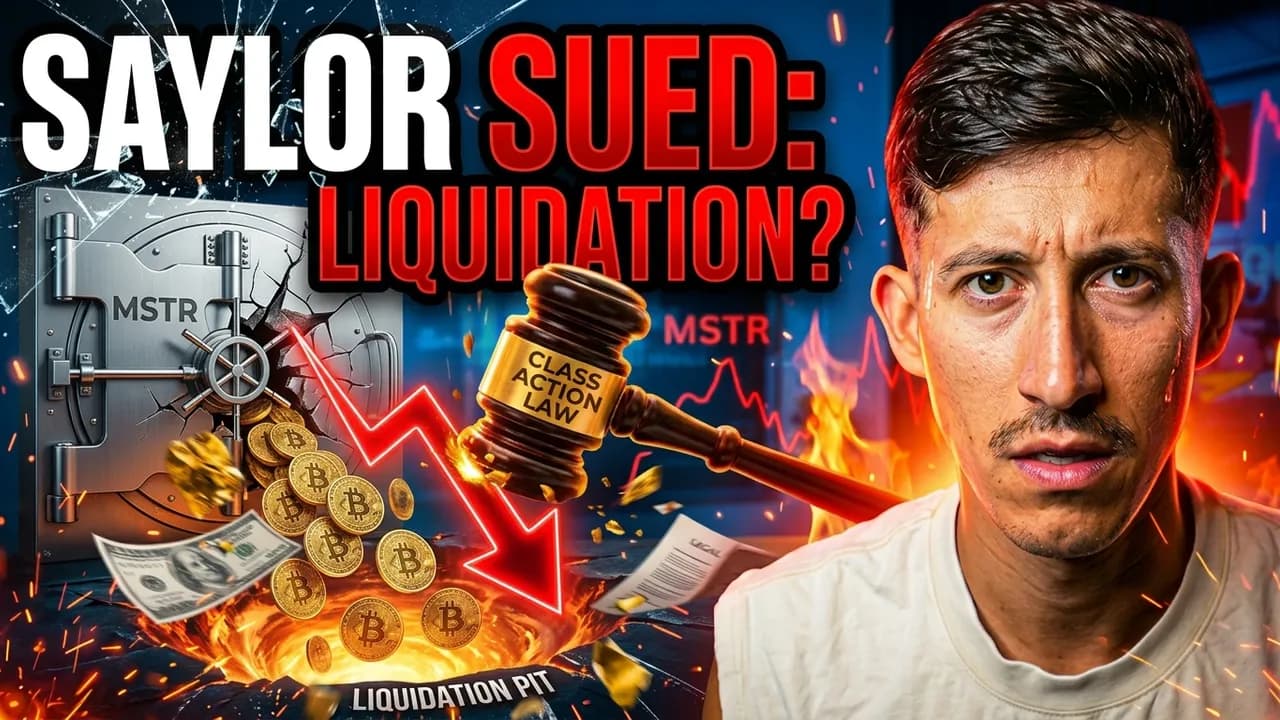
A law firm has opened an investigation into Michael Saylor's strategy regarding potential securities claims. The investigation is real, but any law firm can initiate a class action lawsuit, which does not guarantee merit or legal grounds. Courts will ultimately determine whether the claims have substance.
People are losing significant money on STRC, which has declined approximately 25% and is trading 22-23% below the $100 level. Michael Saylor made bold claims promising investors that STRC offered guaranteed returns and that they could retire from their investment. These promises have led to investor frustration when combined with the recent price drop.
Investors who purchased the product advertised with 11.5% interest, such as a $100,000 investment, are now facing a 22% loss. Recovery from this decline would take nearly two years based on current pricing. This gap between promised returns and actual performance is driving the upset among investors.
Michael Saylor could potentially serve as the fall guy for the current crypto crash, similar to how Sam Bankman-Fried was positioned in the previous cycle. Saylor has consistently stated that MicroStrategy can drop to a dollar without forcing him to sell Bitcoin holdings.
MicroStrategy (MSTR) has declined over 82% from its overall highs of $500. In the past 45 days alone, the stock dropped from $197 to current lows of $87, representing over a 50% decline. Most investors who have held MicroStrategy for three to four years are underwater on their positions. The only profitable participants have been those who took profits or shorted the stock.
The speaker has previously highlighted risks associated with MicroStrategy and Bitcoin at elevated levels throughout 2024. Speculative assets frequently experience short-lived rallies followed by sharp corrections of 50-80%. Dollar cost averaging into these assets does not guarantee long-term success.
Saylor's trigger point involves STRC dividend payment obligations rather than MicroStrategy's stock price reaching one dollar. The company borrows against different ETFs or stocks and must make monthly dividend payments. If MicroStrategy lacks sufficient funds to meet these obligations, Bitcoin holdings may need to be sold.
Selling even a small amount of Bitcoin (such as 25-33 BTC) to cover dividend payments creates market uncertainty because Saylor previously stated he would never sell. This selling pressure causes Bitcoin to decline further, which then drives MSTR lower, which subsequently pulls STRC down. The interconnected decline creates a self-reinforcing death spiral across the related assets.
Michael Saylor is down approximately $14 billion through dollar cost averaging into Bitcoin. He has avoided liquidation only because of his ability to borrow against shareholders. Tom Lee represents another example of why dollar cost averaging into speculative assets carries significant risk. Anyone using standard leverage on similar positions would face margin calls and forced selling.
The investors who have profited from these assets either took profits at elevated levels or avoided adding more capital once prices reached unsustainable heights. Speculative assets naturally experience 50-80% crashes before finding support and potentially recovering.
Bitcoin was designed to function as currency but cannot be used for transactions in everyday commerce. Despite extensive promotion, there have been no meaningful technological or implementation advancements in retail, institutional, or government adoption over the past 10-15 years.
During the current AI-driven bull market, the NASDAQ, S&P 500, and Dow Jones have reached or remained near all-time highs despite a minor recent pullback. Bitcoin has declined 50% during this same period. If traditional markets begin to fall, speculative assets like Bitcoin would likely experience amplified losses.
MicroStrategy operates as a failing software business that loses hundreds of millions of dollars annually. The company generates no profit and continuously dilutes shareholders. The speaker recommends purchasing Bitcoin directly rather than through MicroStrategy to avoid dilution from the middleman structure.
Michael Saylor was unable to answer how he would refinance when asked about supporting a speculative asset that continues losing substantial value. No clear mechanism exists for refinancing under current conditions.
The Federal Reserve may raise interest rates once in 2026, which would be bearish for markets. If this policy shift triggers broader market retracement, crypto assets could decline further. Conversely, Federal Reserve interest rate cuts would support speculative asset recovery.
The speaker does not support investors who are suing Michael Saylor over losses, stating that all red flags were visible beforehand. Individuals who chose to hold the stock despite clear warning signs bear responsibility for their decisions. People commonly file lawsuits after losing money regardless of prior risk indicators.
Keep Ricky Gutierrez in your library
Save the videos and channels worth coming back to, and find them again in one place.