Testosterone: What Every Man Over 40 Should Know
In a Nutshell
Low testosterone in men over 40 is frequently a downstream effect of obesity, insulin resistance, and poor sleep rather than simple aging, and treating the number alone without fixing these drivers fails to address root causes. Historical fears linking testosterone therapy to prostate cancer and heart disease are not supported by current evidence, including the Traverse trial, making therapy safe for appropriate patients when properly evaluated. Metabolic health optimization through sleep, resistance training, and diet must precede or accompany any testosterone treatment, with symptoms and full clinical context guiding decisions over lab values alone.
These notes were generated by AI and may contain inaccuracies.
A physician recommended starting testosterone treatment 10 years ago when the speaker was 57 years old. Despite running marathons with good energy and libido, the speaker declined. The conversation explores why that decision was made and why it has been reconsidered multiple times over the decade.
Men are more confused than ever about testosterone. Some doctors warn it is dangerous while clinics suggest every man over 50 should be on it. Both positions are incomplete.
By the end of the discussion, viewers will understand what the evidence actually shows, what a low number means and does not mean, and what proper evaluation looks like before receiving a prescription.
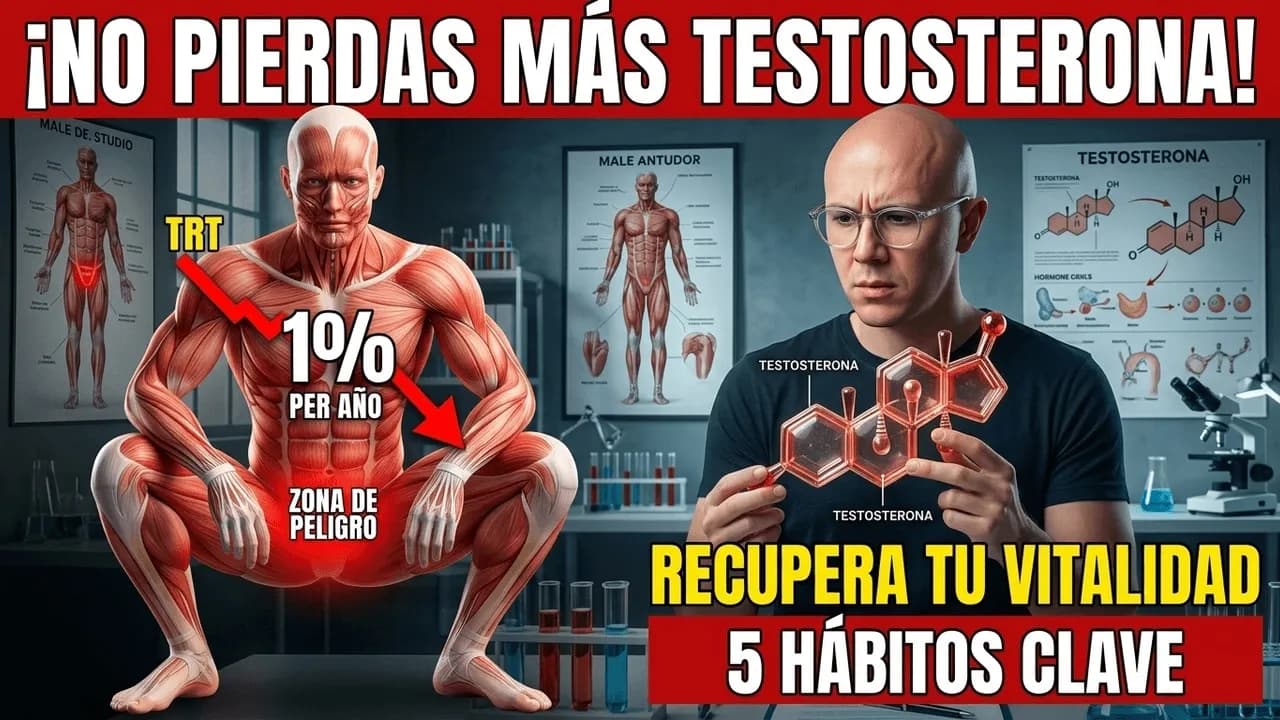
Most men assume low testosterone is simply what happens with aging. Testosterone does drop 1-2% per year starting in the 30s. By age 70, most men have meaningfully lower levels than at age 40. This is normal physiology, but aging is not the only driver.
In many or most men seeking treatment, the real drivers are metabolic disease, obesity, insulin resistance, poor sleep, and sleep apnea. Starting at age 18, over half of people have metabolic disease. By age 60-70 the percentage is much higher, and 90% of those affected do not know they have it.
These conditions can dramatically lower testosterone. A man may present with a low number and symptoms, receive a prescription from a clinic, yet no one asks whether the low testosterone is the primary problem or a downstream result of unaddressed metabolic issues.
When evaluating a patient with low testosterone, the full picture must be assessed: body composition, sleep history, and metabolic markers. Some patients have low testosterone solely because they are 60 pounds overweight and sleeping poorly. Fixing those issues can raise testosterone without injections.
This differs completely from a man whose testes are simply no longer producing enough testosterone. Treating both situations identically is a clinical error.
Visceral fat produces the enzyme aromatase, which converts testosterone into estrogen. This explains the development of gynecomastia ("man boobs") in obese men. Greater visceral fat means more testosterone is converted before it can function.
Visceral fat also produces resistin, which promotes insulin resistance locally and systemically in the liver and muscle cells. Insulin resistance suppresses testosterone production at the testes and disrupts sleep, particularly slow-wave deep sleep required for hormone regulation.
Muscle loss worsens the cycle because muscle is the primary organ for burning glucose. Loss of muscle increases insulin resistance, which increases visceral fat, which increases aromatase activity and lowers testosterone. Lower testosterone accelerates further muscle loss because testosterone is the primary signal for maintaining muscle with age.
This forms a tightening vicious spiral.
Starting testosterone injections can produce some benefits, but effects are not reliable. The underlying visceral fat, insulin resistance, and sleep disruption remain unaddressed. This is symptom management rather than root-cause medicine.
Even if benefits appear while on therapy, symptoms are likely to return upon stopping if the metabolic drivers are not corrected.
Low testosterone also contributes to metabolic disease in the other direction. Men with low testosterone show significantly higher rates of insulin resistance and visceral fat accumulation. Correcting the testosterone deficit can help interrupt the spiral, but only when the metabolic foundation is already being addressed. Testosterone cannot be injected as a substitute for fixing metabolic health.
Many physicians avoided prescribing testosterone due to longstanding fears. In December of the previous year, the FDA convened experts to examine why testosterone remains a Schedule III controlled substance.
The primary historical fear was that testosterone causes prostate cancer. This belief originated with Charles Huggins, the only urologist to win the Nobel Prize for urology work. In the 1930s and 1940s, Huggins showed that castration dramatically relieved bone pain in men with advanced prostate cancer that had metastasized to bone. The medical community incorrectly assumed the inverse: that giving testosterone would cause cancer to grow. This assumption was never tested in a trial and persisted for over 40 years.
Harvard urologist Abraham Morgentaler began challenging the assumption in the late 1980s. Despite colleagues calling him reckless, he biopsied patients with low testosterone before starting therapy. He found cancer in one in seven men, indicating men with low testosterone actually had higher, not lower, rates of prostate cancer.
Over two decades, Morgentaler demonstrated that men with low testosterone had more cancers and more aggressive prostate cancers at diagnosis.
The Traverse trial, the largest randomized controlled trial of testosterone (5,200 men, placebo-controlled, 33 months follow-up), found prostate cancer diagnoses were statistically identical between the testosterone and placebo groups. The old fear is not supported by current best evidence.
A secondary fear involved heart attacks and strokes. Some early 2010s observational studies suggested possible cardiovascular risk. The FDA added a cardiovascular warning label to testosterone in 2015 based on weak, mostly flawed observational data.
The Traverse trial found no higher rates of cardiovascular events with testosterone. Men on testosterone actually showed lower rates of new-onset type 2 diabetes and lower rates of progression from prediabetes to diabetes.
Most men seeking testosterone are not bodybuilders. They are typically men who have built companies or careers as engineers. They want to remain present for grandchildren, stay capable for spouses and families, and maintain the ability to contribute to their companies, culture, and communities.
Health at this stage is not merely personal; it is the instrument used to show up for people who depend on them.
Testosterone remains a controlled substance in most or all states. Many traditional physicians have avoided discussing or prescribing it, leaving specialized clinics as the primary access point for men seeking legitimate therapy.
While some concerns remain, they are limited and specific. Conditions requiring careful evaluation before starting therapy include certain heart conditions, untreated sleep apnea, and polycythemia (excessively thick blood with too many red blood cells). Proper workup and ongoing monitoring are essential.
The greatest danger is not these specific conditions but bypassing evaluation of obesity and metabolic disease entirely and simply prescribing testosterone based on a single number.
Aging does decrease testosterone, but metabolic disease and obesity decrease it far more. Men who receive one lab value and walk out with a prescription have not received proper evaluation. This approach will not improve longevity or reduce disability.
Research will continue. Large randomized controlled trials conducted a decade from now could alter current understanding. Decisions must be based on the best available evidence. The primary recommendation is to evaluate and address metabolic health before considering testosterone replacement therapy.
Testosterone is important for women as well, though their levels are approximately one-tenth those of men.
The Traverse trial and other studies showed a possible slight signal for atrial fibrillation that requires further examination. On a practical basis the risk does not appear significant. A physician with personal atrial fibrillation would not be highly concerned about this signal when considering therapy.
Hypothyroidism is a major independent risk factor for metabolic dysfunction and should be evaluated and treated when present under appropriate medical supervision.
Hypothyroidism is one of the most common causes causally related to heart disease, vascular disease, and metabolic disease. The medical community's fear of testosterone has prevented similar scrutiny of testosterone's role in these conditions, though this is expected to change.
Testosterone is used in women for depression. Morgan Tyler, a Harvard urologist, shared a case of a psychiatrist treating himself unsuccessfully with two major antidepressants who then received testosterone replacement, discontinued both antidepressants, and experienced significant improvement. Testosterone is also used for libido in women.
When evaluating low testosterone, symptoms should drive treatment decisions rather than lab numbers alone. A low number without meaningful symptoms is not automatically a reason to treat. The principle is to treat the patient, not the lab. Many testosterone clinics ignore this and base treatment solely on lab numbers.
Most people measure total testosterone, which ranges from roughly 260-300 to 1,200 nanograms per deciliter. Biologically, what matters is free testosterone, the fraction available to act on tissues. Free testosterone varies between 10-100 depending on units used (pg/mL vs. ng/dL). Sex hormone binding globulin (SHBG) binds most testosterone tightly, making it unavailable. Total can be low while free is adequate if SHBG is low, or total can appear normal while free is low if SHBG is elevated. Albumin also binds testosterone but more weakly. Calculated free testosterone, using total testosterone and SHBG, may be the best measure.
Alex Hormozi has shared his total testosterone of 100 while maintaining significant muscle mass, illustrating that total alone does not determine functional status.
A man at 310 and a man at 950 nanograms per deciliter are both technically in range but not necessarily in equivalent situations. SHBG is a protein that binds testosterone, preventing its use. SHBG levels can be impacted by metabolic disease and other conditions.
Testosterone is circadian-driven and should be drawn in the morning before 10:00 a.m. when levels peak. Afternoon draws produce different values. One test is insufficient; at least two separate draws are needed before drawing conclusions. Single values mislead.
Testosterone therapy is now considered safe for the right patient in the right context with proper evaluation and monitoring. Prostate cancer fears were overstated. Cardiovascular blanket warnings are not supported. Testosterone therapy is a legitimate part of healthy aging. The shortcut approach of drawing blood, finding total T of 250-400, and immediately starting therapy without clinical assessment is opposed.
Significant progressive fatigue not explained by poor sleep, thyroid problems, or other obvious issues; reduced sex drive that is noticeable and bothersome; loss of muscle and strength despite consistent training; increased belly fat despite appropriate low-carb, low-glycemic diet; low mood, motivation issues, or new persistent depression; reduced morning erections; and worsening erectile function warrant testing.
Erectile dysfunction in men over 50 is usually an arterial/cardiovascular problem rather than a testosterone problem. Cardiovascular evaluation should come first.
Get total and free testosterone drawn before 10:00 a.m. on at least two separate occasions. Include LH (luteinizing hormone) and FSH (follicle-stimulating hormone) at least a couple of times. These pituitary hormones indicate whether the problem originates in the testes or higher in the signaling chain, analogous to using TSH for thyroid evaluation.
Sleep, resistance training, and diet must come before testosterone therapy. Sleep apnea alone can suppress testosterone dramatically and affects less than 10% of people who have it. Treating sleep apnea can normalize levels without other interventions. Significant visceral fat and insulin resistance should be addressed before relying on testosterone. Resistance training is one of the most powerful ways to support natural testosterone production and reduce visceral fat. Wall sits are an accessible option. Relying on shots without resistance work, sleep optimization, and low-glycemic diet builds treatment on an unstable foundation.
Whether to start testosterone depends on individual circumstances.
Low testosterone carries some increased risk. Higher free testosterone is not yet confirmed as protective. There appears to be a saturation effect where beyond a certain level, additional testosterone does not further impact most tissues. Muscle is the exception and continues responding to super-physiological levels, which is why bodybuilders can experience tendon injuries when muscle strength exceeds tendon and bone capacity.
High-intensity interval training, resistance training to failure two to three times per week, and low-carb diets have been reported to raise testosterone levels significantly. One individual raised levels from 250 to 750 through a carnivore diet. These lifestyle approaches avoid injections.
Clomid is used in young men who want to preserve fertility, as exogenous testosterone alone decreases testicular function and sperm production, causing infertility. Clomid and FSH are used to address decreased fertility and testicular size reduction.
Evidence linking cholesterol-lowering drugs to drops in testosterone levels is minimal at best, with no good supporting evidence currently available.
Testosterone replacement therapy can positively affect insulin resistance, but muscle gains and metabolic benefits require concurrent resistance training rather than TRT alone.
Testosterone can help decrease visceral fat, but only if combined with lifestyle changes. Testosterone alone will not produce results if someone continues eating high glycemic carbs in excess amounts and avoids exercise. It forms part of a complete program rather than serving as a standalone solution. Many people seek a simple injection without addressing underlying lifestyle factors.
Testosterone replacement for post-menopausal women on HRT has been described as a game changer. Menopause represents one of the major risk factors for heart disease in women due to the lack of estrogen. HRT must be administered correctly with proper nuance in approach. Questions were raised about whether benefits relate to hot flashes, depression, or energy levels.
A 67-year-old man had low testosterone in the high 200s and was started on 0.6 milligrams once weekly. His total testosterone rose to the 500s, then reached 857 with free testosterone at 197. His hematocrit measured 55.05 and PSA was 3.73. His A1C was 6.9. Hematocrit measures red blood cell concentration, and testosterone can increase red blood cells, making blood thicker. This was historically considered a potential heart disease concern.
An A1C of 6.9 indicates metabolic problems requiring further investigation. A1C testing misses 70 percent of diabetes cases, but elevated results demand attention. When A1C is high, it incorrectly labels people with metabolic dysfunction as healthy. Recommended testing includes an OGTT (oral glucose tolerance test), insulin response testing, and fractionation with proper interpretation. A CGM (continuous glucose monitor) helps track blood sugar responses to specific foods.
Sleep apnea diagnosis benefits from addressing circadian rhythm alignment. Wearables like Whoop, Oura Ring, and Apple Watch track heart rate and heart rate variability. These devices assess whether someone is an early riser or night owl and help establish consistent sleep timing. Sleep hygiene fundamentals include maintaining the same bedtime nightly, avoiding screens before sleep, and keeping the bedroom cool rather than overheated.
A fasting insulin level of 9 after six weeks on a low-carb diet is borderline. Laboratory reference ranges often list up to 18 or 20 as acceptable, but these thresholds are too high. Insulin levels of 10 and above impair fat burning. Insulin has multiple functions beyond directing sugar into cells; it also stops fat burning when elevated. The target should be below 5 for optimal metabolic health. Levels of 10 and above create resistance at insulin receptors, raising blood sugar and prompting more insulin release.
Leg press strength increasing from 70 percent of body weight to 130 percent represents nearly doubled leg strength. The leg muscles function as the primary metabolic engine. This improvement significantly enhances metabolic health.
A 68-year-old man reported sexual function equivalent to his teenage years despite having a cardiac stent. Stents can enable harder exercise including sexual activity for some individuals by improving blood flow, though stents do not prevent heart attacks.
Testosterone replacement therapy does not increase prostate cancer risk. Historical concerns originated from 1930s and 1940s research by Huggins, who observed that castrating men with prostate cancer stopped bone pain immediately. However, the opposite conclusion—that high testosterone or testosterone therapy causes prostate cancer—lacks supporting evidence. Low testosterone levels correlate more strongly with prostate cancer concerns than elevated levels.
Cold hands and dry skin following stent placement and daily baby aspirin use may relate more to body temperature regulation than circulation decline. Baby aspirin is recommended for those with plaque unless taking alternative anticoagulants like Eliquis or Xarelto. Recommendations for cold extremities include wearing a sweater and performing wall sits or HIIT (high-intensity interval training) regularly.
When self-administering intramuscular testosterone injections, pulling back on the plunger before injecting confirms the needle is not in a blood vessel. Testosterone entering the bloodstream directly causes no significant adverse reaction since it naturally circulates at varying levels. The primary concern with accidental vascular injection is air embolism risk rather than the testosterone itself. Proper intramuscular technique avoids connective tissue and ensures delivery into muscle.
Abe Morgentaler has contributed significantly to establishing that testosterone treatment does not cause prostate cancer. He maintains a sexual medicine practice with a conservative approach to testosterone therapy, avoiding aggressive dosing protocols.
After 18 months on a low-carbohydrate diet, triglycerides measured 65 and HDL measured 63, producing a triglyceride-to-HDL ratio near 1.0. A ratio above 2 indicates diabetes risk, though optimal health occurs at 1 or below. At age 40, 5 feet 8 inches, and 173 pounds, screening for plaque is recommended. A calcium score of 100 or higher at any point, or HDL near 40, warrants screening consideration.
Three primary methods detect and image plaque. A calcium score is widely available, costs a couple hundred dollars, requires no physician order, and is standardized, though it cannot detect soft plaque. CINT (carotid intima-media thickness ultrasound) involves no radiation but requires skilled technicians and is harder to locate. CTA (CT angiogram) with AI analysis represents the current standard and detects soft plaque. For a 40-year-old, starting with a calcium score is reasonable. If no plaque appears, a CINT can follow in subsequent years. Development of any plaque warrants CTA with AI. Low-risk CTA results do not require annual repetition; three-year intervals are typical. Patients often alternate between CINT and CTA with AI based on findings.
Growing old is not for sissies, but it is significantly better with healthy arteries.
Keep Thomas Fordham Brewer MD MPH in your library
Save the videos and channels worth coming back to, and find them again in one place.