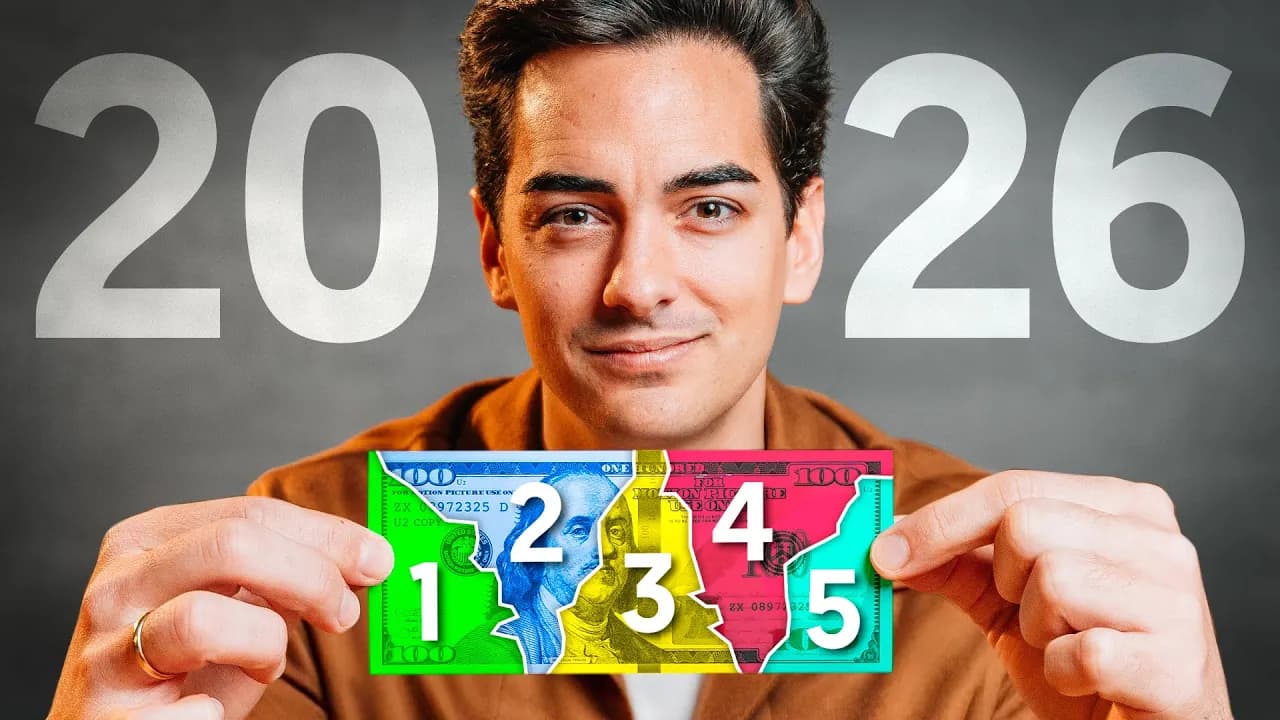
The Best Money Strategy By Income Level ($35K $75K $100K+)
In a Nutshell
For $35K earners: Build a 1-2 month emergency fund ($2,500+), organize and pay off debt (avalanche or snowball), cut small expenses, and boost income via skills, side hustles, or new jobs. At $75K: Automate 401(k) employer match, Roth IRA contributions, and savings buckets; shift from $3 optimizations (e.g., skipping coffee) to $30K questions like raises or higher savings rates. For $100K+: Define "rich" (FI, experiences, giving) to avoid lifestyle inflation and high-fee advisors; favor low-cost index funds like VTI over houses unless community stability outweighs taxes/maintenance costs.
These notes were generated by AI and may contain inaccuracies.
Financial advice that saves someone making $35,000 a year can hurt someone making $100,000+. Same advice, different outcome. Generic internet tips without knowing your tier can damage finances. Speaker lived on less than $50,000 after college, made much more in a year or month, helped millions across income levels. Fundamentals don't change, but strategy does. Breaks down top three money moves for $35K, $70K [corrected to $75K based on context], and six figures.
Take-home pay roughly $2,500/month. Rent, food, bills, transportation eat entire paycheck. Unexpected events like car repair or medical bill force short-term loans or credit cards. Not a money problem, a system problem. First move: not investing or budgeting apps, but saving 5-10% of take-home until 1-2 months of expenses in emergency fund ($2,500 example). Automate $50-100/month, set aside, forget. People live on less than they think. Example: speaker automates $100/week to vacation fund with wife, vacations funded. Emergency fund acts as shock absorber for flexibility, avoids credit cards or borrowing.
$500 balance snowballs into thousands with low disposable income. Get organized: write every debt (credit cards, personal loans, car loans, student loans) with balance and interest rate. Pick payoff method and stick to it:
- Avalanche method: highest interest rate first, mathematically saves most money.
- Snowball method: smallest balance first for quick wins and motivation. Both work, choose what fits. Cutting expenses (cancel subscriptions, stop eating out, brew coffee) helps build $2,500 emergency fund faster, but to change life, make more money. Income not fixed, inflation erodes.
- Bottom: free skills (YouTube, Khan Academy for marketable skills), meetups, LinkedIn, recruiters.
- Middle: side hustles using nights/weekends.
- Top: new job (upward, not lateral) or raise at current job. Income most important.
Bills paid, breathing room. People either splurge or see desired life costs more. Pivotal decision. Assuming emergency fund and consistent debt payoff, priority: build systems for automatic money work.
- Take 401k employer match (e.g., 100% up to 5% salary = 5% raise).
- Open Roth IRA: grows tax-free, no taxes on withdrawal after 59.5. Automate: 401k pre-paycheck, Roth IRA beginning of month, savings into buckets (house fund, emergency top-up, travel fund). Rest for living - freedom through structure, like meal prepping vs. impulse cheeseburger.
Trap: optimizing small things (cancel Netflix, skip coffee, cheaper phone plan) - $3 questions. At $35K, $3 matters; at $75K, ask $30,000 questions:
- $15,000 raise.
- Increase savings rate 1% for compounding assets.
- Check expense ratios on ETFs, index funds, advisor. These add tens of thousands long-term. Skipping latte doesn't move needle. Wealth builders ask big questions, not clip coupons.
Ask: financial independence, giving/philanthropy, experiences, flexibility? High earners often terrible with money because undefined life goals lead to filling heart holes with stuff (e.g., overworking doctors with no life). Define rich: volunteering, FI, giving to kids/community/scholarship, travel, flexibility. Avoid lifestyle looking rich outside, broke inside. Everyone wants generic white picket fence, 3-4 car garage - be intentional to avoid lifestyle inflation (e.g., doctor post-residency buys Porsche, country club, big house instead of debt payoff).
Advisors like Chad charge 1% AUM. Example: $100K at 7% over 30 years = $761K; at 6% = $574K ($187K difference). Evaluate value added. Most underperform low-cost index funds. Invest in VTI (total US stock market, ~4,000 stocks), speaker's majority equities. Some SCHD, others. Check Whiteboard Finance University community.
Cons:
- Property taxes: joke in US (speaker's paid-off house $10K/year; Serbia ski town equivalent $100/year).
- Maintenance: endless (roofs, gutters, HVAC, etc.).
- Interest on mortgage.
- Opportunity cost: move for promotion in down market (e.g., 2007-08), realtor fees, etc. Pros: locks into community of owners who care more (own vs. lease car analogy). Stable neighbors (watch dogs, play with kids) vs. transient renters. Not just math - live normal life, know neighbors, raise family. Buy if stable, not if moving often.
Income bracket determines strategy. $35K: build buffer, avoid derailment, then aim for six figures. Financial literacy essential even at high income - athletes go broke from lifestyle creep. Join whiteboardfinanceuniversity.com ($10/month), live Thursdays 5PM EST, 430+ members, options trades shared.
That's why my family trees got nice thick roots going down deep. Because I'm in Whiteboard Finance University. Marco, you're overly promotional. You're underly promotional.
Click the like button, hit subscribe. My channel shadowbanned. I wonder why. Share the video with 12,000 friends. And as always, have a prosperous day.
Oh, I love unhinged Marco. I love unhinged Marco. If you use the word unhinged, you're an idiot. Stop use unhinged. Like, what is unhing? That's such a dude. All my friends that are in Austin on the co, they always use unhing. Stop saying unhinged. You're unhinged. I'm not unhinged.
Keep Marko - WhiteBoard Finance in your library
Save the videos and channels worth coming back to, and find them again in one place.