The Hidden Capital Crunch Behind Silicon Valley’s AI Boom
In a Nutshell
Silicon Valley's AI boom is creating a hidden capital crisis: top AI companies need trillions in capital but are being funded through increasingly complex "crow tranche" strategies and compute financing rather than traditional equity, with VCs racing to deploy record fundraises at 3-5x markups while LPs face massive concentration risk in just 3-4 companies. The current market mirrors 2021's pace and pricing dynamics but is "healthier" because real revenue growth (10-20x yearly) is occurring, though much of this growth involves low-margin data labeling, usage-based revenue, or consumer products rather than traditional SaaS economics. The biggest winners will be those who proactively invest in obscure categories like brain-computer interfaces and next-gen bio/AI companies before they become obvious, rather than chasing the handful of mega-deals at inflated valuations.
These notes were generated by AI and may contain inaccuracies.
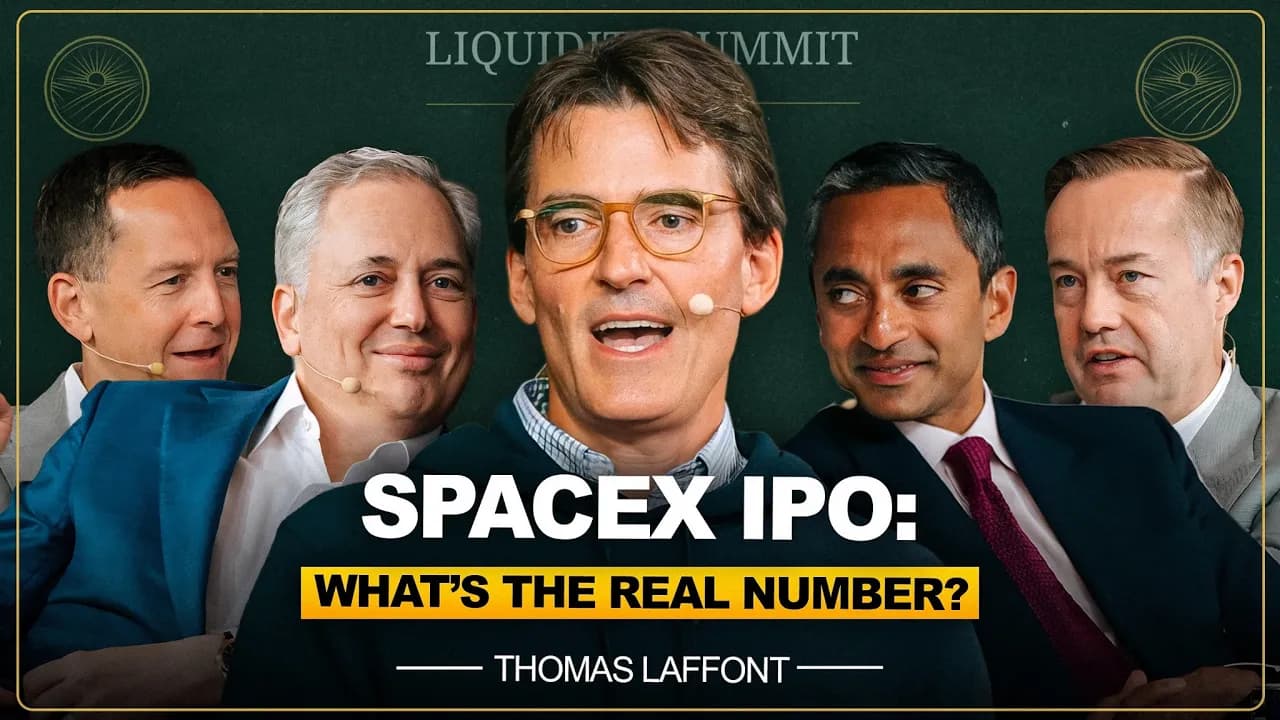
Every few years in Silicon Valley, the criteria for ultimate success change. In 2016, companies were viewed as best-case $10 billion outcomes. Then the standard shifted to $100 billion possibilities. Now the new standard is trillions of dollars, with SpaceX, Anthropic, and OpenAI considered as three-trillion-dollar companies. There may be only two or three such companies rather than 14.
One mutual LP described as a person who can learn the most about the current situation every minute from the venture market. The goal is to recreate that experience without focusing on major issues or history, but rather on what was done the first time.
The deal environment from San Francisco is described as very fast-paced, with investment rounds happening much faster than before and follow-on rounds also occurring much faster than before. Some companies in the middle of their life cycle get a lot of attention at the very beginning with huge demand for capital, whether seed round, Series A, or Series B.
There are a handful of firms from which founders want to raise capital, and these firms get preferential pricing in the first installment or tranche. Many more VC firms miss out on those deals. Historically, VC firms that lost the deal would maintain relationships with small investments to participate in the next round.
In 2021, fast followers raised capital at double valuation a few weeks after missing the initial opportunity. The current market situation is that investors who lost the round don't want to wait for the next round. The question becomes how much it will cost to get into the investment, which is usually three to four or five times more than the initial round, described as a secondary tranche known as the "crow cuck tranche" in Silicon Valley.
These companies are more capital-dependent than they appear, needing capital at their stage but not wanting to withdraw the entire amount in the initial tranche. Trenching is not considered an unhealthy sign for the market but rather a requirement for these types of companies. Sometimes investors get a chance in the early tranche while others get a chance in the second tranche.
Everyone has become a "crow" at least once or twice. People are lost and confused trying to keep up with the market, throwing out offers very quickly. Bad behavior includes changing offers quickly or withdrawing offers, with many things reminiscent of 2021.
Everything is happening so fast that everyone thinks they need to do something to stay ahead. The minimum markup to keep up with the market has reached a point where markups don't seem good anymore. Getting a markup is like keeping pace with market conditions.
In portfolios, every three weeks something happens that makes investors feel good about their market performance, then three weeks later events with non-invested companies make them feel they're falling behind again.
The biggest exits are seen, but after two days of news, people forget and move on. The current speed is not unprecedented, with similar pace in 2021. However, the current pace is considered healthier because real value is being created, with companies working amazingly and growing at unprecedented rates.
The real story behind company revenues involves companies growing at rates of 10, 15, or 20 times per year. Any company with such rapid revenue growth has special aspects that aren't transparent or direct SaaS revenue, 90% gross margins, or annual recurring contracts with over 100% profit. Rapid growth may involve very low margins or loss margins, high customer dependency, data labeling companies multiplying monthly revenue by 12 to show annual income, consumer-based rather than enterprise-based revenue, or usage-based rather than contracted income.
Data labeling companies are growing at incredible rates but with margins of only 15 to 20 percent because collecting data is expensive. Many companies managing foundation model products have income margins approaching those of foundation model companies, but these margins are improving rapidly. One company went from 85% in the first half of the year, with portfolio companies increasing 700 times since 2000 this year, with margins improving from negative 15 percent to positive 35 percent.
Vertical SaaS companies have income multipliers of 100 times, leading to questions about whether these are really SaaS businesses or labor-replacing businesses. The labor substitution theory is not believed, but the growth rate forces consideration of this possibility. Companies are growing at rates of 5 times, 7 times, or 10 times per year even at massive scale. The software cost behind law firms needs to be compared to how much law firms spend on paralegals annually to understand the real market size.
In 2021, companies weren't as attractive, with nothing else like them to compare against. SaaS companies were evaluated on 5x, 3x, 3x, or 2x growth multiples, with companies having $8 million in SaaS revenue raising money at billions of dollar valuations despite limited market scope. A seven-year timeframe was needed to reach $100 million ARR.
The structure of rounds, number of deals, and necessity to keep up with the market are very similar to 2021. In 2021, there was a six-month period when VCs were writing checks, and many would now question why they made those deals. Public market investors are aggressively trying to get into venture, which is very difficult now.
Companies were getting term sheets very quickly, with sheets being taken off quickly or denied. The last 6-7-8 weeks have been the busiest since 2021, with more deals facing renegotiation than ever seen before. The biggest difference is the excitement surrounding companies, with people investing in companies thinking they will become category determinants or world-class companies within 18-24 months.
Companies are finding product market fit much faster than in 2021. Portfolio companies are being used very actively, with family members using AI products who never thought of being early technology users, making these products integral to daily life. This represents a major paradigm shift in technology where people believe there is a time of opportunity that cannot be missed.
Funds recorded in these companies are investing at speed and quantity that requires VCs to raise funds from their LPs, historically endowments, foundations, and similar institutions. Mega platform funds that raised record amounts are probably fund-raising two to three times in 18-24 months, with investment pace almost three times faster than expected.
VCs understand market conditions better than others and raise amounts compatible with their portfolio building model, typically within 18-24 months wanting a certain number of investments and certain ownership amounts. Mega firms vastly underestimated the capital required to achieve desired ownership, meaning they want to invest in more companies than thought, companies are worth more than estimated, and desired ownership requires much more investment than the model suggested.
LPs understand that either ownership in companies is maintained but investment opportunities are greatly reduced, or investment opportunities remain the same but ownership quantity decreases significantly. A good venture capital fund needs a certain number of successful candidates, but without enough ownership, profit chances will be limited.
LPs want as much liquidity or cash as possible at this stage of the cycle but haven't received it. LPs with 35 to 50 percent venture capital exposure actually have this concentrated in only three to four companies like SpaceX, Anthropic, OpenAI, and Databricks. When liquidity becomes available from these companies, LPs can reduce exposure to this asset class.
LPs whose funds have no exposure to these companies face difficult situations with cash crises. Ramp is the only platform that makes finance teams more efficient and fast, saving 5 percent of annual business costs. Rogo's AI platform serves hundreds of thousands of top firms worldwide, automating deal selection, SIM creation, buyer contact, and data room due diligence with safety and compliance.
OpenAI, Cursor, Anthropic, Perplexity, and Versailles all use WorkOS for enterprise-level acceptance, requiring SSO, Schema, RBAC, and Audit Log core capabilities. WorkOS provides these through API from the beginning rather than spending months building features.
One fund raised $2.5 billion in July and was told they would return to the market in January. Another fund received $3 billion from LPs 9 months ago and is now looking for $5 billion. VCs are giving term sheets promising to invest $150 million, but founders discover the money won't be available until mid-January, three months later, because current fund money is already allocated and they're launching a new fund.
One company received a $50 million term sheet from a VC firm supposed to give $40 million, with the VC saying they could send $1 million after deal completion and the rest would take eight to ten weeks. This represents the first time in this cycle seeing VCs promising money before they have it, though they will get the money but it takes momentum forward.
Anthropic's S1 shows $140 billion valuation with $10 billion spent and $132 billion remaining on the balance sheet. With 85% gross margin generating revenue, the $10 billion cost is considered incredible, raising questions about whether new financial products or financing mechanisms are needed.
The answer to why everyone needs this is always compute or computing power. Customer Value Fund provides financing where for every $10 million invested, $30 million will be earned. Some companies creating agents think about daily active user costs. New mediums are emerging with VC firms financing companies with compute resources instead of cash, guaranteeing allocation because the money will ultimately be spent on computers.
Questions arise about whether compute allocation is forever or just for training runs, how many times computers can be recycled to pay back invested capital, and value decrease with each use. New capital frameworks in Silicon Valley are complex and challenging because VCs want clean equity without strange conditions that could put companies in danger. Most founders naturally want clear equity deals.
GC's Value Creation Fund is doing well now, but the first few years required explaining why this is a good product. Historically, VCs don't like venture capital products and will show a million reasons not to do it. In this new era of venture capital, new products are being created for financing a new breed of companies with billions of dollars.
Equity capital only compute spending in the sector may be the best thing about equities. While Elon Musk is saying that a lot of unused compute capacity will be created, Neo Cloud is quite tough in the market. At the same time, literally no one has ever generation, current generation bare from Ruben or NVIDIA not getting any allocation, and the price of GPUs only seems to be upward. This represents a very important part of the market and seems like a strange moment.
Portfolio companies are regularly helped to find their computer because it's easy for them to find computers. Many large Neo Cloud companies with relationships in compute contracts under $200 million are not very interested. Companies that don't have that level of size might be trying to hire some capacity there, but they are relatively nothing compared to market demand.
The question of how much compute is actually needed in this ecosystem turns to hyper scalar and frontier model labs. Private companies are raising huge amounts of funds, for example Neo Labs worth over $1 billion raising funds at seed valuation. The demand for computing is increasing over time, and the only way to limit it is if these companies' compute needs are reduced or funds for those who want this compute becomes difficult to collect. Some companies will continue to raise funds because they are the ones with the best resources and everything they need.
The most attractive part of the market is the Neo-Lab segment, which for hyperscalers is relatively small in comparison, but if you put them all together, their scope is very small. People probably don't start to look at the labs to see which two or three are the best lab to come out or not, but currently there are probably 80 or 90 neo-labs that have funds ranging from $1 to $5 billion collected. The funniest thing about them is that they all have a lot of need money.
A few weeks ago a neo-lab was met who was raising billions of dollars in funding, it was their second round of funding, and they will spend a whole billion dollars next year for the computation of a training run. They said they might have to wait until next year and another $5 billion needs to be raised. The tricky thing with these companies is that it is very difficult to verify how well it is doing.
The most interesting thing about Neo-Labs is that you are interested in the quality of their work and the value of the collection. You will want to verify the amount, but often they come up with something very impressive, however it's hard to understand that they really have any bringing something effective on a generalized scale, or something that is only good in benchmarks specially designed to perform. This is the concept of 'benchmark maxing', which raises the question of whether these are really innovative and groundbreaking, or something that is good in benchmarks although shown, it is not commercially usable and it is unlikely to happen in the near future.
Many companies need a lot of capital, and it will be interesting to see what funds they all have. The question is whether they can continue collecting, or only 50 percent or 10 percent can do it. Lack of capital could be the real obstacle. If the capital market dries up, that is what will cause changes in the computing sector.
It is not so simple. Perhaps equity more will happen in terms of debt than. Those who are creating these technologies need 5 to 10 times more debt than their accumulated equity. In the last few buy something at the public market during the week considering the situation on the quad, their borrowing costs will increase. These companies are on-demand computing equity needed to build capacity. The main thing now is whether you can collect it or not. Rather, the real issue is that business to maintain continuity or survive are they the necessary loans on suitable terms can you collect.
Some seed deals now are happening at an incredible price, which is R Sid it doesn't feel like a stage; these are like a series-D level price risk is worth taking. These new markets are much larger than before, with the promise that everything is a 100 billion dollar company. This idea is now part of every pitch or proposal.
Every few years in Silicon Valley business end goal criteria changes. When starting as an early-stage investor in 2016, everyone gave 10 billion-dollar success story to each company and would set the deal price accordingly. Then around 2021, when Stripe, Data BRICS, Airbnb and DoorDash hit 100 billion dollar valuation, everyone gave the companies 100 billion dollar began to be seen as a possibility and the price was set accordingly.
It turned out companies worth $100 billion in 2021 were on its way to becoming a dollar, except for those companies also deal at the same high prices. They started as if they too would be successful. Now the goal or goal post has moved. It stands at a potential of one trillion dollars. Currently, SpaceX, Anthropic and three companies like OpenAI in one approaching a trillion dollars.
There might be two or three more companies in the future that may be like that, but not 40. Yet everyone now wants companies to be worth a trillion dollars they see it as a successful prospect for the dollar. Then what with a $1 billion entry valuation is it possible to achieve a trillion dollar outcome. This is the valuation. The dynamics are changing.
However, at each stage of the venture looking at it, it can be seen it's always fair in good companies. There is an investment opportunity in value. Investors who generally can't do good in bad times, they basically the bulk of their capital is the most obvious or invest in popular topics. Ventures that were launched in 2021 capital invested a large part of their capital invested in the most obvious sectors. They basically have 100 times more in their portfolio investing in high-revenue SaaS deals. They are probably from that time now venture capital fund minimum in the quartile or lower 75th percentile there is.
If you are in the early stages and obviously it's best to work with good ideas. Support the founders, but you skyrocketing market prices must be paid, especially when the market is bullish. But if you support the best founders those who work with obscure or new ideas however, in such markets, alpha generation that's the best way to do it, because if you really want to be the best founders support, but they work in a bad market not doing it. They are usually a bit on the market entered earlier.
There are two ways to get a return on capital. One is to be reactive and the other is it's about being proactive. The reactive method, if you do it correctly you can choose, but you need a top helps to become a quartile manager. Being proactive is what you need to be one of the top 5 percent of managers helps.
What it means to be proactive is to support all those founders those who work in markets that are still unclear doing. And if the ideas are still vague yes, that means you are too much not facing competition. You pricing these deals accordingly you can.
A company called Conduit was started about 9 months ago with a seed investment. Those who have BCI or brain computer working with the interface. People very nice person, but whoever that is if you met the founders, you would understand that's how talented they are. But 9 months ago, no one in Silicon Valley is a BCI category worried much about it.
The subject being worked on is very interesting, like Neuralink in your brain the chip is being implanted and as a result, perfect getting readout. This group is wearable on the head brain information through a product collecting. When meeting with Conduit, they have human training the amount of data was very small.
The fun thing is, their model's data scaling it is seen that the more data available, the going, this is to understand your thoughts the more accurate it becomes in the case. It has been seen that if someone thoughts used to be typed before they were typed, but their device, software or model is 80 percent accurate that they understood what were you thinking. So, what the model understands and if you compare what they typed, you will see the result would be the same, but the words would be different.
Now they have 30,000 hours there is human training data. And then the last 8 BCI (Benefits of Silicon Valley) in 10 weeks BCI has become a very popular category it's up. The conduit is very big picked up a round, which is a lot subscribed, 13 term sheets because now it's a great team who working in a market that everyone is familiar with interested.
If these guys succeed and if they now have a million hours of training the data goes to run, and their scaling if the laws work, you are a you can see the world where in 5-10 years a small device worn in your and my ears there will be someone who can understand our thoughts, will contact our agent and between effective and ineffective thinking can make a difference, and what you think your agent backend does it for you will do it. You are the most skilled in the world then become a human.
Now everyone is thinking, second, is anyone really one at BCI can create trillion dollar companies. And the last round of the conduit is that the price includes the possibility. However this is a great way to support a talented founder a great example of doing this, who is a working in the market where people might be they weren't very interested at the time, but they I was ahead of the market because I thought either smart people usually market understand the market long before you pay attention can.
Gavin Uberti of Etched has a perfect example with it. Gavin is every big name in Silicon Valley met with the investor and everyone when he left that meeting, he thought he was very talented. In my mind no VC has ever met Gavin there is a (VC) who didn't think he was talented. But many assumed that a startup company to make AI chips can beat big companies in the field no. This will never be possible.
And as long as Sequoia didn't give him $10 billion blessed with valuation, until then not everyone thought, oh, wait a second, now we I truly believe that startups are it will leave others behind in the market. And you've seen all the other chips on the market companies have received skyrocketing valuations, because now everyone thinks that the bet here the catch is a clear market.
Before it becomes clear to the market, the market was clear to the founders. If this set of observations is called a it has to be reduced to metrics, but what term is there an ideal number of sheets. Like you you don't want to, you know, take Gavin's, because I know that story. It's not that he didn't get any term sheets. He is just a handful got a few. That wasn't 50. You know, he's met with all the VCs and from some great investors got a few term sheets.
There are about 15 companies you support no, but rather two, three or four term sheets. That's not the case. If any company receives 15 term sheets, it will be very expensive. If a company gets two to three term sheets, but you you will probably get a reasonable price because then there is less competition and one is great.
As an investor, you have that agree to take your money from the founder ensuring the core position of the business and operations there is a greater competitive advantage in doing so. If many people meeting with the company, but usually they do it because the founder is very impressive or they are their acquaintances good to know about that founder from close up heard something.
Big investors to get a meeting with, you know, a lot people consider the founder a high-ranking you have to recommend me as a founder. But if those company meetings very few return with successful results, however maybe it's not because everyone thinks he's bad. The founder thought so. The reason for this is, they thought at the end of the meeting that the opportunity was so great not interesting.
And by the way, venture most of the time in the case of capital the opportunity is not that attractive, but some this is a really interesting opportunity. And like I said, most VCs reactive, not proactive; and someone is that didn't want to take the initiative to learn about the opportunity, in which this very special and intelligent the person will be in the next year of their career decided to spend decades.
These market valuations that said, what will these companies become in the future you really have to imagine what it could be like. You have to have a big heart, so that you can the price you are paying seems reasonable. Anthropic or OpenAI trillion dollars to companies like to raise funds at valuation and public it's easier to imagine it when you see it happen. So the market will take you to that stage it gave me the opportunity to expand my imagination.
But when you see the capital with which these deals are being financed is what I see in the subject is probably 2021 reminds me of the market; those who market knows better about it, now it's also for them it has become difficult to understand anything. What could the final price be. Somewhat in a normal market, I would not hire a founder I can say, listen, I think if you go to the market and we will find several term sheets we also have some advantages, but we are probably a good quality partner to get around this assessment from a closer look I can.
Currently we are in the market I'm in a situation, I think you might be here so much less and yet so much more valuable you can get the term sheet, and in terms of price that's like a 4x difference, right. So, it's like these things where will the value go. I have no idea, because the market so uncertain that someone might lose the deal you will do something irrational out of fear, and that unreasonable acts may be the second highest paying three times more than the bidder.
One reason why this happens in this market is, the founder's funding round you want to lead, each of them has a there is an expectation that they will be financed with capital want to collect and often they gives an example of a friend who has a similar type of the company has similar growth and who raised funds for this evaluation. And that friend might be the one who raised funds for the evaluation did, it may be because a person three times the second highest bidder paid a high price, right.
So this a situation arises in the market where you make an offer to a founder that it may seem generous to you, but they usually would feel insulted by that offer, because they are an example of someone they know those who are at the same level can show 3 or raised funds at 4 times the price.
What do you think is the most important thing in this market rational work is on the other end of the spectrum moving to the edge, where we to really vet businesses can I. What you are describing is the product at all with reality or its growth seems unrelated, that is, such with something on which to base a business is about to develop. It's literally just fame and this a strange, baseless game.
Something like Databricks take the case of institutions, where I think you are a big partner, there is data understanding or thinking about investing in BRICS it's very easy to do. And all such wonderful companies there are those who are growing up very quickly and huge. What do you think, this madness between the two, they run on the opposite end of the spectrum maybe it would be wise to go.
I think that's probably it. There the competition here is relatively low. You are this large capital investments in companies can and an inactive you can become an investor. And I think this is great for all your companies a safe way to ensure investment.
The main question is, in today's market, when you when evaluating these companies, you have to answer for yourself that this is it 2019 or 2021. Because in 2021 you are $100 billion in Stripe could invest in valuation, and Stripe was a great company. It's still a great company, probably one of the best. However, Stripe currently the valuation is $179 billion, which is pretty good. But in 5 years it might be 11-12% IRR (IRR), which is higher than the bottom 75% of ventures good.
So at high prices in the best companies by investing, you may be in the venture market secure their position in the top ranks you can. Because they are great companies and great companies it usually stays great. Over time with their growth at a compound annual rate it keeps growing.
There is some concern, because you there has been a lot of talk about the method recently has become popular or common. Because the last 18 I'm closing a record number of VC firms in a month I have seen some people chasing the same idea, there are a handful of great companies that have huge amount of capital can be received. A VC as such, if you are associated with these names you can prove your presence, but you are older you can raise funds and this with large sums of money in companies you can be a passive investor.
This is now it has become a common tactic that has become a big a way to invest money and do good it is considered an easy way. Your you probably have more information about this than I do. Yes, but I am very rare in history I can think of only one example where a simple the strategy has paid off in the long run.
The most interesting aspect of the market is that if everyone believes it's easy to make money way, but it's probably a way to make money not a great way. There were some strategies that it was considered a way to make easy money, but the way people are looking at this issue now is I have no strategy for making easy money at scale not known.
What will happen to data companies year after year it was assumed that this was a one-time thing, it is more like a company than a trade. For example, our models needs to be enriched with lots of data, but once we have the data in hand, we are good I will stay in position. It seems that the idea maybe things have changed and these things maybe more than I thought long-lasting or large.
Data to most investors companies are like a puzzle, because historically it was thought that this companies lack long-term sustainability, because those to whom they sell data, they finally got all the data they needed you won't need data anymore. But mine it seems that the model makers' need for data everyone is greatly underestimated. In mind their data needs are only increasing and there are some companies that are interested in what kind of data needs to be ahead of others. They are able to provide the required quality data are able and they are collecting that data; some data are harder to collect than others and those companies charge accordingly and their profits are determined accordingly.
A data and robotics sales person has seen such companies. A type of company believes that data is big business and we will for the next 10, 15 or 20 years we will be able to continue selling data and as a result I can earn hundreds of millions of dollars. I think I don't think these companies' data needs will it ever end, and there are a group of VCs those who believe this and they have a lot of data want to invest in the provider company.
On the other hand, there are some companies that sells and says, we believe data is just a medium, and ultimately how much data can we sell and one way to grow your business is to there are limitations. But we think the data selling our own research and funding for robotics model training a good way, because this market is what we know better than others how to collect data and we can raise a lot of equity capital, which we will do. But other models we also sell data to providers we can finance our research.
So there are two sides here and they both very experienced in the subject, but data what should be the final result of the sales transaction their view on this matter is absolutely different.
New angel investors coming and these three big companies and more as a result of some companies going public, they are going to be incredibly rich, what do you think the impact will be. Many employees' balance sheets are now all the big angel funds or seed funds equal in size.
I think it's a Silicon Valley company as the best place in the world to start it is getting better. I think there is no other ecosystem as successful as Silicon Valley the reason it doesn't happen is because Silicon Valley probably 100 times or more dense there are private investors who before companies become institutionalized, their own funds to help write a check for $100,000 to $1 million giving. And I think it's a unique topics that you won't find anywhere else. Such people who write you a check for a million dollars and if they lose it, then their it doesn't matter. This is one of a kind here mentality. And I think it's an innovation probably good for.
The more people do this, the will, from early angel investment people who make a lot of money are innovators it will be helpful to continue. I'm sure you want abstract may it develop further. You are about this evolution what are you thinking.
For a long time you were basically a Sid working as an investor and considering himself as such established as a seed farm, where founders raise money come for. Do you want to stay like that or do you want to evolve into something bigger than this. For example we have evolved into something more than that. So I think, in recent years, we work a little more at the venture level I did, which is series A to C defined. We are socket and Doctronic or series B in companies like Dust I led the financing. And as well we are like Crusoe in a company of some passive
The speaker has made growth investments including XAI in its formation round and PolyMarket's Series B round. The firm's first fund in 2018 was worth $100 million, and the latest funds raised reached $800 million. When raising $100 million in seed capital in 2018, LPs commented that the fund was too large for a first-time manager, but by the time the firm raised $800 million, LPs praised the discipline of staying young. The speaker notes it is ironic that a $100 million fund in 2018 would be considered small by 2026 standards.
Most of the fund's returns came from investments where there were no allocation restrictions, though capital limitations existed. The firm maintains strong relationships and trust with portfolio company founders. However, historically the fund size prevented participation in certain financing rounds despite having the relationships. When founders trust the firm and it appears outside the traditional financing process, the firm can take a sufficient portion of the round to attract other investors without needing to rely solely on pro-rata rights.
Many managers worry excessively about future fund size rather than maximizing what can be accomplished with the current fund. The speaker's philosophy is to use available capital in the best possible way, which provides more options during the next fundraising period. When planning fundraising, the firm typically considers the current market situation about 6 months before going to market, comparing it to the last fundraising period to determine if they can invest more capital in companies of the same or better quality without compromising the return profile.
When asked about the biggest mistake after raising funds, the speaker stated they always kept funds too small. With double the amount of capital, the firm could have maintained a similar return profile while providing more capital to founders and playing more lead investor roles rather than co-investor positions. This would have strengthened the firm's position in companies and established its name beyond seed rounds into later-stage financing.
The speaker poses three recurring questions to assess market conditions. The first rates current opportunity excitement on a 1-10 scale compared to historical experience. The second rates current excitement level ("Freddyness") on a 1-10 scale, noting mid-2022 was around 2. The third asks for pioneer or "bellwether" companies that indicate future market direction, excluding Anthropic.
Based on 10 years in venture capital, the speaker rates opportunity excitement at 10 within specific market segments. The range of opportunities where the firm can become an investor is also rated 10. For excitement level, 2021 receives a 10, while the current market rates 6.5 to 7, justified by unprecedented growth, adoption qualifications, and product-market fit achievement rates.
Companies the speaker recommends watching include New Limit and Isomorphic, which should rank much higher on opportunity lists. These represent bio and AI-based next-generation companies with potential to build like Genentech. Market opportunities for these companies range from $500 billion to trillions of dollars. Applied Computing is identified as the leader in the category of companies that own their own data and knowledge intelligence.
Physical Intelligence stands out as a company with potential for hundreds of billions or trillions in value. These companies attract exceptional talent and have strong retention capabilities. In Silicon Valley venture capital, the biggest challenge is retaining top talent, as the best employees can obtain higher salaries or equity elsewhere. Companies with high concentrations of talented people and strong retention power warrant greater optimism.
Ramp's expense system functions as capital allocation strategy, naturally making smarter decisions with better data and improved economic results. Vanta automates compliance and security while providing reliable risk sources. WorkOS enables AI and software companies like OpenAI, Cursor, and Perplexity to become enterprise-ready overnight. Ridgeline serves as a real asset management partner rather than just a software vendor, helping firms achieve 5x growth with faster operations and competitive advantages.
Keep Invest Like The Best in your library
Save the videos and channels worth coming back to, and find them again in one place.