The hidden pattern behind successful products | Mark Pincus (FarmVille, Words with Friends, & more)
In a Nutshell
Mark Pincus's core framework is "proven better new": copy what's already proven to work at the pixel level on your platform, add small increments that 10/10 existing users would choose, then layer in one novel idea—because instincts are right 95% of the time but ideas are wrong 75% of the time. Success comes from being less ambitious at the start, killing hope-based bets early, and measuring retention over virality. The biggest opportunity is building durable social experiences that feel like great cocktail parties rather than empty engagement, especially in the emerging agentic AI era.
These notes were generated by AI and may contain inaccuracies.
Your instincts are right 95% of the time. Your ideas are wrong 75% of the time or at best right 25% of the time. Many founders stoically and heroically stick with a losing idea. When you have lightning in a bottle and true signal, everything works. Most products are better versions of things that existed before.
It is almost a moral arbitrage. Founders become entrepreneurs to be innovators but often try to win the hearts and minds of consumers like nurses in Indiana with FarmVille. Define your ambition in the eyes of your consumer rather than trying to win awards and respect from peers. Building a consumer social app that is durable is very rare. There is latent demand for social but it has lost its adrenaline. People are proud to tell you they are not on Instagram and are not missing the party. To reinvent social, look for where the cocktail is. A great cocktail party makes you feel glad to be there. Today people are hanging out on Claude or GPT but there is no cocktail party. The challenge is to figure out how to make it rowdy.
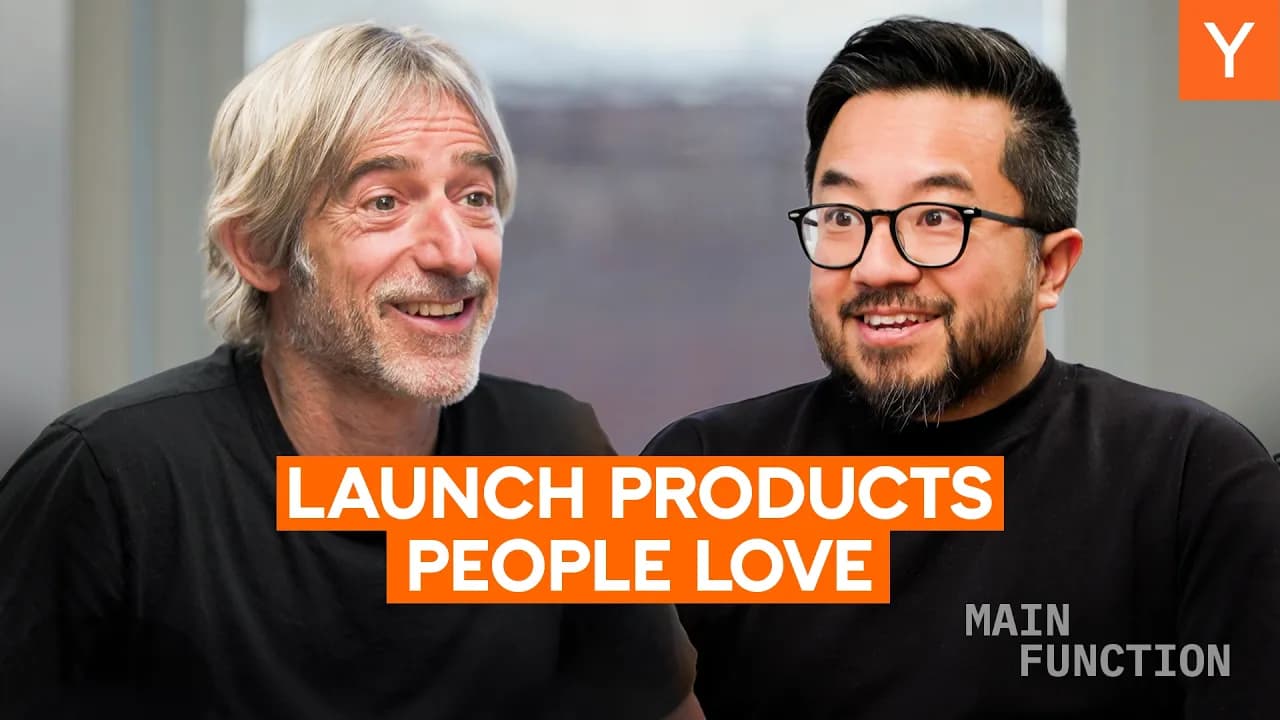
Mark Pincus is the founder of Zynga and has created more successful consumer products than anyone else in history, with over a dozen both within Zynga and before. Over the past 5 years he has been working on a book called Life at the Speed of Play that synthesizes what he has learned about building successful consumer products. Sam Altman said that today the only bottleneck to building great products is knowing what to create. In the book and conversation, Mark shares a clever and counterintuitive framework for coming up with successful product ideas, why being less ambitious is often the path to the most ambitious ideas, why you need to kill your hope before your hope kills you, why your instincts are usually right but your ideas are usually wrong, and what he has learned about raising kids.
The framework is called proven better new and is designed to help come up with and refine product ideas and startup ideas to increase the odds that an idea is good and will work. It was developed early at Zynga and became a religion and the core engine behind product management there. For three of the four years writing the book it was called proven better new. The philosophy is that people have human-level instincts in their gut that are pretty much always right, and then they put ideas on top of the instincts that are usually wrong. The rule of thumb is instincts are right 95% of the time and ideas are wrong 75% of the time or at best right 25% of the time. The framework isolates the innovation zone, isolates what is in the gut, tests many ideas around it, and fails for the right reason not the wrong reason.
Sid Meier, the godfather of game design, launched a social civilization game on Facebook. Ten minutes after launch, Zynga product managers emailed their analysis that it was dead on arrival because the first-time user experience had so many clicks and was so bad that no one would ever see the great game design. Even Sid Meier tripped over what the most junior product managers at Zynga understood as the best-of-breed approach to onboarding a new user on the Facebook platform. Because he did not perfectly copy the proven right elements, his innovation was never seen.
The point of proven better new is to take all the proven off the table. For something like the AI Snapchat or AI camera, start with what you are not innovating on. Look for where the best-of-breed proven exists, whether from Apple, Snapchat, or Instagram, and copy those legally and with taste. Be a master of the proven first. Get a PhD in proven first. You have not earned the right to innovate on the camera until you are the world's leading expert on the best mobile cameras that already exist. Better is usually very small increments and innovations. Better is something that 10 out of 10 existing users of that product would say yes to. Ten out of 10, not what you think is better, because what you think is better is called new. We are usually too ambitious on the new. Better could be it is now free or there is no download. It is something you can statistically show works, is better, and every user would say yes to. It is usually very small, polish, and things that intense users and power users notice most.
In Words with Friends, it was Scrabble, but if it was just Scrabble it would not have become a massive hit with 14 million daily active users when Scrabble itself was not. There must have been something better and novel. The polish for mobile was the better. The novel new idea, the back-of-the-box idea that gets people to download and try it, was social. Your friends are attached to the Facebook graph and already there to play with you. That was the new idea. Even that might not get 10 out of 10 people saying yes. The new idea is probably going to fail. It is a reason to try it but probably going to fail. If you do proven better new right, the product has much better odds of succeeding and not failing for the wrong reasons. Start with the premise that the new is probably not right and have four other new ideas ready to test. If you do proven better new right, it is like a time machine.
One instinct became a $1.6 trillion company and you were a year ahead of them. The Tribes idea became Reddit and a whole company and industry of listings. At Tribe the metrics were not working, D30 retention was terrible, and it was a sinking speedboat. If the attitude had been to try a lot more ideas and look around for what is proven in the market that you can also test, the odds of success would have changed massively.
When applying proven better new, make a list of things proven to be working already in the market that people love about the space. Better is something not just better but that 10 out of 10 people would say yes, they would switch. Then add something new that nobody has tried before. Founders often misuse proven to justify a wrong idea by picking something that is not precise. You have to be precise and think at the pixel level of the experience. Proven is on this platform for this audience for this experience. If it is not on this platform it does not count as proven. The masters of the product craft do proven better new whether they call it that or not, and they do it at such a beautiful level that nobody realizes what it is derivative of. Slack might have been proven and better and no new, which is even better. If you can have a successful product with no new, that is ideal because people do not like change. Take a behavior they like and make it much more accessible or more fun.
There is a thread of copying that turns people off. In the Peter Thiel sense it is almost a moral arbitrage. There is something in the gut as a product person where you became a founder to be an innovator, and it can feel like a beatdown that the path to innovation starts with copying. We were taught in school that copying is cheating. That moral resistance also makes the opportunity more available for people who have less ego involved. If you are truly ambitious, burn your resume. If you define your ambition in the eyes of your consumer and not your peers, you are not trying to win awards. You are trying to win the hearts and minds of nurses in Indiana like with FarmVille. You will define innovation differently and will not worry about taking the best ideas wherever you can find them if they serve giving the consumer an experience she loves more. If all you did was copy there is no reason for her to choose your product, but if you took something she loves and made it one inch better she might love that more than something she has never seen before and did not wake up knowing she wanted. The art is to do it in a way she does not even realize it. Consumer taste resists a copy that feels too derivative and is not adding something important and new. Craig Newmark on Craigslist took two years to add photos to listings. He wanted to make sure people liked it and that the photos came up in the right ways. If you are driving across San Francisco to buy someone's couch, why would you not want photos? In his mind it was new. He is a world-class product maker because we feel a sense of ownership of products we rely on every day and we get angry when they change even if for the better, because we go through life faster because of pattern recognition and do not want to think about these things. A junior product maker might make the whole thing a picture and not realize that what people liked most was seeing the text real quick to compare prices.
Most products are better versions of things that existed before. As a product team you go look at competitors, look at all their flows, see what is working, see all the great ideas, and build on that. It is easy to get turned off by the word copy, but this is mostly how products end up getting built. Nikita saw his perfect product buried inside an Arabic-only version of his product and said they nailed it. When you can see something proven already in someone else's product but they have the wrong idea around it, that is gold. Not every product is derivative from proven better new. At the outset the question is which path you want to be on. If you go down the path of just innovate and start with a blank whiteboard without looking at other products, that is like what Rovio did with Angry Birds. They made 45 games, every single game was totally different, not learning from previous failures or the market, and the 45th shot was a hit and innovative, but the odds are wildcat drilling. OMGPop created the hit game Draw Something. They were on their last dollar after trying something totally innovative that failed completely. They then did proven better new, took a proven game, did everything about it as perfect students of what was already working and viral on mobile, perfectly copied the turn-based system from Words with Friends, and made a massive hit.
Be less ambitious. There are many paradoxes. If you are too ambitious and visionary about the product at the outset, you will probably miss product-market fit because you will not start at a small enough humble enough place. The starting point for these massive hit products is usually embarrassingly small. Facebook was just an app to check out girls and guys at Harvard. Many massive hit products and franchises started in very humble, non-ambitious places. Careers go in waves. After success there is a tendency to feel the need to do something bigger the next time. That is human instinct. After Freeloader and Support.com, which both started with very small humble premises and had bigger success than imagined, when Tribe came along the social networking opportunity looked big, so everything was tried with Tribe. It was really ambitious, multiple use cases were pursued, and it failed even though the tribes idea worked and people loved it. After being humbled and desperate to get out of the abyss, Zynga started with something embarrassingly small: a Facebook app, a poker game. At 41 as a multi-time successful founder it looked like there was no dignity, but ambition came down to a thousand-foot altitude, not a hundred-thousand-foot altitude, and that was the key to success. New founders have an advantage over multi-time successful founders because the latter have too much rope to hang themselves. It is too easy to raise money and recruit teams against a big vision before product-market fit. The world does not care about your resume. Everyone has the same chance, and if you are in a more humble place you have a better
The more ambitious you are, the more humble you should be and the smaller place you should be willing to start. Startups have an advantage in being less ambitious because larger companies like Facebook need to pursue only multi-billion dollar opportunities. This willingness to pursue small, early-stage threads that are not yet businesses is how many successful companies today got their start.
Bolt.new toiled in obscurity on something the founders were passionate about, then open-sourced it. They were barely able to sustain commercial development when they realized that combining their web stacks and virtual machine work with an AI coding co-pilot created something better than competitors offered.
Slack emerged when founder Stuart Butterfield kept attempting to start game companies. After failing at a mass-market MMO idea, the team was humbled enough to recognize value in a small internal tool their engineers were using and built a product around it.
Founders must express confidence to investors and teams even when internal confidence is lacking. Balancing expressed confidence with intellectual honesty, authenticity, and transparency without rattling the team is difficult. Over-transparency and constant idea changes can burn out team members, leading to perceptions that working at the company feels like third-grade soccer where the leader gets excited about a different idea every Monday.
Create a culture where the team is ambitious enough not to settle for a B+ product even if it could secure funding and shows some traction. The north star is to continue until product-market fit is achieved. This requires courage to tell both the team and investors that the current direction is not working, and to ask whether everyone is ambitious enough to continue or would prefer to join an established rocket ship.
There is a difference between belief and hope. Hope is confidence without basis, a prayer not founded in lived experience, product experience, user experience, or data. Too many founders and teams continue based on the hope that the next release will deliver something magical.
The best product makers collect winnings rather than make bets. They already know a product will succeed before launch. Brian Chesky knows his launches are hits before they happen.
The phrase "minimum viable product" contains a dangerous word: "viable." Viable implies hope that something might work. There is a distinction between putting a product out early to learn from it versus launching a product you believe will be a hit.
AI is a powerful but dangerous tool because it allows teams to reach a viable product much faster and cheaper than before, which can reinforce the habit of building one idea over three months instead of testing many ideas quickly.
The recommended approach is to build the product completely wrong before knowing it is right. If you can build it right, do so, but do not be slowed down by perfection. The goal is to learn quickly by building the lowest-possible-cycle version that can return signal.
Teams should test ideas in the cheapest possible ways, such as running ads before building the full product. At Zynga, before launching the FarmVille English Countryside expansion pack, the team had planned to spend a $10 million ad budget promoting it externally. Instead, they placed different art variants directly on the game board for existing users, testing which versions generated the most engagement while simultaneously collecting emails for early access.
This approach generated both product direction and $19 million in revenue from users purchasing keys for early access, turning what would have been after-the-fact advertising into a testing and revenue-generating feature.
FarmVille and CityVille achieved the highest installs, engagement, retention, and revenue, while Words with Friends and Poker proved more enduring because they transitioned successfully to mobile. Zynga's games were criticized for being overly viral and spamming Facebook feeds, but the company's success came from two factors beyond virality.
First, the core mission was connecting the world through games by adding dimensionality to existing activities. The concept of a "bold beat" involves taking something rote, such as poker, and adding a new social dimension with real identities so players can meet new people or strengthen relationships.
Many middle-aged women loved FarmVille because they were not playing alone but with friends and making new friends. The most successful features enabled co-op play, gifting, and value exchange between friends.
The framework was "invest, express, and connect": players could feel creative and be seen as creative by others, express themselves, and connect with people around that expression.
Zynga's core metric was retention rather than virality. The company was the only consumer company tracking day 365 retention. The most valuable companies statistically have the highest day 365 retention. Early indicators such as day 1 and day 30 retention correlate with day 365 outcomes, but high day 30 retention does not guarantee day 365 retention.
Products must be built with the mentality of whether someone will still be using them in a year. Users themselves evaluate products through this lens when deciding whether to invest time or share information.
Viral-based companies are like sinking speedboats that must keep adding users faster than they lose them. The alternative is fixing retention by building a better product.
Zynga developed an internal metric called ASN (Active Social Network) measuring round trips between players, such as taking a turn and receiving one back or exchanging gifts. Moving from zero to one ASN created an 80% chance of seeing the user again in the next month. Reaching four ASN created an 80% chance of seeing the user 22 out of the next 30 days.
Despite the size of the gaming industry, which grew from $23 billion in 2007 to $280 billion today, many adults still do not play games, suggesting latent demand remains. Similarly, while people are on existing social platforms, the experience has lost its adrenaline and often feels like empty calories.
NPS data showed that people who quit Facebook or Instagram moved from +35 to -35, often feeling proud to have left. The biggest unexplored opportunity on the internet is reinventing the social experience for the agentic AI age by delivering new productivity rather than time-wasting engagement.
Social experiences can be understood through the metaphor of a cocktail party. People want to host or attend great parties where interactions move from obligatory to genuinely exciting. At great parties, valuable leads are exchanged.
Napster, Friendster, Facebook, and LinkedIn succeeded by providing better lead generation within a social context. Zynga's strategy was to attend the existing Facebook cocktail party and add games as a new dimension.
Today, people spend time on Claude and GPT, but there is no social layer. The challenge is to make that quiet, lonely cocktail party rowdy and socially productive.
When evaluating whether a product is exceptional, there's a clear distinction between an A product and a B+ product. When with the right person or product, there's immediate certainty—no questioning whether it's the right fit. With an A-minus or B+ product, constant doubt arises about whether it could be the one. Osho observed that if you're torn between two paths, they're both wrong—you have feet in two canoes.
If you're asking whether your product is an A, it's not an A. The first point of intellectual honesty is acknowledging it's not, even if there's potential to turn it into an A later. Validation comes through multiple signals: personal addiction to the product, friends loving it, and metrics confirming it works. GPT is an example where no one questioned whether it was exceptional—people immediately recognized its power and began dreaming of new applications.
The challenge with a B+ product is first being intellectually honest that it is a B+. Once recognized as not being the target, the question becomes what to do with it. Options include killing it and starting over, or using it as a learning opportunity. The power lies in knowing it's a B+—that acknowledgment enables clearer decision-making about next steps.
Pincus pulled the plug on his Earth project for the fourth time after building toward his vision of the metaverse for 20 years. He defines the metaverse, crediting Reed Hoffman, as blurring the lines between the virtual and the real—not an escape to an immersive world, but a complete integration of virtual and real experiences. After going native by building a web browser-based game engine and being too ambitious without achieving product-market fit, he spent four years and $25 million on one version before stopping. In the two weeks since pulling the plug, he felt more inspired around ideas than in the previous four years. There's power in pulling the plug on a B+ product, and even more on a D product.
Distribution has always been difficult, but it's harder than ever because of constant market noise and full channels—both paid and SEO. The average app installs per user per month is zero. Last year, approximately 40,000 new games launched in the app store, with zero becoming top 10 hits and zero sustaining top 25 or 50 positions.
Consumer categories like social and games are almost not investable in the current environment, though enterprise and proumer companies are scaling revenue ARRs quickly. Distribution cannot be an afterthought—it must be part of the product and deeply baked into strategy from the beginning. Building a product and hoping it spreads virally or through word of mouth is a hope strategy, not a belief strategy. Experimenting now is valuable because acquiring the same distribution in a year will be 100 times more expensive due to increased noise.
AI is not yet a new platform—it's an important technology with a new portal through GPT and chat interfaces, but it's not a platform in the traditional sense of hardware, interface, or mobile platforms. We're still in the mobile and web era, and chat apps are not platforms for other apps and experiences. AI is somewhere between belief and hope as a potential consumer-facing platform for AI apps and agents.
Gary Tan's insight suggests that with intelligence on tap and free tokens, the token supply will increase dramatically while today's purchased tokens will essentially become free in a year or two. Building consumer services based on free tokens represents an innovation zone. Unlike the dot-com era where pig ears and delivery prices wouldn't decrease, token prices will fall, making this approach potentially viable. Premium games and apps hitting token limits today might unlock interesting innovation by getting around those constraints.
An agent positioned in the middle could broker social relationships with context from both parties. This intelligent social membrane of trust gets smarter at knowing when to dynamically change trust or attention levels, functioning like a great chief of staff. The agent could share less information than it knows and handle scheduling between parties with asymmetric interest levels.
For example, if one person suggests hanging out and the other agrees, their social secretaries could work out logistics without either party seeing the other's availability status directly. This avoids situations where someone appears to have nothing going on or gets scheduled for meetings they don't want. The asymmetry in interest levels across weekends can be brokered without hurting feelings.
There's an obvious race and competition around coding between major LLMs, but they will likely return to competing for consumer and proumer attention. A consumer-facing platform for AI apps and agents will likely emerge, as consumers won't get these services buried in the mobile app store. OpenAI, Claude, and others have incentive to see consumer-facing agentic service apps succeed with their LLM baked in, especially when uniquely instantiated to their platform.
A prime example is an agentic travel agent—always available 24/7, knowing travel context, capable of booking travel and rebooking flights during trips while managing logistics. Travel agents couldn't make a living from commissions and consumers wouldn't pay enough, but an AI version could deliver this value. The differentiation challenge for LLMs is that generic AI chat value is becoming harder to distinguish between providers, which is why they're currently competing on coding capabilities.
Whether major AI companies will eat the entire market or play nice with startups remains an open question. Historical examples include Microsoft as a brutal monopoly that absorbed everything around it, while Facebook avoided music due to IP rights complications and games because they didn't want to hire artists, but absorbed everything else.
All management principles came through desperation. Managing people is a necessary evil because abdicating CEO responsibilities leads to messed-up priorities and teams receiving feedback rather than direction. The core management challenge is getting people to do the right thing when you're not in the room.
By giving people a hill to take and making them real CEOs with operating control and degrees of freedom, they can provide a plan and budget then execute independently. This eliminates the need to manage them and proves highly motivating. The best people to turn into CEOs are frustrated expert witnesses who think they have the right answers and have pent-up demand to prove it. This approach aligns with Silicon Valley's move toward getting rid of middle management, where the best CEO is the best player at their position doing what they're great at rather than managing others.
Careers typically begin close to the metal as individual contributors working with primary data and building actual products. People in the trenches are closest to the data and likely the right answer, but furthest from decision-making—this is the expert witness syndrome. You're called to plead your case, then excused while others decide, then must deal with consequences through disagree and commit.
When becoming a CEO or founder, the paradox is the need to stay close to the metal. The best product CEOs engage with minutiae and pixel-level details that matter. Steve Jobs insisted on picking carpeting in conference rooms. Discord founders realized they had outsourced the most important product decisions to their least experienced people and inverted the pyramid, deciding founders should be the first and last mile for the product.
Brian Chesky believes in doing things in non-scalable ways by hand. Jeff Bezos and Zuck would work two days a week deeply with teams on what mattered most. The principle is putting the best product maker on the field rather than in investor meetings and scaling activities.
Micromanagement is beautiful and should be done as long as possible. At Zinga, with 50 employees, standup calls lasted two hours with everyone's name in a spreadsheet tracking yesterday's tasks and today's plans, with verification from others. This approach was highly effective. The first principle is being in the room as much as possible, only delegating when it's impossible to be in all rooms simultaneously.
The teaching hospital approach involves putting as many people as possible in the room during product management meetings so passion, ideas, and approach spread to them. A tech assistant follows around for six to twelve months, absorbing everything and receiving test projects. This creates a mini-me who can take on bigger roles elsewhere. At Amazon, everyone on the C-staff had been a tech assistant to Bezos.
The number one job of a CEO is to be right—a principle from Bezos. Even if execution, inspiration, or management isn't phenomenal, picking the right product and strategy matters more than operational excellence. Being in the right body of water matters more than having the right boat. A great boat in a dead lake bed isn't going anywhere. The best resume shows being right about something. Misfits who are right are preferable to those with perfect style but wrong answers. Intellectually honest expert witnesses who are right put balls in the net.
The interviewer notes that people who know Mark Pincus well consistently describe him as a wonderful dad who invests significant time in parenting. Pincus identifies growing good humans as his greatest role and service to the world, and states that he is "growing my best friends."
Pincus has five children, each representing a very different version of a human. He has a special needs son with fairly extreme special needs. His one-year-old baby has a gene mutation and may also end up being very neurodivergent. His 15-year-old twin girls are completely divergent from each other.
The first principle Pincus follows is meeting children where they are. He explains that adults often either talk down to kids or treat them like adults, but neither approach is correct. Instead, adults must engage with children at the altitude they're at, as human to human, and then bring them to surprisingly sophisticated places beyond where they're supposed to be at any given moment.
Teaching Math During the Pandemic
Pincus started playing with math with his twins when they were very young. During the pandemic, he taught "daddy math" because their school was not equipped for online homeschooling. He taught his twins and their friends how to approach math in a way that was fun and curious. He later discovered he had taught them all the way through eighth grade math without either side realizing it.
Pincus believes society is at the end of a hundred-year cycle of mass-produced education designed to get the most knowledge in and raise everyone's averages to educate large numbers of graduates for factory work and then knowledge work. He feels this factory-produced model is becoming outdated as knowledge work changes, yet schools continue teaching knowledge education.
With his older kids, Pincus focuses on teaching critical thinking rather than knowledge accumulation. He tells them he doesn't care if they go to college, which is difficult for them as achievers. What matters to him is that they develop critical thinking and find a way to be useful to people in the world.
Daughter Carmen's Initiatives
One daughter, Carmen, is neurodivergent with ADHD and dyslexia. She created a brand of sweatshirts called Comfy Fancy. She also created Neurosparkley, a group for neurodivergent middle school kids, turning what could be viewed as a deficit into a way to connect with and help other children.
Pincus feels dissonance because his kids are in an educational system trying to prepare them for college and knowledge work, yet he knows that game is changing. He teaches his children to look at the deeper meta of what's going on. When an adult tries to convince them of something or when a teacher has a point of view they disagree with, they should try to understand why by asking: What's their agenda? Where are they coming from? What's their lived experience? And how has that impacted their view?
Pincus emphasizes teaching children to ask better questions rather than know more answers.
Regarding online use, Pincus tries to promote generative activities that put something new out in the world, because that's how one gets something back. He discourages being a passive consumer of content and experiences.
Phone Policy and Internships
Pincus tried to keep his older girls phone-free until age 16 but reached only age 14. He gave them flip phones, and they had internships at Niantic working on Pokémon Go where they built a first-time user experience. They needed smartphones for that work and still have them.
For his older girls, Pincus maintains a running Google Doc of life philosophies containing quotes he repeats. He writes them up with stories so his daughters have a reference document. He knows they read it because they repeat some of the philosophies.
"Nothing's personal. Don't ever take anything personal. And if you assume nothing's personal, you're probably right 19 out of 20 times. And the 20th time, you probably handled it right because of that."
"Don't be a victim. The world doesn't happen to you, it's happening around you. We're defined by how we react to the world, not by the events that happen to us."
Pincus considered writing a book on parenting titled everything he knows about parenting he learned from his dog Zingga. He had the dog before having kids. He gave her clear boundaries, freedom, and love in between, and she believed she was a person.
The concept that has resonated most from Pincus's book of life over 30 years is the importance of identifying and articulating one's why. He didn't articulate his until starting Zynga at age 41. He states that for all people, getting to their why is important, and they may do work for a long time before they can articulate it.
Pincus's why is to create an "internet treasure"—a service people can't remember life before or imagine life without. He wants to know he gave everything he had toward building something the next generation can't believe anyone ever lived without. He references his friend Bing Gordon, who says these treasures will one day be in the Smithsonian.
Pincus's book Life at the Speed of Play shares his playbook and philosophies. He hopes people will steal from his ideas and take them further. He notes the book is designed to be easy and fun to read because he finds pain in reading many books. The interviewer confirms it is not very long and is bite-sized.
Keep Lenny's Podcast in your library
Save the videos and channels worth coming back to, and find them again in one place.