The Problem With Copying Fitness Influencer Workouts
In a Nutshell
Copying fitness influencer workouts often fails because individual factors like training sensitivity, work capacity, recovery ability, genetics, training age, biological age, and lifestyle create vastly different training needs. The core solution is to start with lower volume than recommended, assess your actual recovery and work capacity, then adjust sets, frequency, rep ranges, and exercise selection based on your personal response rather than following the program exactly. Your results depend on finding your own maximum recoverable volume and training variables that match your unique body, not replicating someone else's approach.
These notes were generated by AI and may contain inaccuracies.
Your favorite gym influencer probably has great advice for your muscle growth and fat loss journey. But, what works for them may not work as well for you, or sometimes may not work at all. You are different in at least 10 different ways, and knowing how you are different and how to adjust to any plan—even one recommended by your favorite fitness influencer—can make the difference between disappointment and the best success of your life.
Training Sensitivity
Training sensitivity refers to how much growth you get from a specific hard set of training for your average muscle group. For the past 100 days, workouts were cut in half, going to just one, sometimes two, all-out sets for each exercise instead of the usual three to four sets. Always start with low training volume. But, if your muscles don't get tired and sore, or if they do get sore, they recover quickly, then you'll probably get the best improvement by doing more sets for each muscle each week. Because obviously your muscles can recover from that, and even a small increase doesn't hurt, that's probably what's happening. Even if the amount is much higher than the program recommended by your favorite influencer.
Work Capacity
Work capacity is how much work or training you can do and still be able to continue to work productively. High work capacity is when you can do five sets of squats, 10 to 15 reps each, and then do five sets of 10 to 15 reps of bench press, and then do the same for pull-ups, and then do the same for shoulder presses. It's the same in every workout you do. Having low work capacity means that after finishing the fourth set of squats in that example, you vomit blood, rethink your entire life, and think, "Okay, there's no way I can do this same workout." Because even though some programs may seem daunting on paper, if you have a high work capacity, they can be done without any problems. While some programs may seem good on paper, they are nearly impossible for anyone other than the five greatest CrossFitters of all time, whose work capacity is incredible.
How to adapt: Talk directly to yourself while watching the program recommended by your favorite influencer. Is this something you can actually do? For example, if you see 5 sets of 10 deadlifts as the third exercise in a program, you know it's not for you, because after about three sets of deadlifts you're completely exhausted. There's nothing else to do for the rest of that workout. Start with a number of sets and exercises that you can definitely do in your own version of your favorite influencer's program. So, if it says, let's say, 5 by 10 of this, 5 by 10 of that, 5 by 10 of that, you think, "Well, that seems like a lot. Maybe I can rest, but maybe I can't." Start with 3 by 10. If after four sets of squats, you get wobbly and tired or if you think, "No, my legs can take more." If your favorite fitness influencer's work capacity is the worst ever and he said, "Listen, today you're going to do one set of bicep curls." And you're thinking, "Well, what do I do next?" He said, "Wow, bro. This will make you completely crazy. You'll think, well, what do I do now?" So, what would you do? You wouldn't have left the program. You would just do two or three sets of bicep curls and increase the amount from there as needed. If you go over three hours of a workout that was supposed to last an hour, you should take much longer rest breaks, because you don't have the stamina to finish sets every few minutes. You may need to halve the number of sets or skip some exercises. Something has to be left out.
Ability to Recover
The ability to recover can be measured or characterized in the following ways. How many hard sets can you do in a session, so that you are fully recovered and ready to work the same muscle again after XYZ days of your program? For example, some people experience severe pain and weakness three days after doing six sets of chest presses, which means they can't do chest exercises twice a week because their condition worsens after just six sets. Some people, just three days after doing 12 sets of chest press, are as fresh as a cucumber, completely healed, pain-free, and their muscles are full and strong again. So, it is very advisable for them to practice twice a week.
If your favorite fitness influencer has a much lower recovery capacity than you, known as a lower MRV (Maximum Recoverable Volume), i.e. the maximum they can do after recovering for the next session or the next week, then you can set more than them and benefit, or you can even benefit by doing more sessions per week. Follow their main program, but arrange those variables in your own way. On the other hand, if their MRV is higher than yours, they can recover much more. You will either get bad, disappointing results; Or you will get good results, but will collapse from extreme fatigue unless you completely collapse; Or, perhaps, following their program exactly will leave you completely exhausted and/or injured.
How to adapt: Start with a number of sets per session that you can easily recover from and choose a frequency that is reasonable. So, you look at a plan and think, "Okay, four sets of dumbbell presses, three sets of flyes. I'll do chest exercises again in 3 days. Yeah, that seems like something I can recover from, because I've done it before." But, if you see a program that has a lot of volume, you'll think, "How do I do that?" Don't just rely on the plan. Tell yourself, "Dude, that's 18 sets of chest and that's three times a week. I'm sure I can't get better by doing 12 sets of chest twice a week. That's not for me. That needs to change." Once you start with fewer sets, you can easily increase them gradually, no problem. No matter how many sets your favorite influencer starts the program with, you need to demonstrate good and consistent recovery habits before each session. It's not like, "If you can do this many sets, you'll be as muscular as them, and the rest is willpower." Rather, you should only do as many sets as will leave your body feeling very tired, so that you can somehow recover for the next time. This will be the best program. You have to find this number for yourself.
Genetics - Anthropometry
Anthropometry is your body composition, roughly speaking. Your torso could be very short and your femurs could be very long, or your torso could be very long and your femurs could be very short. A torso is long and femurs are a little short. This means squatting loves and it works quad muscles great, because you can stay completely straight and you're not limited at all by your back. If your torso is short and your femurs are long, your squat will probably look like Good Morning Pose and work your glutes and lower back more than your quad muscles. And so, if you say, "Oh, Mike does a lot of squats for his quads. He said squats are great." You try it, it doesn't work. This may be because your physical structure is different.
How to adapt: Try each exercise and see if it works well for your specific muscles and if it causes any problems with your joints. If not, try changing the strategy. But, if your technique is already good, you've made a lot of changes to it, and it's still not working, then it's clearly a matter of body proportions, you need to find a new exercise for the best results. And there's no problem with that. The exercise tips given by your favorite influencers are only helpful suggestions. There's no argument that you have to do these types of dumbbell flyes to gain muscle. There are many exercises that work. You just have to choose the ones that work best for you.
Genetics - Response to Rep Ranges
Some respond best to high reps, some to low reps, some to medium reps, and some to all reps. Just because your favorite fitness influencer prefers sets of five reps doesn't mean you can't get amazing results from sets of 15 reps. And that doesn't mean you'll get amazing results from just doing sets of five reps. Or you might get really good results, but then your shoulder starts to hurt, and you think, "Oh my God, this is not possible for me to continue."
How to cope: If you want to try an influencer program, just move your rep count in that direction. For example, if you usually do sets of 15 reps for your average lifts, and your favorite influencer likes a set of 30 reps, that means maybe you shouldn't go straight to 30 reps. You might try a set of 20 or even 22 reps for a few days and see how it goes. You don't need to go all the way to 30 to know if there's something good or bad here. Respond from the higher feelings of the body and move forward from there.
Genetics - Muscle Shape
This is how round, pointed, short, or long your muscles tend to be. For example, curvy biceps versus long biceps. Kevin Levrone's front double biceps vs. Ronnie Coleman's front double biceps. Both have huge biceps, but Kevin's is smoother, and Ronnie's is more curvy. If you want to get bigger muscles that look like yours by following your favorite fitness influencer's program, then great. But if you follow your influencer's favorite program to get the same muscle shape as them, you will almost certainly fail, because the shape of the muscle changes very little. There are many changes only in shape.
How to adapt: Stop listening to all the nonsense that promises you a beautiful figure. Quads like Samson Dauda. That doesn't work. Your quads will get bigger, but they will be your own big quads. Give your best, build muscle, and your shape will improve. The truth is, all muscles become rounder as they grow in size. So your muscles will also be round, but it won't magically transform into the look you want. People follow other people's programs to get chest muscles (pecs) like theirs, but they don't get biceps. Yeah, you won't get chest muscles like them, buddy. It won't happen.
Genetics - Intra-muscular Differences
Not only are your overall muscle growth genetics different from others, but each of your muscles also has different genetics. For example, you may be very strong throughout your body and your chest genetics are great, resulting in a huge chest, but your calf muscle genetics may be very bad. And even though the rest of your body is quite large and almost all of your muscles are much larger than average, your calf muscles may look a little smaller than those of that Asian woman in the store. Asians have amazing calf muscles, that's one thing, but what's surprising is that he's 80 years old and has never exercised.
You watch your favorite influencer's program, and a lot of times—we do it, everyone does—we assume, "Oh, they do so much volume for their triceps; hmm, that's funny, 15 sets of triceps a week, that's how my triceps will grow." This is wrong. You probably don't know how big their triceps were before they started training seriously, or how susceptible they were to growth. And you don't even know if they are naturally strong in those muscles. If someone has genetically amazing triceps, but their biceps are also genetically weak, and they haven't improved much in either for years, does they really know how to train their triceps extensively? Or are his triceps big because his parents had great genetics and exercised a lot, and the boy was born with great triceps without any effort?
How to adjust for this in your plan: If you have genetically small or weak muscles, doing more sets per session and more sessions per week will likely benefit them, provided they recover well. And it will probably recover, because from a hypertrophy perspective, small, weak, and genetically inferior muscles recover very quickly. They're slow-twitch, they have good blood circulation, so they heal quickly. But these are like a kid who's not good at school, but comes to every class on time. He says, "What will we learn today?" Hey kid, you're going to fail. Why do you come here every day? They just come, don't heal properly, and don't do much else. Both have muscles in our bodies that are always ready to be trained, but they're not sure if training does them any good. They're like, "Yeah, I've done 15 sets of chest. What else do you want from me?" I mean, will you have muscle pain? For example, muscle pain, I've never heard of it. So, if your muscles are recovering, it usually works better to do more exercise for your weaker parts. If you have naturally great muscles in certain parts of your body, they can often grow and benefit from more frequent, lower volume and frequency. So, if your quads are pretty strong and you want bigger quads, but they respond very well to low volume, be careful not to increase the volume too much, as this can over-fatigue your naturally developed muscles. If you want a nicely balanced physique, use your volume allocation wisely. Give more volume to the parts that aren't working so well, increase the frequency, and give a little less to the parts that are working very well, and no matter how your favorite influencer uses their volume allocation, you'll get a balanced physique. The knowledge gained from here is not meant to be copied.
Training Age
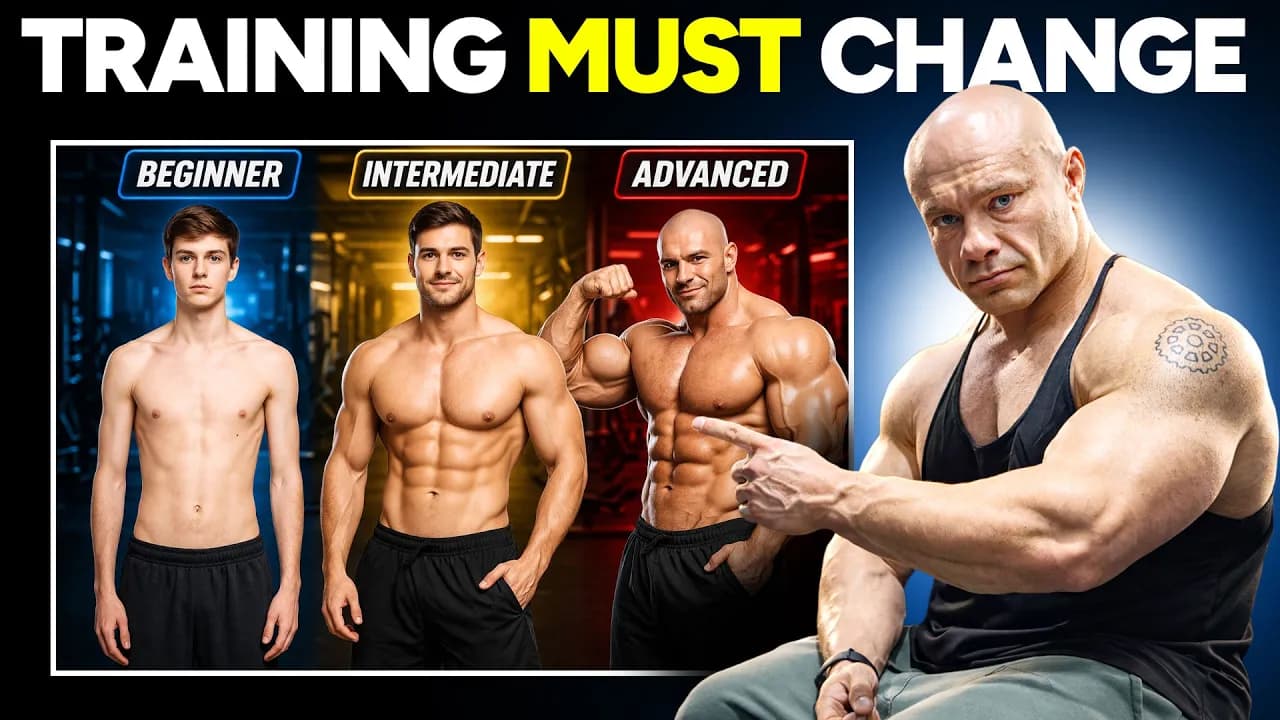
Training age refers to how many years you have been working hard in the gym. New, intermediate, and advanced lifters have different limitations and needs, as they have spent different amounts of time in the gym. If you're a beginner and your favorite influencer is advanced, imitating them is like stepping into the cockpit of an F-22 advanced stealth fighter plane on your second day of learning to fly a Cessna commercial jet. It feels great, but you'll probably crash and die because you're not qualified to drive that thing. If you've been following your favorite influencer for 5 years and their specialty is beginner programs, which many fitness influencers excel at, you may need to change your program to something that the influencer may not be promoting as much, because they promote beginner programs. On the other hand, if you are an advanced user and you are curious about a program from a young but emerging influencer with good genetics, understand that you probably know a lot more about your body than they do and their programs may not be advanced enough for you, as they are only an intermediate level, even though they are an influential figure online and look amazing.
How to adapt: For beginners, compound basics will mostly involve doing sets of five to ten reps, which are primarily focused on learning and demonstrating excellent technique. Intermediates should focus on sets of five to twenty reps in compounds and isolations, emphasizing excellent technique and maximum effort on each set, which will take them very close to failure. Advanced lifters need a full range of sets of five to thirty reps and should do the lifts that work best for them. It has to be based on the mind-muscle connection, meaning they have to feel a connection to know what the best way is. It's great to find inspiration, and you can get it from anyone, even your favorite fitness influencer. But its application to one's own needs is unrivaled.
Biological Age
Biological age is how old you are in human years. Just your age. When you enter your 30s, and especially your 40s and beyond, your flexibility, your ability to recover, your risk of injury, and the compromises you have to make in life due to spending 18 hours a week in the gym, all start to take on a different form. And as a result, you have to compromise when it comes to taking risks with more weight in the gym.
How to adapt: If you are older and you follow young lifters, you might consider taking their advice, but reduce the weight and increase the number of reps to five. They're doing sets of eight reps, you're doing sets of 13. Take breaks at the bottom of the lift and use much better techniques. When you see young people doing whatever they want in a hurry, think, "Hey, enjoy life. You're 22, whatever happens. You'll tear your chest muscles, it'll heal, no problem." When you see adults doing whatever they want in a hurry, think, "What are you doing, dude?" If you follow the older lifters, and you're younger, consider doing more basic lifts, fewer pre-exhaust exercises, fewer activation and warm-up drills, fewer high reps and more low reps, and trying to set personal records (PRs) with lighter weights between 5 and 10 and 10 to 20 reps. Now, "I can connect well with this pec deck at home, especially if I lower the weight for 6 seconds on the eccentric." This is nonsense from an old man who is too injured to train in the best way. Always do this, because I'm old. People ask why I don't train as hard and with heavier weights as I used to. The answer is, I don't want to get hurt. And I am 42 years old. That's the whole answer.
Lifestyle
Lifestyle includes how much you work, how much family pressure you have, how much you sleep, and how consistent your nutrition is. Sometimes influencers are actually professional athletes. So, to survive and benefit from their programs, you have to quit your day job and sleep 9 hours a night, and do all the things you wouldn't do. Sometimes influencers are essentially characterless criminals. No. No. You don't know any of them. Not one. And I include myself in this. And they confuse three nights of sleep a week with a party. And that was a relaxing week. Typically, they are at the club five nights a week. To recover like them, you have to be something like a war wound. So, if they plan on low volume and say, "Yeah, man, recovery is really important," but you know they party like animals, then you probably won't have a problem even if you double the workload.
How to adapt: If your plans to copy or simply take inspiration from fitness influencers seem ambitious, start simple. Start simple. Set low. If the plan is easy, do more. Isn't that right? So, if the plan is simple and you think, I'm recovering really well, but he says to only do four sets. For example, you could probably set five, then six, and then seven. And do your best to eat, reduce stress, and sleep. Your gain will be yours. You can't get gains like Sam Sulek. Those are his gains. Give your best. If you want, let the RP Hypertrophy app automatically adjust its workout plan based on your actual session-to-session response. And hopefully, we'll see you next time, intact and with more jack.
Keep Renaissance Periodization in your library
Save the videos and channels worth coming back to, and find them again in one place.