The Real Reason Michael Burry Shorted Micron Stock
In a Nutshell
Michael Burry shorted Micron at $151.87 because its 200%+ rally and stretched technicals signal a likely 30% AI-driven correction, citing terrible capital returns and cyclical destruction in three of every four quarters. Micron's fundamentals show $50B net income and a 21.8 P/E, with analysts targeting $1,500, but Burry warns FOMO buying around sold-out HBM masks structural weakness. Shorting carries unlimited risk, and any sustained break below QQQ or S&P support would validate the thesis and create better long entries in quality semis afterward.
These notes were generated by AI and may contain inaccuracies.
Michael Burry is shorting Micron Technologies. This update focuses on Burry's position rather than a general market update. Burry is famous for The Big Short, where he shorted the housing bubble and made his clients hundreds of millions of dollars. He has called out overbought and overvalued stocks in the past, but has been wrong many times. No one has a 100% success rate, and just because Burry shorts a stock does not mean others should follow.
Michael Burry no longer runs a public firm and does not have to disclose positions to the SEC. The short position against Micron was shared in his Substack post dated July 2nd. Burry stated that the puts seemed expensive, so he shorted the stock directly and would add puts if volatility eases. His disclosed entry price is $151.87 per share. The position does not appear aggressive, and he is open to adding more if the direction becomes favorable. The size of the short was not disclosed.
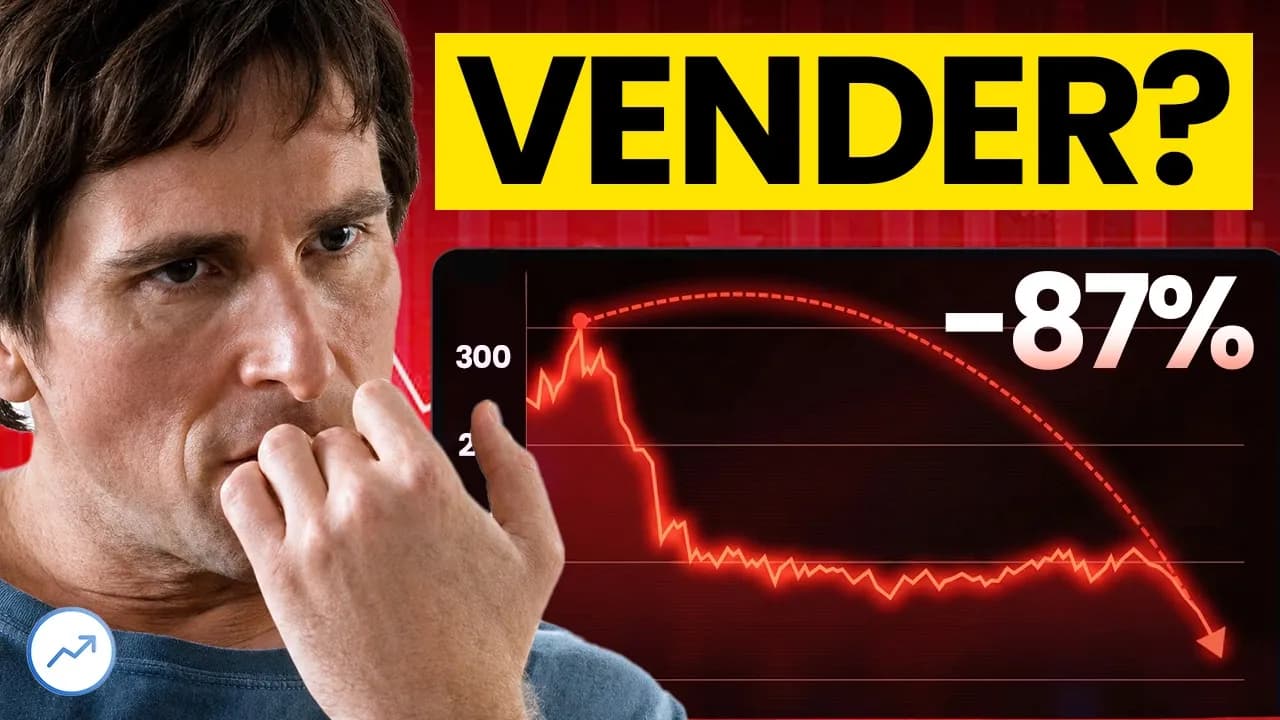
Micron is up over 200% in 2026 alone, moving from lows of $290 per share to highs of $1,255, with extended hours highs reaching $1,330. It ranks as one of the best performing stocks of 2026. Year-to-date through July 2nd, Micron shares are up 242% with a market cap of nearly $1.17 trillion.
According to InvestingPro software and fair value analysis, Micron shows 6.5% downside based on current fundamentals. The P/E ratio is 21.8 times earnings, which is not considered very expensive relative to competition. The forward P/E is even lower. The company generates $50 billion in net income and holds a market cap of $1.1 trillion. Despite strong fundamentals and price performance, Burry is shorting the stock.
Burry argues that AI-related stocks may be due for a 30% correction. His thesis relies on historical cycles and stretched technicals. Micron stock is more extended above the 200-day moving average than at any point since 1984, including during the dot-com peak. Micron defines cyclical stocks like no other, with 34 drawdowns of more than 30% over 42 years. The median return on invested capital is 4% and return on equity is 7%, which Burry called frankly terrible. One quarter in every three, Micron destroys capital, with free cash flow negative 48% of the time.
Burry views the rally as reflecting fear of missing out (FOMO) buying and greater fool dynamics around high bandwidth memory (HBM) being sold out through 2026. The timing coincides with President Trump praising Micron for a $250 million commitment to Trump accounts launching the following day. Co-founder Sanjay Mehrotra highlighted more than $200 billion in US memory investment.
Micron posted Q3 revenue of $41.46 billion, up 346% year-over-year. Guided Q4 revenue is approximately $50 billion per its 8-K filing. Analysts carry an average price target of nearly $1,500 with 30 buy ratings and 9 strong buy ratings. The bull case remains formidable given the strategic value of memory in the AI era.
Burry has been early to cycle calls before. Short sellers face unlimited loss risk since there is no theoretical cap on how high a stock can rise. Micron previously moved from under $100 per share in 2004-2005 to $1,300. Structurally growing themes can extend for long periods before a thesis pays off. The market can stay irrational longer than one can stay solvent. When shorting, shares are borrowed, creating risk especially when using margin.
Investors should monitor HBM pricing and hyperscale capex commentary. Micron's Q4 earnings report, targeting $50 billion in revenue and $1 billion in profit, could either extend the AI memory thesis or expose the cyclicality Burry highlights. Cautious position sizing is reasonable given Micron's beta of 2.17. Burry's disclosure could reshape sentiment among traders tracking his positioning, though his thesis remains opinion rather than certainty. The next earnings cycle across the chip supply chain may determine whether the contrarian bet ages well or arrives too soon.
Semiconductor stocks are the best performing sector in 2026. Taking a heavy short position now is considered risky. Markets are in early stages of a possible correction. On the QQQ daily chart, support is still being tested with no break of support and no breakup structure. Markets remain bullish for now. A break of support on QQQ or the S&P 500 daily chart, which has not occurred since April, would signal a change in sentiment. Semiconductors may be overbought on shorter timeframes and due for a pullback.
Burry appears to be aiming for a 30% retracement. His average entry of $151.87 is not viewed as particularly attractive given the stock traded at $1,200 recently. A 30% retracement from highs would target $860. This level has already been tested as support. If overall markets break support and form lower lows, shorting companies like Micron for a short period becomes more comfortable due to technical overbought conditions.
Beginners who are poor at managing risk should not short. Staying light or in cash allows waiting for deals after a sell-off. The most money is made going long, especially in fundamentally sound companies. After a potential sell-off, buying the dip on good semiconductor companies is preferable. Intel is not favored due to consistent annual losses. Micron and other semiconductor names are viewed positively for long-term investment, including for children, given the ongoing AI boom.
Much of the recent rally stems from Trump's tweets and the Iran deal, pushing markets to elevated levels that may not be sustainable due to inflation and labor market concerns. The Federal Reserve may now be expected to raise interest rates instead of cutting them, creating a more bearish environment. The biggest indicator for a short opportunity would be an active break of support on QQQ or the S&P 500 daily charts.
When overall markets sell off, the most overvalued stocks correct the hardest. A 30% retracement could present itself in that environment. After closing a small short on Micron, buying the dip on quality semiconductor companies becomes attractive. Both the bear case and bull case present opportunities, and only time will determine outcomes.
A free risk calculator is available on the LPP homepage via the second link in the description. It calculates entry, stop-loss, profit target, number of shares, and displays risk-to-reward ratio before taking trades. Trump's accounts go live the following day. A Heritage Gap page at heritagegap.com educates parents on applying for the $1,000 investment accounts available for children born after 2025 through 2028. The goal is to help 1,000 parents start investing through a free series of educational videos.
Keep Ricky Gutierrez in your library
Save the videos and channels worth coming back to, and find them again in one place.