The rise of the professional vibe coder (a new AI-era job)
These notes were generated by AI and may contain inaccuracies.
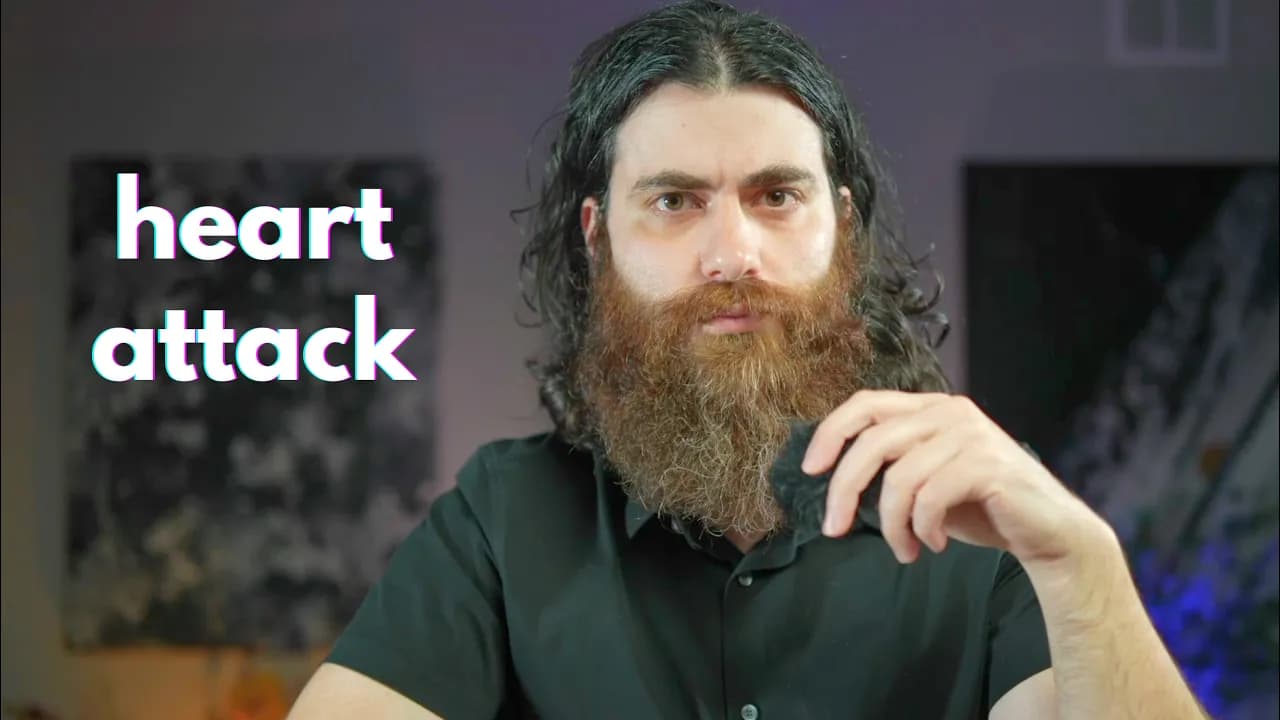
Lazar Yavanovich is the first official vibe coding engineer at Lovable, at the top 0.1% elite level of vibe coding. It's a dream job. Vibe coding became a job by building in public; you don't need a company to hire you—you can hire yourself as a professional vibe coder first. You've never coded and don't want to look at the code. Coding is going to be like calligraphy: "Oh my god, you wrote that code. That's so amazing." It's going to be so rare it's going to become an art. The Venn diagrams of engineer, designer, PM used to be very separate; now they're converging. AI, regardless of your background, is an amplifier. If you don't know what you're doing, you're just going to produce garbage faster. An emerging core skill is learning clarity in the ask of the AI.
I like to use the Aladdin and the genie analogy. You rub the lamp, a genie comes out. I'll grant you three wishes. The first wish is I want to be taller. Genie makes me 13 ft tall because I was not specific.
Optimizing 100% of time today on good judgment, clarity, quality, taste.
Guest: Lazar Yavanovich, professional vibe coder at Lovable. He gets paid to vibe code all day and build internal and external products. This conversation provides a glimpse into where tech roles are heading, especially product management, engineering, and design. Advice on getting the most out of AI tools with unique frameworks to level up success.
Newsletter Perks: Insider subscribers get over 20 products free for a year: Lovable, Replit, Bold, Gamma, Nadan, Linear, Devon, Post Talk, Superhuman, Descript, Whisper Flow, Perplexity, Warp, Granola, Magic Patterns, Ray, Catch, Chap, Your De Mo, Stripe Atlas. Visit lennisnewsletter.com/product-pass.
Sponsor: Strella (strea.io/lenny): AI customer research platform. Runs and analyzes in-depth interviews automatically. AI moderator asks follow-ups, surfaces patterns across hundreds of conversations in hours. Used by Amazon, Duolingo for Figma prototype testing, concept validation, customer journey research.
Sponsor: Samsara (samsara.com/lenny): Builds for physical world (first responders, truck drivers, construction). Solves hardware/software/edge AI problems. AI reasons about intent (e.g., abrupt braking: distracted or heroic?). Ground LLMs in real-world telemetry, solve edge constraints at scale.
Lazar was brought on by Elena Verna (head of growth at Lovable). Uses tools like Lovable to push projects to production for internal/external use: marketing/sales templates, internal tools with integrations. Covers wide surface area across departments; flexible role complements ideas people have but can't build due to lack of skills/bandwidth. Ensures ideas come to life fast with quality and security.
Builds both internal tools and public products. Examples:
- Shopify integration templates (all/most remixing templates built by him).
- Merch store to prove Lovable + Shopify works (including shirt sold online).
- Internal: feature adoption matrix (custom stack, no off-the-shelf solution).
At stage where building custom is faster than setting up enterprise accounts (1-2 hours). Prefers build vs buy: in the build boat.
Reports closer to rover helping everywhere: started in growth, now GTM, enterprise, community tools. Thrives on rough concepts/ideas to bring to life ASAP. Fastest growing startup in history—every department needs this.
No technical background: never wrote a single line of code (just console logs). Leans on AI assistance. Advantage of non-technical background: Don't know what's "not supposed to be possible," so build it anyway.
Examples:
- Community wished for Chrome extensions; non-technical prompted Lovable to build one (possible despite React/different stack explanations).
- Built desktop applications on Lovable.
- Community manager prompted video generation inside Lovable (now a feature).
Mindset: Positively delusional—everything possible until proven wrong.
Traps for non-technical:
- Getting blocked/not knowing how to solve.
- Building teetering slop that won't scale (lacking system architecture knowledge).
Solutions:
- Be self-aware and delusional but know need to improve.
- Coding not the problem; clarity is.
- AI output faster than human; spend 80% time planning/chatting, 20% executing.
- Optimize for right speed (most optimize wrong).
- Treat tools as technical co-founders/educators: learn while doing, read agent output (not code). Trust LLM syntax; focus on agent reasoning.
LLM Limitations:
- Machine: Context memory window (Aladdin/genie: 3 wishes at a time). ~100,000 tokens (reading, browsing, thinking, executing).
- Human: Vague asks ("taller" → 13ft tall, dysfunctional). AI lacks human context/experience; be specific with references/context.
Control human side: provide specificity to combat vagueness.
Clarity = understanding tasteful/good enough vs world-class/magical. Develop via exposure time (to content/people/relationships).
Development cycle:
- Can build (wow).
- Can build fast.
- Should I build this? (Solve for judgment post-"how").
Core skill now: Not coding (don't learn if you haven't). Rewarded for better judgment, not faster output. Comes from exposure + building (muscle).
No coding needed: Don't look at code; watch agent output. Invest in clarity (what to build) + taste/judgment.
Exposure examples: Great UX, onboarding flows, websites.
Mindset shift: Vague idea → first project version.
Process (iterative projects):
- Brain dump prompt (voice dictate in Lovable, don't wait to finish).
- New project: clearer (features/pages), add references (Maven, Dribbble screenshots/animations—tools accept files).
- Even clearer: Use existing templates (expose AI to quality).
- Best for pixel-perfect: Export code snippets (e.g., 21st.dev, libraries). Tools communicate best in code (English #1 programming language, but code > natural language).
Provide exact design and functionality via code snippets as the third project in parallel builds. After three projects, achieve high clarity that surpasses starting with an empty paper or casual ChatGPT chat without action.
Taking action is cheap and free—tools have free plans, starting multiple projects incurs no extra cost except builder credits. Gain 3-6 concepts to compare, building clarity progressively.
Solves AI slop by generating 4-5 design options, saving massive credits and dollars long-term. Upfront cost is minor; better clarity from start saves days and hundreds of credits/dollars.
If you really want to finish this project, you're actually saving hundreds of credits and maybe even hundreds of dollars, not to mention the amount of days simply because you started from a point of better clarity and better refinement process.
Build five projects in parallel:
- Brain dump general idea (use Whisper Flow or built-in mic).
- Type out detailed prompt.
- Find mock design on Mobbin or Dribbble.
- Attach code template (HTML/CSS zip or anything similar).
Wins: Clarifies idea as builds reveal mismatches; pick best direction early, avoiding lock-in and token waste on fixes.
Just run five different approaches at it to start... as you're getting started with a project.
Saves money by getting direction right initially, not fixing perpetually.
Framework is eye-opener: simple yet unintuitive, from non-technical background. Start multiple projects while waiting—build 5-6 simultaneously, switching tabs.
Manage context switching productively despite limited token windows. LLMs forget early messages after 10-15-20-40 exchanges as they optimize for speed.
Solution: Provide perpetual reference/context like to an engineer.
After parallel builds, pick winner (obvious after experience). Generate PRDs (Project Requirements Documents) as sources of truth:
- Master plan: Compass—what we're building (treat tool like human).
- Implementation plan: Sequence/how to build.
- Design guidelines: Look/feel (define for non-emotionally intelligent system).
- User journey: Steps post-registration, etc.
Spend a day planning/documentation after nailing design.
Create plan.md or tasks.md (Markdown, AI prefers it): Tasks/subtasks to finish line.
rules.md or agent.md (in tools like Cursor, Claude Code; Lovable project settings): Define behavior, focus—e.g., read all PRDs first, check tasks.md for next task, execute, report what done + test instructions.
Prompt: "Proceed with next task." No more context needed—outsourced/delegated. Update docs dynamically to shift token window.
Build 5 projects simultaneously without losing productivity. Manually now; agents will automate soon.
Optimize for judgment, clarity, quality, taste, copy, fonts (60%+ of output quality).
I'm optimizing 100% of my time today on good judgment, clarity, quality, taste, good copy, good fonts... people don't talk about fonts at all that work with AI. They're like 60% in my mind, maybe even more in how your output's going to look.
Start projects, try bunch, pick direction. Spend day planning with AI (Lovable supports plans/rules/MD files). Then execute one task at a time to keep context window small.
Without docs/reference, breaks lead to investigation consuming tokens (e.g., 60-70 Edge functions: reads all, uses 80% tokens on reading, 20% on fixing). Agents lie/obediently claim fixed.
Your fault for no clarity/context—digs deeper hole.
Future: AI more honest. Trusting false fixes leads to frustration; AI apologizes, wastes tokens on anxiety reduction.
The ceiling on the AI isn't the model intelligence. It's what the model sees before it acts.
Vibe for prototyping/exploration; use docs for production to allocate scarce tokens right.
Reference files precisely—don't assume figuring out. Wastes tokens; rushed end-solutions pick easy fixes.
Handhold: Find file, reference it—gets real fixes.
Read agent output religiously (don't read code).
MVP files (build over day):
Master Plan.md
10,000-ft overview: Why building, who for, feel. Reference other PRDs (e.g., design params in design guidelines.md).
Implementation Plan
High-level order (e.g., backend/tables first, then auth, API). Like ideas guy to technical co-founder roadmap.
Design Guidelines
Look/feel, some CSS elements for steering (AI over-creative).
User Journeys
Navigation/features high-level.
Tasks.md
Nitty-gritty tasks/subtasks from above. All prior files serve this.
Use ChatGPT custom GPTs: "Lovable base prompt generator" or "Lovable PRD generator" for outputs.
We're product managers on steroids—leverage AI for writing; compensated for judgment/taste. Build to improve taste.
Test one, two, three, four, five projects with these tools to achieve clarity through doing, not just reading.
OpenAI, Cursor, Perplexity, Vercel, Plaid, and hundreds of other winning companies are powered by Work OS. For enterprise software, integrate single sign-on, SCIM, RBAC, audit logs via drop-in APIs on a modern developer platform for B2B SaaS. Ideal for seed-stage startups landing first enterprise customers or unicorns expanding globally—like Stripe for enterprise features. Visit workos.com or use their Slack support with real engineers. Build with delightful APIs, comprehensive docs, and smooth developer experience.
Planning takes a few hours or a day, then AI builds what would take weeks or months—absurd ROI. This demonstrates professional vibe coding: not just typing commands, but building great, needle-moving, problem-solving, scalable products that last. This is how to do it as a real job.
Prototyping has huge value, especially where production pushes are blocked (healthcare, finance, regulations). Motto for 2025: demo don't memo—build prototypes in 30 minutes instead of writing documents or holding meetings to convey vision to engineers. Example: Built enterprise-grade prototype in four hours using Lovable (January last year); engineers replicated it in production six to seven months later. Would have taken a week or two just to document. Lovable today (January 2026) is ages ahead.
At least half of S&P 500 companies have people using Lovable. Enterprise companies on enterprise plans in ride-sharing, telecommunications, healthcare, finance build meaningful projects. Feedback: Can't always push to prod, but marketers no longer wait for engineers; go-to-market, sales, HR build internal tools for expenses, employee onboarding.
Share simple templates of MD files post-recording. Use ChatGPT: "Lovable GPT Lovable PRD generator" (authored by speaker). Brain dump; it asks questions for clarity, produces four files to upload to Lovable or other tools. Trained to think like the speaker.
From first principles, unlearning building as PM, engineer, designer; AI fills gaps—crafts PRDs, designs. Triad of product manager, engineering, design still necessary; AI + individual creates it. PMs win in AI era: clarify what to build, requirements, success. Design value rising: taste, judgment for emotional appeal.
AI amplifies: garbage in produces garbage faster. Old world: good enough sufficed. Now, everyone produces good enough with AI. Gap between good enough and world-class is massive—optimize for world-class and magic.
PMs bring clarity, win today. Next: designers, as AI lacks emotional decisions; design is emotion. Biggest upskill at Lovable: working with designers Felix, Nad, Abby—learning world-class standards. Example: Stole design from Figma; simple gradient was 50 layers, 50 colors with opacity gradients.
Expose to exquisite designs. Follow Felix from Lovable's newsletter. Learn design styles (e.g., Boho, glassmorphism)—built app ui-style.lovable.app with 18 styles and prompts to replicate.
Elite engineering needed more than ever. Everyone building means need for maintaining, scaling codebases—different skills from building. Infrastructure suffers (e.g., Cloudflare outages, Lovable influx). Elite engineers fix, build hosting, security, email, connectors for billions of builders.
For 18-year-old: become plumber or electrician—new millionaires in trades, not CS degrees. Good engineers understanding future remain scarce.
Application layer: Everyone becomes rapid engineer/vibe coder. Elite engineers admit AI writes all code. Coding like calligraphy—rare art, commoditized. Roles (engineer, designer, PM) converge via LLMs + judgment.
No plan avoids problems. 4x4 framework: Four ways to debug, attempt each once.
-
Agent self-fix: In Lovable, agent labels mistake orange, "try to fix" button—fixes small issues.
-
Awareness via console logs: If persists or unaware (e.g., third-party integration, missing context), open preview, run function, right-click console log. Prompt: Add console logs to monitor steps. Rerun, copy logs to chat—99% fixes.
-
External diagnostics:
- Export to GitHub, import to CodeX (OpenAI) for review—diagnostic only, not changes (don't know agent well).
- Or RepoMix: Compress codebase to single file, upload to Claude/ChatGPT with logs/problem.
-
Revert and reprompt: Your fault (bad prompt). Revert via version control (Lovable, Cursor, etc.), rethink prompt, walk away, retry—often fixes snags/syntax errors.
Post-fix: Ask agent, "I did four things to fix. How to prompt better next time?" Great answers prevent recurrence. 100% our fault—bad token allocation, no file reference, wrong phrasing. Use chat mode to craft prompts: brain dump, "Help draft better prompt."
Record learnings in rules.md—AI reads every time, self-prompts better, eliminates human error.
Sequence when stuck:
- Ask tool to try fix.
- Add debugging console logs, analyze output.
- Use CodeX on code + logs (elite for gnarly bugs).
- Learning: Ask agent how to prompt better; add to rules.md for AI's brain.
Ben Tossell, now at a factory, shared recently about learning how coding and systems work by watching agent output. He transitioned from no-code tools to coding. This connects to Michael Terrell, CEO of Cursor, who envisioned Cursor as the layer after code where people no longer worry about code. A year ago, this seemed distant, but now it's the agent conversation: what it's thinking and your response in English—not even pseudocode. The layer over code is the agent's thinking and your conversation with it.
Good judgment comes from learning how tools work and knowing what's possible. There's an advantage in not knowing limits, but you can't be oblivious to facts.
When OpenAI released native image generation in ChatGPT, the speaker tried building a lovable app wrapper without an API, spending a week brute-forcing it. A week later, OpenAI released the API, and the app was built in 30 seconds. Lesson: learn what's possible through agent communication.
Tools like Lovable are agentic: they write code, browse the web, read files, and reason. Agents inform when something is undoable due to specific reasons, providing learning opportunities. Use chat mode for planning and learning to develop clarity and judgment, not just coding skills.
Over time, tools automate manual workflows. VIP coding involved files and workflows that Cursor and Lovable now handle natively. A year ago, such capabilities would blow minds. The speaker built a successful course on Starter Story teaching workarounds; now Lovable addresses 99% natively. A March 7-day "Learn How to Vibe Code with Lovable" YouTube series is obsolete—all issues are now solved natively.
Steam engines took 200 years to develop; once cars hit roads, 90% of US horse population was eradicated in 20 years. A Clogged Code employee tweeted: hired for technical job, obsolete in six months. Humans get less transition time than horses—roles must evolve fast.
Evolution outsources hated tasks (meetings, notes, spreadsheets), rewarding clarity, judgment, thinking. We'll be paid to think longer as building becomes instant. Poor clarity with powerful tools leads to bad outputs. Speaker excels at exploratory prototyping, not elite engineering paths.
Focus on emotional intelligence, understanding human nature, real-life dynamics. Humans will crave authentic experiences amid fake AI content (images, posts, profiles, videos). Human-to-human interactions will scale up.
Avoid deterministic tasks like math (AI excels: X input = Y output). Excel in human dynamics.
Specific skills:
- Great design (images, fonts, copy).
- Copywriting: Humans detect AI copy in 3 seconds after two years of AI; people avoid AI output for raw human experience.
Future roles: human-first engineers, human designers. Karpathy coined vibe coding in early 2025; speaker did it from July 2024, teaching it for 3-4 months without a name.
AI replaces translators (good at language translation) but not comedians (AI jokes are awful, lacks humor understanding). Replaces most journalists (good research, copy) but amplifies elite writers (train AI to write 7 books/year vs. 1). Average writers are at risk; no comedians replaced.
Find industry analogies: writing jokes (safe), translating (endangered).
Anthropic hired National Lampoon comedy writers for model training. Speaker predicts confidently AI won't master comedy.
I'll be wrong on 95% of the things I said today, 3 months from now. That is the only thing I can say very very confidently.
Speaker's nonlinear path: blue-collar jobs (Subway), forestry engineer (not software), waiting tables (human skills), startups (community management, social media). Distribution matters for attention scarcity.
Vibe coding became a job via building in public: YouTube channel sharing failures/projects, LinkedIn for long-form (prefers over X). Give away secrets immediately.
Chat with Elena: selected for building in public. Participate in hackathons to connect with builders.
Lovable is hiring across roles—apply directly. Secret: hires from Lovable apps (not resumes) on lovable.app domain; always opened. DM with Lovable app outlining collaboration.
Develop good judgment, understanding vibe coding dynamics. Companies hire vibe coders pre-Lovable; speaker is first official at Lovable. One company has 3 full-time vibe coders migrating CRM/CMS to Lovable. S&P 500 companies list Lovable skills in job descriptions.
Hire yourself first: speaker was professional vibe coder before hiring. Do the job anyway.
Lovable is an idea/mission enabling building over consuming—human nature. Dump idea, get output others use. Speaker's lifelong dream (first computer at 6); gave up after failed technical co-founders. At 36, feels like that kid again.
Try it: fear turns to excitement. Only fear doing nothing—leap is small, just speak and ship.
Tech stack (HTML, React, backend/frontend) doesn't matter—end user wants stellar experience. Anyone can do good enough; produce magic to stand out.
Start from good enough, level up via exposure time:
- Read agent output to learn thinking/possibilities.
- Follow designers on X, tool creators (e.g., one publishes 40-50 min daily design videos for prompting insights).
Set more time for learning than building—you can code garbage or magic fast; input matters.
LinkedIn best for contact/responsiveness. Re-engaging YouTube for Lovable/vibe coding tips.
Help by sharing first-time Lovable experiences: hurdles, breaks—reduces battles to empower best work.
Join Lovable team—hiring across roles. Energy shows working with top minds; not #1 by accident.
Man, I think I can solve it, come join us. Help us build and shape the future of software development.
Incredible. And what's the site? I imagine it's just a link on Lovable's website to find the open roles. We'll link folks there.
Yeah.
Incredible. Lazar, thank you so much for being here.
I appreciate the opportunity.
Bye, everyone. Thank you so much for listening. If you found this valuable, you can subscribe to the show on Apple Podcasts, Spotify, or your favorite podcast app. Also, please consider giving us a rating or leaving a review as that really helps other listeners find the podcast. You can find all past episodes or learn more about the show at lennyspodcast.com. See you in the next episode.
Keep Lenny's Podcast in your library
Save the videos and channels worth coming back to, and find them again in one place.