These Stocks Are Going Down
In a Nutshell
The semiconductor sell-off and strong jobs report are pressuring AI stocks as investors price in higher rates and question massive capex spending. Multiple analysts argue AI models are commoditizing with no moats or pricing power, evidenced by Broadcom's missed expectations and hyperscalers potentially raising equity to fund infrastructure. Despite these concerns, commodity businesses like AWS, Spotify, and Texas Roadhouse demonstrate that operational advantages and packaging can still generate strong returns even without product differentiation.
These notes were generated by AI and may contain inaccuracies.
Last week the market experienced a rapid sell-off in the semiconductor ETF that fell over 10% in a day and a half. South Korea's Kospi index cratered 8% and tripped multiple circuit breakers. Tom Lee described the event as sobering because expectations are higher.
Oracle is reporting earnings this week. The company is one of the key sellers of cloud infrastructure and is meaningful to the AI story. Adobe will also be reporting earnings. There is rumored news that Meta is weighing a big equity raise to finance AI infrastructure. A critical inflation report is also coming out this week.
Gary Marcus posted a viral tweet viewed over 1.1 million times arguing that everybody is building essentially the same technical solution with the same data, creating no moat. Steve Eisman reiterated that AI spend is ultimately a commodity with no moats, noting people switch constantly between models and there is no pricing power despite hundreds of billions or trillions in investment.
Broadcom reported earnings without the expected beat and raise. The company reiterated previous guidance rather than raising it, representing a deceleration from analyst expectations. Broadcom is down 17% over the past one-week period.
The US economy added 172,000 jobs in May, more than double economist forecasts, with upward revisions to the previous two months. The job market is booming rather than slowing. Markets are now pricing in rate hikes instead of cuts, creating a higher rate environment that puts pressure on high-growth AI companies.
Some analysts believe investors are pulling capital out of other companies to free up funds for the SpaceX IPO, which is valued at $75 billion. Sam Altman admitted AI costs are becoming a huge issue as overspending becomes a meme. The Uber CEO stated the company blew through its annual AI budget in a single quarter and is now cutting back on AI spend and limiting developer spending on AI tokens.
Oracle needs to not only post great headline numbers but must raise guidance. If Oracle only reiterates guidance without raising it, that would represent another company showing deceleration from analyst expectations. Adobe will post great numbers but needs to show AI is not disrupting the business by demonstrating organic volume growth of products and seats. Adobe trades at a 10 forward PE ratio and 10% free cash flow yield.
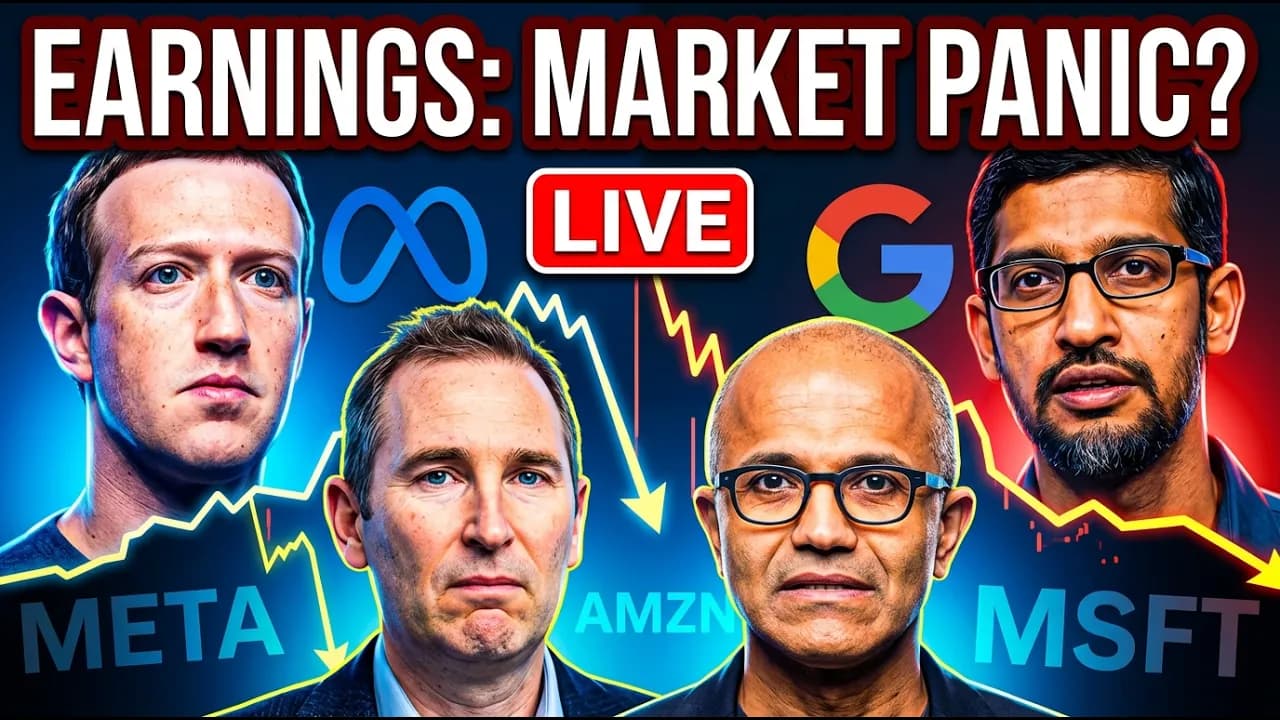
Portfolio positions include Meta, Google, and Microsoft, all spending hundreds of billions in capex. The Story Fund holds Amazon as another major AI capex spender. These four companies represent the majority of AI spend funding the big capex buildout.
Steve Eisman noted that when companies move from $90 billion to $180 billion in spending, they must raise capital including stock. He argues the tech sector is transforming from asset-light to asset-intensive businesses. Eisman believes AI models are commoditized with no moats and no pricing power despite massive spending.
Gary Marcus argued that AI is treated like a winner-take-all competition but companies are building the same solution with the same data, creating no moat. Without a moat, nobody can charge monopoly prices, leading to commodity pricing and overpayment relative to modest profits in competitive markets.
There are over 100 different AI models from various companies with performance benchmarks leapfrogging each other monthly. One month OpenAI may have the best model, the next Grok, then Google's Gemini. AI models are becoming commoditized as acknowledged.
AWS S3 storage grew 30%+ year-over-year to over $60 billion even before AI in 2022, with 30% operating margins. Storage itself is a commodity, but AWS packaged it with global availability, permissions, versioning, lifecycle policies, integration, analytics, security, compliance, developer trust, and thousands of tools for data manipulation.
Spotify resells licensed music without owning the product. The same content is available on YouTube Premium, Apple Music, and other services. Despite selling a commodity product, Spotify generated over $3 billion in net income in the past trailing 12 months with rapidly growing free cash flow. The service advantages include distribution, algorithms, rankings, social networking, and user interface.
Netflix creates some original content but much value comes from licensing other people's shows. The platform provides better discovery, recommendations, user profiles, and content displays. People pay for reliable entertainment and fresh content discovery rather than exclusivity.
Texas Roadhouse has return on invested capital of 17.7%, consistently hovering around 17-20%. For a commodity business, typical ROIC ranges from 8-12%. The company sells steak, a commodity product with no barriers to entry, but earns double commodity returns through consistency, experience, and operational excellence that competitors struggle to replicate.
Companies like Costco operate with profit margins below 3%, operating margins below 4%, and gross margins of 12%, yet trade at 50 trailing PE and 45 forward PE ratios. Costco focuses on topline revenue growth through expensive warehouse expansion rather than margins. Being capex heavy and lower margin does not automatically mean lower quality or inability to generate high returns on capital.
Meta is rumored to be weighing a big equity raise similar to Google's rumored plan. Google's forward PE is around 30 while Meta's is 19. To raise $80 billion, Google would dilute approximately 1.8% while Meta would need to dilute 5-6%. Dilution at Meta's lower valuation is substantially more expensive. Meta investors are also more concerned about return on capital than Google investors, potentially leading to a more negative stock price reaction.
Sam Bankman-Fried, serving a 25-year prison sentence after 2024 conviction for fraud and money laundering, has filed for a pardon from President Trump. Trump has pardoned hundreds of people in his second term, including Trevor Milton, founder of Nikola, who was convicted of defrauding investors. Bankman-Fried believes he may have a chance at a pardon.
Sam Bankman-Fried defrauded investors by secretly moving customer deposits and diverting funds to his own
Sam Bankman-Fried defrauded investors by secretly moving customer deposits and diverting funds to his own trading firm. He used these funds to trade on different venture capital ideas, real estate, and loans to executives. He also made political donations with the diverted funds. All of these activities were fraudulent because Sam Bankman-Fried lied about the ways he was using other people's money, which is illegal and typically results in jail time.
Sam Bankman-Fried invested $500 million into Anthropic, acquiring 7.84% of the company with the illegally obtained funds. This investment is currently valued at upwards of $100 billion, representing one of the greatest venture investments in history that turned $500 million into $70-100 billion. However, he made this investment with the wrong money and at the wrong time.
The crypto crash occurred before the full value of Anthropic was realized or became obvious. If the crypto crash had happened only a few months later, FTX would never have become insolvent and would have been able to pay every single customer using their venture capital investments alone, including any gains. The timing proved most unfortunate for Sam Bankman-Fried.
Sam Bankman-Fried is considered one of the unluckiest people in prison today because FTX represents one of the largest frauds in history where all victims are expected to recover not only their entire investment but also 18-20% interest. This outcome is unique - even in massive fraud cases like Bernie Madoff's scheme, victims might recover 90% or more of their money, but rarely receive 100% back, and it is even rarer to receive beyond 100% in fraudulent cases.
Sam Bankman-Fried returned investors' money plus interest while facing 25 years in prison, making him the fail of the week.
Keep Joseph Carlson in your library
Save the videos and channels worth coming back to, and find them again in one place.