Trump Just Secretly Triggered The Next Great Wealth Transfer
In a Nutshell
The video debunks the "Great Meltup" claim that endless money printing will make stocks rise forever and never crash. High US debt will likely be managed through gradual financial repression—inflation slightly above interest rates—rather than hyperinflation, with assets rising in nominal terms but delivering lower real returns. The core warning is that record valuations still carry major downside risk, and investors should stay diversified with cash reserves rather than assume perpetual gains.
These notes were generated by AI and may contain inaccuracies.
The stock market has set 53 all-time record highs since the election. A viral Reddit thread argues that stocks will never go down again, claiming this is no longer a meme but a law like gravity in reverse. The argument rests on the claim that the US owes $40 trillion in debt with interest payments about to exceed GDP, forcing the government to print enough money to cover interest payments alone.
This money printing will cause hyperinflation, but asset owners will benefit because stocks like Palantir or Tesla will inflate proportionally with the currency. This explains why any market crash instantly recovers within half a trading day. The theory suggests the stock market could literally not go down, creating the largest wealth transfer in history.
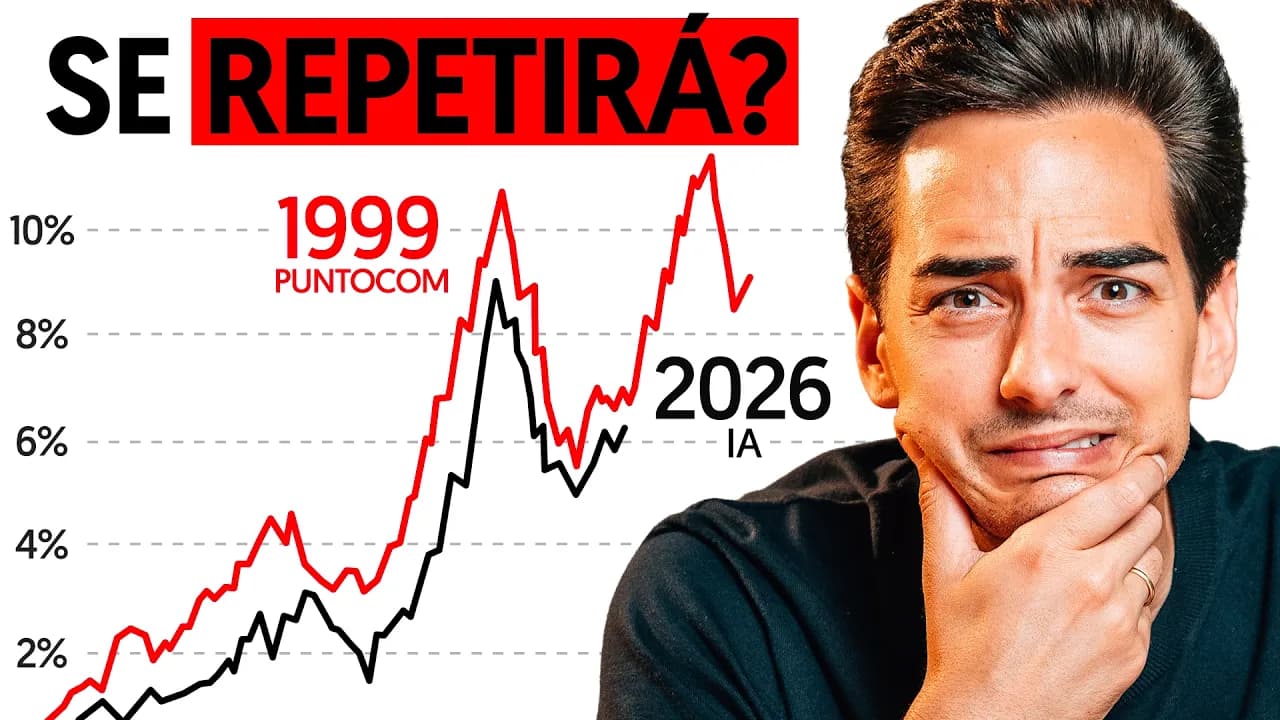
The Reddit argument is based on the economic concept called the great meltup. In every bull market, there is a final euphoric phase where prices are driven entirely by momentum rather than earnings and fundamentals. Investors believe prices keep going up simply because they have been going up. Historical examples include the 1999 dot-com bubble, where the NASDAQ rose roughly 400% from 1995 through March 2000, with the final year up nearly 90%. The NASDAQ then lost 78% over the following 2.5 years and did not fully recover for more than a decade.
Japan's stock market rose 900% between 1975 and 1989, with land values so high that the Imperial Palace was estimated to be worth more than all real estate in California. When Japan raised interest rates, the stock market fell 60% in under two years and the economy took 34 years to break even. Great meltups end when there is no one left to keep buying at higher prices.
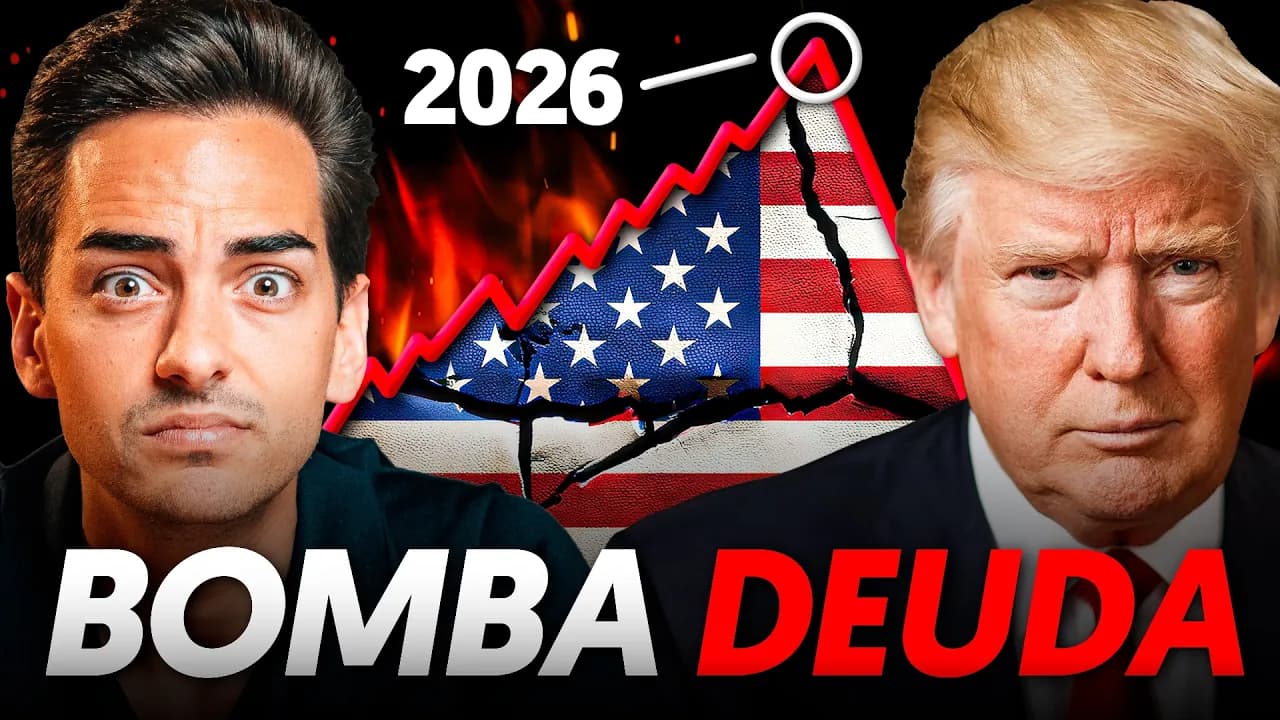
The US government owes nearly $40 trillion in debt and runs a $2 trillion annual deficit. The proposed solution is to inflate the debt away through financial repression, the same method used after World War II. The US printed money, kept interest rates artificially low, and the national debt quietly disappeared over decades. When governments inflate currency, assets priced in that currency tend to rise alongside it.
Goldman Sachs raised their S&P 500 target to 8,000. Morgan Stanley and Deutsche Bank project 17% growth. The M2 money supply is increasing at the same pace as the stock market, with a projected $50 trillion national debt by 2030. Current valuations show the market at some of the highest price-to-earnings levels ever recorded, roughly double historical averages. The CAPE ratio has only been above 40 twice: at the peak of the dot-com bubble and today. Stocks are currently more expensive than before the 1929 Great Depression and the 2008 financial crisis.
Surf Shark VPN encrypts online data, masks IP addresses, and prevents hackers from identifying location and download history. It allows users to virtually change their device location to access accounts and content from anywhere. The service blocks ads, trackers, malware, and phishing attempts without storing activity logs. Users can get an extra 4 months free at surfark.com/gram with code Graham, with a 30-day money-back guarantee.
The claim that interest payments are about to exceed GDP is false. The debt-to-GDP ratio has exceeded 100% before, occurring in the 1950s when the US successfully printed its way out and the market recovered. The claim that the government must print money to make interest payments is not entirely true. The government borrows by selling treasuries to investors, pension funds, corporations, and foreign governments.
The claim that stocks inflate proportionally with hyperinflation is not historically accurate. Between 1918 and 1922, the German stock market lost 97% of its value before the hyperinflationary peak. In Zimbabwe, the stock market rose 500-fold in nominal terms during hyperinflation but lost 99.8% of its value compared to US dollars. Venezuela posted a 22,000% return in 2018 while the economy contracted over 50%. In the United States during the 1970s, inflation averaged 7% annually but the stock market went nowhere after adjusting for inflation.
The most realistic outcome is a long period of financial repression rather than hyperinflation or default. Inflation will run slightly higher than interest rates, making debt easier to manage as future dollars become worth less. Savers get squeezed as cash loses value and asset prices rise in dollar terms but deliver lower real returns. The expected scenario includes 3 to 5% inflation cycles, interest rates drifting lower, occasional market volatility without complete collapse, and the government using higher taxes, slower spending growth, and inflation to manage debt over decades.
The stock market could still fall 30%, 40%, 50%, or 60% and then recover to new all-time highs. High debt does not automatically mean high inflation or guaranteed stock market gains. The Reddit post is directionally right that governments have incentive to let inflation reduce debt burdens over time, favoring stocks and assets long-term. However, the idea that it is mathematically impossible for the stock market to fall is dangerous because it leads investors to buy at record valuations with no margin of safety and no preparation for downturns.
People who historically beat inflationary periods maintained steady income, stayed diversified, kept cash on the sidelines, and avoided forced selling. Stocks outperform cash over the long term, but there are periods of a decade or more where the stock market loses money or goes nowhere. The recommended approach is to keep buying in, stay diversified, maintain a margin of safety with cash reserves, and avoid basing financial decisions on viral social media posts.
Keep Graham Stephan in your library
Save the videos and channels worth coming back to, and find them again in one place.