Trump's 10% Credit Card Interest Rate Cap (Here’s What Happens Next)
These notes were generated by AI and may contain inaccuracies.
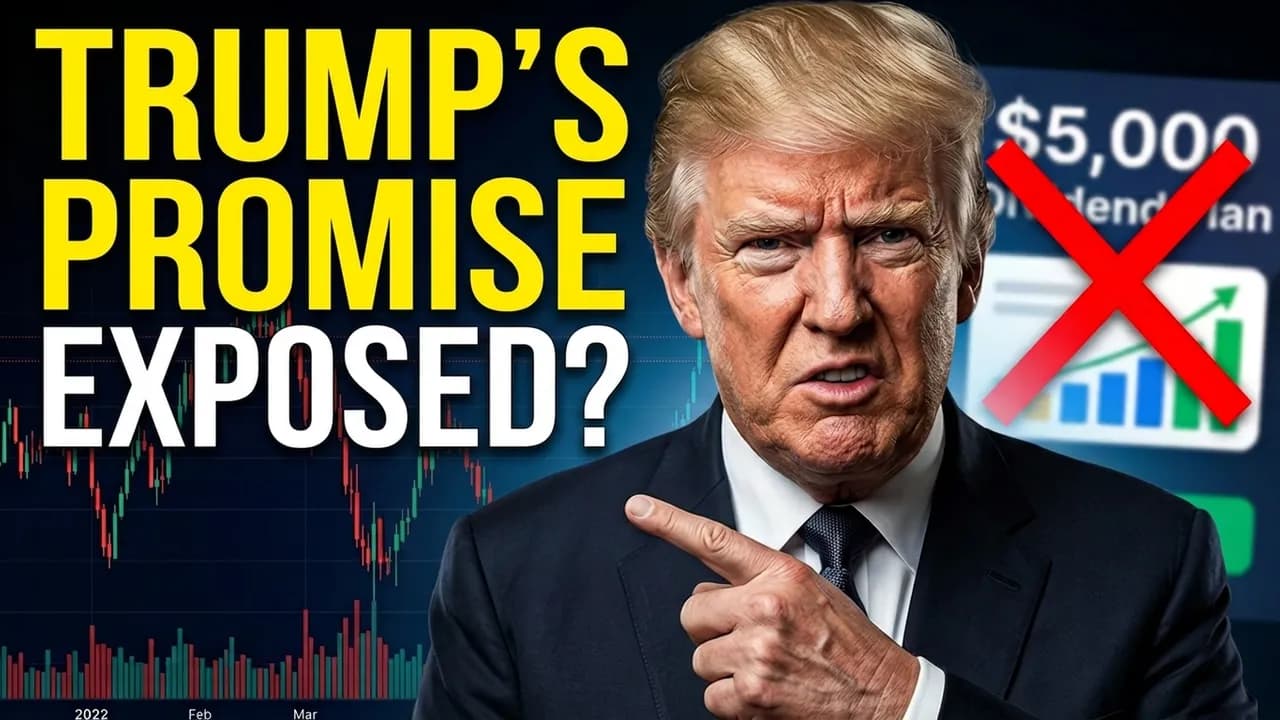
What if starting January 20th, credit card interest rates were capped at 10% for one year? Trump announced calling for a 10% cap starting January 20th. This is not a legal order or executive order. Anyone can call for anything.
Trump posted on Truth Social: effective January 20th, 2026, as president, calling for a one-year cap on credit card interest rates of 10%. January 20th coincides with the one-year anniversary of something historic and successful. According to Reuters, Trump repeated a campaign promise for a one-year 10% cap but did not outline enforcement. Critics say it requires Congress to pass a law. Research using resources confirms Congress is needed. Elizabeth Warren said Trump's call is meaningless without a bill passed by Congress.
Americans hold record $1.23 trillion in credit card debt; roughly half of cardholders carry a balance. New York Fed data for Q3 2025: total outstanding debt $5.1 trillion, including credit cards $1.23 trillion (rose by $24 billion in Q3), student loans $1.65 trillion, auto loans $1.66 trillion, other $0.5 trillion. Average APRs over 20%, so massive interest costs on this debt, not all on 0% balance loans.
Vanderbilt study: 10% cap would save $100 billion per year in interest. To maintain profitability for customers with FICO scores below 760, banks would reduce rewards by up to $27 billion annually.
Savings by Cap Level
- 18% cap: $16 billion annual interest savings, no reduction in rewards, average monthly interest savings $361 per person.
- 15% cap: $48 billion annual savings, $563 per month saved.
- 10% cap: $100-150 billion annual savings, $900 per month saved, but $27 billion annual rewards reduction for FICO <760.
No one makes $900/month off rewards unless running a big business or having high balances. Average monthly interest savings more important than rewards for most. People with 0% balance use points as bonus on normal spending.
President lacks legal authority to unilaterally cap private lending rates via executive order; that's Congress's job. American Bankers Association and trade groups called it an executive order but discouraged it. Any attempt would be challenged and struck down by courts. Evidence shows 10% cap would reduce credit availability, devastating for millions of families and small businesses relying on credit cards.
Bill Ackman tweeted at Trump (deleted, screenshot from archive): huge mistake. Without rates to cover losses and earn return on equity, lenders will cancel cards for millions, forcing them to loan sharks at higher rates and worse terms. Banks and groups warn: reduced credit availability for lower credit scores, fewer approvals, lower limits, lost rewards.
Policy Genius is a marketplace to compare life insurance policies from top insurers for best coverage at lowest price. Licensed agents handle process. Example: 20-year $2 million policy for $33/month. Head to policygenius.com/whiteboardfinance for free quotes.
Wall Street reacted: Synchrony, Capital One, American Express stocks fell. At recording: Bank of America down 1.75%, American Express down 4.29%, JP Morgan Chase down 2.1%. Play: buy call options 3-6-9-12 months out at higher strike. If cap is nothing burger, stocks rebound (e.g., Visa on generational tear). Not financial advice.
Consumers with high APRs save money. Banks: lower interest income, so reduce rewards, raise fees, tighten credit standards, cut off high-risk borrowers. Markets adjust; analysts note trade-offs. From experience in bank credit analysis (2018): when costs rise, businesses pass to customers via higher prices.
Jeffrey analyst: highly unlikely. Just a proposal; needs Congress, similar bills failed. Resonates due to cost-of-living pressure: groceries, insurance, housing expensive. Credit cards are symptom, not solution—short-term band-aid for cash flow issues.
Key Takeaways
- 10% better than 19-27.9%, saves per Vanderbilt study.
- Credit cards not long-term fix; don't carry balances.
- Winning strategy: pay off in full monthly, zero balance; no consumer debt.
- Has zero consumer debt, Tesla payment at 1.99% due to insurance after X5 totaled.
- Real goal: higher savings, better cash flow, lower fixed expenses.
- Invest in assets to fight inflation and protect purchasing power.
Check Whiteboard Finance University: live Thursdays, courses, community.
Share video. Have a prosperous day.
Keep Marko - WhiteBoard Finance in your library
Save the videos and channels worth coming back to, and find them again in one place.