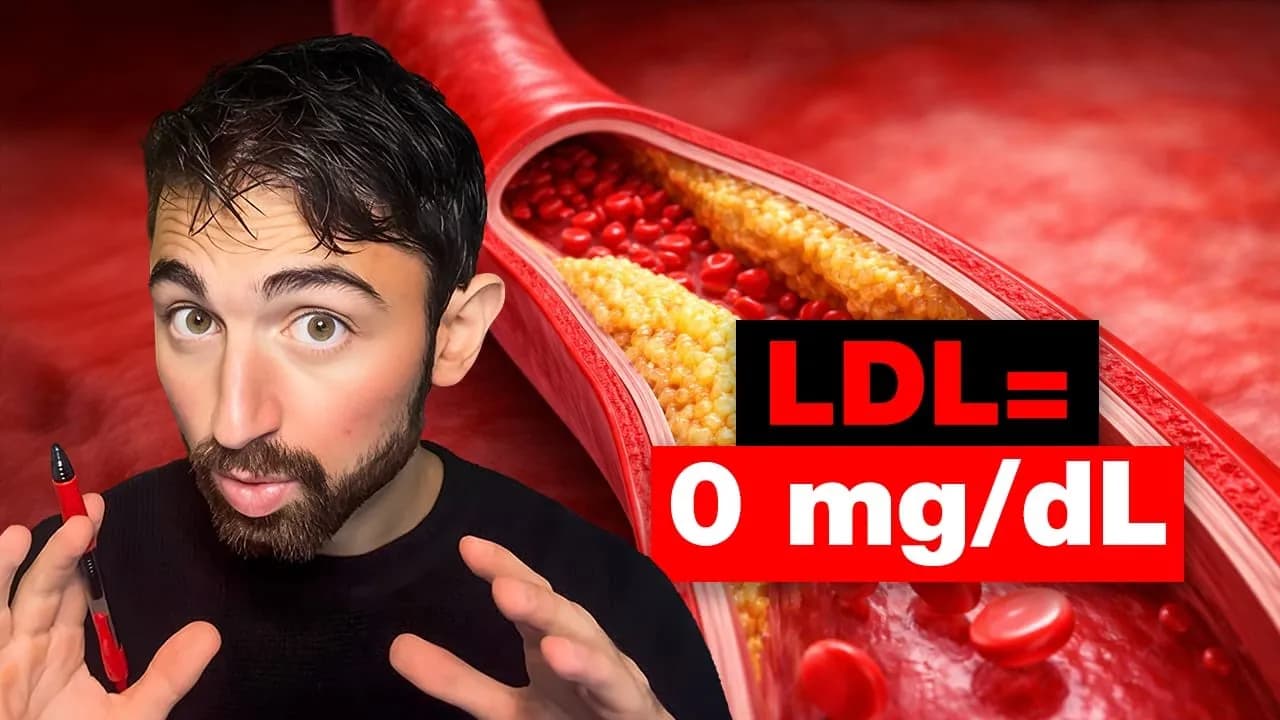
What I Tell My Patients With High Cholesterol
In a Nutshell
High cholesterol is often a signal of underlying metabolic disease and inflammation rather than the direct cause of plaque. The key tests are fasting insulin, high-sensitivity CRP, and LDL particle fractionation to identify whether arteries are inflamed before focusing on cholesterol numbers. Prioritize fixing insulin resistance and inflammation through diet and exercise first, as treating LDL alone while metabolic damage continues fails to stop heart attacks.
These notes were generated by AI and may contain inaccuracies.
When a patient comes with high cholesterol, the first statement is often that cholesterol may not be the first problem to focus on. This surprises many patients. The speaker lived through the same confusion personally, having run marathons, followed a strict low-fat diet, and done everything the guidelines recommended while teaching the same advice to patients. A scan later revealed plaque was still building inside the arteries despite decades of following standard recommendations. This experience showed that the standard model was not designed to catch what was actually happening.
A study of 136,000 people hospitalized for heart attack found that nearly three quarters had LDL levels that their doctors considered fine, acceptable, or very good. Almost half had LDL cholesterol levels under 100, which guidelines at the time called optimal. Most of these people were already on lipid-lowering treatment, typically a statin. They had good cholesterol numbers, were being treated, and still had a heart attack.
Cholesterol is often a signal, not a source or primary cause. The mechanism that drives plaque begins with metabolic disease, including insulin resistance, pre-diabetes, and excess visceral fat around the organs. Chronic blood sugar elevation triggers systemic inflammation. Inflammation, not fat or cholesterol by itself, damages the artery wall. Once the wall is damaged and inflamed, particles become trapped inside. Immune cells called macrophages consume these particles and turn into foam cells, and the foam cell build-up forms the plaque.
Metabolic disease causes friendly fire on the body. Metabolic disease is the cause, inflammation is the trigger, and it originates from metabolic disease rather than cholesterol.
Before addressing cholesterol, the first question is whether the arterial system is already inflamed. Three biomarkers are essential.
Fasting Insulin
Fasting insulin, also called basal insulin, is upstream of fasting glucose and A1C. It begins rising years before glucose levels rise. A 17-year Danish cohort study found that fasting insulin predicted cardiovascular disease independently and ahead of every standard risk factor, including cholesterol, blood pressure, BMI, and smoking. It detected upcoming heart attack risk before any of those markers. When prediabetes develops, the pancreas produces more insulin to keep blood sugar and A1C normal even as insulin receptors become less responsive.
High-Sensitivity CRP
High-sensitivity CRP (C-reactive protein) is a direct marker of systemic inflammation. Research from the Physicians' Health Study and the Women's Health Study showed that even mildly elevated CRP in an otherwise healthy person doubles future heart attack risk independent of LDL levels. The JUPITER trial confirmed this: when CRP was elevated but LDL was normal, cardiovascular events were cut in half by treating the CRP.
Lipid Fractionation
Lipid fractionation, or cholesterol fractionation, provides more information than a standard cholesterol panel. Total LDL number does not reveal the type of LDL particles present. LDL comes in different particle sizes. Small dense particles oxidize faster, remain in circulation longer, and are less likely to be cleared by the liver. A 2017 study found that larger LDL particles do not stick to arterial walls as easily, are less prone to oxidation, and are less likely to trigger the immune response that starts plaque formation.
When metabolic disease develops and insulin rises, the body has difficulty burning triglycerides. Large fluffy LDL particles are repurposed by pulling out the apoB protein to transport triglyceride, converting them into IDL, VLDL, and chylomicron remnants. These particles are the ones associated with plaque regardless of position in the LDL debate. Two people can have the same LDL number but completely different risk profiles based on their actual particle composition.
On the HDL side, it is not just the quantity but the type that matters. Low large AB HDL often signals that metabolic dysfunction is interfering with the body's ability to clear cholesterol from the arteries. In fractionation results, the most important marker is HDL large, followed by LDL pattern. Small dense LDL is the least important of the three. Multiple drugs developed to raise total HDL failed to reduce cardiovascular events because they did not raise the large HDL fraction.
LDL and HDL may function more as biomarkers of metabolic disease. With metabolic disease, both LDL large and HDL large are lost, which is why the patterns matter.
Once the three markers (CRP, fasting insulin, and fractionation) are obtained, the decision becomes clearer. There are two situations requiring different approaches.
If metabolic disease and elevated inflammation are present, that is the starting point, not cholesterol. Lowering the cholesterol number while the metabolic fire continues is managing symptoms without stopping arterial damage. The priority is metabolic health first through improved insulin sensitivity, inflammation control, and cutting carbs. Regular exercise ranks second. Cutting carbs and exercise form the foundation.
If there is no significant metabolic disease or elevated inflammation, cholesterol can still matter, especially at very high levels for some people. Direct cholesterol management then becomes an option, but metabolic health remains essential because metabolic disease makes LDL more dangerous.
Two groups do not follow the standard pattern. The first is familial hypercholesterolemia (FH), a genetic condition caused by a mutation in the LDL receptor gene that prevents proper LDL clearance from childhood. Heterozygous FH patients typically have LDL levels of 180 to 350 and often remain problem-free until metabolic disease develops. Homozygous FH patients can have LDL levels of 500, 600 or higher and may experience heart attacks in their teens or twenties. FH affects roughly one in 250 to 400 people in the US, yet only about 10% are diagnosed. Left untreated, the risk of premature cardiovascular disease can increase up to 20-fold. In FH, cholesterol plays a larger role, but the risk still rises if metabolic disease is not addressed. Both interventions are necessary.
The second group is lean mass hyper-responders, who have a genetic variation that causes LDL to rise dramatically on a ketogenic diet. These individuals are typically lean, physically fit, and usually follow a ketogenic diet. They show LDL levels of 200, 300, or as high as 700, with very low triglycerides, high HDL, and a triglyceride-to-HDL ratio clearly less than one. Their metabolic markers remain clean. A trial published in JACC Advances followed 80 lean mass hyper-responders with a mean LDL of 272 and compared them to controls from the Miami Heart Study with average LDL of 123. There was no significant difference in coronary plaque burden. The question of whether extremely high LDL in lean mass hyper-responders causes harm remains under active debate.
New guidelines recommend LDL below 55. For individuals seeking maximum reassurance, lowering cholesterol is not opposed, and this has been done for several patients. Very high LDL in someone who also has metabolic disease carries real risk. The argument is not for ignoring cholesterol but for interpreting it correctly. Treating the cholesterol number while metabolic disease continues to damage arteries is the core problem.
Most doctors acknowledge that diabetes increases heart attack risk by up to five times, yet the system still focuses on LDL rather than insulin resistance, which causes both diabetes and heart attacks. Three-quarters of doctors do not know how to diagnose pre-diabetes properly. Waiting until diabetes develops means reacting after years or decades of arterial damage from prediabetes.
After decades in the field, the priority is helping people avoid the outcome of doing everything recommended and still ending up hospitalized. Patients treated for LDL who believed everything was fine have later presented with heart attacks and undiagnosed rip-roaring diabetes. The three tests covered are the starting point. The Heart Reveal Panel provides the correct set of labs at an affordable price along with proper interpretation. A digital twin is also in development, and a half-hour session with a trained coach is available for those who want additional guidance on results.
Growing old is not for sissies, but it is considerably better with healthy arteries.
Keep Thomas Fordham Brewer MD MPH in your library
Save the videos and channels worth coming back to, and find them again in one place.