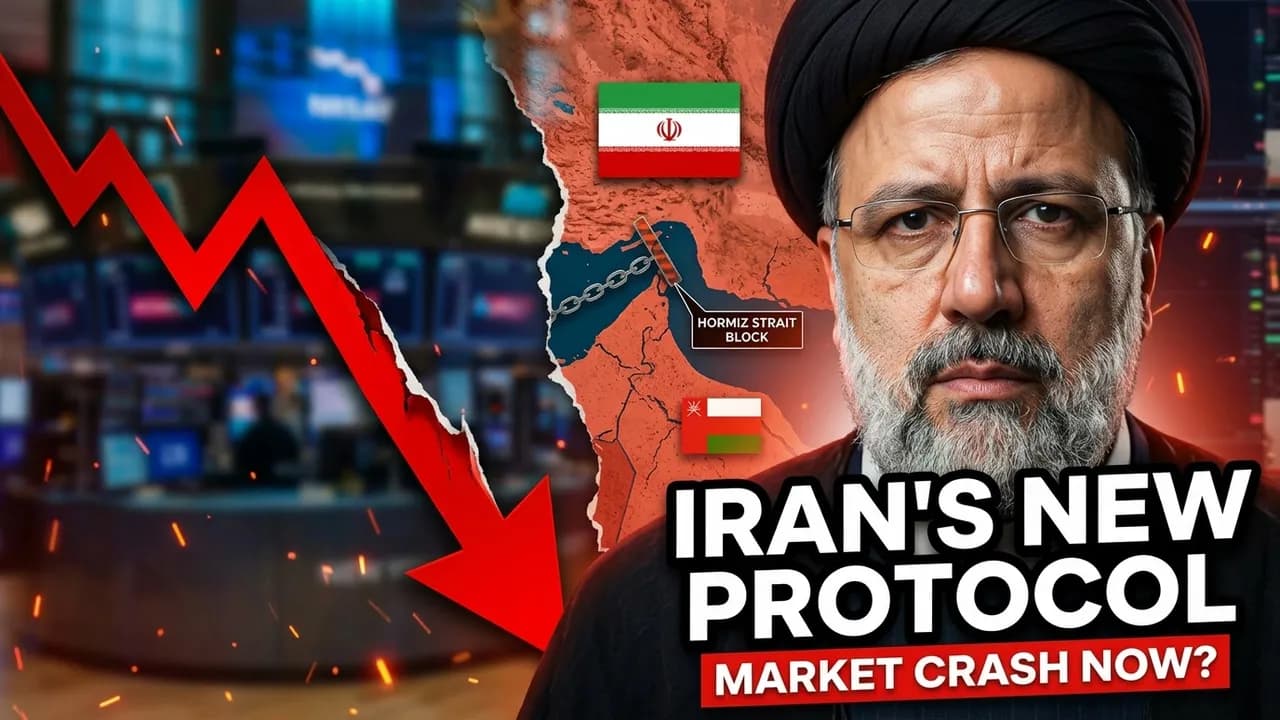
WHY ARE MARKETS DROPPING AGAIN?
In a Nutshell
Markets dropped after a brief recovery attempt fueled by inconsistent Trump statements on Iran, worsening Middle East tensions, and rising oil prices above $96/barrel, amid elevated valuations and economic uncertainty despite strong JOLTS data. Long-term outlook remains bullish with minimal pullback from all-time highs, but expect more consolidation or sell-offs. Buy dips cautiously if tensions ease (no leverage, manage position size, keep cash); shorting risks V-shaped recoveries at oversold support levels.
These notes were generated by AI and may contain inaccuracies.
Happy Friday. Ricky with Techbook Solutions provides a quick market update. Markets were up a little bit over half of a percent at one point. Markets have been trading in QQQ and SPY within a common resistance and support range with oversold and overbought levels for the past few weeks.
Today, the market tried to recover based on false hope. President Trump told G7 leaders that Iran is about to surrender. However, yesterday Trump said this could take an additional 3 to 4 weeks, and days before that he said the Iran war is pretty much complete. His words are beginning to carry less weight due to inconsistency.
Markets had to drop because things in the Middle East are not getting better; they are getting worse, injecting more fear. Oil prices are going back up. US oil prices surged above $96 a barrel after President Trump said the Iran war will end when I feel it in my bones.
A gap in communication—not sharing every thought—would be useful in the current delicate market position. Markets are trading at elevated levels with concerns about the US economy and geopolitics. Comments creating uncertainty cause sell-offs due to overvaluations.
Markets aren't crashing. On larger time frames, markets have barely pulled back from all-time highs, especially NASDAQ and S&P 500, remaining incredibly bullish long-term. More consolidation and uncertainty from the president increase likelihood of strong pullbacks or sell-offs, like early to mid last year during the trade war and tariff war with quick retracements from highs.
Recent updates: PCE report (Federal Reserve's favorite inflation measure), GDP report, and JOLTS (job openings). Good news: Expectation of 6.7 million jobs created in January; actually 6.9 million. 'Supposedly' due to common discrepancies and revisions—adjustments of hundreds of thousands or millions of jobs not actually created in 2025. JOLTS has been one of the most inconsistent reports recently; market may not be buying it.
If bullish long-term, respect that. If markets are done selling off and Middle East calms over weekend, buy the dip as we're at oversold range. If uncertain or things worsen, be careful aggressively buying the dip.
- For beginners buying the dip: Don't use leverage.
- Understand more downside possible before recovery.
- Use position size management: Don't buy with everything; keep cash on sidelines to tolerate time for recovery.
For those preferring to short: Be careful. Current levels are oversold based on recent time frames, including start of February and all of 2026 so far—a common support range. It can go lower, but normally doesn't hold much lower because Trump tweets cause V-shaped recoveries. At oversold levels, risk-to-reward worsens for shorts as recovery risk increases.
Series of reports next week. Friendly reminder about LPP: Watch live trading and learn how to trade. Not required—you can learn on your own. For beginners learning best with structure and watching others: Access to A2Z video lesson library, daily live trading sessions, private group chat. One-time payment, lifetime access; members from 2018 still active. Second link in description. Sign up now to watch live trading Monday. Feedback: Feel more in tune, less stressed, less irrational in chaotic market full of greed.
Keep Ricky Gutierrez in your library
Save the videos and channels worth coming back to, and find them again in one place.