Why Did The Market Rally Today - What Changed?!?
In a Nutshell
US stock markets rallied sharply today as the probability of a Fed rate hike fell from 68% to 48% in 24 hours, driven by weak labor data showing a cooling jobs market. The Treasury's $12.5 billion debt buyback added liquidity, while geopolitical tensions around Iran and Trump election strategy provided additional context. Tomorrow's nonfarm payrolls and unemployment rate releases are expected to reinforce the case against near-term rate hikes.
These notes were generated by AI and may contain inaccuracies.
QQQ Nasdaq ended 1.19% in the green. S&P 500 closed up 1%. Over $800 billion was added to US stocks today. Two items occurred before discussing the main market change: the US Treasury bought back $12.5 billion of its own debt, marking the largest buyback in over 3 months.
The Treasury buyback represents additional liquidity for the market. The Trump administration plans to resume the Iran war with full force after the November midterm elections. Top Trump aides are pushing to formally declare the Iran war over and prevent escalation before November to limit Republican electoral losses. Iran states it will defeat Trump and Trumpism in the November midterms through systematic economic warfare. Trump's disapproval rating sits at one of the lowest levels seen in comparison to any previous candidate.
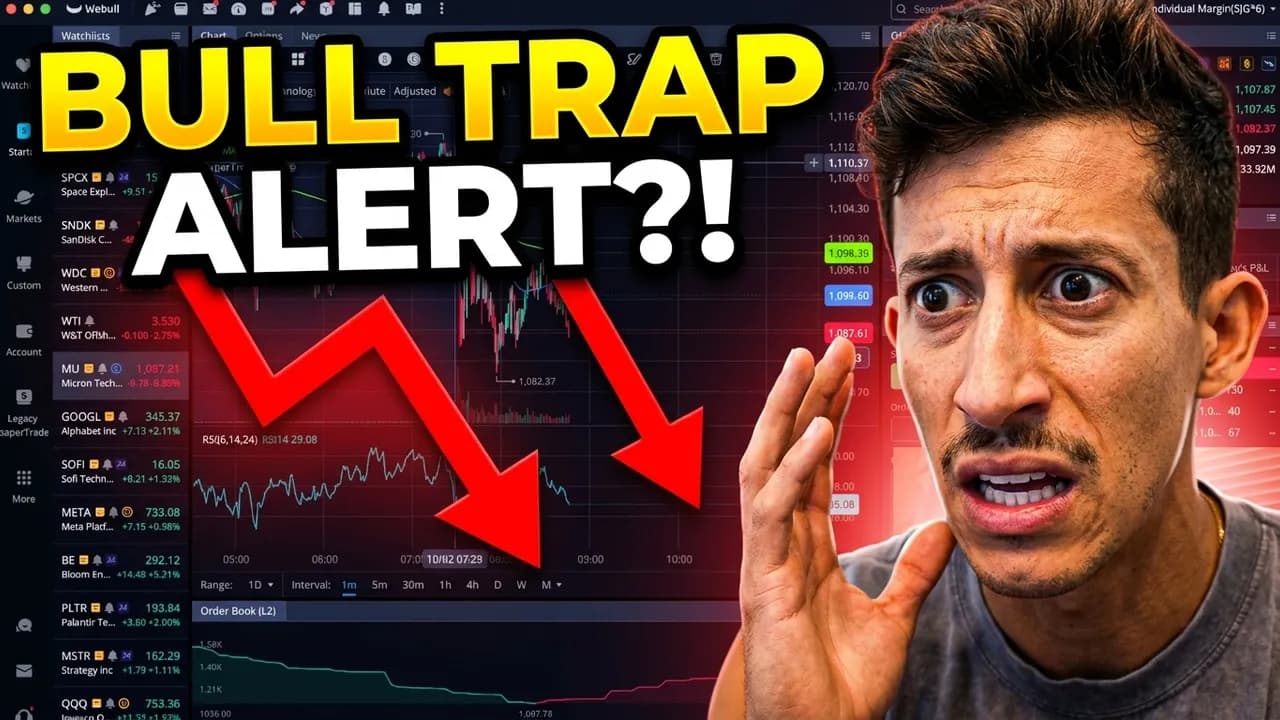
Palantir gapped up at open. Dell gapped up. Semiconductors started lower, gapped up, then pulled back into the close. Not all stocks had strong green days. Strong moves occurred primarily at market open, followed by plateauing. Markets saw a big gap up, peaked, then corrected within the first 30 minutes. By market close, most stocks remained within the same range.
The key market change centers on Federal Reserve interest rate expectations. The probability of a Federal Reserve rate hike dropped from 68% to 48% over the past 24 hours. Recent economic reports, including labor and job reports, indicate a slowdown in the labor force. This weakness suggests raising interest rates would further damage an already weak labor market.
The Federal Reserve operates under a dual mandate of price stability and strong labor market conditions. Current conditions present a double-edged sword where inflation remains above the 2% target while the labor market shows significant weakness. Raising rates would address inflation but further weaken the labor market. Oil prices continue rising and represent a major inflation contributor.
Tomorrow's nonfarm payrolls release will likely show continued weakness, further supporting the case against rate hikes. The unemployment rate will be released 1 hour before markets open tomorrow. Recent nonfarm payrolls have been terrible.
Daily live trading sessions are conducted with the LBP team. The second link in the description provides access to current sale pricing. Only service offered consists of daily live sessions with the LPB team. No other services are associated with this account. Instagram verification confirms the account identity. Multiple fake accounts exist that impersonate the account. Direct messages will never be initiated first.
Keep Ricky Gutierrez in your library
Save the videos and channels worth coming back to, and find them again in one place.