Why Trump Flew to China with 18 CEOs
In a Nutshell
Trump flew to China with top CEOs to negotiate a new global monetary order replacing the post-WWII system, using a gold-based deal instead of direct yuan revaluation to avoid Japan's fate from the 1985 Plaza Accord. China gains US market access, tariff relief, and monetary legitimacy while investing $1 trillion in American factories; the US gets its balance sheet strengthened by marking gold reserves to market and inflates away debt. The closed Strait of Hormuz creates leverage for this deal by draining global oil supplies, with inflation as the intended outcome that benefits asset owners in a K-shaped economy.
These notes were generated by AI and may contain inaccuracies.
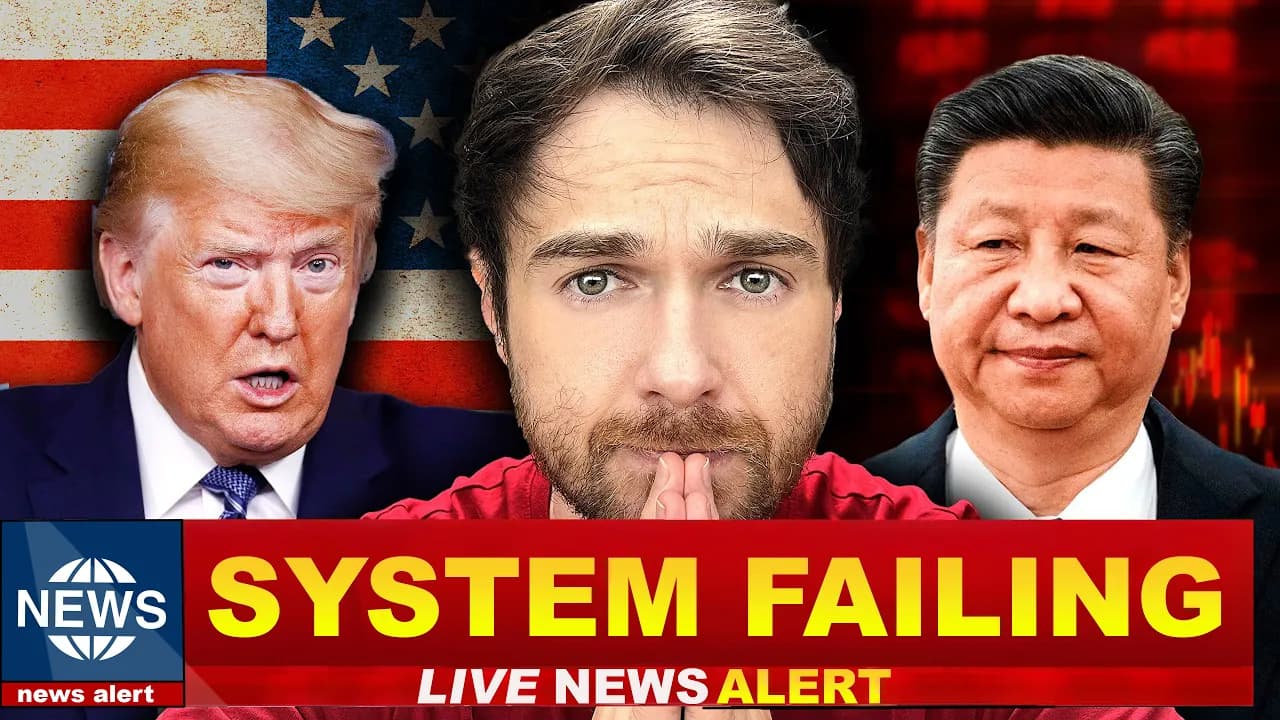
The theory presented is that Trump's trip to China with 18 CEOs including Elon Musk, Tim Cook, Jensen Huang, and Larry Fink from BlackRock represents the most powerful business leadership ever assembled for a foreign trip in American history. This gathering relates to negotiations for a new monetary order, potentially the most significant in a lifetime. The post-World War II order imposed by the US is breaking down, with China having substantial say in dictating the next world order. Xi Jinping referenced the Thucydides trap, asking whether China and the United States can overcome it and create a new paradigm of major country relations.
The theory traces back 40 years to the Plaza Accord, a deal that restructured the global economy. In 1985, the United States faced a huge trade deficit and an overly strong dollar, making American manufacturers uncompetitive globally. The Reagan administration called a secret meeting at the Plaza Hotel in New York City with France, West Germany, Japan, and the UK. The deal involved other countries manipulating currency markets to weaken the US dollar specifically against the Japanese yen.
The yen doubled in value almost overnight, making Japanese exports expensive and American goods cheap by comparison. The trade deficit decreased and America became more competitive in manufacturing. In exchange, Japanese companies gained permission to invest heavily in the United States. Companies like Toyota, Honda, and Nissan built factories in America, with Japanese money flowing into US real estate, treasuries, and businesses. However, Japan's export-driven economy seized up from the rapid currency doubling. Japan flooded its economy with cheap money, creating the biggest asset bubble in modern history across real estate and stocks. Japan spent the next 30 years attempting to recover, known as the lost decades, and never fully recovered.
China proposed a deal in October 2025 to Scott Bessent, but will not allow their currency to be plaza-accorded the way Japan was. China watched Japan's destruction from currency revaluation and refuses a direct revaluation of the dollar against the yuan. Instead, the theory suggests the deal will occur through another asset, most likely gold. This approach would change what the dollar means, what inflation means, what savings and investments mean, and potentially the entire money system itself.
The Thucydides trap is a theory from political science named after an ancient Greek historian who studied the war between Athens and Sparta around 400 BC. The theory states that when a rising power threatens the dominance of an existing power, fear, pride, and competition make conflict almost inevitable. After studying 16 historical cases where rising powers challenged ruling ones, 12 resulted in war. Xi Jinping acknowledges China as a rising superpower and proposes avoiding this historical pattern.
The most important factor is the flow of energy, as whoever controls energy flow controls leverage and capital flow. The Strait of Hormuz controls roughly 20% of the world's energy. Since the US-Israeli war with Iran started earlier this year, the strait has been closed and remains closed according to data. The official story claims this will resolve quickly with a peace deal reopening the strait, but data shows the world has been drawing down emergency oil reserves. Bloomberg reported global oil inventories will hit operational stress levels by about June, with minimum floor levels needed for pipelines and refineries running out by about September.
Jeff Curry, former head of commodities at Goldman Sachs, stated on Bloomberg that parts of Europe and Asia are already in shortage. He noted the difference between deficit and shortage, explaining that inventories are being drawn down and oil is being borrowed from the future. The US hits critical levels around July 4th. CEOs of Chevron, ConocoPhillips, and Saudi Aramco have expressed concerns about oil supply, noting that the US cannot make up all the lost supply. Morgan Stanley research indicates no demand destruction in oil until prices hit $140 a barrel, yet oil remains under $100.
Suspiciously timed trades made investors about $2.6 billion betting oil prices would drop, with the DOJ now investigating. The official White House press release from the Beijing Summit stated both Trump and Xi agree Iran could never have a nuclear weapon. However, China and Russia have nuclear technology and every motive to pressure the West. Neither has given Iran a nuclear weapon despite having the capability. The closed strait serves as their economic weapon, slowly draining the world's oil supply, which is worth more to Russia, Iran, and China than a nuclear war.
China and Russia use Iran as a proxy to put pressure on the West for favorable leverage in the new monetary deal. The longer Hormuz stays closed, the more urgently the United States needs to make a deal before financial markets get exposed by broken supply chains. China now has enough economic power to buy a seat at the table of global monetary restructuring. This explains why Trump flew to China with 18 CEOs to make a deal.
According to Bloomberg and New York Times reports, Trump and Xi are considering a deal where China invests $1 trillion into the United States, with most money used to build factories, supply chains, and industrial infrastructure in America. This mirrors the Japanese automaker strategy after the Plaza Accord. China proposed this deal first in October 2025 during negotiations in Madrid to Secretary Scott Bessent. China would flood the US with investment money in exchange for rolling back national security restrictions on Chinese deals and removing tariffs for Chinese-owned factories built in the US.
Chinese analyst Henry Wong states Beijing has leverage over Iran as its largest trading partner and believes Xi could provide a much-needed off-ramp for Trump at a price. China wants reduction in tariffs, removal of export controls on advanced semiconductors, and lifted sanctions. What China wants most is Taiwan. China seeks market access to the world's biggest consumer market for its export economy, monetary legitimacy with a seat at the global financial restructuring table, and gold appreciation since their reserves would explode in value if the deal triggers gold repricing.
Taiwan produces more than 90% of the world's most advanced semiconductors, crucial for AI and defense, making Taiwan ground zero for a global supply chain. China refuses to repeat Japan's mistake of allowing direct revaluation of the yuan against the dollar. Instead, China can allow another asset to reprice as an escape valve, most likely gold.
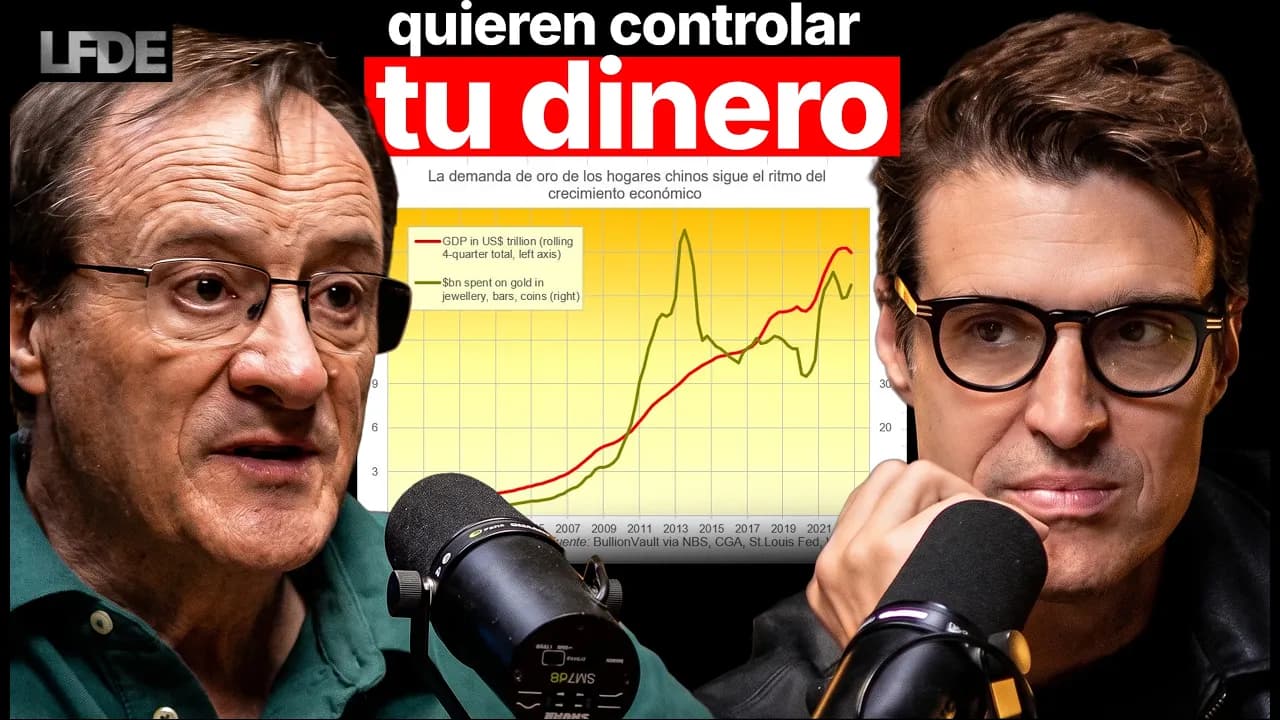
The United States government holds over 8,000 tons of gold valued at only $42 an ounce on government books, the price set in 1973. The actual market price of gold exceeds $45,000 per ounce, meaning the US balance sheet is dramatically understated. China holds substantial gold reserves and has been aggressively accumulating more for years. According to research from Luke Roman at FFTT, for five of the last six months, the single biggest export out of the United States, bigger than oil, pharmaceuticals, or aircraft engines, has been nonmonetary gold. Physical gold is leaving America, going to China or Switzerland first and then eventually to China.
Throughout history, the country exporting gold is usually the one losing, while the country importing gold is usually winning. Great Britain in the early 20th century saw gold leave London for New York as the British Empire declined. By World War II's end, America held more than half of the world's gold, which is why the dollar became the world's reserve currency. The country with the gold writes the rules. Currently, the United States is the single biggest exporter of gold in the world, going to China.
Instead of China revaluing the yuan against the dollar, both sides could allow the dollar to weaken against gold. The US could mark its gold reserves to market price, dramatically improving the US balance sheet and making the debt burden more manageable. The dollar weakens not directly against the yuan but indirectly against gold, meaning China's huge gold reserves also increase in value. Chinese money would flood into American manufacturing with a trillion dollars of investment for factories, infrastructure, and jobs. The American industrial base could potentially be rebuilt with Chinese money. Trump gets to look like a hero, and China gets access to American markets, tariff relief, and a seat at the new monetary structure table. Chinese cars could potentially hit the US market within about 5 years.
The dollar has been falling against the Chinese yuan since late March, around the time US Treasury markets showed signs of stress, opposite of what would be expected in a war designed to pressure China. Chinese government bond yields have been steady and going down, while other countries' borrowing costs, including the United States, are going up. Gold has been rising significantly. These are fingerprints of a deal underway, with the market pricing it in before announcement.
If the deal occurs, the dollar devalues while Chinese investment restructures American manufacturing, setting off a chain reaction across every asset class leading to inflation. Inflation is not just a side effect but potentially the whole point, as it makes unpayable debt payable by inflating it away. A dollar of debt borrowed in 2020 gets repaid in 2030 with dollars worth half as much. Normal people experience this through higher prices for eggs, rent, and gas. Inflation does not hit everyone equally. Those owning assets like stocks, real estate, gold, Bitcoin, watches, or collectibles see assets increase in nominal value and are protected.
Those without assets living paycheck to paycheck with wealth in savings accounts are destroyed by inflation, as their dollars buy less over time. This creates the K-shaped economy where the top half benefits and the bottom half suffers. AI is making the top half more productive while eliminating jobs the bottom half depends on, including customer service, data entry, trucking, manufacturing, and warehouse work. Transitions of this scale leave some people behind, creating anger, low consumer sentiment, and potential social instability.
Central planners have known this monetary transition was coming and built infrastructure to manage it, including financial innovation, digital identity, programmable currency, and digital ID. This represents a centralization of power and a digital control grid requiring people on their best behavior as class divides worsen.
This remains a theory with the deal possibly never getting done, Hormuz potentially reopening, or the gold theory being wrong. It is unknown where inflation gets absorbed, whether in gold, consumer prices, or both. The question is which side of the K-shaped economy one occupies. If wealth sits in cash or dollar savings accounts, one may be on the wrong side. Assets that governments cannot print more of make sense to hold, including gold and Bitcoin. Any asset with scarcity and utility is relevant. The story continues with the deal probably not yet signed, the oil crisis not yet peaked, and more developments coming.
Keep Andrei Jikh in your library
Save the videos and channels worth coming back to, and find them again in one place.