14 Signs Your Thyroid is Low And Most People Miss Them
In a Nutshell
Dr. Singh identifies 14 subtle symptoms of hypothyroidism—such as unexplained fatigue, weight gain, constipation, hair loss, dry skin, cold intolerance, depression, menstrual changes, puffiness, carotenemia, nail changes, outer-eyebrow loss, sleep apnea, carpal tunnel, and rare facial-nerve palsy—explaining how each arises from low thyroid hormone and underscoring that these signs are frequently dismissed as normal aging or stress. He stresses that diagnosis requires asking for TSH, free T4, and TPO-antibody tests rather than relying on a single TSH cutoff, because treating the underlying deficiency can reverse most symptoms and prevent misdiagnosis.
These notes were generated by AI and may contain inaccuracies.
There's a small gland in your neck, about the size of a butterfly, that controls your energy, your metabolism, your skin, your hair, your mood, your weight, your heart rate, your brain function, and your reproductive health. When it's working properly, you don't know it exists, but when it starts to fail, everything starts to fall apart in ways that are so easy to dismiss as stress, aging, or just feeling off. Around 20 million Americans have a thyroid disease, and up to 60% of them don't know it. They're being told their fatigue is normal, their weight gain is lifestyle, and their brain fog is just getting older, but it may not be any of those things.
I'm Dr. Kabir Harricharan Singh, a family and obesity medicine physician, and today I'm taking you through 14 signs that your thyroid may be underactive, what's actually happening in your body at each stage, and the specific test you need to ask your doctor for. Stay until the end because the last two signs are the ones most physicians miss, and one of them can look exactly like a stroke.
This video is for educational purposes only, not medical advice.
Let's start with the three symptoms that bring most people to their doctor, and the three that are most often dismissed when they get there. If you've been told your fatigue is just stress, your weight gain is what happens when you get older, or your constipation is because you're not eating enough fiber, and none of that actually fix anything, keep listening because for a lot of people the thyroid is what's actually behind all three.
The mechanisms are direct and clear. Fatigue: your thyroid controls how fast your cells produce energy. Think of it like the dial that sets how hard your body's engines are running. When thyroid hormone drops, the dial turns down. Your cells slow down, and the result is a kind of tiredness that sleep doesn't fix because it's not coming from not enough rest. It's coming from your body not producing enough fuel.
Constipation: your gut has muscles that squeeze in a wave-like pattern to push food through, and thyroid hormone is what tells the muscles to keep going. When it drops, that squeezing slows down. Food moves through more slowly, and constipation that doesn't respond to more water or more fiber is often the result.
Weight gain with hypothyroidism is particularly frustrating because it happens even when nothing in your diet or activity level has changed. Here's why: your thyroid controls your resting metabolic rate, how many calories your body burns just to keep you alive while you're sitting still. When thyroid hormone drops, the rate drops with it. Your body starts burning fewer calories around the clock, not just during exercise, but all day, every day, even while you sleep. And the weight that comes with it often has a particular quality, a puffiness and heaviness that doesn't budge the way a regular weight does.
Hair loss is one of the most distressing symptoms of hypothyroidism and one of the most frequently dismissed because it's attributed to stress, aging, or nutritional deficiency before the thyroid is even considered.
Here's what's happening at the scalp level. Each hair follicle goes through a natural cycle. It grows, rests, and then sheds to make room for new growth. Thyroid hormone is what keeps that cycle running on schedule. When thyroid hormone drops, two things happen simultaneously: hair production slows and becomes disorganized, producing thin, brittle, dull hair, and follicles hit the rest and shed phase too early, which is why people with hypothyroidism often notice widespread hair loss across the whole scalp, not in one spot, but everywhere. Usually starting about 2 to 4 months after thyroid hormone drops.
What distinguishes thyroid-related hair loss from typical pattern baldness is the diffuse distribution. It's not receding from the temples or thinning at the crown. It's thinning everywhere, often dramatically and rapidly. Documented cases in the literature include women losing the majority of their scalp hair within 4 months of hypothyroidism onset and recovering completely following thyroid hormone replacement.
Hypothyroidism dramatically reduces the production of skin oils and this leads to moisture escaping, skin cracking, and the pattern this produces, dermatologists call it asteatotic eczema. And it looks like a mosaic of irregular cracks.
But skin changes in hypothyroidism go beyond dryness. The signals that control how your skin renews itself get thrown off. Instead of shedding and regenerating normally, skin starts building up a tough protein called keratin, the same protein that makes up your hair and nails. When too much of it builds up in the skin, the result is thickening and cracking. In severe cases, this produces dramatic skin thickening, particularly on the palms and soles. These skin changes are reversible with thyroid hormone replacement when caught and treated.
The most visible sign of a struggling thyroid is the thyroid getting bigger, a condition called a goiter. Here's the biology: when your brain detects low thyroid hormone, it sends out more and more of a signal called TSH. Think of it as your brain turning up the volume, trying to get your thyroid to respond louder. But TSH doesn't just stimulate hormone production, it also tells the thyroid to grow in an attempt to compensate for this increased demand.
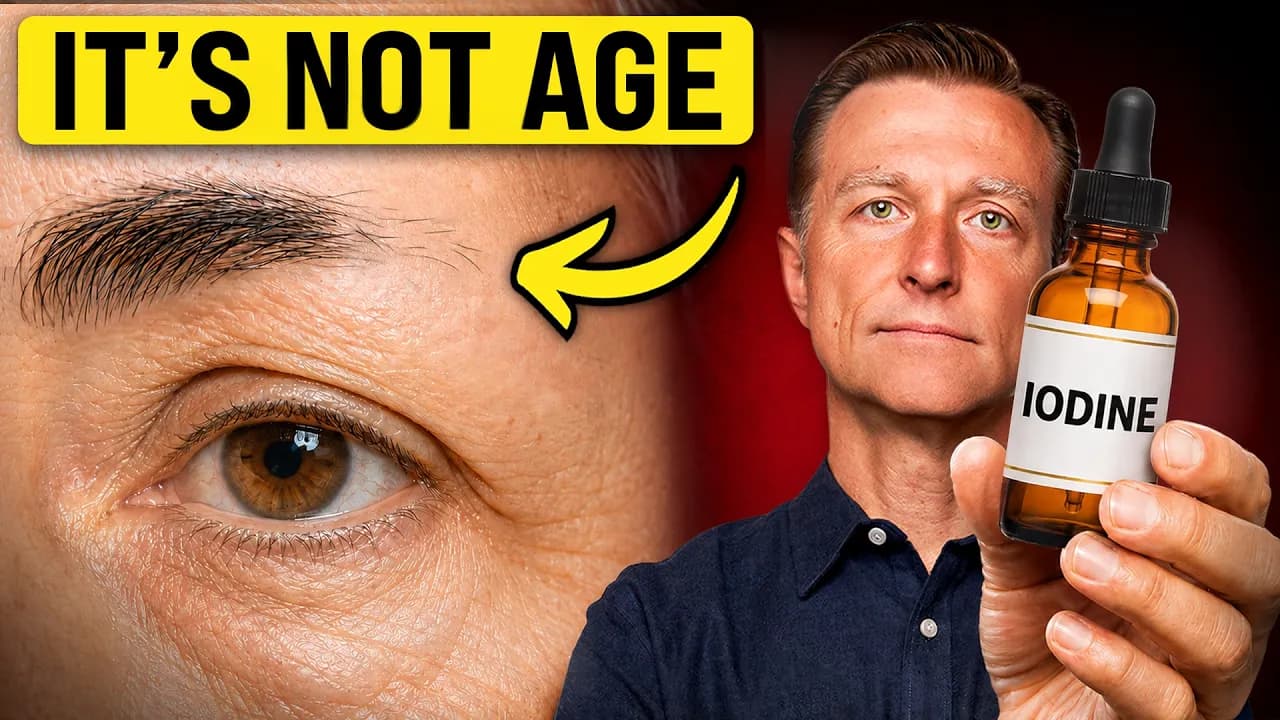
But, here's the problem. If the gland itself is damaged or if there's a nutritional deficiency, iodine deficiency being the most common globally, the thyroid can grow enormously and still not produce enough hormone. At its most severe, a goiter can become large enough to press against your esophagus, making it hard to swallow or press against your airway, making it hard to breathe.
You can actually check for this yourself. Look at the base of your neck, just above your collarbone and below the Adam's apple in men. Take a sip of water and watch that area as you swallow. Most people with a healthy thyroid won't see anything, but if you see a visible bulge that moves up and down with swallowing, that's worth the clinical evaluation.
Thyroid hormone is the primary regulator of your basal metabolic rate, the speed at which your body produces energy and heat just to keep you alive while you're sitting still. When thyroid hormone drops, your metabolic rate drops with it and less energy production means less heat generation. Your cells are doing only the basics to survive without the extra metabolic activity that generates body warmth. The result: cold intolerance.
The person in the office who's always wearing a sweater in July, the one who brings a blanket to the movie theater, who wears socks to bed, who turns the heat up when everyone else is comfortable. Some people genuinely just run cold and that's fine. But, if this is a change from your normal baseline or if you're recognizing yourself in more than one sign on this list, your thyroid deserves an evaluation.
Thyroid hormone has direct effects on the brain, specifically on the brain chemicals called neurotransmitters that control your mood, your motivation, and your ability to focus, including serotonin and dopamine. When thyroid hormone drops, so does neurotransmitter function. The clinical consequences: depression, anxiety, thinking that feels slower than usual, trouble remembering things, difficulty concentrating, and a general sense of mental fog that doesn't resolve with sleep or rest.
A meta-analysis in The Lancet found that subclinical hypothyroidism was significantly associated with depressive symptoms, and that many patients treated for depression who had underlying hypothyroidism saw significant mood improvements after treating the thyroid condition, sometimes without antidepressant medications. This is why every time someone is newly diagnosed with depression, thyroid testing should be part of the evaluation. For anyone who has been living with a depression diagnosis and still doesn't feel like themselves despite treatment, this is worth knowing.
Thyroid hormone has significant interactions with the reproductive hormone system, particularly through its effect on estrogen and progesterone metabolism. In hypothyroidism, your body has trouble clearing estrogen out of your system the way it normally would. So, estrogen levels stay higher than they should. At the same time, progesterone, the hormone that balances estrogen, drops. That imbalance directly affects the lining of the uterus. This combined effect on the uterine lining produces heavier, longer, more frequent, and more irregular periods, one of the most common presenting symptoms of hypothyroidism in reproductive-aged women.
Hypothyroidism also impairs ovulation, contributing to fertility challenges and increased risk of early pregnancy loss.
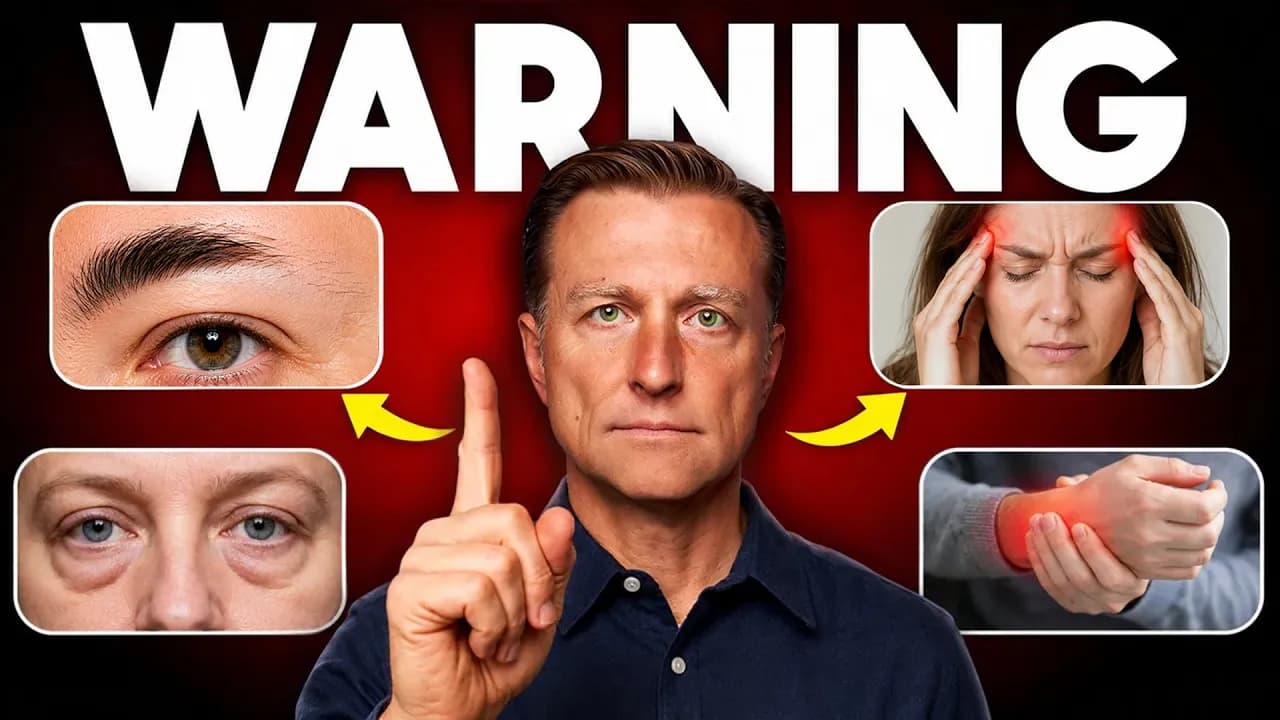
The puffiness that appears in hypothyroidism isn't the same as an ordinary swelling, and the difference is important. With normal swelling, like what happens when you sprain an ankle, pressing on the area leaves a dent that slowly fills back in. That's water-based swelling. In hypothyroidism, the swelling is different. It feels firm, almost doughy, and pressing on it doesn't leave a dent. That's because it's not water. It's a thick, gel-like material that builds up under the skin when the thyroid hormone level is low.
Here's why that happens. Your body naturally produces a substance called hyaluronic acid. You may have heard of it. It's the same ingredient used in cosmetic fillers and skin care products. Normally, thyroid hormone keeps the production of hyaluronic acid in balance. When thyroid hormone drops, that balance breaks, and hyaluronic acid builds up in the spaces between your cells, creating a firm, doughy puffiness. Doctors call this buildup myxedema. It tends to show up first around the eyes and face. But, as it builds up, it can collect in other places, too. The hands, the feet, the tongue.
This sign surprises almost everyone, including physicians who haven't seen it before. You've probably heard that carrots are good for your eyes. That's because of a compound called beta-carotene, the orange pigment in carrots, sweet potatoes, and pumpkins. Normally, your body converts beta-carotene into vitamin A, which your body can use. Think of it like a recycling process. Beta-carotene comes in, gets broken down, and comes out the other side as something useful.
Your thyroid hormone keeps that recycling process running. When thyroid hormone drops, that process slows down. Beta-carotene stops getting converted, and instead starts building up in your bloodstream. Eventually, it has nowhere to go, so it deposits in your skin. And because it's orange, your skin starts to take on an orange-yellowish tint, most notably on the palms of your hand and the soles of your feet, where the skin is the thickest. This is called carotenemia, and it's harmless from the pigment perspective, but its presence is a clue that the thyroid might be underperforming.
It's worth distinguishing this from jaundice, the yellow discoloration of liver disease, which affects the whites of the eyes, but carotenemia spares the sclera. If the palms and soles are orange, but the eyes are white, think thyroid, not liver.
The same keratin disruption affecting skin and hair also affects nails. And nail changes in hypothyroidism have a distinctive pattern worth knowing. Nails may become thicker, but paradoxically more brittle and prone to splitting because the structural quality of the keratin being produced is poor, despite its quantity. Thick vertical ridges can develop, which tend to crumble and fracture easily. The nail can also start to separate from the nail bed underneath, lifting away and leaving a whitish gap where air gets in. Doctors call this onycholysis, but what you'll notice is that the nail starts to look white or opaque near the tip, almost like it's detaching. These nail changes, seen alongside the hair and skin findings, form a clinical pattern that should trigger thyroid evaluation. And like hair and skin changes, they're reversible with appropriate treatment.
This finding even has a name in the medical literature, Queen Anne sign. The outer eyebrow loss is distinctive enough that a trained physician will notice it immediately during an exam. Look at your own eyebrow in good lighting. If the outer third, the portion farthest from the nose, has become sparse or absent, that's worth mentioning to your physician, particularly along with other signs from this list. The mechanism is the same hair follicle disruption we discussed earlier, but the outer eyebrow is particularly susceptible to this pattern of thyroid-related hair loss.
Here's the thing about myxedema, once it's accumulating, it shows up in unexpected places and some of them are genuinely surprising. Myxedema accumulation in the tongue causes macroglossia, an enlarged tongue, and this is one of the less commonly known ways in which hypothyroidism causes sleep apnea. When the tongue enlarges with this gelatinous material, it falls back against the back of the throat during sleep and obstructs the airway, causing the breathing pauses, broken sleep, and daytime exhaustion that are the hallmarks of sleep apnea.
Though most sleep apnea isn't caused by hypothyroidism, in patients with hypothyroidism-related sleep apnea, treating the thyroid condition can resolve or significantly improve the sleep apnea without CPAP, without surgery, without anything beyond correcting the underlying hormone deficiency.
Here's one that catches almost everyone off guard, including physicians. Up to 5% of all carpal tunnel syndrome cases may be caused by hypothyroidism and it matters because treating the thyroid often resolves the carpal tunnel symptoms entirely without surgery.
Here's why. The carpal tunnel is a narrow tunnel in your wrist that important nerves and tendons run through. It's tight to begin with, so any swelling in that space puts pressure on the nerve and produces the classical signs of tingling, numbness, and pain in the hand.
This is one of the rarest signs on the list, but one of the most important to be aware of. Before I explain the mechanism, I need to stop and say something clearly because it matters. If you or anyone around you develops a sudden facial droop, assume it's a stroke until proven otherwise and call emergency services immediately. When it comes to a stroke, time is brain. Don't delay emergency care to consider whether hypothyroidism might be the cause. The team in the emergency department can work through rare causes after a stroke has been excluded and the patient is stabilized.
Now, here's the mechanism behind this rare hypothyroid presentation. In rare cases, the same gel-like material, myxedema, that builds up under the skin can also build up around the facial nerve as it passes through a very tight channel in the skull. When that space gets crowded, the nerve gets squeezed and a squeezed facial nerve produces a drooping on one side of the face that can look almost identical to a stroke. This is rare, but it's real. And it's why any sudden facial drooping needs emergency evaluation, not a wait-and-see approach.
Now that you know what to look for, let's briefly talk about how it's diagnosed and how to discuss it with your doctor. The first test is called a TSH level, which is the signal your brain sends to your thyroid to tell it to produce more hormone. Think of it like a text message your brain sends when it's not getting enough thyroid hormone back. When thyroid hormone is low, your brain sends that text more and more urgently. So, your TSH level goes up. A high TSH is your brain essentially yelling at your thyroid to produce more. Most labs flag TSH above 4.0 to 4.5 as high, but there's a real debate in medicine about whether that threshold is too lenient. Some physicians will treat when the TSH is above 2.5 in someone who has symptoms. That's why the symptoms matter, not a number alone, because it tells the whole story when combined together.
If your TSH comes back high, the next test is called a free T4. This measures the actual thyroid hormone circulating in your blood and confirms whether the deficiency is real. And if your doctor suspects the cause is autoimmune, meaning your immune system is attacking your own thyroid, which is called Hashimoto's thyroiditis, they'll also check something called TPO antibodies. You don't need to remember the name, just ask, "Should we also check for an autoimmune cause?"
That's it. Three tests, one blood draw, and it could explain a lot. Hypothyroidism is one of the most common conditions in medicine, but it's also one of the most under-diagnosed. Not because the tests are complicated, but because the symptoms are easy to attribute to something else. Stress, aging, lifestyle, depression, just feeling off. The diagnosis is a blood test. The treatment is well-established, and the outcomes, when it's caught and managed early, are really good.
If you recognized yourself in this list, even in two or three of these signs, that's worth a conversation with your physician. Ask for a TSH and a free T4, but if autoimmune thyroid disease is a concern, ask about TPO antibodies. And if this gave you something useful, share it with someone in your life who has been dismissed about their fatigue, their weight, their hair, or their mood. They may be watching this and recognizing themselves for the first time. That recognition matters, and a blood test can help them get the answers.
Keep Kabir Harricharan Singh, MD in your library
Save the videos and channels worth coming back to, and find them again in one place.